Synopsis
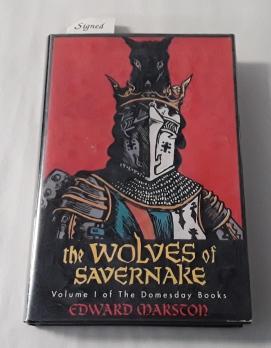
In Norman England, in 1086, a royal tribunal discovers a terrible murder in the village of Bedwyn, and soldier Ralph Delchard and clerk Gervase Bret chase a potentially nonhuman killer
Reviews
Marston, whose previous mystery series features an Elizabethan theatrical troop, launches a medieval series with a servicably plotted tale set in 11th-century England after the Norman Conquest. Two of William the Conquerer's officials ride through Savernake Forest near Stonehenge with the aim of assessing the charter and holdings of Bedwyn Abbey for taxation. Tough Norman horseman Ralph Delchard, who fought at Hastings, is accompanied by young Chancery clerk Gervase Bret. In the woods, they find the corpse of the disliked miller Alric, his throat apparently torn out by a wolf. While four-footed predators are hunted in vain, a frenzied posse threatens to hack down an aged healer, Emma, the Witch of Crofton, and her dog. After a second identical murder, the sleuths are aided by the miller's widow and a beautiful young townswoman in whom Gervase takes an interest, spurred on by Ralph's seduction of a burger's wife. The wily monks of Bedwyn hamper an inquiry that might link the grisly deaths to their suspect charter. Period details and colorful venues, e.g., a subterranean mint run by a dwarf, help to make up for Marton's stodgy characterization.
Copyright 1993 Reed Business Information, Inc.
The author moves from his customary Elizabethan Age theater world (The Mad Courtesan, etc.) to 1086 and the village of Bedwyn, dominated by its Abbey, its Royal Mint, and the Savernake Forest surrounding it. King William has sent emissaries Ralph Delchard, an ex-soldier, and young lawyer Gervase Bret to investigate land claims of local mill-owner Aldric Longdon against the Abbey. They arrive in time to share the horror of the villagers at the brutal death of Longdon, apparently savaged by a wolf in the forest depths. The hearings on his claim drone forward anyway, complicated by the disappearance of his charter to the land in question; the death of a second victim, killed as Longdon was; the near lynching of Emma, the Witch of Crofton; a flow of counterfeit coins; and the intricacies of Abbey life and politics. The killer, eventually unmasked by this Norman-era Batman and Robin, provides an unconvincing surprise in a story that invites comparison to the crystalline novels of Ellis Peters, and to the author's own previous work. By either standard, though, this is overburdened with historical detail, a surfeit of subplots, and too many uninspired characters. Marston fans may hope for his early return to that other world he so brilliantly re-created. -- Copyright ©1993, Kirkus Associates, LP. All rights reserved.
The author of a series of bawdy theatrical whodunits set in the Elizabethan era now turns both his attention and his pen to a previous period. Marston revisits the England of William the Conqueror, forging a splendid historical mystery populated with plenty of self-righteous Normans and a host of resentful Saxons. When William authorizes a nationwide reassessment in 1086, Ralph Delchard, a lecherous Norman lord, and Gervase Bret, an intelligent and youthful Chancery clerk of Saxon origins, journey to the picturesque village of Bedwyn in order to settle a disquieting property dispute. After a successful merchant apparently falls prey to a vicious attack by a wolf, Ralph and Gervase uncover an all-too-human motive for murder. During the course of their investigation, the two friends and trusted colleagues unravel a cunning forgery and counterfeiting scheme that leads them indirectly to the local abbey. An artful and evocative adventure steeped in the local humor, lore, and legend of eleventh-century England. Margaret Flanagan
"About this title" may belong to another edition of this title.