About this Item
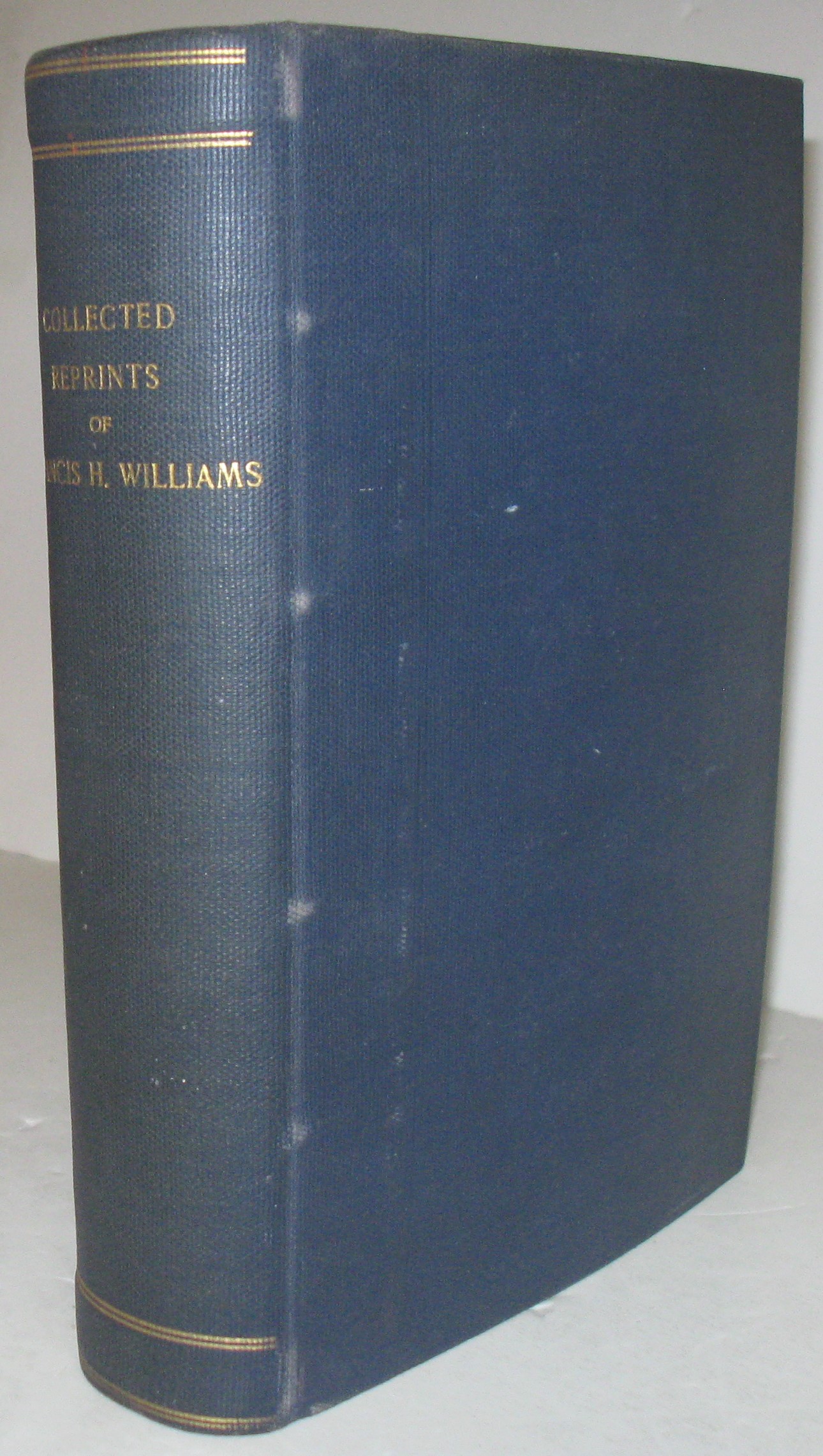
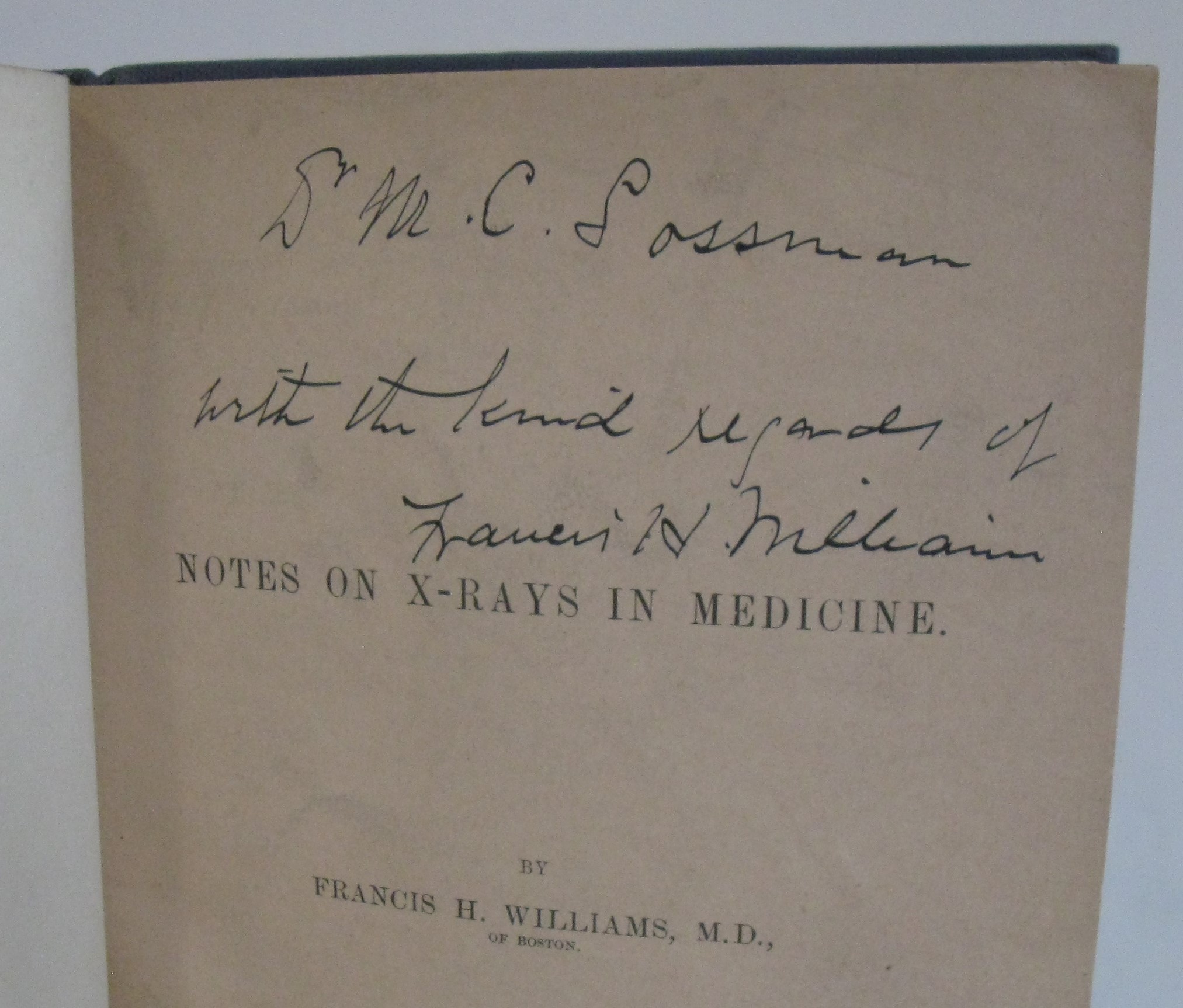
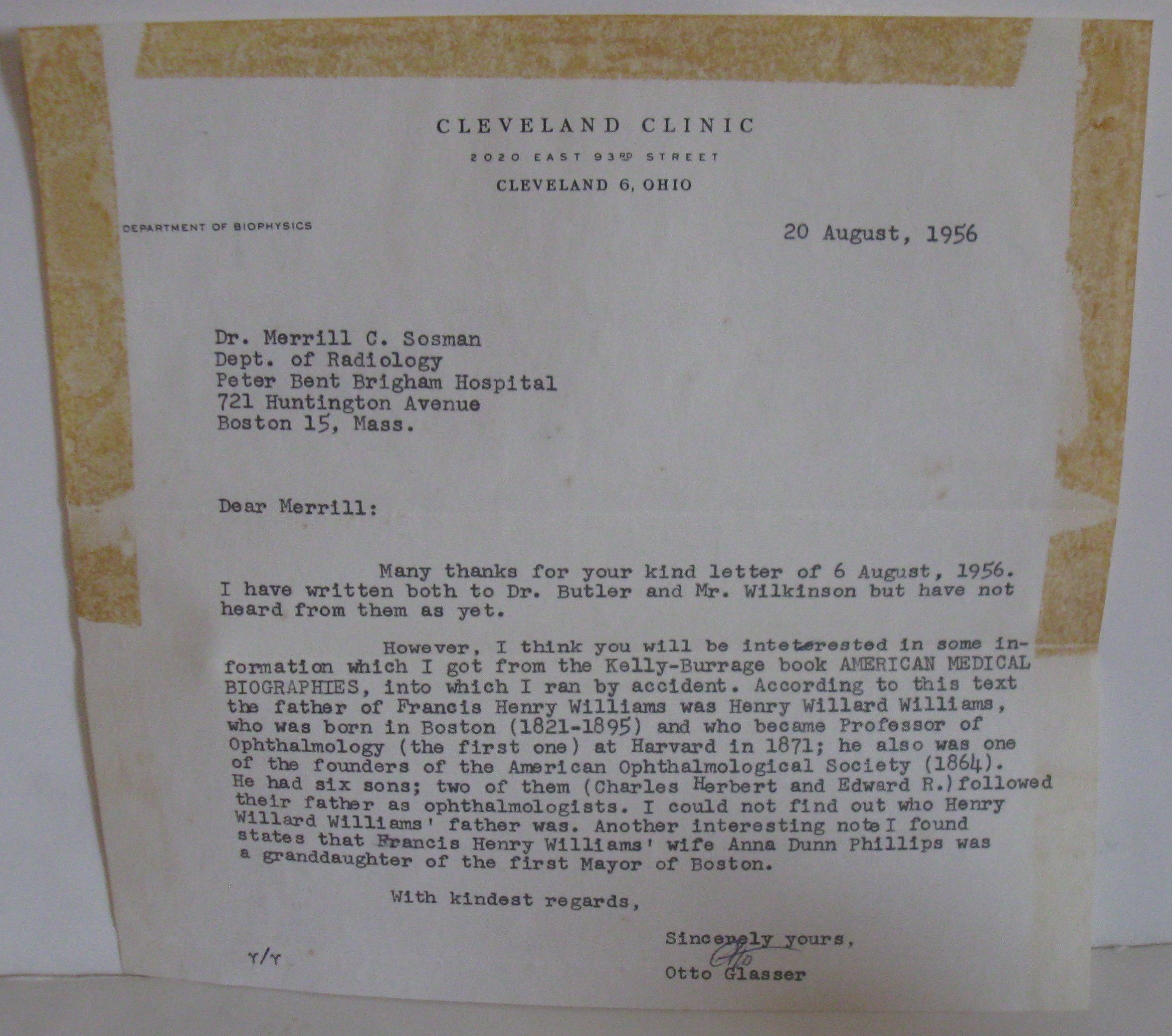
Buckram (stamped on spine: "Collected Reprints of Francis H. Williams"). Ink name stamp of Merrill C. Sosman, Peter Bent Brigham Hospital, Boston Mass., on front flyleaf (see photos) and on rear pastedown. OFFERED WITH: Typed Letter, Signed, from Otto Glasser, Cleveland Clinic, to Merrill Sosman, 20 August 1956, about Francis Williams. This letter, with a horizontal fold, was once taped to the front pastedown of this volume, but it is now loose (see photos for the letter and for the tape stains on the front pastedown). "A search of the medical literature reveals no one else in the United States or Canada during 1896 who ranked with Francis W. Williams in breadth of radiological experience, precision of observation, depth of insight, soundness of judgment, ingenuity, and clarity of expression. He was the first to bring to radiology the full range of skills which now characterize it, and can therefore properly be cited as 'America's first radiologist' " (Brecher & Brecher, The Rays. A History of Radiology in the United States and Canada, p. 80; see pp. 70-80). A complete list of the 29 offprints is available upon request. The first offprint in the volume is inscribed by Francis Williams: WILLIAMS, Francis H.: "Notes on X Rays in Medicine." Reprinted from the Transactions of the Association of American Physicians. 1896. 6 pp; 3 plates containing 5 figs. Original front wrapper. SIGNED BY FRANCIS W. WILLIAMS: "Dr. M. C. Sossman [sic]/ with the kind regards of/ Francis H. Williams" (see photo). The collection also includes: WILLIAMS, Francis H.: "A Method for More Fully Determining the Outline of the Heart by Means of the Fluorescope Together with Other Uses of This Instrument in Medicine." Reprinted from the Boston Medical and Surgical Journal of October 1, 1896. Boston: Damrell & Upham, 1896. 6 pp; 4 figs. Original front wrapper. Garrison-Morton 2686.1 and 2804.1. "Williams's promptness in utilizing the new roentgen rays in the examination of patients enabled him to publish one of the first articles on their application to clinical cardiology. This article, 'A method for more fully determining the outline of the heart.,' appeared in 1896. In addition to demonstrating that cardiac enlargement and abnormalities of the cardiac silhouette could be observed by means of the roentgenoscope, Williams emphasized the importance of correlating these observations with physical findings" (Willius & Dry, History of the Heart and the Circulation, pp. 331-32, also pp. 204-05). This classic paper is reprinted in Willius & Keys, Cardiac Classics, pp. 697-706.
Seller Inventory # 15199
Contact seller
Report this item