Synopsis
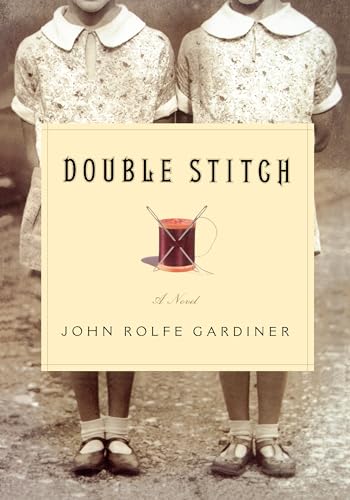
By the award-winning author of Somewhere in France, a historical novel based on a true story of orphaned identical twins born to switched identities, uncanny communications, and terrible trials.
In 1926, Rebecca and Linda Carey arrive at a progressive orphanage outside of Philadelphia. They're identical twins, ten years old, copper skinned and beautiful, with perfectly matched faces and manners that doom them to a mischief of switched identities. Drayton Orphanage is a wealthy campus of fairy-tale stone cottages and modern education, but these girls are unimpressed. They want to get as far away "as a dollar will send a post card." Implacably sharp-tongued, confident and aloof, they enthrall everyone at the orphanage but bridle under the attention, drawn only to each other.
While their guardians wage war with their own divided personalities, Becca and Linny battle for control of their twinned life. Locked in a paired world, they can't help themselves from switching names and clothes and tricking their teachers, house mothers, and peers. But when their black grandmother turns up unexpectedly, one twin imagines herself colored, the other white, and a painful rift grows between the two who had often before not known which one was which. When the apostate Freudian Otto Rank comes to Philadelphia and becomes interested in the twins, he and his prodigy (and lover) Anais Nin, see what no one else does--the twins are becoming dangerous to each other: "We must all recognize the double who stalks us. Guilt is shifted to the shoulders of the double. Fear, too. In the end there may be paranoia, extreme mistrust. And if the other haunts relentlessly it must of course, in the end, be destroyed."
Far from blind to the threat they hold for each other, the twins live in a nightmare of broken mirrors. As they come of age, they choose to separate from each other as well as the stifling world of the Orphanage. But, when at age seventeen they finally do escape, one to China, the other to California, their lives, still parallel, turn horrific--their shared willfulness and naivete lead them to similar straits. Together and apart, each is caught in a struggle to survive the fate of the double.
About the Author
John Rolfe Gardiner was born in New York City in 1936 and grew up in the Washington D.C. suburbs of Northern Virginia during World War II. He served in England in the Army Security Agency, then worked as a reporter and editor at Broadcasting and Television magazines in New York and Washington.
Gardiner's first novel, Great Dream From Heaven for which he was named a member of the Mark Twain Society, was published in 1974. An early recipient of a National Endowment writer's grant and a winner of the Lila Wallace award for fiction, he is the author of six novels and three story collections, his stories have appeared in The New Yorker, American Scholar, American Short Fiction, Ontario Review, Oxford American, O Henry Prize Stories, Best American Short Stories, the Pushcart Prize volume and many other periodicals and anthologies.
Much of the writer’s early short fiction treated life in a rural Virginia village and the culture west of Washington D.C.’s Beltway. Novels and later short fiction set in Europe and America have taken historical settings from the American Revolutionary period to a Tennessee coal miners’ uprising of the 1890s, World War I France, a Depression Era orphanage, World War II home-front, the American mall culture of the 1980s, and lately, short fiction set in the world transformed by information technology.Gardiner lives east of the Shenandoah River and Blue Ridge Mountains in the village of Unison, Virginia, with his wife, ceramic artist Joan Gardiner.
"About this title" may belong to another edition of this title.