Synopsis
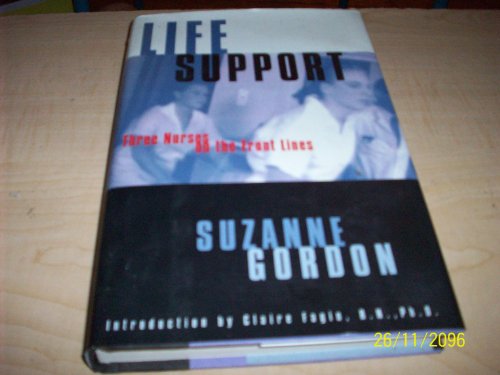
Life Support offers an intimate and important look at what nurses do for patients and their families. It takes us right to the bedside on hospital wards and home visits, in clinics and emergency rooms, capturing the drama of nurses' work in the story of three RNs at Boston's Beth Israel Hospital. Gordon's heroines are nurse practitioner Ellen Kitchen, who bicycles through poor neighborhoods in Boston to visit elderly patients at home; oncology nurse Nancy Rumplik, whose technical skill and emotional support enable cancer patients to endure some of the most arduous high-tech medical treatments; and clinical nurse specialist Jeannie Chaisson, who helps new RNs and physicians begin their careers on a general medical floor. Life Support draws on the experience of these and other nurses to examine the history of their profession, the complex relationship between doctors and nurses, and the central role that nurses play in the final days of life, when care, not cure, is a patient's main concern. In addition, the book makes a powerful critique of hospital restructuring and managed care. Gordon shows how understaffing, shorter hospital stays, layoffs, and replacement of nurses by unlicensed personnel are threatening the quality of care and shifting more of its burden onto patients' families. She describes what consumers can do to resist these trends - through alliances with concerned providers.
Reviews
Lavish praise for the nursing profession interwoven with dire warnings about the threat to its future posed by the growth of managed care. At Boston's Beth Israel Hospital, Gordon (Off Balance: The Real World of Ballet, 1983; Prisoners of Men's Dreams: Striking Out for a New Feminism, 1990; etc.) spent over two years following the daily routines of three registered nurses: Nancy Rumplik, an outpatient nurse in an ambulatory cancer clinic; Jeannie Chaisson, a clinical nurse specialist on a general medical floor; and Ellen Kitchen, a nurse-practitioner in the hospital's home-care service. Gordon shows us Nancy dealing with angry, frightened patients, Jeannie sharing her wisdom with younger nurses, and Ellen bicycling to the homes of Boston's homebound elderly poor. By describing in detail the work of three highly skilled and experienced RNs- -together they have a total of more than 50 years of experience- -Gordon shows us nursing at its very best. Empathic, sensitive, knowledgeable, and conscientious, they seem exceptional, but Gordon stresses that there are hundreds of thousands like them. Nursing, she reminds us, is the largest profession in health care and the largest female profession in America. The catch is, bedside RNs are an endangered species. Long regarded as physicians' handmaidens, they are now, reports Gordon, seen as expendable luxuries by the managers of for-profit hospitals seeking to maximize their bottom line. Hospital patients are increasingly likely to be tended by unlicensed ``patient care technicians'' or by temporary and floating staff unfamiliar with either the patients or the hospital's routines. Gordon's paean to nurses thus also serves as a call to arms. In order to protect ourselves, she warns, we must act now to protect the nursing profession. A convincing demonstration that, in a world of impersonal and complex high-tech treatments, a real nurse is the best medicine. -- Copyright ©1997, Kirkus Associates, LP. All rights reserved.
Gordon's aptly titled book tells the stories of three nurse practitioners^-advanced practice nurses who nursed patients at Boston's Beth Israel Hospital and at the patients' homes. Thanks to a program begun at Beth Israel in the 1970s, bedside nurses are permitted--and encouraged--to increase their education and yet remain bedside nurses; salaries grow step-by-step, so experienced nurses do not have to leave patient care for administrative offices. Stories of many different types of patients add life to Gordon's account of her three subjects' nurse-patient relationships and cogency to these nurses' additional roles as spokespersons for the patients to physicians and administrators. Gordon also examines, in her forceful but levelheaded journalist's style, contemporary nursing as it is affected by managed-care programs and administrative downsizing. Buttressing her points with statistics and arguments garnered from many interviews and the literature, she demonstrates that there has been an appalling downturn in nursing care and misled use of poorly trained assistants by some HMOs and insurance companies. William Beatty
"About this title" may belong to another edition of this title.