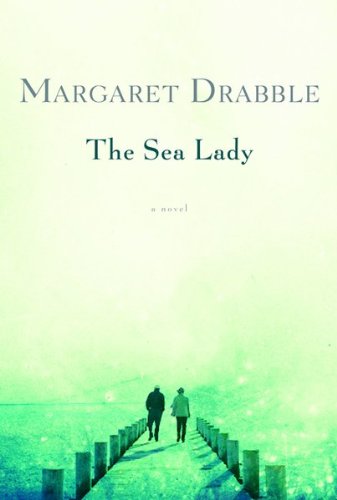
The Sea Lady - Hardcover

Drabble, Margaret

  • 3.25 out of 5 stars
    739 ratings by Goodreads
 
9780151012633: The Sea Lady

Synopsis

This is the story of Humphrey Clark and Ailsa Kelman, who spent a summer together as children in Ornemouth, a town by the gray North Sea. As they journey back to Ornemouth to receive honorary degrees from a new university there—Humphrey on the train, Ailsa flying—they take stock of their lives over the past thirty years, their careers, and their shared personal entanglements. Humphrey is a successful marine biologist, happiest under water, but now retired; Ailsa, scholar and feminist, is celebrated for her pioneering studies of gender and for her gift for lucid and dramatic exposition. The memories of their lives unfold as Margaret Drabble exquisitely details the social life in England in the second half of the last century.

"synopsis" may belong to another edition of this title.

About the Authors

MARGARET DRABBLE is the author of many novels and the editor of The Oxford Companion to English Literature. She lives in London.


MARGARET DRABBLE is the author of many novels and the editor of The Oxford Companion to English Literature. She lives in London.

From the Back Cover

Advance Praise for The Sea Lady

It is a pleasure to read The Sea Lady and find again the canny, cagey, unfooled, intransigent author of The Needle s Eye Drabble s generous and unsentimental truthfulness to the condition of childhood is very rare. Ursula Le Guin, The Guardian

[A] dense, fascinating novel Drabble writes beautifully about the passing of time and the sad, incomplete experience of human love. The New Statesman

But for all its dark knowledge, oceanic psychology, and spiny social critique, Drabble s novel is as scintillating as a sunny day on board a fast-moving sailboat on the life-sustaining sea. Booklist (starred)

From the Inside Flap

Seductive as the tides, it pulls the reader in. Publishers Weekly
Two distinguished guests are traveling separately to a ceremony where they will meet for the first time in three decades. Both are apprehensive as they review the successes and failures of their public lives and their shared personal history.
Humphrey Clark and Ailsa Kelman met as children by the gray North Sea to which they are returning. Humphrey was a serious child, drawn to the underwater world of marine biology. For her part, Ailsa could kick and bite like a pony, and she was as brave as a scorpion, qualities that foreshadowed her dazzling transformation into a flamboyant feminist celebrity. Margaret Drabble traces the evolution of their careers and their passionately entangled relationship, and brings them together again to see what they will make of their past and in what spirit they will be able to face the future.
At her acute, witty best, Margaret Drabble examines the ways in which place, chance, and time merge to make us what we are.

Reviews

In her 17th novel, Margaret Drabble takes the reader on a tour of the last 50 years of the 20th century as she examines questions of character, aging, and memory. Though critics generally praised her evocative prose, vivid descriptions of post-war Europe, and well-developed, eccentric characters, some considered the plot uneven and the romance between Ailsa and Humphrey unlikely. The constant marine symbolism and sea-related metaphors irritated some but amused others. The Public Orator was also a point of contention for critics, who found the contrivance unnecessary. Fans of Drabble will most likely be pleased with this literary novel, but readers looking for a straight story about relationships and the route to intimacy may be annoyed by the many detours.
Copyright © 2004 Phillips & Nelson Media, Inc.

The bold latest from by the ever-inventive Drabble (The Red Queen, etc.) tells the tale of two aging academics—Ailsa Kelman, flamboyant feminist activist and TV talking head, and marine biologist Humphrey Clark—who are traveling separately to the North Sea coastal town of Ornemouth: she's presenting a book award that he, unknowingly, will receive. The two met at Ornemouth as children one summer toward the end of WWII; they lost track of one another and haven't seen each other since their brief, disastrous marriage in 1960s London. A cocky narrator reveals the charged memories, of childhood and beyond, that the trip triggers for both—and occasionally breaks free to fill in narrative gaps and pose destiny-altering scenarios. Neither is content: Humphrey is lonely and dissatisfied by his scholarship's mere competence; Ailsa, twice divorced, is uncertain if she's a success or a caricature of success (her cervix has been on TV). Secondaries include red-headed local boy Sandy Clegg, and Ailsa's rich, unscrupulous brother Tommy, in thick with the royals. Nothing as simple as a love story, this prismatic novel shines as a faceted portrait of England's changing mores, as an ode on childhood's joys and injustices, and a primer for marine biology, complete with hermaphrodite crayfish and fossils of sea lilies. Seductive as the tides, it pulls the reader in. (May)
Copyright © Reed Business Information, a division of Reed Elsevier Inc. All rights reserved.

*Starred Review* There are few pleasures more mentally invigorating than astringently witty and wise satirical fiction. Drabble is a master of the form, creating audacious women characters of withering insight and triumphant sensuality. Her latest, Ailsa Kelman, is the most reviled of celebrities: an outspoken, sexy, shrewd, and exhibitionist feminist scholar. In her sixties and still indomitable, she is, however, haunted by her past, and is now heading back to the place where she met the great love of her life, a modest city on the cold yet fertile North Sea. As a child she spent an indelible summer there, as did Humphrey Clark, who was so smitten with the sea that he became a notable marine biologist. Now, he, too, is returning to the source of his life's passion. The sea, the crucible of life, infuses every aspect of this blissfully commanding performance, and Drabble goes all out in an orgy of marine imagery, from mermaid-inspired attire, to oceanic decor, tsunamis of emotion, and salty sex, powering a steady current of exhilarating metaphors involving tides, fish, seashells, reefs, and sharks. And this is no idle wordplay. As in The Peppered Moth (2001), Drabble uses a character's scientific quest to delve into humankind's abuse of the natural world, here portraying a man full of reverence for the sea in a time of rampant marine devastation. But for all its dark knowledge, oceanic psychology, and spiny social critique, Drabble's novel is as scintillating as a sunny day onboard a fast-moving sailboat on the life-sustaining sea. Donna Seaman
Copyright © American Library Association. All rights reserved

Excerpt. © Reprinted by permission. All rights reserved.

The Presentation
The winning book was about fish, and to present it, she appeared to have dressed herself as a mermaid, in silver sequinned scales. Her bodice was close-fitting, and the metallic skirt clung to her solid hips before it flared out below the knees, concealing what might once have been her tail. Her bared brown shoulders and womanly bosom rose powerfully, as she drew in her breath and gazed across the heads of the seated diners at the distant autocue. She gleamed and rippled with smooth muscle, like a fish. She was boldly dressed, for a woman in her sixties, but she came of a bold generation, and she seemed confident that the shadowy shoals of her cohort were gathered around her in massed support as she flaunted herself upon the podium. She felt the dominion. It pumped through her, filling her with the adrenalin of exposure. She was ready for her leap.
The silver dress must have been a happy accident, for until a few hours earlier in the day nobody knew which book had carried off the trophy. The five judges had met for their final deliberations over a sandwich lunch in a dark anachronistic wood-panelled room off an ill-lit nineteenth-century corridor. The result of their conclave was about to be announced. Most of the guests, including the authors, were as yet ignorant of the judges’ choice.
Ailsa Kelman’s wardrobe could hardly have been extensive enough to accommodate all six of the works upon the shortlist, a list which included topics such as genetically modified crops, foetal sentience and eubacteria: subjects which did not easily suggest an elegant theme for a couturier. Would it be suspected that she, as chair of the judges for the shortlist, had favoured a winner to match her sequinned gown, and had pressed for its triumph? Surely not. For although she was derided in sections of the press as an ardent self-publicist, she was also known to be incorruptible. The sea-green, silvery, incorruptible Ailsa. And her fellow-judges were not of a cal¬i¬bre to submit to bullying or to manipulation.
The venue of the dinner might also shortly be observed to be something of a happy accident. The diners were seated at elegantly laid little round tables beneath a large grey-blue fibreglass model of a manta ray, which hung suspended above them like a primeval spaceship or an ultra-modern mass-people-carrier. They could look nervously up at its grey-white underbelly, at its wide wings, at its long whip-like tail, as though they were dining on the ocean floor. Like the costume of Ailsa Kelman, this matching of winner and venue could not have been planned. The museum was a suitable venue for a prize for a general science book with a vaguely defined ecological or environmental message, but the diners could as easily have been seated in some other hall of the huge yellow-and-blue-brick Victorian necropolis, surrounded by ferns or beetles or minerals or the poignant bones of dinosaurs. The dominant theme of fish had prevailed by chance.
The programme was going out live, and noses had been discreetly powdered, hair adjusted, and shreds of green salad picked from teeth. Now the assembly fell silent for Ailsa’s declaration. Although the winner did not yet know the result, the cameramen and women did, and some of the more media-wise of the guests were able to read the imminent outcome from their disposition. Great sea snakes of thick cable twisted across the floor and under the tables, and thinner ropes of wire clambered up like strangling weeds on to the platform and connected themselves to microphones and control buttons. The technology was at once primitive and modern, cumbersome and smart. The platform on which Ailsa stood was temporary and precarious, and the fake grass matting that covered it concealed a hazardous crack.
Posture, Ailsa, posture, said Ailsa Kelman to herself, as she straightened her shoulders, drew in another deep breath, and, upon cue, began to speak. Her strong, hoarse and husky voice, magnified to a trembling and intimate timbre of vibration by the microphone, loudly addressed the gathering. The audience relaxed, in comfortable (if in some quarters condescending) familiarity: they knew where they were going when they were led onwards by this siren-speaker. They felt safe with her expertise. She took them alphabetically through the shortlist, travelling rapidly through the cosmos and the bio¬sphere, sampling dangerous fruits, appraising the developing human embryo, interrogating the harmless yellow-beige dormouse, swimming with dwindling schools of cod and of herring, burrowing into the permafrost, and plunging down to the black smokers of the ocean floor. She summoned up bacteria and eubacteria and ancient filaments from the Archaean age, and presented her audience with the accelerating intersexuality of fish.
Behind her, around her, above her, in the wantonly and wastefully vast spaces of the Marine Hall, swam old-fashioned tubby three-dimensional life-size models of sharks and dolphins, like giant bath toys, and the more futurist magnified presences of plankton and barnacles and sea squirts and sea slugs. Ailsa Kelman shimmered and glittered as she approached her watery climax. And suddenly, all the foreplay of the foreshore was over: Ailsa Kelman declared that the intersexuality of fish had won! The hermaphrodite had triumphed!
Hermaphrodite: Sea Change and Sex Change was the winning title. The winning author was Professor Paul Burden, from the EuroBay Oceanographic Institute in Brittany and the University of California at San Diego.
Applause, applause, as a tall bearded marine biologist picked his way over the seabed of Marconi cables towards the platform to receive his cheque and present his weathered outdoor face to the bright unnatural lights. A television person conducted the applause, encouraging a crescendo, insisting on a diminuendo, attempting, not wholly successfully, to impose a silence. Some members of the captive audience were by now quite drunk, and, deprived of the false concentration of suspense, were growing restless.
The hermaphrodite had won!
‘This is a brilliantly written survey of gender and sex in marine species . . . prefaced by a poetic evocation of a distant and placid asexual past . . . covering bold hypotheses about the evolutionary origins of sexual reproduction, followed by startling revelations about current female hormone levels, current male infertility, and rising sexual instability caused by POPs and other forms of chemical hazards . . .
Few were listening to the formal citation. However, because of the cameras and the controlling conductor, nobody could yet move. They had to sit and pretend to follow Ailsa Kelman’s eulogy.
The jaws of sharks, fixed in the gape of their everlasting grins, displayed their triple rows of teeth above the diners.Now the prize-winner was saying his few words. Oddly, he pronounced the main word of his title with an extra syllable, an unusual fifth syllable. ‘Herm-Aphrodite,’ he said, conjuring forth an intersexed Venus-Apollo from the waves, a goddess or a god of change. He spoke of intersexed males and females, of transitionals. ‘When I was young, he was saying, hermaphrodites were more common in the invertebrate world. My first published paper was on the life cycle of the marine shrimp . . .’
Ailsa Kelman stood on the platform, back straight, breathing evenly and listening hard. She smiled rigidly outwards and onwards as the marine biologist spoke. Professor Burden was speaking very well. He was a proper scientist, a hard scientist, but he was also a literary man, and keen to prove it. Now he had moved on to Ovid and his Metamorphoses and why they had become so fashionable at the beginning of the third millennium. He mentioned the nymph Salmacis and Hermaphrodite, joined together in one body in the fountain of life. The question of the mutability of gender which had so intrigued the ancients, he was saying, had now become a serious item on the very different agenda of evolutionary biology . . .
Ailsa found it hard to concentrate on the content of his speech, elevated and displayed to the public view as she was, as she so often was. But she tried. She was dutiful, in her fashion. She was a professional.
Public occasions enthralled Ailsa Kelman. She loved their special effects, their choreography, their managed glamour, their moments of panic, their humiliations, their heterogeneity, their ephemeral and cynical extravagance. She rose to these occasions and blossomed in the surf of them. She was in her element here.
The marine biologist mentioned the escalating incidence of uterine cannibalism in certain species. Fish siblings, it seems, increasingly tend to devour one another in the womb. The womb is a surprisingly dangerous environment, he was telling the obligatorily attentive diners.
 
Copyright © Margaret Drabble, 2006

All rights reserved. No part of this publication may be reproduced or transmitted in any form or by any means, electronic or mechanical, including photocopy, recording, or any information storage and retrieval system, without permission in writing from the publisher.

 
Requests for permission to make copies of any part of the work should be submitted online at www.harcourt.com/contact or mailed to the following address: Permissions Department, Harcourt, Inc., 6277 Sea Harbor Drive, Orlando, Florida 32887-6777.

"About this title" may belong to another edition of this title.

Other Popular Editions of the Same Title