
Items related to Odes and Epodes
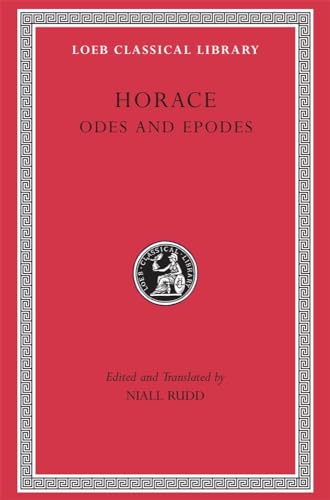
Synopsis
Monumental verse.
The poetry of Horace (born 65 BC) is richly varied, its focus moving between public and private concerns, urban and rural settings, Stoic and Epicurean thought. The Loeb Classical Library edition of the great Roman poet’s Odes and Epodes boasts a faithful and fluid translation and reflects current scholarship.
Horace took pride in being the first Roman to write a body of lyric poetry. For models he turned to Greek lyric, especially to the poetry of Alcaeus, Sappho, and Pindar; but his poems are set in a Roman context. His four books of Odes cover a wide range of moods and topics. Some are public poems, upholding the traditional values of courage, loyalty, and piety; and there are hymns to the gods. But most of the Odes are on private themes: chiding or advising friends; speaking about love and amorous situations, often amusingly. Horace’s seventeen Epodes, which he called iambi, were also an innovation for Roman literature. Like the Odes they were inspired by a Greek model: the seventh-century iambic poetry of Archilochus. Love and political concerns are frequent themes; the tone is only occasionally aggressive. “In his language he is triumphantly adventurous,” Quintilian said of Horace; Niall Rudd’s translation reflects his different voices.
"synopsis" may belong to another edition of this title.
About the Author
Niall Rudd (1927–2015) was Professor of Latin, University of Bristol.
"About this title" may belong to another edition of this title.
Search results for Odes and Epodes

Stock Image
Odes and Epodes (Loeb Classical Library)
Published by
Harvard University Press, 2004
ISBN 10: 0674996097
ISBN 13: 9780674996090
Used
Hardcover
Seller: The Book Corner, Beaverton, OR, U.S.A.
Seller rating 4 out of 5 stars

hardcover. Condition: Acceptable. Hardback. No dust jacket. Cover edges and corners in good shape with some wearing. Spine is tight. Pages are clean, no markings, notes or stains. Published in 1960. Ships from Friends bookstore to benefit Beaverton (Oregon) library. Seller Inventory # mon0000082938
Stock Image
Odes and Epodes
Published by
Harvard University Press, 2004
ISBN 10: 0674996097
ISBN 13: 9780674996090
Used
Hardcover
Seller: World of Books (was SecondSale), Montgomery, IL, U.S.A.
Seller rating 5 out of 5 stars

Hardback. Condition: Good. Monumental verse.The poetry of Horace (born 65 BC) is richly varied, its focus moving between public and private concerns, urban and rural settings, Stoic and Epicurean thought. The Loeb Classical Library edition of the great Roman poet?s Odes and Epodes boasts a faithful and fluid translation and reflects current scholarship. Horace took pride in being the first Roman to write a body of lyric poetry. For models he turned to Greek lyric, especially to the poetry of Alcaeus, Sappho, and Pindar; but his poems are set in a Roman context. His four books of Odes cover a wide range of moods and topics. Some are public poems, upholding the traditional values of courage, loyalty, and piety; and there are hymns to the gods. But most of the Odes are on private themes: chiding or advising friends; speaking about love and amorous situations, often amusingly. Horace?s seventeen Epodes, which he called iambi, were also an innovation for Roman literature. Like the Odes they were inspired by a Greek model: the seventh-century iambic poetry of Archilochus. Love and political concerns are frequent themes; the tone is only occasionally aggressive. ?In his language he is triumphantly adventurous,? Quintilian said of Horace; Niall Rudd?s translation reflects his different voices. Seller Inventory # 00105486084
Seller Image
Horace Odes and Epodes
Published by
Harvard University Press, 2004
ISBN 10: 0674996097
ISBN 13: 9780674996090
New
Hardcover
Seller: GreatBookPrices, Columbia, MD, U.S.A.
Seller rating 5 out of 5 stars
Condition: New. Seller Inventory # 2076194-n
Seller Image
Odes and Epodes (Hardcover)
Published by
Harvard University Press, Cambridge, Mass, 2004
ISBN 10: 0674996097
ISBN 13: 9780674996090
New
Hardcover
Seller: Grand Eagle Retail, Bensenville, IL, U.S.A.
Seller rating 5 out of 5 stars
Hardcover. Condition: new. Hardcover. The poetry of Horace (born 65 BCE) is richly varied, its focus moving between public and private concerns, urban and rural settings, Stoic and Epicurean thought. Here is a new Loeb Classical Library edition of the great Roman poet's Odes and Epodes, a fluid translation facing the Latin text.Horace took pride in being the first Roman to write a body of lyric poetry. For models he turned to Greek lyric, especially to the poetry of Alcaeus, Sappho, and Pindar; but his poems are set in a Roman context. His four books of odes cover a wide range of moods and topics. Some are public poems, upholding the traditional values of courage, loyalty, and piety; and there are hymns to the gods. But most of the odes are on private themes: chiding or advising friends; speaking about love and amorous situations, often amusingly. Horace's seventeen epodes, which he called iambi, were also an innovation for Roman literature. Like the odes they were inspired by a Greek model: the seventh-century iambic poetry of Archilochus. Love and political concerns are frequent themes; here the tone is generally that of satirical lampoons. "In his language he is triumphantly adventurous," Quintilian said of Horace; this new translation reflects his different voices. The poetry of Horace (born 65 B.C.) is richly varied, its focus moving between public and private concerns, urban and rural settings, Stoic Epicurean and thought. This translation offers the Latin text with English translation on facing pages. Shipping may be from multiple locations in the US or from the UK, depending on stock availability. Seller Inventory # 9780674996090
Stock Image
Odes and Epodes
Seller: PBShop.store US, Wood Dale, IL, U.S.A.
Seller rating 5 out of 5 stars
HRD. Condition: New. New Book. Shipped from UK. Established seller since 2000. Seller Inventory # WL-9780674996090
Seller Image
Odes and Epodes
Published by
Harvard University Press, US, 2004
ISBN 10: 0674996097
ISBN 13: 9780674996090
New
Hardcover
Seller: Rarewaves.com USA, London, LONDO, United Kingdom
Seller rating 5 out of 5 stars
Hardback. Condition: New. Monumental verse.The poetry of Horace (born 65 BC) is richly varied, its focus moving between public and private concerns, urban and rural settings, Stoic and Epicurean thought. The Loeb Classical Library edition of the great Roman poet's Odes and Epodes boasts a faithful and fluid translation and reflects current scholarship. Horace took pride in being the first Roman to write a body of lyric poetry. For models he turned to Greek lyric, especially to the poetry of Alcaeus, Sappho, and Pindar; but his poems are set in a Roman context. His four books of Odes cover a wide range of moods and topics. Some are public poems, upholding the traditional values of courage, loyalty, and piety; and there are hymns to the gods. But most of the Odes are on private themes: chiding or advising friends; speaking about love and amorous situations, often amusingly. Horace's seventeen Epodes, which he called iambi, were also an innovation for Roman literature. Like the Odes they were inspired by a Greek model: the seventh-century iambic poetry of Archilochus. Love and political concerns are frequent themes; the tone is only occasionally aggressive. "In his language he is triumphantly adventurous," Quintilian said of Horace; Niall Rudd's translation reflects his different voices. Seller Inventory # LU-9780674996090
Buy New
US$ 37.35
Free Shipping
Ships from United Kingdom to U.S.A.
Ships from United Kingdom to U.S.A.
Quantity: Over 20 available
Seller Image
Horace Odes and Epodes
Published by
Harvard University Press, 2004
ISBN 10: 0674996097
ISBN 13: 9780674996090
Used
Hardcover
Seller: GreatBookPrices, Columbia, MD, U.S.A.
Seller rating 5 out of 5 stars
Condition: As New. Unread book in perfect condition. Seller Inventory # 2076194
Stock Image
Odes and Epodes
Seller: PBShop.store UK, Fairford, GLOS, United Kingdom
Seller rating 5 out of 5 stars
HRD. Condition: New. New Book. Shipped from UK. Established seller since 2000. Seller Inventory # WL-9780674996090
Buy New
US$ 33.42
US$ 5.44 shipping
Ships from United Kingdom to U.S.A.
Ships from United Kingdom to U.S.A.
Quantity: 15 available
Stock Image
Odes and Epodes (Loeb Classical Library 33): 033
Seller: Chiron Media, Wallingford, United Kingdom
Seller rating 5 out of 5 stars
hardcover. Condition: New. Brand new book, sourced directly from publisher. Dispatch time is 24-48 hours from our warehouse. Book will be sent in robust, secure packaging to ensure it reaches you securely. Seller Inventory # 6666-GRD-9780674996090
Buy New
US$ 32.73
US$ 6.53 shipping
Ships from United Kingdom to U.S.A.
Ships from United Kingdom to U.S.A.
Quantity: 3 available
Stock Image
Odes and Epodes (eng)
Published by
Harvard University Press, 2004
ISBN 10: 0674996097
ISBN 13: 9780674996090
New
Hardcover
Seller: Brook Bookstore On Demand, Napoli, NA, Italy
Seller rating 5 out of 5 stars
Condition: new. Seller Inventory # d940cc8abfcef21d8323c8680ca21f5c
Buy New
US$ 37.18
US$ 6.03 shipping
Ships from Italy to U.S.A.
Ships from Italy to U.S.A.
Quantity: Over 20 available