
Items related to iOS Architecture Patterns: MVC, MVP, MVVM, VIPER, and...
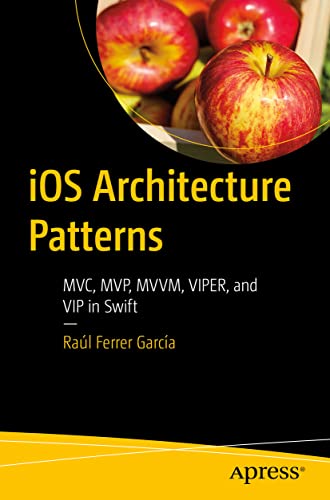
Synopsis
Develop well-structured applications using tested techniques and patterns. When we start to develop an application, we not only have to think about the idea we have of the finished application, but also about how it will evolve as we build it. We have to plan for changes, scope creep, and other developers joining in.
Start by learning what architecture patterns for an application are. You’ll find out why it’s important for your applications to be based on these patterns and which ones are the most common. Then you’ll look at the MVC as one of the best known and used patterns. You’ll see how and when it can be implemented in your applications, as well as its advantages and disadvantages. From there, you’ll discover the first evolution of the MVC model: the MVP, which introduces a new layer (Presenter) to better manage views. The next evolution after that is the MVVM, which introduces the ViewModel layer and its connection with the views through Data Binding. With those prominent patterns covered, you’ll read about VIPER, an Architecture Pattern that seeks to make applications easily maintainable, modularized, and highly scalable. All of which are hallmarks of Clean Architecture.
Architecture Patterns, some simpler and others more complex have developed and evolved to give our applications solid foundations. With these patterns, you will reduce the problems that may arise when modifying existing functions, adding new ones, or correcting errors that may arise in the development process.
What You'll Learn
- Code cleanly with solid foundations
- Start your project ready to adapt and evolve as features and other developers are added
- Find and apply the right patterns for the best results
Who This Book Is For
Developers with some programming knowledge who want to learn different architecture patterns, as well as those who already have more experience and are looking for information on complex patterns such as VIPER or VIP.
"synopsis" may belong to another edition of this title.
About the Author
Raúl Ferrer García holds a doctorate in Chemistry and started short-circuiting computer science by programming with a ZX Spectrum when he was 14. For the past decade as a Mobile Tech Lead, he has dedicated himself completely to the development and management of mobile applications for iOS. He also maintains a blog in which he tries to explain everything he’s learned and studied about the world of mobile development.
From the Back Cover
Develop well-structured applications using tested techniques and patterns. When you start to develop an application, you not only have to think about the idea of the finished application, but also about how it will evolve as it is built. This book shows you how to plan for changes, scope creep, and for the possibility of other developers joining in.
Start by learning what architecture patterns for an application are. You’ll find out why it’s important for your applications to be based on these patterns and which ones are the most common. Then you’ll look at the MVC as one of the best known and used patterns. You’ll see how and when it can be implemented in your applications, as well as its advantages and disadvantages.
From there, you’ll discover the first evolution of the MVC model: the MVP, which introduces a new layer (Presenter) to better manage views. The next evolution after that is the MVVM, which introduces the ViewModel layer and its connection with the views through Data Binding. With those prominent patterns covered, you’ll read about VIPER and VIP, Architecture Patterns that seeks to make applications easily maintainable, modularized, and highly scalable. All of which are hallmarks of Clean Architecture.
Architecture patterns have developed and evolved to give your applications solid foundations. Understanding these patterns, you will reduce the problems that may arise when modifying existing functions, adding new ones, or correcting errors that may arise in the development process.
"About this title" may belong to another edition of this title.
Search results for iOS Architecture Patterns: MVC, MVP, MVVM, VIPER, and...

Seller Image
Ios Architecture Patterns : Mvc, Mvp, Mvvm, Viper, and Vip in Swift
Seller: GreatBookPrices, Columbia, MD, U.S.A.
Seller rating 5 out of 5 stars

Condition: New. Seller Inventory # 45290732-n
Stock Image
iOS Architecture Patterns MVC, MVP, MVVM, VIPER, and VIP in Swift
Seller: Lakeside Books, Benton Harbor, MI, U.S.A.
Seller rating 5 out of 5 stars
Condition: New. Brand New! Not Overstocks or Low Quality Book Club Editions! Direct From the Publisher! We're not a giant, faceless warehouse organization! We're a small town bookstore that loves books and loves it's customers! Buy from Lakeside Books! Seller Inventory # OTF-S-9781484290682
Seller Image
IOS Architecture Patterns: MVC, Mvp, MVVM, Viper, and VIP in Swift (Paperback or Softback)
Published by
Apress 3/4/2023, 2023
ISBN 10: 1484290682
ISBN 13: 9781484290682
New
Paperback or Softback
Seller: BargainBookStores, Grand Rapids, MI, U.S.A.
Seller rating 5 out of 5 stars
Paperback or Softback. Condition: New. IOS Architecture Patterns: MVC, Mvp, MVVM, Viper, and VIP in Swift. Book. Seller Inventory # BBS-9781484290682
Seller Image
iOS Architecture Patterns
Seller: Rarewaves.com USA, London, LONDO, United Kingdom
Seller rating 5 out of 5 stars
Paperback. Condition: New. Develop well-structured applications using tested techniques and patterns. When you start to develop an application, you not only have to think about the idea of the finished application, but also about how it will evolve as it is built. This book shows you how to plan for changes, scope creep, and for the possibility of other developers joining in. Start by learning what architecture patterns for an application are. You'll find out why it's important for your applications to be based on these patterns and which ones are the most common. Then you'll look at the MVC as one of the best known and used patterns. You'll see how and when it can be implemented in your applications, as well as its advantages and disadvantages. From there, you'll discover the first evolution of the MVC model: the MVP, which introduces a new layer (Presenter) to better manage views. The next evolution after that is the MVVM, which introduces the ViewModel layer and its connection withthe views through Data Binding. With those prominent patterns covered, you'll read about VIPER and VIP, Architecture Patterns that seeks to make applications easily maintainable, modularized, and highly scalable. All of which are hallmarks of Clean Architecture. Architecture patterns have developed and evolved to give your applications solid foundations. Understanding these patterns, you will reduce the problems that may arise when modifying existing functions, adding new ones, or correcting errors that may arise in the development process.What You'll LearnCode cleanly with solid foundationsStart your project ready to adapt and evolve as features and other developers are added Find and apply the right patterns for the best results Who This Book Is ForDevelopers with some programming knowledge who want to learn different architecturepatterns, those who already have more experience and are looking for a starting point on complex patterns such as VIPER or VIP, and beginner programmers. Seller Inventory # LU-9781484290682
Buy New
US$ 49.30
Free Shipping
Ships from United Kingdom to U.S.A.
Ships from United Kingdom to U.S.A.
Quantity: 1 available
Stock Image
iOS Architecture Patterns: MVC, MVP, MVVM, VIPER, and VIP in Swift
Seller: California Books, Miami, FL, U.S.A.
Seller rating 5 out of 5 stars
Condition: New. Seller Inventory # I-9781484290682
Stock Image
Ios Architecture Patterns : Mvc, Mvp, Mvvm, Viper, and Vip in Swift
Seller: GreatBookPrices, Columbia, MD, U.S.A.
Seller rating 5 out of 5 stars
Condition: As New. Unread book in perfect condition. Seller Inventory # 45290732
Stock Image
iOS Architecture Patterns: MVC, MVP, MVVM, VIPER, and VIP in Swift
Seller: Fachbuch-Versandhandel, Freiburg, Germany
Seller rating 5 out of 5 stars
Condition: Wie neu. guter und sauberer Zustand, broschiert, h4, G. Seller Inventory # OS-S8ED-K51S
Buy Used
US$ 38.18
US$ 20.11 shipping
Ships from Germany to U.S.A.
Ships from Germany to U.S.A.
Quantity: 1 available
Stock Image
iOS Architecture Patterns (eng)
Print on DemandSeller: Brook Bookstore On Demand, Napoli, NA, Italy
Seller rating 5 out of 5 stars
Condition: new. Questo è un articolo print on demand. Seller Inventory # UUXBPBXCKR
Buy New
US$ 58.13
US$ 7.64 shipping
Ships from Italy to U.S.A.
Ships from Italy to U.S.A.
Quantity: Over 20 available
Stock Image
iOS Architecture Patterns: MVC, MVP, MVVM, VIPER, and VIP in Swift
Seller: THE SAINT BOOKSTORE, Southport, United Kingdom
Seller rating 5 out of 5 stars
Paperback / softback. Condition: New. New copy - Usually dispatched within 2 working days. Seller Inventory # B9781484290682
Buy New
US$ 49.89
US$ 16.97 shipping
Ships from United Kingdom to U.S.A.
Ships from United Kingdom to U.S.A.
Quantity: 2 available
Stock Image
iOS Architecture Patterns: MVC, MVP, MVVM, VIPER, and VIP in Swift
Seller: Chiron Media, Wallingford, United Kingdom
Seller rating 5 out of 5 stars
paperback. Condition: New. Brand new book, sourced directly from publisher. Dispatch time is 3-4 days from our warehouse. Book will be sent in robust, secure packaging to ensure it reaches you securely. Seller Inventory # 6666-CBL-9781484290682
Buy New
US$ 62.35
US$ 6.05 shipping
Ships from United Kingdom to U.S.A.
Ships from United Kingdom to U.S.A.
Quantity: 2 available