
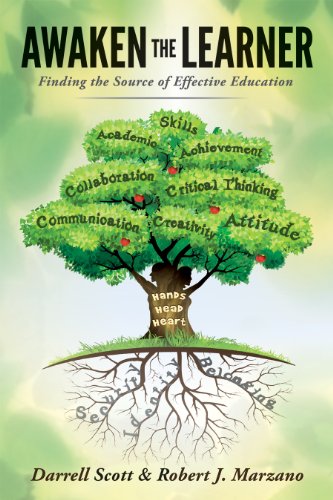
Awaken the Learner (Essentials for Principals)
Darrell Scott; Robert Marzano
ISBN 10: 0991374819 ISBN 13: 9780991374816
Published by Marzano Research Laboratory, 2014
Used
paperback
From
Gulf Coast Books, Cypress, TX, U.S.A.
Seller rating 5 out of 5 stars

AbeBooks Seller since June 27, 2017
This specific item is no longer available.
About this Item
Description:
Seller Inventory # 0991374819-4-35894790
Synopsis:
With the adoption of the Common Core State Standards, there is a renewed focus on developing writing skills and, along with it, an awareness that the new digital technologies have much to contribute in this vital area. Learn how to integrate technology into writing instruction with this handbook full of innovative ideas from an eclectic group of educators.
Benefits
- Find out how digital technology can facilitate grammar instruction, prewriting and brainstorming exercises, editing, revising, peer review, assessment, and collaborative writing.
- Equip yourself with and learn how to model strategies that help students brainstorm, plan, and organize their writing.
- Discover how the natural interplay between reading and writing can be used to strengthen both of these processes.
- Capitalize on the capability students have to move their writing through multiple storage locations and technologies from school computers and smartphones to laptops and tablets.
- Explore the need for students to know why they are writing and for whom.
- Develop your students understanding of voice, and teach them how to manage deadlines and other responsibilities of authorship.
- Examine the process of not just fixing mistakes, but also understanding the root issues that drive writing errors.
- Address the issue of assessing writing in ways that lead to positive growth in writing skill.
About the Author: Darrell Scott is the founder of the Rachel s Challenge program. He has spoken to over five million people in live settings around the world and reached millions more through programs such as The Oprah Winfrey Show, Larry King Live, and The Today Show. He has authored or coauthored five books, including Rachel s Tears, Rachel Smiles, and Chain Reaction: A Call to Compassionate Revolution, and meets with politicians and educators regularly concerning issues of school violence.
Robert J. Marzano, PhD, is the cofounder and CEO of Marzano Research Laboratory in Denver, Colorado. During his forty years in the field of education, he has worked with educators as a speaker and trainer and has authored more than thirty books and 150 articles on topics such as instruction, assessment, writing and implementing standards, cognition, effective leadership, and school intervention. His books include The Art and Science of Teaching, Leaders of Learning, On Excellence in Teaching, Effective Supervision, The Classroom Strategies Series, Using Common Core Standards to Enhance Classroom Instruction and Assessment, Vocabulary for the Common Core, and Teacher Evaluation That Makes a Difference. His practical translations of the most current research and theory into classroom strategies are known internationally and are widely practiced by both teachers and administrators. He received a bachelor s degree from Iona College in New York, a master s degree from Seattle University, and a doctorate from the University of Washington.
"About this title" may belong to another edition of this title.
Bibliographic Details
Title: Awaken the Learner (Essentials for ...
Publisher: Marzano Research Laboratory
Publication Date: 2014
Binding: paperback
Condition: Fair
Edition: 3rd Edition
Top Search Results from the AbeBooks Marketplace

Stock Image
Awaken the Learner (Essentials for Principals)
Published by
Marzano Research Laboratory, 2014
ISBN 10: 0991374819
ISBN 13: 9780991374816
Used
Softcover
Seller: World of Books (was SecondSale), Montgomery, IL, U.S.A.
Seller rating 5 out of 5 stars
Condition: Good. Item in good condition. Textbooks may not include supplemental items i.e. CDs, access codes etc. Seller Inventory # 00042631360
Seller Image
Awaken the Learner (Essentials for Principals)
Published by
Marzano Research Laboratory, 2014
ISBN 10: 0991374819
ISBN 13: 9780991374816
Used
Softcover
Seller: Greenworld Books, Arlington, TX, U.S.A.
Seller rating 5 out of 5 stars
Condition: good. Fast Free Shipping â" Good condition. It may show normal signs of use, such as light writing, highlighting, or library markings, but all pages are intact and the book is fully readable. A solid, complete copy that's ready to enjoy. Seller Inventory # GWV.0991374819.G
Stock Image
Awaken the Learner : Finding the Source of Effective Education
Seller: Better World Books Ltd, Dunfermline, United Kingdom
Seller rating 5 out of 5 stars
Condition: Very Good. Former library copy. Pages intact with possible writing/highlighting. Binding strong with minor wear. Dust jackets/supplements may not be included. Includes library markings. Stock photo provided. Product includes identifying sticker. Better World Books: Buy Books. Do Good. Seller Inventory # 11458463-20
Buy Used
US$ 6.12
US$ 6.73 shipping
Ships from United Kingdom to U.S.A.
Ships from United Kingdom to U.S.A.
Quantity: 1 available
Stock Image
Awaken the Learner : Finding the Source of Effective Education
Seller: Better World Books Ltd, Dunfermline, United Kingdom
Seller rating 5 out of 5 stars
Condition: Good. Former library copy. Pages intact with minimal writing/highlighting. The binding may be loose and creased. Dust jackets/supplements are not included. Includes library markings. Stock photo provided. Product includes identifying sticker. Better World Books: Buy Books. Do Good. Seller Inventory # 45883478-20
Buy Used
US$ 6.12
US$ 6.73 shipping
Ships from United Kingdom to U.S.A.
Ships from United Kingdom to U.S.A.
Quantity: 1 available
Stock Image
Awaken the Learner: Finding the Source of Effective Education
Seller: ThriftBooks-Dallas, Dallas, TX, U.S.A.
Seller rating 5 out of 5 stars
Paperback. Condition: Very Good. No Jacket. May have limited writing in cover pages. Pages are unmarked. ~ ThriftBooks: Read More, Spend Less. Seller Inventory # G0991374819I4N00
Stock Image
Awaken the Learner: Finding the Source of Effective Education
Seller: ThriftBooks-Dallas, Dallas, TX, U.S.A.
Seller rating 5 out of 5 stars
Paperback. Condition: As New. No Jacket. Pages are clean and are not marred by notes or folds of any kind. ~ ThriftBooks: Read More, Spend Less. Seller Inventory # G0991374819I2N00
Stock Image
Awaken the Learner: Finding the Source of Effective Education
Seller: ThriftBooks-Atlanta, AUSTELL, GA, U.S.A.
Seller rating 5 out of 5 stars
Paperback. Condition: As New. No Jacket. Pages are clean and are not marred by notes or folds of any kind. ~ ThriftBooks: Read More, Spend Less. Seller Inventory # G0991374819I2N00
Stock Image
Awaken the Learner: Finding the Source of Effective Education
Seller: ThriftBooks-Reno, Reno, NV, U.S.A.
Seller rating 5 out of 5 stars
Paperback. Condition: Very Good. No Jacket. May have limited writing in cover pages. Pages are unmarked. ~ ThriftBooks: Read More, Spend Less. Seller Inventory # G0991374819I4N00
Stock Image
Awaken the Learner (Essentials for Principals)
Published by
Marzano Research Laboratory, 2014
ISBN 10: 0991374819
ISBN 13: 9780991374816
Used
paperback
Seller: One Planet Books, Columbia, MO, U.S.A.
Seller rating 4 out of 5 stars

paperback. Condition: Good. 3rd ed. Ships in a BOX from Central Missouri! May not include working access code. Will not include dust jacket. Has used sticker(s) and some writing and/or highlighting. UPS shipping for most packages, (Priority Mail for AK/HI/APO/PO Boxes). Seller Inventory # 002043076U
Seller Image
Awaken the Learner (Essentials for Principals)
Published by
Marzano Research Laboratory, 2014
ISBN 10: 0991374819
ISBN 13: 9780991374816
New
Softcover
Seller: Shakespeare Book House, Rockford, IL, U.S.A.
Seller rating 4 out of 5 stars
Condition: new. Seller Inventory # EBBV.0991374819.N