About this Item
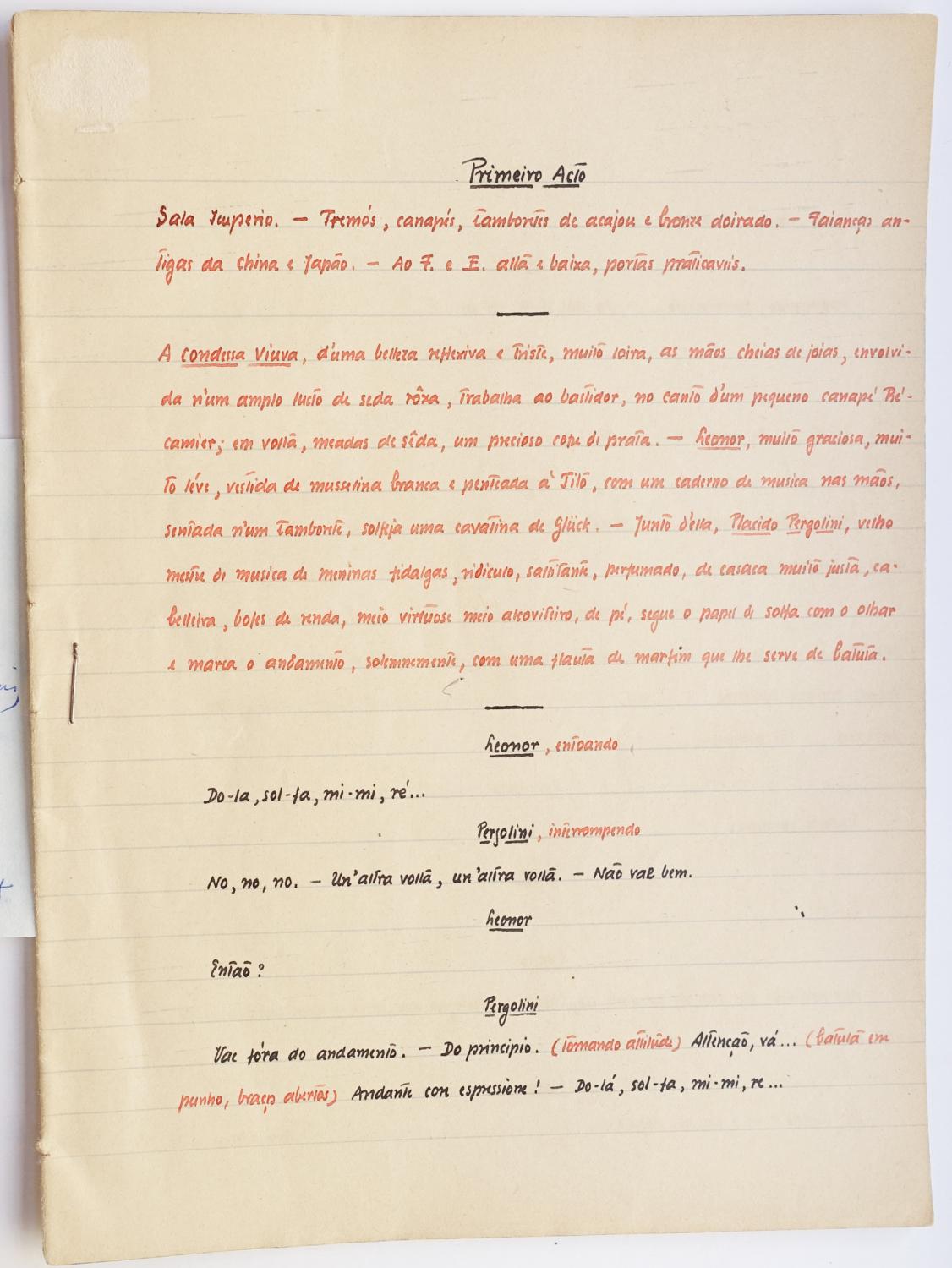
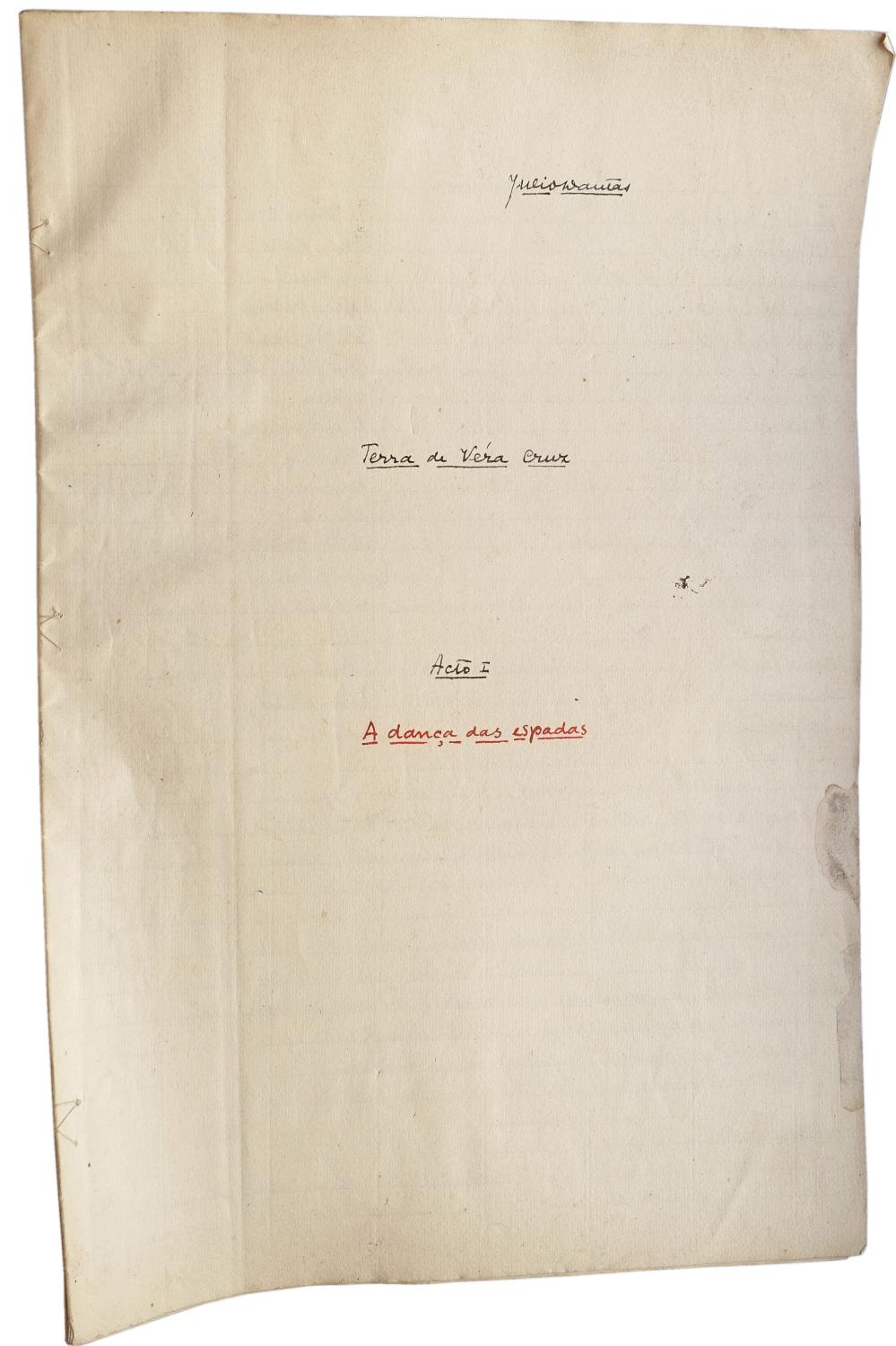
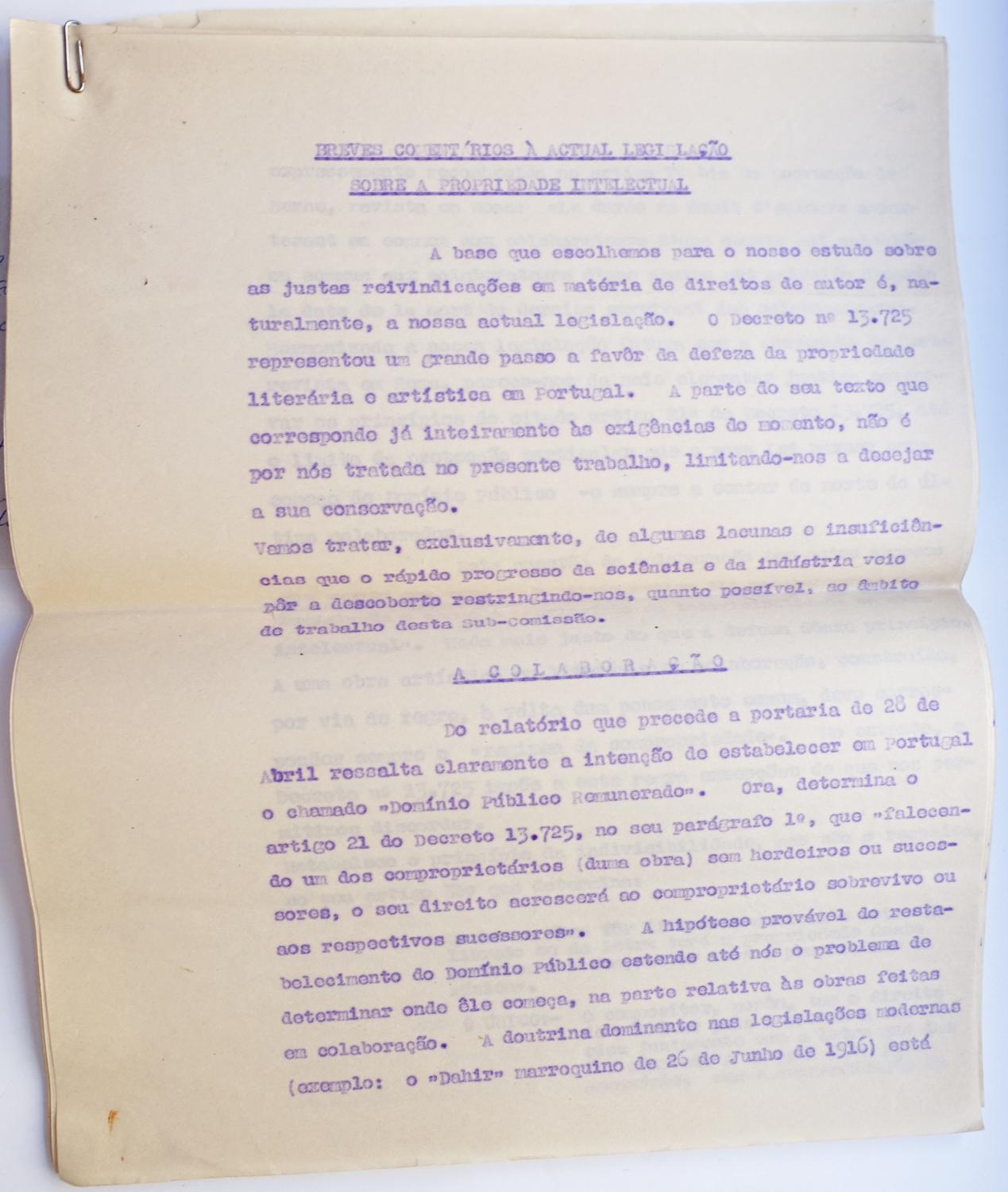
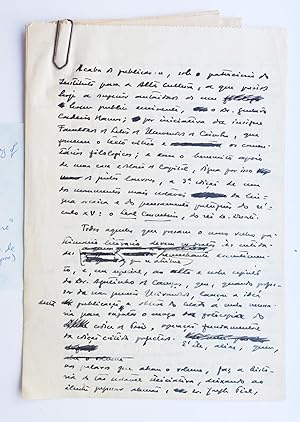
Most 8º, but ranging from 7 x 7 cm. to folio size., Written in Dantas's small but legible hand. In good to very good condition. About 725 leaves dating from the 1880s to the 1950s, with concentrations in the late 1880s and 1930s to 1940s. Includes many notes scribbled on the back of letters, typed copy, page proofs, etc. *** A collection of about 725 pages by one of the most well-known early twentieth century Portuguese authors. It includes many working drafts and research notes, ranging from the 1880s to the 1950s with concentrations in the 1880s and 1920s to 1950s. Physician, playwright, poet, journalist, diplomat and academic, Júlio Dantas (Lagos, 1876-Lisbon, 1962) is most famous for A ceia dos cardeaes, which went through 48 editions from 1902 to 1962 and translations into French, Spanish, Catalan, Italian, English, German, Swiss, Danish, and Japanese. Its influence may also be judged by the fact that no fewer than 49 parodies of it are listed in Campos Ferreira Lima?s As parodias na literatura portuguesa. The opening salvo of the Portuguese Modernist movement was José de Almada Negreiros's Manifesto anti-Dantas (1915), a rare work. Almost the entire edition of this ferocious attack was said to have been purchased and then destroyed by Dantas. Son of a military officer, Dantas attended Lisbon's Colégio Militar, then studied medicine at the University of Lisbon. In 1893 he published his first article, in Novidades. His first book of verse, Nada, appeared to wide acclaim in 1896, while Dantas was still in school. O que morreu de amor, his first play, was staged in 1899 - the same year he defended his thesis Pintores e poetas de Rilhafoles, on the artistic manifestations of inmates of the Rilhafoles lunatic asylum. For a time, Dantas served as a physician in the Portuguese army, specializing in psychiatry.He published numerous dramas and novels on historical subjects, the most famous of which was A ceia dos cardeaes (The Cardinals' Supper), 1902. His A Severa was made into the first Portuguese film with sound in 1931.Dantas was also a prominent public figure, as Inspector das Bibliotecas Eruditas e Arquivos (1912-1946), president of the Academia das Ciências de Lisboa (beginning in 1922), minister of Education (1920), minister of Foreign Affairs (1921-1922, 1923), and ambassador to Brazil (1941-1949).This collectionThe collection, with some 725 leaves, occupies about 22 linear centimeters. Size of the leaves ranges from about 8 x 8 cm to folio size; most are octavo. Many notes are scribbled on the back of letters, typed copy, page proofs, etc. The collection falls into 7 parts.Part A: Material from Dantas's years at the Real Colegio Militar, ca. 18881. Letters from Julio to his parents: 9 letters, 32 ll. total, including one dated December 12, 1888, reporting on an accident with an olive pit that required medical intervention.2. Two school exams, 1884 and 1885. 2 ll.3. Poem in manuscript, "Pedi-t'um beijo." 1 leaf.4. Draft of a short story, main character Miguel Maurs. 2 ll.5. Small pencil sketch of a castle, signed Julio Dantas.6. Visiting card inscribed to his mother, with "Alumno do Real Collegio Militar" printed on it.Part B: Dramatic works1. Untitled play, copied neatly in red & black, but the final 5 ll. are partly in pencil and appear to be a working draft. 16 ll., 4to. Characters include Leonor, Pergolini, Monsenhor, and others.2. Untitled play, copied neatly in red & black, a few corrections. 35 ll., 4to. Characters include Leonor, Pergolini, and others.3. "Terra da Vera Cruz," play in 4 acts, each act stitched separately. Copied in red & black. 52 ll., large folio. Act III includes a sketch for the set.4. Untitled play ("Os tutores da menina"on envelope that follows this notebook). 46 ll., 4to notebook with blue wrappers, marbled edges. Characters include Capuleto, Paris, Madona, Bianca, Julieta, Romeu, and others.Part C: Essays, speeches, booksNote: Most of these are not listed in "Julio Dantas, curriculum vitae,
Seller Inventory # 24640
Contact seller
Report this item