About this Item
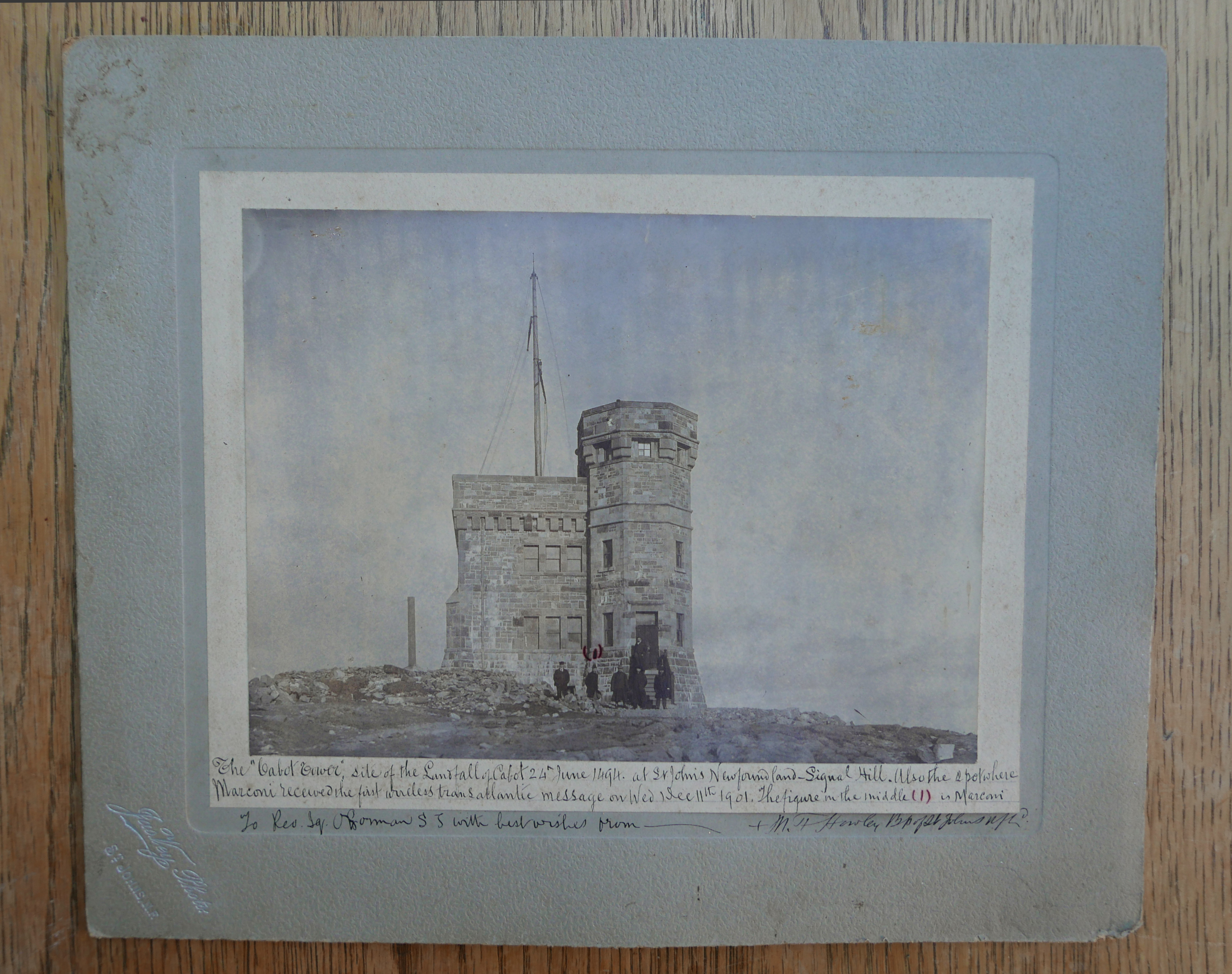
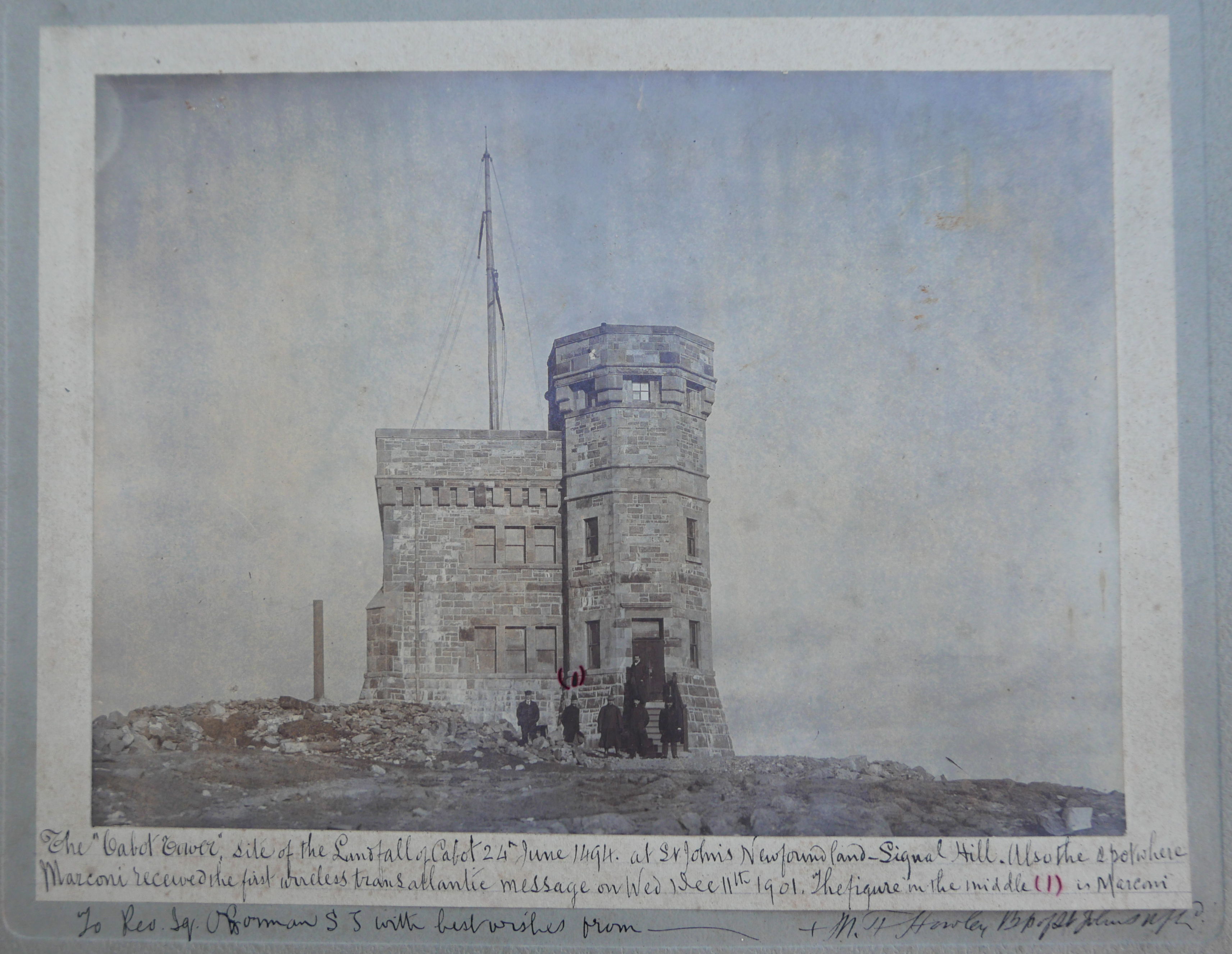
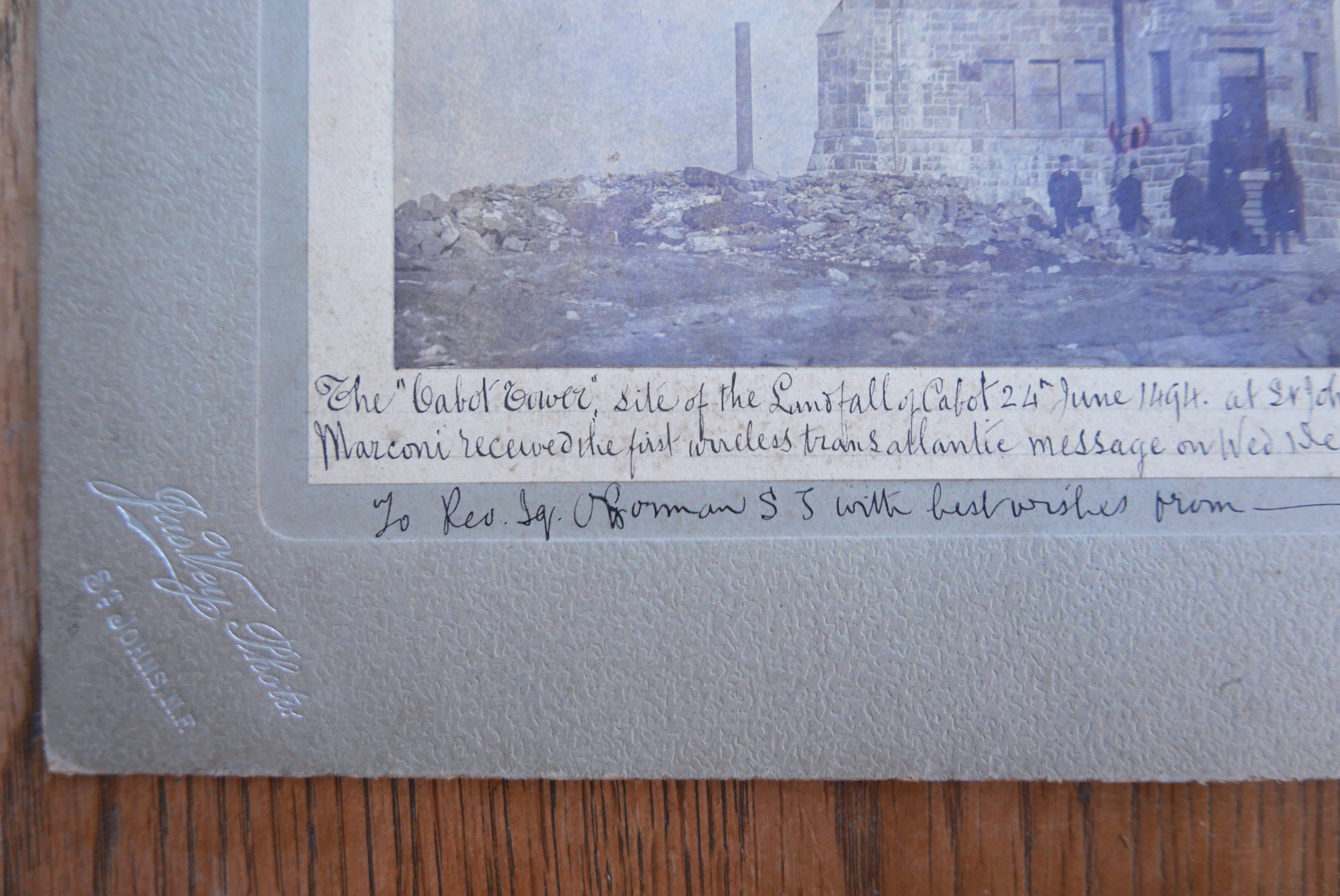
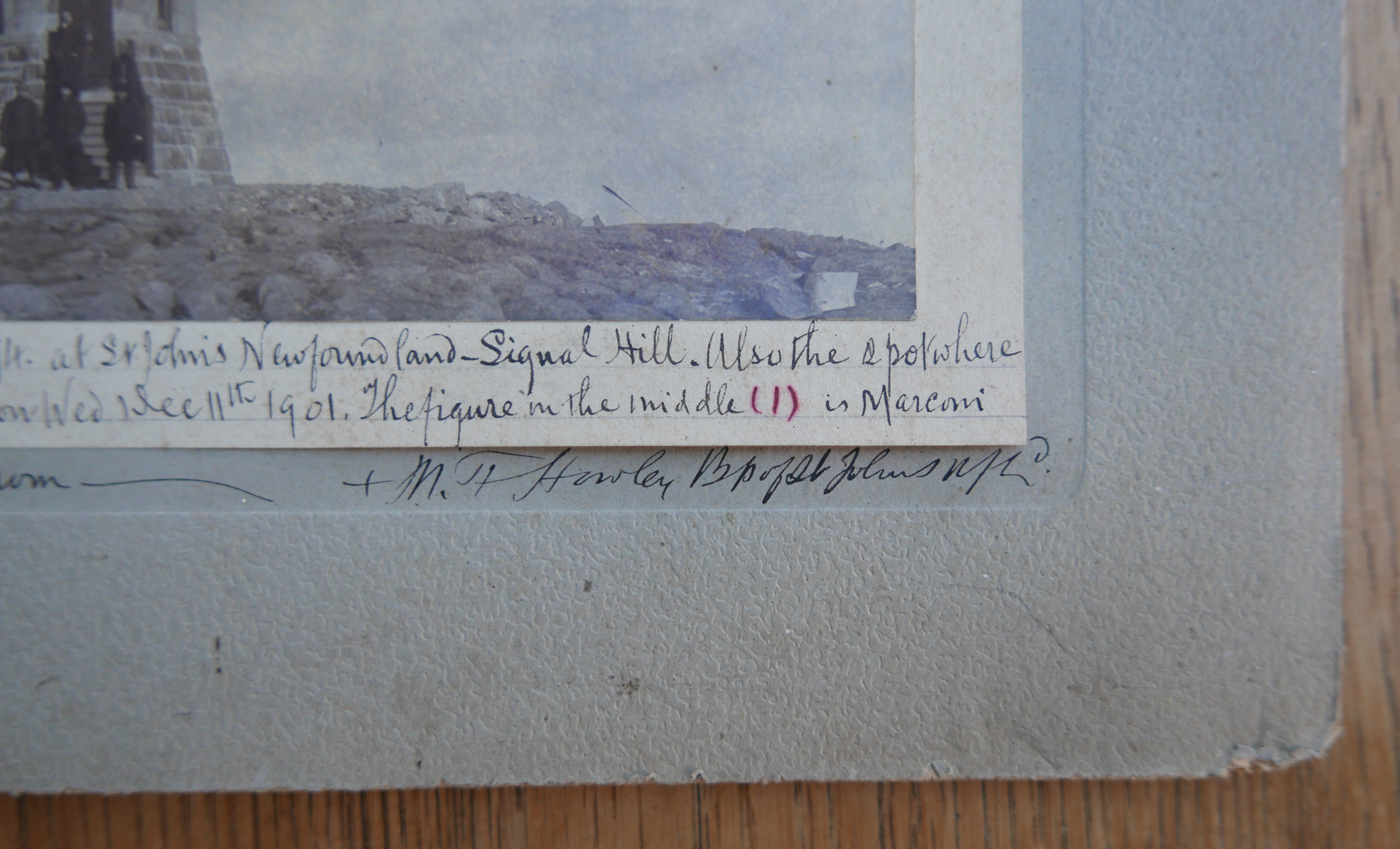
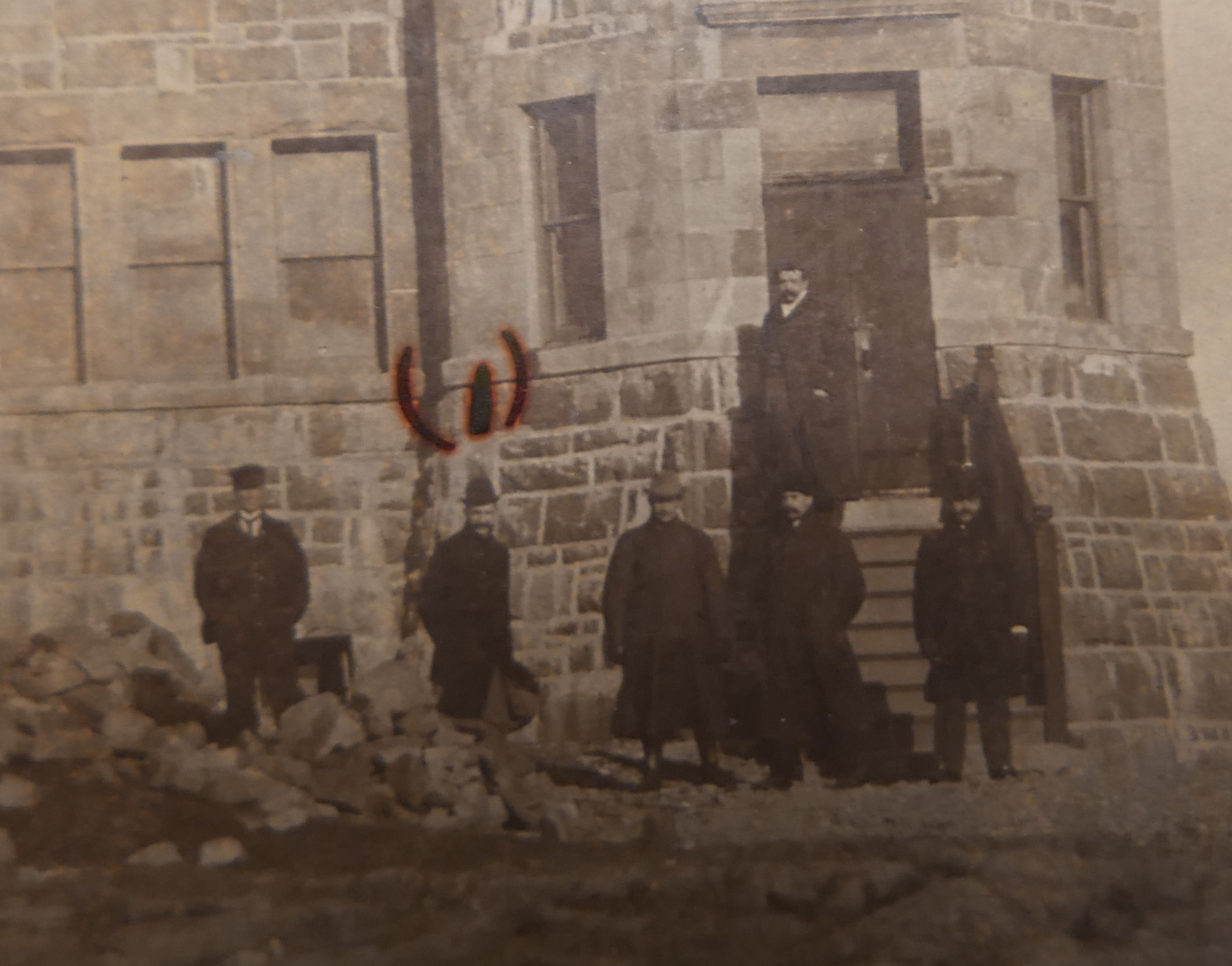
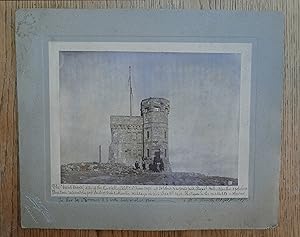
Original Jas Vey Photograph, showing Guglielmo Marconi and a group of people in front of the Cabot Tower, Signal Hill, the First Atlantic Wireless Communication, December 1901. image size 20.5 x 15 cm, mounted, 30 x 25 cm. original grey publishers mount card [wear] with Presentation inscription from the M. F. Howley, Bishop St. John's [1843-1914] to J.J. O'Gorman [1884-1933]. The Origins of Wireless Communication. 'The first overseas wireless communication was achieved on December 12, 1901, at Signal Hill, in St. John's, Newfoundland, Guglielmo Marconi, listening through his telephone headset, heard a series of three "bips"; Morse code for the letter "s." He had received the first transatlantic communication, sent from a radio transmitter just over 2100 miles away, on the southwest coast of England. The Royal Navy's decision to try Marconi's wireless radio systems was based on the success of his 1899 experiment where he transmitted a message across the English Channel to France, though it was still unknown just how far a wireless signal could be sent. The excepted scientific wisdom of the day was that radio waves traveled in a straight line. If this were true, then the distance a wireless transmission could travel was limited to the distance from the point of origin to the horizon. Marconi, however, believed that radio waves would follow the curvature of the earth which, if true, would mean that messages could travel much greater distances. The main focus at the time was on being able to communicate with ships at sea. Even though Marconi believed this to be possible he still had to prove it. His idea was to send a message across the Atlantic.Marconi would eventually set up his receiver at Signal Hill in St. John's, Newfoundland, Canada but this location was not his first choice. He had originally set up his receiver at Cape Cod, Massachusetts, on the east coast of the United States, and the transmitter at Poldhu, Cornwall, on England's west coast. However, a storm damaged the antenna at Poldhu forcing Marconi to replace it with a shorter one. Fearing that the signal would not travel the distance to Cape Cod with the shorter antenna he decided to change the location of the receiver to a point closer to the transmitter, Signal Hill, Newfoundland. The only point in North America closer to Europe is Cape Spear, Newfoundland. The Newfoundland government would later try to encourage Marconi to establish a wireless station there.' Cabot Tower became a Marconi wireless station in 1933. A Good Example'.
Seller Inventory # 1826
Contact seller
Report this item