Synopsis
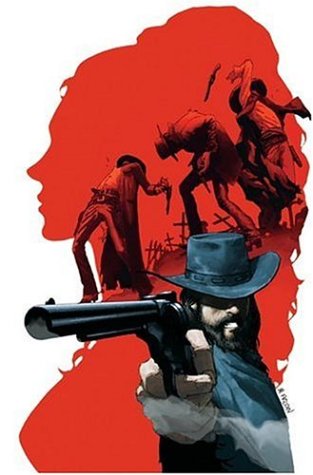
Wes Cutter, a former Confederate soldier, is appointed sheriff of Blackwater, his hometown, by Union soldiers and must find the killer behind a series of brutal murders that may reveal the town's dark past.
Reviews
Grade 12 Up–Living in post-Civil War America, Wes Cutter, a Southern rebel, has returned to Missouri after being detained in a Union prison camp. When he arrives, he finds that his home has been taken over by the Union troops who want Wes to join up with their cause. He is also searching for his wife, who is sometimes seen accompanying him, though readers sense that things are not always what they seem. The story is told in flashbacks that are not always clearly delineated. Wes is a character with questionable morals who wants to reclaim what is rightly his, and he will employ any means necessary–including excessive amounts of violence–to do so. The shadowy art is a perfect complement to this exceptionally dark Western tale. With scenes of appalling violence, coarse language, sex, rape, nudity, and racial epithets, this volume puts the graphic back into graphic novel. It will most likely find an audience with fans of Azzarello's 100 Bullets series and Garth Ennis's Preacher series (both Vertigo).–Jennifer Feigelman, Goshen Public Library and Historical Society, NY
Copyright © Reed Business Information, a division of Reed Elsevier Inc. All rights reserved.
Azzarello, best known for the hard-boiled 100 Bullets, has had varying success with other genres. His cynicism was ill-suited for the larger-than-life star of Superman: For Tomorrow but proves a better match for the western, especially in an era when that genre is largely identified with cable's caustic Deadwood. Confederate soldier Wes Cutter returns to Blackwater, Missouri, to find his home taken over by northern soldiers. Reunited with his wife, Ruth, he sets out to reclaim his land, carving out an uneasy relationship with the Union troops. The treatment of occupation has a contemporary relevance that is certainly intentional. Narratively, Azzarello uses flashbacks distinctively, weaving images of the past into present-set scenes. Pacing is leisurely and Leone-like, and the dialogue tends to be blunt and terse (not profanely eloquent a la Deadwood.The sparse, gritty artwork by Azzarello's previous collaborator on Hellblazer (see Freezes Over, 2003) ideally complements the grim script. This initial story arc largely establishes the series; future installments will see Cutter and Ruth heading west, running from the law. Gordon Flagg
Copyright © American Library Association. All rights reserved
"About this title" may belong to another edition of this title.