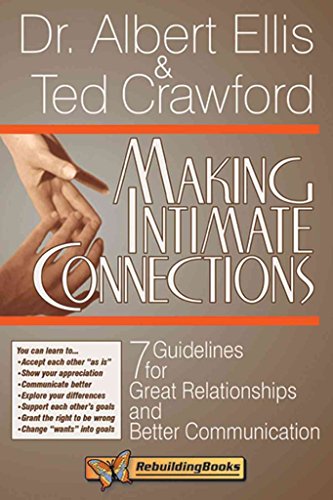
This is the first book to apply Dr. Ellis's famous “Rational Emotive Behavior Therapy” principles to intimate relationships. The seven guidelines for better couple communication offered in this user-friendly guide emphasize non-blaming acceptance, integrity, mutual support, appreciation, replacing irrational ideas and expectations with realistic attitudes. An effective resource for couples seeking greater closeness, intimate partners who are willing to make "unilateral" changes, marriage and family therapists -- a breakthrough relationship guide from the father of rational therapy.
Dr. Albert Ellis (1913-2007) was the author of more than 65 books on psychotherapy, relationship therapy, and self-help, including Feeling Better, Getting Better, Staying Better; Rational Emotive Behavior Therapy: A Therapist's Guide; Making Intimate Connections and How to Make Yourself Happy and Remarkably Less Disturbable. He published over 700 articles and composed more than 200 rational songs.
Dr. Ellis was rated by psychologists and counselors in the United States as one of the most influential psychologists of our time. He "revolutionized" psychotherapy since 1955, when he created Rational Emotive Behavior Therapy (REBT), the first of the now-popular cognitive behavior therapies. Dr. Ellis was a practicing psychologist, president of the Albert Ellis Institute in New York City, and a featured speaker at workshops and conferences throughout the world. He received many awards, including distinguished psychologist, scientific researcher, and distinguished psychological practitioner from several associations, including the American Humanist Association, American Academy of Psychotherapists, Society for the Study for Scientific Sex, American Association of Sex Educators, Counselors, and Therapists, and Academy of Psychologists in Marital and Family Therapy. He also earned one of the highest awards of the American Psychological Association: Distinguished Professional Contribution to Knowledge.
Ted Crawford, as a young man, served in the US Army Air Corps in India and China. That experience inspired him to work toward prevention of war and other types of conflict. He developed a profound knowledge of semantics, and studied Rational Emotive Behavior Therapy with Albert Ellis. Ted's major contributions include the system of Revolving Discussion Sequence and other processes for overcoming differences and disagreements.