About this Item
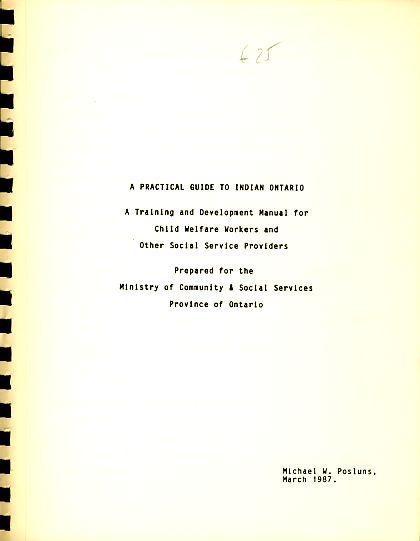
157 S. in Ringbuch-Bindung. Letztes Blatt mit Anmerkungen. - A PRACTICAL GUIDE TO INDIAN ONTARIO // A Training and Development Manual for Child Welfare Workers and Other Social Service Providers. Prepared for the Ministry of Community & Social Services Province of Ontario. - The Reader: This Guide introduces social service providers, and particularly child welfare workers to the several diverse Indian and Native cultures in Ontario. Social service providers in general, and child welfare workers in particular are very often called upon to carry out their role in an Indian or Native community. This may mean working with a single Indian or Native adult or child. More often today, in child welfare matters, it will mean working both with a child and also with a family as a whole. Very often, in Ontario, the worker will be required to leave the town in which their agency is located and work with Indian people in a reserve community. More often today, the Indian or Native people in need of social service will live in the same urban area as the worker. Whether the Indian or Native people lives in a reserve community, a non-reserve Metis community, a village, town or city, the worker will want to be aware that there will often be a real connection between the attitudes of the person the worker is trying to help, and the norms, values, customs and standards of the culture to which they belong. - Traditional Norms and Standards // The advantage of understanding people's child and family service needs in the context of their culture has a special relevance for Indian and Native people. An Indian or Native person is, by definition, a member of one or another specific Indian or Native Nation or culture. If the person lives in Ontario, unless they have migrated to this Province, the Nation of which they are a member is a culture which is indigenous to Ontario. The culture and national identity which have shaped their personal identity, their standards and norms evolved on this land over the centuries. This is their homeland. In social terms, which are often quite different from legal usage, being an Indian means being a member of one or another of the Indian First Nations of North America. Traditionally, each Indian Nation has had a strong and definite set of customs regarding preferred and normal family life. The customs of any one Nation can, to a large degree, be seen as reflecting the particular values of the culture of that Nation. The actual extent to which the person adheres to the traditional norms and standards of their culture may vary as much among Indian and Native peoples as among any other group. . (S.1-2). Sprache: Deutsch Gewicht in Gramm: 550.
Seller Inventory # 903850
Contact seller
Report this item