
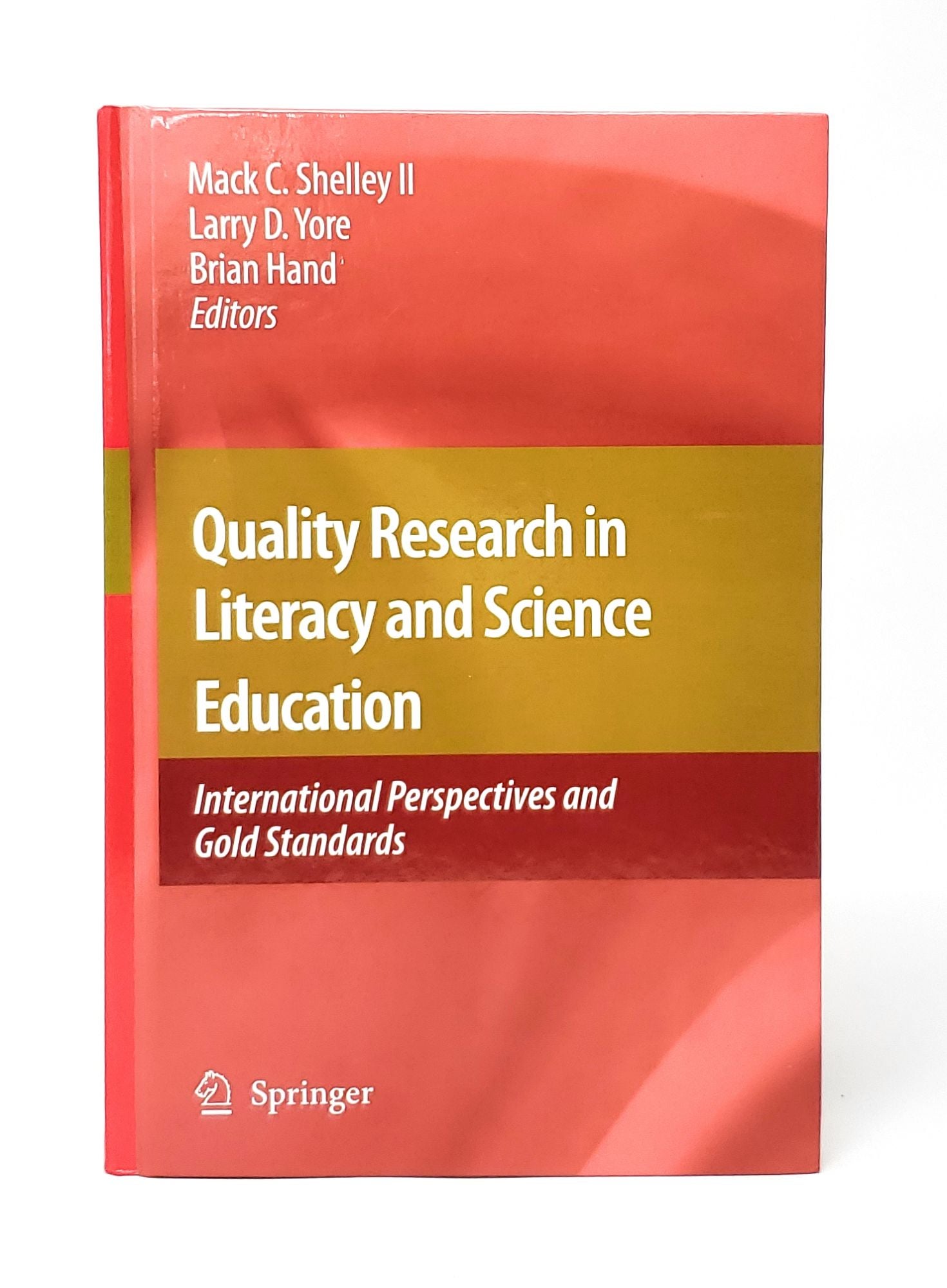
Quality Research in Literacy and Science Education: International Perspectives and Gold Standards
Shelley, Mack C. II (Ed.); Yore, Larry D. (Ed.); Hand, Brian (Ed.)
ISBN 10: 1402084269 ISBN 13: 9781402084263
Published by Springer, New York, 2009
Used
Hardcover
From
Underground Books, ABAA, Carrollton, GA, U.S.A.
Seller rating 5 out of 5 stars

AbeBooks Seller since September 1, 2011
This specific item is no longer available.
About this Item
Description:
Hardcover. 9 1/2" X 6 1/2". xxix, 666pp. Very mild shelf wear to covers, corners, and edges of paper over boards. Pages are clean and unmarked. Binding is sound. ABOUT THIS BOOK: Statistical models attempt to describe and quantify relationships between variables. In the models presented in this chapter, there is a response variable (sometimes called dependent variable) and at least one predictor variable (sometimes called independent or explanatory variable). When investigating a possible cause-and-effect type of relationship, the response variable is the putative effect and the predictors are the hypothesized causes. Typically, there is a main predictor variable of interest; other predictors in the model are called covariates. Unknown covariates or other independent variables not controlled in an experiment or analysis can affect the dependent or outcome variable and mislead the conclusions made from the inquiry (Bock, Velleman, & De Veaux, 2009). A p value (p) measures the statistical significance of the observed relationship; given the model, p is the probability that a relationship is seen by mere chance. The smaller the p value, the more confident we can be that the pattern seen in the data 2 is not random. In the type of models examined here, the R measures the prop- tion of the variation in the response variable that is explained by the predictors 2 specified in the model; if R is close to 1, then almost all the variation in the response variable has been explained. This measure is also known as the multiple correlation coefficient. Statistical studies can be grouped into two types: experimental and observational.(Publisher). Seller Inventory # 13170
Synopsis:
Statistical models attempt to describe and quantify relationships between variables. In the models presented in this chapter, there is a response variable (sometimes called dependent variable) and at least one predictor variable (sometimes called independent or explanatory variable). When investigating a possible cause-and-effect type of relationship, the response variable is the putative effect and the predictors are the hypothesized causes. Typically, there is a main predictor variable of interest; other predictors in the model are called covariates. Unknown covariates or other independent variables not controlled in an experiment or analysis can affect the dependent or outcome variable and mislead the conclusions made from the inquiry (Bock, Velleman, & De Veaux, 2009). A p value (p) measures the statistical significance of the observed relationship; given the model, p is the probability that a relationship is seen by mere chance. The smaller the p value, the more confident we can be that the pattern seen in the data 2 is not random. In the type of models examined here, the R measures the prop- tion of the variation in the response variable that is explained by the predictors 2 specified in the model; if R is close to 1, then almost all the variation in the response variable has been explained. This measure is also known as the multiple correlation coefficient. Statistical studies can be grouped into two types: experimental and observational.
From the Back Cover:
This book addresses implications for "Gold Standards" of education research―especially in science education and literacy. These standards are meant to provide evidence-based educational outcomes found effective in randomized controlled trials, following patterns of evidence used in medical research. Similar expectations have emerged in other countries―from education ministries, for researchers working with U.S. colleagues, and for researchers with multinational and non-profit support.
The current "Gold Standard" policy, developed in the United States through the 2001 "No Child Left Behind" [NCLB] Act and the 2002 Education Sciences Reform Act, attempts to improve the effects of schooling and enhance educational research. The contributions to this book explore perspectives on how best to implement multiple standards of education research.
"About this title" may belong to another edition of this title.
Bibliographic Details
Title: Quality Research in Literacy and Science ...
Publisher: Springer, New York
Publication Date: 2009
Binding: Hardcover
Condition: Very good
Top Search Results from the AbeBooks Marketplace

Stock Image
Quality Research in Literacy and Science Education: International Perspectives and Gold Standards
Seller: Mobilis Books, Geneva, FL, U.S.A.
Seller rating 5 out of 5 stars
Condition: Very Good. Statistical models attempt to describe and quantify relationships between variables. In the models presented in this chapter, there is a response variable (sometimes called dependent variable) and at least one predictor variable (sometimes called independent or explanatory variable). When investigating a possible cause-and-effect type of relationship, the response variable is the putative effect and the predictors are the hypothesized causes. Typically, there is a main predictor variable of interest; other predictors in the model are called covariates. Unknown covariates or other independent variables not controlled in an experiment or analysis can affect the dependent or outcome variable and mislead the conclusions made from the inquiry (Bock, Velleman, and De Veaux, 2009). A p value (p) measures the statistical significance of the observed relationship; given the model, p is the probability that a relationship is seen by mere chance. The smaller the p value, the more confident we can be that the pattern seen in the data 2 is not random. In the type of models examined here, the R measures the prop- tion of the variation in the response variable that is explained by the predictors 2 specified in the model; if R is close to 1, then almost all the variation in the response variable has been explained. This measure is also known as the multiple correlation coefficient. Statistical studies can be grouped into two types: experimental and observational. Seller Inventory # 1130
Stock Image
Quality Research in Literacy and Science Education : International Perspectives and Gold Standards
Seller: Buchpark, Trebbin, Germany
Seller rating 5 out of 5 stars
Condition: Sehr gut. Zustand: Sehr gut | Seiten: 666 | Sprache: Englisch | Produktart: Bücher | This book addresses implications for "Gold Standards" of education research-especially in science education and literacy. These standards are meant to provide evidence-based educational outcomes found effective in randomized controlled trials, following patterns of evidence used in medical research. Similar expectations have emerged in other countries-from education ministries, for researchers working with U.S. colleagues, and for researchers with multinational and non-profit support.The current "Gold Standard" policy, developed in the United States through the 2001 "No Child Left Behind" [NCLB] Act and the 2002 Education Sciences Reform Act, attempts to improve the effects of schooling and enhance educational research. The contributions to this book explore perspectives on how best to implement multiple standards of education research. Seller Inventory # 4677448/12
Buy Used
US$ 94.31
US$ 120.49 shipping
Ships from Germany to U.S.A.
Ships from Germany to U.S.A.
Quantity: 1 available
Seller Image
Quality Research in Literacy and Science Education: International Perspectives and Gold Standards
Seller: Solr Books, Lincolnwood, IL, U.S.A.
Seller rating 5 out of 5 stars
Condition: new. Seller Inventory # 5D4000007S4R_ns
Stock Image
Quality Research in Literacy and Science Education (eng)
Print on DemandSeller: Brook Bookstore On Demand, Napoli, NA, Italy
Seller rating 3 out of 5 stars

Condition: new. Questo è un articolo print on demand. Seller Inventory # 2N0RU9FNPK
Buy New
US$ 149.23
US$ 12.62 shipping
Ships from Italy to U.S.A.
Ships from Italy to U.S.A.
Quantity: Over 20 available
Stock Image
Quality Research in Literacy and Science Education: International Perspectives and Gold Standards
Seller: HPB-Red, Dallas, TX, U.S.A.
Seller rating 5 out of 5 stars
Hardcover. Condition: Good. Connecting readers with great books since 1972! Used textbooks may not include companion materials such as access codes, etc. May have some wear or writing/highlighting. We ship orders daily and Customer Service is our top priority! Seller Inventory # S_373558694
Seller Image
Quality Research in Literacy and Science Education
Seller: moluna, Greven, Germany
Seller rating 5 out of 5 stars
Condition: New. Seller Inventory # 4095512
Buy New
US$ 162.23
US$ 56.22 shipping
Ships from Germany to U.S.A.
Ships from Germany to U.S.A.
Quantity: Over 20 available
Stock Image
Quality Research in Literacy and Science Education : International Perspectives and Gold Standards
Seller: GreatBookPricesUK, Woodford Green, United Kingdom
Seller rating 5 out of 5 stars
Condition: New. Seller Inventory # 5872997-n
Buy New
US$ 187.83
US$ 19.85 shipping
Ships from United Kingdom to U.S.A.
Ships from United Kingdom to U.S.A.
Quantity: Over 20 available
Stock Image
Quality Research in Literacy and Science Education: International Perspectives and Gold Standards
Seller: Ria Christie Collections, Uxbridge, United Kingdom
Seller rating 5 out of 5 stars
Condition: New. In. Seller Inventory # ria9781402084263_new
Buy New
US$ 187.86
US$ 15.85 shipping
Ships from United Kingdom to U.S.A.
Ships from United Kingdom to U.S.A.
Quantity: Over 20 available
Seller Image
Quality Research in Literacy and Science Education: International Perspectives and Gold Standards
Published by
SPRINGER NATURE Jan 2009, 2009
ISBN 10: 1402084269
ISBN 13: 9781402084263
New
Hardcover
Seller: BuchWeltWeit Ludwig Meier e.K., Bergisch Gladbach, Germany
Seller rating 5 out of 5 stars
Buch. Condition: Neu. This item is printed on demand - it takes 3-4 days longer - Neuware -Statistical models attempt to describe and quantify relationships between variables. In the models presented in this chapter, there is a response variable (sometimes called dependent variable) and at least one predictor variable (sometimes called independent or explanatory variable). When investigating a possible cause-and-effect type of relationship, the response variable is the putative effect and the predictors are the hypothesized causes. Typically, there is a main predictor variable of interest; other predictors in the model are called covariates. Unknown covariates or other independent variables not controlled in an experiment or analysis can affect the dependent or outcome variable and mislead the conclusions made from the inquiry (Bock, Velleman, & De Veaux, 2009). A p value (p) measures the statistical significance of the observed relationship; given the model, p is the probability that a relationship is seen by mere chance. The smaller the p value, the more confident we can be that the pattern seen in the data 2 is not random. In the type of models examined here, the R measures the prop- tion of the variation in the response variable that is explained by the predictors 2 specified in the model; if R is close to 1, then almost all the variation in the response variable has been explained. This measure is also known as the multiple correlation coefficient. Statistical studies can be grouped into two types: experimental and observational. 666 pp. Englisch. Seller Inventory # 9781402084263
Buy New
US$ 189.68
US$ 26.39 shipping
Ships from Germany to U.S.A.
Ships from Germany to U.S.A.
Quantity: 2 available
Seller Image
Quality Research in Literacy and Science Education : International Perspectives and Gold Standards
Seller: AHA-BUCH GmbH, Einbeck, Germany
Seller rating 5 out of 5 stars
Buch. Condition: Neu. Druck auf Anfrage Neuware - Printed after ordering - Statistical models attempt to describe and quantify relationships between variables. In the models presented in this chapter, there is a response variable (sometimes called dependent variable) and at least one predictor variable (sometimes called independent or explanatory variable). When investigating a possible cause-and-effect type of relationship, the response variable is the putative effect and the predictors are the hypothesized causes. Typically, there is a main predictor variable of interest; other predictors in the model are called covariates. Unknown covariates or other independent variables not controlled in an experiment or analysis can affect the dependent or outcome variable and mislead the conclusions made from the inquiry (Bock, Velleman, & De Veaux, 2009). A p value (p) measures the statistical significance of the observed relationship; given the model, p is the probability that a relationship is seen by mere chance. The smaller the p value, the more confident we can be that the pattern seen in the data 2 is not random. In the type of models examined here, the R measures the prop- tion of the variation in the response variable that is explained by the predictors 2 specified in the model; if R is close to 1, then almost all the variation in the response variable has been explained. This measure is also known as the multiple correlation coefficient. Statistical studies can be grouped into two types: experimental and observational. Seller Inventory # 9781402084263
Buy New
US$ 201.68
US$ 75.39 shipping
Ships from Germany to U.S.A.
Ships from Germany to U.S.A.
Quantity: 2 available