Synopsis
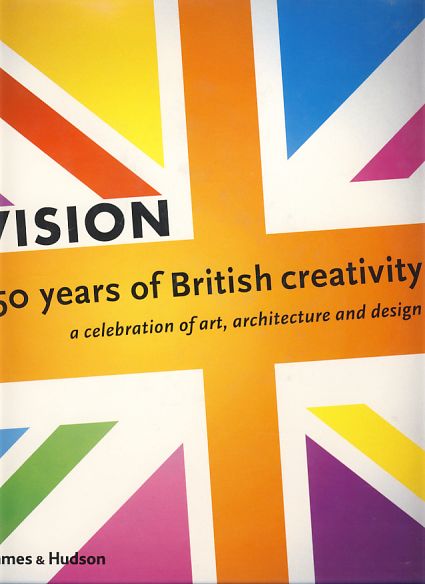
The second half of the twentieth century has seen British artists, architects, and designers assuming a central role on the world stage. Starting in the years of reconstruction after the war, the young began to challenge accepted artistic values, looking at popular culture for their inspiration; the iconoclasm of the Pop movement has continued to be one of the most vital ingredients of the British art scene. In the year-by-year record that this book provides, the work of newcomers making their first impact is seen alongside that of outstanding artists in their maturity, with connections and contradictions across the entire visual scene--from architecture, interior design, furniture, and the decorative arts to painting, sculpture, and graphic art. Pictures and text explore the many factors that contributed to the special character of British art. The unique system of artists teaching in art schools, the worlds of fashion and pop music, political and social developments: the response of the best artists to these influences has always been original and questioning and has opened new avenues for future development. The book is organized by decade, and the achievements of each are highlighted by statements from a distinguished group of artists, designers, collectors, and critics who have themselves made a significant contribution to each decade. Encouragement, challenge, and opposition have all provided stimulus for creative talents that have been able to override the changes of taste and fashion. The book features the work of more than 250 artists, from Henry Moore, David Hockney, Francis Bacon, and Lucian Freud to James Stirling, Richard Rogers, Neville Brody, and Damien Hirst. The publication is also a celebration of the first fifty years of Thames and Hudson--founded by Walter Neurath in 1949--and the role that the publishing house has played in educating the public and supporting the arts during this period.
Reviews
Despite Prince Charles' invective against contemporary British architecture, both applied and fine arts are well treated in this compendium of the U.K.'s best since 1949. In fact, it's safe to say that aesthetics reigns in merry new England; to the likes of painter David Hockney and sculptor Henry Moore are added fanciful, punk, and serious practitioners, from a Cecil Burton portrait photograph to the raucous "Spitting Images" lampoon cartoon TV program. The brief snippets of art history, beginning with the 1951 Festival of Britain in London, enhance the pages and pages of illustrations and examples, helping browsers and students alike understand that Britain, too, deserves its place in the art world's sun. An eye-opening introduction. Barbara Jacobs
This survey of the arts in Great Britain from 1949 through 1999 is organized as a yearly chronology, with a well-chosen sampling of painting, architecture, graphic and industrial art, and fashion design lavishly displayed throughout. The volume's contributing essayists include key personalities from the British contemporary art scene, most notably Nicholas Sertoa, the director of the Tate Gallery, and renowned painter David Hockney. As the text weaves its way through the striking layouts, Hockney's observation that "one forgets how small an art world is" rings true. The critics, teachers, artists, and others who contribute their insights to the text are obviously from this world's inner circle, and as such, their thought-provoking commentary tends to lack the perspective of an objective overview. Lacking also is a detailed index (an appendix with brief artists biographies doubles as an index to reproductions). Still, this is a handsomely produced and informative survey for larger public libraries as well as academic and art libraries.ADavid Soltesz, Cuyahoga Cty. P.L., Parma, OH
Copyright 1999 Reed Business Information, Inc.
"About this title" may belong to another edition of this title.