

Order Total (1 Item Items):
Shipping Destination:

1870s Engravings (1 results)
Skip to main search results
Search filters
Product Type
- All Product Types
- Books (1)
- Magazines & Periodicals (No further results match this refinement)
- Comics (No further results match this refinement)
- Sheet Music (No further results match this refinement)
- Art, Prints & Posters (No further results match this refinement)
- Photographs (No further results match this refinement)
- Maps (No further results match this refinement)
- Manuscripts & Paper Collectibles (No further results match this refinement)
Condition Learn more
- New (No further results match this refinement)
- As New, Fine or Near Fine (No further results match this refinement)
- Very Good or Good (No further results match this refinement)
- Fair or Poor (No further results match this refinement)
- As Described (1)
Binding
- All Bindings
- Hardcover (No further results match this refinement)
- Softcover (No further results match this refinement)
Collectible Attributes
- First Edition (No further results match this refinement)
- Signed (1)
- Dust Jacket (No further results match this refinement)
- Seller-Supplied Images (1)
- Not Print on Demand (1)
Language (1)
Price
- Any Price
- Under US$ 25 (No further results match this refinement)
- US$ 25 to US$ 50 (No further results match this refinement)
- Over US$ 50
Free Shipping
- Free Shipping to U.S.A. (No further results match this refinement)
Seller Location
Seller Rating
-
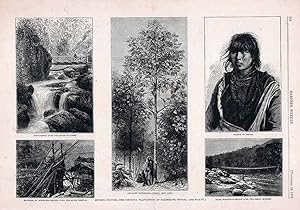
Quinine Culture - The Cinchona Plantations at Darjeeling, Bengal.
Published by Harper's Weekly. 23 November1872., New York., 1872
Seller: Asia Bookroom ANZAAB/ILAB, Canberra, ACT, Australia
Association Member: ANZAAB ILAB
Seller rating 5 out of 5 stars

Signed
Five engravings in three columns 23.5 x 10 cms; on a single newspaper leaf, 28.7 x 40.8 cm, unrelated text on the verso, lower margin creased with a small central tear affecting the caption (no loss), the image sin very good condition. Engravings from Harper's Weekly in November 1872, all centred on the quinine production in Darjeeling. Production began in the 1860s from seeds sent by the famed botanist Sir Joseph Dalton Hooker. Quinine proved indispensable to British rule in India and they invested heavily in plantations to sure up supply.The anti-malarial was vital for colonial expansion, "quinine coursed through the bloodstream of empire" (Townsend Middleton, "Becoming after: The Lives and Politics of Quinine?s Remains" in Cultural Anthropology, Vol. 36, Issue 2, pp. 282-311, 2014), although probably known more to the readers of Harper's Weekly as an essential for gin and tonic. The five engravings: Foot-Bridge over the River Rungbee Buttress of Suspension Bridge over the River Teestah Cinchona Succirubra Thirty Feet High (signed, but indecipherable) Native of Sikkim Cane Suspension Bridge over the Great Runjeet.
