Order Total (1 Item Items):
Shipping Destination:

After Durer (21 results)
Skip to main search results
Search filters
Product Type
- All Product Types
- Books (12)
- Magazines & Periodicals (No further results match this refinement)
- Comics (No further results match this refinement)
- Sheet Music (No further results match this refinement)
- Art, Prints & Posters (8)
- Photographs (No further results match this refinement)
- Maps (No further results match this refinement)
- Manuscripts & Paper Collectibles (1)
Condition Learn more
- New (No further results match this refinement)
- As New, Fine or Near Fine (4)
- Very Good or Good (8)
- Fair or Poor (No further results match this refinement)
- As Described (9)
Binding
- All Bindings
- Hardcover (8)
- Softcover (No further results match this refinement)
Collectible Attributes
- First Edition (5)
- Signed (No further results match this refinement)
- Dust Jacket (3)
- Seller-Supplied Images (15)
- Not Print on Demand (21)
Language (3)
Free Shipping
- Free Shipping to U.S.A. (No further results match this refinement)
Seller Location
Seller Rating
-

The Pope's Rhinoceros
Language: English
Published by Sinclair Stevenson / Reed International Books, London, 1996
ISBN 10: 1856194132 ISBN 13: 9781856194136
Seller: The Print Room, Cockernhoe nr Luton, United Kingdom
Seller rating 5 out of 5 stars

First Edition
US$ 11.00
US$ 33.38 shipping
Ships from United Kingdom to U.S.A.Quantity: 1 available
Add to basketHardcover. Condition: Near Fine. Dust Jacket Condition: Near Fine. Jacket after Albrecht Durer (illustrator). 1st Edition. First UK edition, first impression. Some slight edge wear to top and bottom of jacket and spine, spine very slightly faded, corners slightly bruised, not price clipped (£15.99), no inscriptions, contemporary magazine review tipped in, some faint dents to bottom back jacket, internally clean tight and square, overall a vg+ copy. 608pp. In February 1516, a Portuguese ship sank with the loss of all hands a mile off the coast of Italy. The Nostra Senora da Adjuda had sailed 14000 miles from the Indian kingdom Gujarat. Her mission, to deliver a rhinoceros to the Pope. 'The Pope's Rhinoceros' tells the stories which culminate in this bizarre incident. Ranging from the Baltic Sea to a flyblown colony in India, from a tribe hidden in the African rain forest to atrocities committed in an obscure town in Tuscany, Norfolk's brilliant novel holds up the true history of the rhinoceros as a mirror to the fantasies and obsessions of the Renaissance.
-
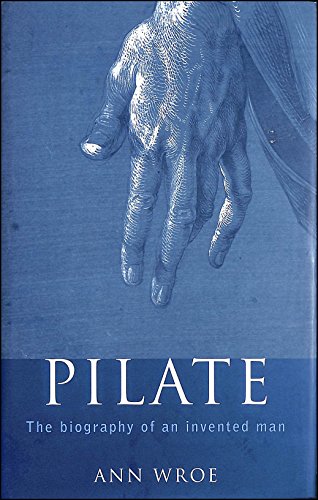
Pilate. The Biography of an Invented Man
Language: English
Published by Jonathan Cape / Random House, London, 1999
ISBN 10: 0224059424 ISBN 13: 9780224059428
Seller: The Print Room, Cockernhoe nr Luton, United Kingdom
Seller rating 5 out of 5 stars
First Edition
US$ 13.75
US$ 33.38 shipping
Ships from United Kingdom to U.S.A.Quantity: 1 available
Add to basketHardcover. Condition: Near Fine. Dust Jacket Condition: Near Fine. Jacket after Albrecht Durer (illustrator). 1st Edition. First edition, first impression with full number line. Some slight edge wear to top and bottom of jacket and spine, top corners slightly bruised, very slight lean, not price clipped (£17.99), no inscriptions, internally clean and tight, overall a vg+ copy. 381pp. The facts about Pontius Pilate are very few. We don't know when he was born or when he died. We know nothing of his career before he became Govenor of Judea, and nothing of what happened to him after he was recalled by Tiberius. Some say he came from Rome, others from Spain or Germany. Everyone, from the evangelists to the writers of the medieval mystery plays, has his own Pilate, each symbolic of something, each a projection of his own ideas and anxieties. This extraordinary book is all about our Pilates real half real and invented. Some are familiar, some surprising. They have depths and contrasts that are unexpected. They do remarkable things. Among these surprises, perhaps, are the glimpses we get of a man actually walking on a marble floor in Caesarea, feeling his shoes pinch, clicking his fingers for a slave, while the clouds of lasting infamy gather over his head.
-

At Hawthorn Time
Language: English
Published by Bloomsbury Publishing Plc, London, 2015
ISBN 10: 1408859041 ISBN 13: 9781408859049
Seller: The Print Room, Cockernhoe nr Luton, United Kingdom
Seller rating 5 out of 5 stars
First Edition
US$ 16.50
US$ 33.38 shipping
Ships from United Kingdom to U.S.A.Quantity: 1 available
Add to basketHardcover. Condition: Near Fine. Dust Jacket Condition: Near Fine. Jacket after Albrecht Durer (illustrator). 1st Edition. First edition, first impression. Some slight edge wear to top and bottom of jacket and spine, very slight lean, corners bruised, not price clipped (£16.99), no inscriptions, internally clean tight and almost square, overall a vg+ copy. 280pp. Four thirty on a May morning, the black fading to blue, dawn gathering somewhere below the tree line in the east. A long, straight road runs between sleeping fields to the little village of Lodeshill and on it two cars lie wrecked and ravished, violence gathered about them in the silent air. One wheel, upturned, still spins. Howard and Kitty have recently moved to Lodeshill after a life spent in London. Now, their marriage is wordlessly falling apart. Custom car enthusiast Jamie has lived in the village for all of his nineteen years and dreams of leaving it behind, while Jack, a vagrant farm worker and mystic in flight from a bail hostel, arrives in the village on foot one spring morning, bringing change. All four of them are struggling to find a life in the modern countryside, all are trying to find ways to belong. Building to an extraordinary climax over the course of one spring month 'At Hawthorn Time' is both a clear eyed picture of rural Britain, and a heartbreaking exploration of love, land and loss. A future classic.
-

Europe, The Struggle For Supremacy, 1453 to the Prsent
Language: English
Published by Allen Lane / The Penguin Group, London, 2013
ISBN 10: 0713994274 ISBN 13: 9780713994278
Seller: The Print Room, Cockernhoe nr Luton, United Kingdom
Seller rating 5 out of 5 stars
First Edition
US$ 48.13
US$ 33.38 shipping
Ships from United Kingdom to U.S.A.Quantity: 1 available
Add to basketHardcover. Condition: Near Fine. Cover art and endpapers after Albrecht Durer (illustrator). 1st Edition. First edition, first impression with '001' on copyright page. Illustrated boards, no jacket as issued. Some slight edge wear to top and bottom of covers and spine, price on back cover (£30.00), no inscriptions, internally clean tight and square, overall a vg++ copy. 690pp. At the heart of Europe's history lies a puzzle. In most of the world humankind has created enormous political frameworks, whether ancient (such as China) or modern (such as the United States). Sprawling empires, kingdoms or republics appear to be the norm. By contrast Europe has remained stubbornly chaotic and fractured into often amazingly tiny pieces, with each serious attempt to unify the continent (by Charles V, Napoleon and Hitler) thwarted. In this ambitious and exciting new book, Brendan Simms tells the story of Europe's constantly shifting geopolitics and the peculiar circumstances that have made it both so impossible to dominate, but also so dynamic and ferocious. It is the story of a group of highly competitive and mutually suspicious dynasties, but also of a continent uniquely prone to interference from 'semi detached' elements, such as Russia, the Ottoman Empire, Britain and (just as centrally to Simms' argument) the United States.
-

The Adoration of the Shepherds.
Published by 1953., 1953
Seller: Wittenborn Art Books, San Francisco, CA, U.S.A.
Seller rating 5 out of 5 stars
Manuscript / Paper Collectible
Condition: Good. Facsimile of the woodcut used as a Christmas card by Richard and Elizabeth Timken in 1953. 290 x 210 mm. Bartsch, 85.
-

THE BOOK OF COMMON PRAYER and Administration of the Sacraments and other Rites and Ceremonies of the Church according to the use of the United Church Of England And Ireland. Together with the Psalter or Psalms of David. Pointed as they are to be sung or said in Churches
Published by William Pickering, London, 1853
Seller: Thompson Rare Books - ABAC / ILAB, Hornby Island, BC, Canada
Seller rating 5 out of 5 stars
Octavo, bound in later 20th Century black half-morocco leather over red cloth boards, the spine with raised bands, lettered and ruled in the compartments, front & rear panels with ruled boarders in gilt, black endpapers, all edges gilt. Decorated title in red & black, verso with a portrait of Queen Elizabeth at prayer. Every page with decorated border illustrated with designs by Mary Byfield after Albert Durer, Hans Holbein, and others. Two ink names on a preliminary blank, one dated 1868, the other 1975; a very good clean copy, nice and attractive. A beautiful and sympathetic reprint of the 1569 prayer book Queen Elizabeth I.
-
Recueil de Lions, dessinez d'après nature par divers maitres. Par Bernard Picart. Divisé en six Livres chacun de six feuilles . First edition.
Published by Amsterdam: Bernard Picart and Paris : Chereau., 1729
Seller: Wittenborn Art Books, San Francisco, CA, U.S.A.
Seller rating 5 out of 5 stars
Condition: Good. Oblong 4to. 25.5 x 18.8cm. Contemporary marbled calf and gilt spine.[2], 6pp. Engraved title page followed by 42 engravings on 36 plates. Very good with unfoxed plates.OCLC Number / Unique Identifier:469747697; Nissen ZBI 3167; Brunet IV, 630; Nagler XII, 414, 123.
-
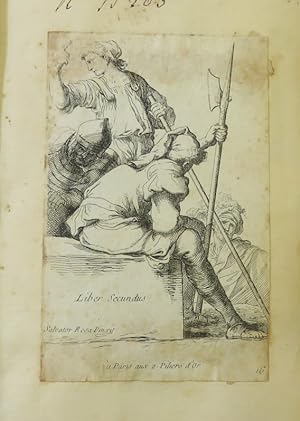
**Album of Early Engravings after Albrecht Durer, Salvator Rosa & Others
Published by Private, Italy, 1514
Seller: St Marys Books And Prints, Stamford, United Kingdom
Seller rating 4 out of 5 stars

First Edition
US$ 27,436.33
US$ 27.57 shipping
Ships from United Kingdom to U.S.A.Quantity: 1 available
Add to basketHard Back. After Durer (illustrator). 1st Edition. A stunning collection of 139 sixteenth century engravings and prints Beautifully bound in eighteenth century red morocco with elaborate gilt tooled borders to boards andnbspgilt inner dentelles Five raised bands to the spine black label band with gilt titles intricate gilt tooling Very minor loss to the titles bind minor rubbing to the extremities and some light marking to the boards but still presents very well overall gilt to the boards stillnbspnice and bright Marbled endpapers all edges gilt Small early Porkington library book plate to the front pastedown Plates mounted one per page starting with 24 after Salvator Rosa then 4 of Saints after Albrecht Durer The rest are mostly a combination of the Wierix Brothers Bodart Brueghel and Peter Hus among others most of which are hallmarked with initials The last 40 depict nuns in various costumenbspand have Latin text to the base These are numbered and appear to be from the same sourcenbspPlates generally in excellent condition most trimmed within platemark many biblical scenes with intricate detail Just slight water damage and minor foxing to a few pages predominantly the last few First page a little loose hinges starting in places but generally binding tight Two neat ink inscriptions light pencil annotations through out referencing the engravings Pencil to the page only never to the engravings An astonishing large collection of engravings from the sixteenth century including two of the best known engravers of the period very well preserved in a beautiful later period binding nbspnbspnbspnbspnbspnbspnbspnbspnbsp. book.
-

Self-Portrait of Albrecht Durer (1471-1528), from Imperiale e Reale Galleria di Firenze.
Published by Firenze: La Societa Editrice, circa 1841-1846., 1846
Seller: Wittenborn Art Books, San Francisco, CA, U.S.A.
Seller rating 5 out of 5 stars
Art / Print / Poster
Condition: Good. Stipple and line engraving. 49.5 x 34.4 cm. (sheet). Drystamp of the publisher. Very Good. Light foxing in the margin areas."Storia della pittura dal suo risorgimento in Italia, dimostrata coi monumenti della Reale Galleria di Firenze." OCLC no. 83041262.
-

Woodcut on wove paper, 20th century printing from the woodblocks in the Derschau collection, monogrammed S.K. and dated 1574 (the monogram has been identified as Sigmund Krumer by Nagler), image: 307 x 238 mm., sheet size 315 x 245 mm., in excellent condition, the collection mark W.v.D. (Wolfgang von Dallwitz, Lugt 2656) on the verso. Christ kneels before St. Peter, with St. John standing behind Christ holding a jug and cloth. A print with a curious history, as it is a contemporary copy by monogrammist S.K. of the ninth print from the Small Passion series of woodcuts by Dürer (ca. 1508-1509). Derschau is said to have discovered hundreds of original wood blocks by German masters in a trunk in Nuremberg. Rudolph Zacharias Becker was then tasked with publishing a collection of reprints of these blocks, titled "Holzschnitte alter deutscher Meister in den Original-Platten gesammelt von Hans Albrecht von Derschau" (1808). This was again published as "Holzschnitte alter Meister gedruckt von den Originalstöcken der Sammlung Derschau im besitz des Staatlichen Kupferstich-kabinetts zu Berlin" (Lepizig: E.A. Seeman, 1922) after the blocks entered the collection of the Kupferstichkabinett in the Staatliche Museen zu Berlin. Literature: Meder 134; Bartsch VII.199:25; Nagler V.22:122.
-

Print. Condition: Good. [Paris, 189-?]. Sheet size: 11 x 7 3/4"; image: 5 3/4 x 4 1/4". Printed on thin paper and mounted on page. From Gazette des beaux-arts.
-
2-Antique Master Prints-ENGRAVED-PASSION-1512-PAIR-Muller-Dürer-c.1600
Published by c.1600, 1600
Seller: Pictura Prints, Art & Books, Overasselt, Netherlands
Seller rating 5 out of 5 stars
Art / Print / Poster
After Albrecht Durer (illustrator). '1512 AD (ON BOTH PLATES, LOWER LEFT OR UPPER LEFT IN A TABLET BEARING DÜRER'S MONOGRAM).'Two prints after Durer: 1) Christ bound to a column and scourged by two Roman soldiers, others observing; 2) Christ carrying the cross, surrounded by soldiers and followed by mourners. Intricate detail and emotional expression, with Dürer's monogram copied in both.Made by Jan Harmensz. Muller after After Albrecht Durer.Medium: Engraving on hand laid (verge) paper.Sheet size: 11.5 x 16.5 cm (4.53 x 6.5 inch). Image size: 11.5 x 16.5 cm. (4.53 x 6.5 inch).JAN HARMENSZ MULLER DÜRER ENGRAVED PASSION FLAGELLATION CARRYING CROSS 1512 GERMAN RENAISSANCE RELIGIOUS | PCO-E30-21BACKGROUND INFORMATIONAfter plates from Durer's Engraved Passion (1512). Reverse copies by Jan Harmensz. Muller.Reference: Strauss, The Intaglio Prints of Albrecht Dürer (1976), p. 172.Biography engraver: Jan Harmensz. Muller (1571-1628) was a Dutch engraver and painter active in Amsterdam. He was known for masterfully reproducing works by Renaissance masters, especially Durer and Italian Mannerists.Biography artist: Albrecht Durer (1471-1528) was a German painter, printmaker, and theorist of the Renaissance. He is celebrated for his woodcuts and engravings, especially his religious cycles like the Passion series. Condition: fair, given age. Missing sections due to paper loss from rodents eating. Both prints show strong impressions. Toning and foxing present. Some damage to paper edges. Trimmed to image. General age-related toning and/or occasional minor defects from handling. Please study scan carefully.
-
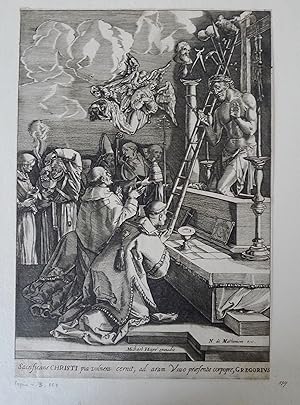
The Mass of St Gregory' sacrifices christi pia vulneracernit ad aram viuo praefentis corpore gregorius Etching by Nicolas DE MATHONIERE
Published by Michael Hayé, 1650
Art / Print / Poster
US$ 275.05
US$ 15.35 shipping
Ships from United Kingdom to U.S.A.Quantity: 1 available
Add to basketNo Binding. Condition: Very Good. Durer, Nicolas DE MATHONIERE, (illustrator). Published by Michael Hayé (Flemish 1630-1660) etching by Nicolas DE MATHONIERE after the wood engraving by Durer titled The mass of St Gregory, 1585. Printed in hand made paper and in good condition. The images shows the pope kneeling in front of an altar, on which Christ is appearing surrounded with the instruments of the Passion: a column, a scourge, hammer, and the Cross (with a ladder leaning against it); beyond are other religious figures, one holds a tiara, and an acolyte lifts the lid to a censor to release more incense smoke; The image is in reverse to the original by Durer. (Nicolas DE MATHONIERE is an artist born in the 17th century Sheet/image size 305 x 210mm (12 x 8.25 inches).
-

the large calvary
Published by 1496-1500, Nurnberg, 1496
Seller: Antiquariat Reinhold Berg eK Inh. R.Berg, Regensburg, Germany
Seller rating 5 out of 5 stars
Art / Print / Poster
Original woodcut, printed from four woodblocks on laid paper. 2nd state probaly around 1550 printed This is the so-called copy of the large calvary (Der große Berliner Kalvarienberg), a very rare and early woodcut, which is printed from four woodcut blocks. This much discussed large woodcut exists only in eight copies all in public institutions. The original version of it is only known in two copies: in Berlin (Kupferstichkabinett) and in London (British Library). With our example now eleven woodcuts of the large calvary are known. We have compared our copy with the example in the Berliner Kupferstichkabinett and learned that our example must be slightly earlier printed then the one in Berlin. This could be defined clearly by comparing the eruptions in the wood. But none of these 8 known copies do have as our copy an additional monogram: ?HS" in the lower right side. The monogram is either cut into the woodblock or was stamped into that gap. This monogram in our woodcut not mentioned in any bibliography or descriptive text about the large calvary. It is looking very similar to the monograms, which Hans Schäufelein was using, who did his apprenticeship in Dürer's worksshop. There is also a ?Hans Schwarz" known, the 2nd husband of Hans Schäufelein's widow. Many questions are still open on the authorship of the large calvary, maybe the work could also be attributed to Hans Schäufellein. The authorship and attribution to Albrecht Dürer and the dating of this woodcut is still uncertain, although the woodcut shows several Dürerian motifs, but many extraneous elements speak against an undivided authorship. The design of the woodcut can be dated to the time before Albrecht Dürer's first stay in Venice. Provenance: The woodcut was acquired in the mid 1980's and it was kept in a private collection. The woodcut was backed on thick paper. This was lately perfect removed and we discovered now an old collector's stamp on the reverse in the lower left corner. The laid paper does not show any watermark. We were also able to identify the collector's stamp and can thus close a small gap in the origin story of the woodcut. Lugt 1008 (H. FÜSSLI & Cie, oder FALKEISEN & HUBER.) Meder p. 159, copy 2nd state; Schoch/Mende/Scherbaum A 7, copy 2nd state. Verso lower left corner with old collector' mark: Falkeisen & Huber (Lugt 1008). Printed from four woodblocks, a small paper loss at the tip of the lower right corner, a short tear at the left margin of the sheet. Paper slightly darkened and sporadically with small inconspicuous brown spots, otherwise in good condition. 58.7 x 39,6 cm (23 x 15,5 inches).
-

WITH A BORDER BEARING THE INSCRIPTION "VERBUM DOMINI MANET IN ETERNUM."
Published by ca. 1540, Germany, 1540
Seller: Phillip J. Pirages Rare Books (ABAA), McMinnville, OR, U.S.A.
Seller rating 3 out of 5 stars

183 x 133 mm. (7 1/8 x 5 1/4"). WITH A FULL-PAGE MINIATURE DEPICTING THE HARROWING OF HELL, featuring a naked Adam and Eve on the left, and on the right Christ bending down to rescue John the Baptist, the figures framed by a stone archway supporting a hairy creature who aims the point of a spear directly at Adam and Eve, the miniature in a thin brown frame with gilt lines, surrounded on two sides by the words "VERBUM DOMINI MANET IN ETERNUM" in gilt, all framed in gray and red washes with double rules of black and gilt. Light soiling to frame, a little flaking to the gray border and a couple of small scuffs and smudges elsewhere, verso with spotting, but the miniature vibrant and well preserved with only very trivial imperfections. A close copy of an early 16th century engraving by Albrecht Dürer, this powerful miniature depicting the Harrowing of Hell is an intriguing artifact that ties together manuscript art, print culture, and the Reformation. The image depicts an apocryphal tale in the Gospel of Nicodemus in which Christ, following his death but before his Resurrection, descends into Limbo in order to save righteous souls who had passed away before him (particularly figures from the Old Testament). Christ appears here in pale pink robes carrying a long staff with a cross and banner adorning the top. Having just brought down the gates of Hell, he stoops to rescue John the Baptist (here dressed in furs) from its depths. A naked Adam and Eve, covering their loins, stand at the left of the composition--Adam now a gray-bearded old man as a reflection of sin and mortality, but Eve still as she was at the Expulsion, in keeping with the period's inclination to retain the classically idealized youthful feminine form. Above them is a stone arch upon which a dog-like demon perches stealthily, aiming a spear directly at the oblivious couple. Another demon snaps its jaws at the feet of Christ, and we can see a lick of flames below the broken gate as more captive souls clamor to escape. The painting is skillfully done, showing the artist's facility with anatomy, proportion, and foreshortening. The bodies of Adam and Eve are particularly excellent, with lovely skin tones and convincing molding. The composition is clearly based on an engraving by Dürer published in 1513 as part of a major series of 16 images known as the "Engraved Passion." In translating a black & white print into a full-color painting, the artist here dispensed with a few details seen in Dürer's work, such as the shadowy figure behind Adam and Eve, and the stigmata on Christ's hand; however, the overall composition deviates little from the original, suggesting that the artist may have been working from an actual engraving. Although this leaf contains just a few words in the form of a border inscription--"Verbum Domini manet eternum" ("the Word of the Lord endures forever")--they are monumentally important. This line from Isaiah 40:8 and 1 Peter 1:25 became the motto of the Lutheran Reformation, appearing on art, clothing, coins, and even armor of the 16th century. The Schmalkaldic League, an influential group of allied Lutheran principalities in the Holy Roman Empire at the time, also adopted it as their motto. Given the dominance of print materials during the Reformation period, our hand-painted miniature--possibly produced as a frontispiece--must have been a very special commission. It is also an object that is prime for further study, touching on aspects of book production, religious art, and the transmission of images and ideas in the early modern period.
-
![Seller image for Finely executed carved ivory relief portrait of German humanist and public official Ulrich Varnbüler [1474-1545], based on a 1522 woodcut portrait by Albrecht Dürer. for sale by D & E LAKE LTD. (ABAC/ILAB)](https://pictures.abebooks.com/inventory/md/md31276111003.jpg)
Finely executed carved ivory relief portrait of German humanist and public official Ulrich Varnbüler [1474-1545], based on a 1522 woodcut portrait by Albrecht Dürer.
Published by [cGermany: c16th-17th century].
Seller: D & E LAKE LTD. (ABAC/ILAB), Toronto, ON, Canada
Seller rating 3 out of 5 stars
No Binding. Condition: Very Good. 6 3/4 x 3 3/4 inches (size of plaque). 10 x 7 ½ inches (size with frame). mounted in an antique wooden frame c1840 on a pine backing board (a number of minor surface blemishes, crack of not more than ½ inch in top near centre & 2 small cracks of not more than ½ inch in hat). The subject, Ulrich Varnbüler [1474-1545], was a German humanist and public official. In 1521 he was appointed chancellor to the Reichsregiment [1521-30] which was to exercise imperial powers in Germany in the absence of Charles V. With the Reichsregiment he first resided in Nuremberg where his friend Albrecht Dürer sketched his portrait for a woodcut which was executed in 1522 and upon which this ivory is based. The text in the cartouche of the woodcut reads in translation: "Through this picture, Albrecht Dürer from Nuremberg would like to recognize Ulrich, the secretary and chief clerk of the Roman imperial government, with the surname Varnbüler, whom he loves immensely." Varnbüler was also friends with Erasmus and translated into German the latter s adage Dulce bellum inexpertis (Basel: 1519). Varnbüler was instrumental in obtaining in the name of the emperor protective privilege against pirated editions for works published by Johan Froben and Andreas Cratander. A number of works were dedicated to him by Cratander, Willibald Pirckheimer and Peter (II) Schöffer. See P.G.Bietenholz, Contemporaries of Erasmus , 1987, Vol. III p. 377.
-

"Albertus Mi Di Sa Sanc. Romanae." - Albrecht van Brandenburg (1490-1545) Markgraf Hohenzollern Erzbischof v. Magdeburg Portrait
Language: German
Published by 17. / 18. Jh.
Seller: Antiquariat Steffen Völkel GmbH, Seubersdorf, Germany
Seller rating 5 out of 5 stars
Art / Print / Poster
Maße: ca. 17 x 13 cm. -- Kupferstich-Portrait. Auf Trägerpapiermontiert. Seltener Kupferstich nach Albrecht Dürer. -- im Außenrand etwas fleckig, sonst gut erhalten. || Copper engraved portrait from the 18th century. Mounted on paper. Rare engraving after Albrecht Dürer -- with some staining on the outer margin, otherwise in very good condition. // Wir, das Antiquariat Steffen Völkel, kaufen und verkaufen alte Bücher, Handschriften, Zeichnungen, Autographen, Grafiken und Fotografien. Wir sind stets am Ankauf von kompletten Bibliotheken, Sammlungen und Nachlässen interessiert. Sprache: Deutsch Gewicht in Gramm: 10.
-
![Seller image for [Antique print, etching] Lion standing [set title: Receuil de Lions, series A]/Staande leeuw, published 1729. for sale by Antiquariaat Arine van der Steur / ILAB](https://pictures.abebooks.com/inventory/md/md30824111002.jpg)
[Antique print, etching] Lion standing [set title: Receuil de Lions, series A]/Staande leeuw, published 1729.
Seller: Antiquariaat Arine van der Steur / ILAB, Den Haag, Netherlands
Seller rating 4 out of 5 stars
Plate belonging to part A of the series 'Recueil de lions', showing a landscape with a lion standing, turned to the right. Carries Dürer's monogram AD at the top right. At the bottom inscribed: 'Albert Duur del. B. Picart sculp.'Lettered at the bottom left: 'A.' Numbered at the bottom right: '2.'Printed in Amsterdam, 1729; Print also used as a book illustration in Recueil de lions, dessinez d'après nature par divers maitres. Amsterdam: Bernard Picart, 1729. Etching on paper with small margins; platemark: 121 x 177 mm, total: 131 x 187 mm; traces of previous mounting on the verso, light foxing at the paper's edges, very nice impression. Les peintres français du XVIIIe siècle : histoire des vies et catalogue, Louis Dimier, vol. 1, p. 393, cat.nr. 903-946.
-
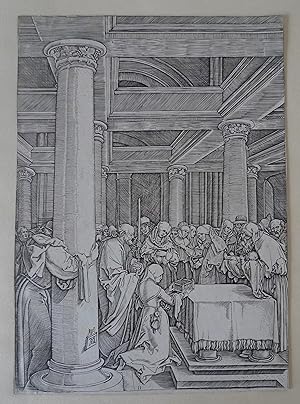
The presentation in the Temple (Die Darstellung im Tempel, from The Life of the Virgin
Publication Date: 1840
Art / Print / Poster
US$ 137.53
US$ 15.35 shipping
Ships from United Kingdom to U.S.A.Quantity: 1 available
Add to basketNo Binding. Condition: Very Good. Durer, (illustrator). In original paper mount with title and price in pencil in margin of mount. The engraving is from the series The Life of the Virgin engraved by Durer.The sheet is stuck at all four corners making it difficult to check the paper from the verso. I believe the paper is manmade, therefore after 1820 and the engraving a reproduced copy or a later restrike. Pin holes in all four corners, each corner glued onto backing, else good. Sheet/image size 291 x 208mm (11.5 x 8.25 inches).
-
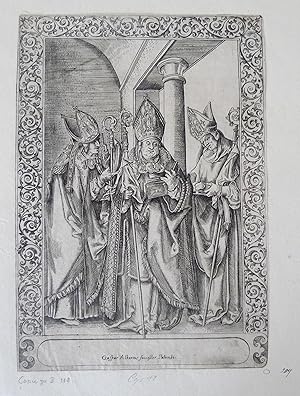
St. Nicholas, Ulrich and Erasmus (Gafpar Albertus Successor Palumnis) Copper Engraving
Publication Date: 1700
Art / Print / Poster
US$ 275.05
US$ 15.35 shipping
Ships from United Kingdom to U.S.A.Quantity: 1 available
Add to basketNo Binding. Condition: Very Good. Durer (illustrator). Copper engraving after the wood engraving by Durer of the same title. Printed on handmade paper not dated but circa 1700 by the surround cartouche. Trimmed at margins, The sheet is stuck at all four corners with glue onto a thick Victorian wove type paper, probably from a Victorian collectors scrap book. No text on verso, else in very good condition Size 259 x180mm (10.25 x 7 inches).
-
Engraved at the age of 14 (as inscribed in the stone in the foreground) by Johannes Wierix after Dürer. On the plate on the right the date and the monogram of the German master:'1520 / AD' l Engraving on paper, trimmed to platemark; total: 145 x 100 mm; state II/2; Hollstein 989; MH 749; Alvin 628.