

Order Total (1 Item Items):
Shipping Destination:

After Robert Adam (34 results)
Skip to main search results
Search filters
Product Type
- All Product Types
- Books (1)
- Magazines & Periodicals (No further results match this refinement)
- Comics (No further results match this refinement)
- Sheet Music (No further results match this refinement)
- Art, Prints & Posters (33)
- Photographs (No further results match this refinement)
- Maps (No further results match this refinement)
- Manuscripts & Paper Collectibles (No further results match this refinement)
Condition Learn more
- New (No further results match this refinement)
- As New, Fine or Near Fine (No further results match this refinement)
- Very Good or Good (4)
- Fair or Poor (No further results match this refinement)
- As Described (30)
Binding
- All Bindings
- Hardcover (1)
- Softcover (No further results match this refinement)
Collectible Attributes
- First Edition (No further results match this refinement)
- Signed (1)
- Dust Jacket (No further results match this refinement)
- Seller-Supplied Images (34)
- Not Print on Demand (34)
Language (1)
Free Shipping
- Free Shipping to U.S.A. (No further results match this refinement)
Seller Location
Seller Rating
-
The seats of the Nobility and Gentry : in Great Britain and Wales in a collection of select views, engraved by W. Angus. From pictures and drawings by the most eminent artists. With descriptions of each view. Second edition.
Published by Islington, [London],: Published by W. Angus, Gwynne's Buildings, Feby. 1 [1815], 1787
Seller: Wittenborn Art Books, San Francisco, CA, U.S.A.
Seller rating 5 out of 5 stars

Condition: Good. 4to. 26.2 x 25 cm.Contemporary straight-grain morocco blind-stamped decorative gilt border, extremities rubbed. 64 leaves, LXIII leaves of plates : ill. .,.additional engraved title and 63 engraved views by Angus after Sandby, Turner, Nattes & others, each with explanatory leaf of text, spotting and foxing throughout,.OCLC Number / Unique Identifier:22224907.Engraved title page.First issued 1787-[1797] with 48 plates. Reissued in 1815 with an additional 15 plates; these 63 plates are dated 1787-1815Some leaves have printing on verso.
-

Elevation of the North End of Luton Park House. Elevation of the South End of Luton Park House
Published by London, 1774
Seller: Donald A. Heald Rare Books (ABAA), New York, NY, U.S.A.
Seller rating 5 out of 5 stars
Art / Print / Poster
Engraving, by T. Vivares. (Neat repairs to two small marginal tears). A fine engraving of two of the exterior elevations of Luton Park House, a project undertaken by Robert Adam in about 1764. Robert and his brother James Adam forever changed the face of British architecture by introducing innovative Classical design ideas. From 1754-57, Robert lived in Italy where he had a long productive friendship with Piranesi, which was inspirational for both men. Adam's first book, on Diocletian's palace in Dalmatia, is clearly very like the archaeological investigations Piranesi was making at the same time of similar ruins. Piranesi's friendship and passion for Roman Classicism were seminal influences on Adam, and the greatest single factor, other than his own talent, in the work Adam produced on his return to England. Upon his return, the brothers launched their career by building the Adelphi from the Thames to the Strand in London, which although not a commercial success at the time, included one of London's most cherished buildings, the Adlephi Theatre. Together, the Adam brothers designed and built some of the most famous buildings in England, including such bastions of English architecture as Kenwood House, Keddlestone Manor, and Syon House. To the interiors of their English country houses, the Adams brought wonderful ornamental elements in niches, lunettes, festoons and reliefs. Their classically designed buildings were so numerous in London that they changed the prevailing feel of the city and established their brand of neo-Classicism as the model of elegance and importance. It is asserted that the brothers originated the concept of the uniform facade attached to the typical English row house, an architectural device that distinguishes London buildings. This monumental contribution is evidenced in the Adams' designs for Portland Place and Fitzroy Square, and these were used as architectural models for the whole city. The brothers brought their talents into other areas by designing furniture to complement their beautiful interiors and by creating and publishing a treatise of design entitled 'Works in Architecture'. The work was published in three volumes over an extended span of time, beginning in 1773, with the final volume being published posthumously in 1822. Cf. Brunet I.47; cf. Lowndes I, p.8; DNB; Wilton-Ely, The Mind and Art of Giovanni Battista Piranesi.
-

The Library At Kenwood, Hampstead. Design of the Chimney for the Library or great Room.
Published by London, UK: Roberts., 1774
Seller: Wittenborn Art Books, San Francisco, CA, U.S.A.
Seller rating 4 out of 5 stars

Art / Print / Poster
Condition: Good. 13.75" x 12" Very Good. Engraving. Mounted on mat board.This engraving depicts the interior of Kenwood House, in Hampstead, London, which was re-modelled in 1761 - 1773.
-

Elevation of the North End of Suton Park House / Elevation of the South End of Suton Park House
Published by London, 1775
Seller: Donald A. Heald Rare Books (ABAA), New York, NY, U.S.A.
Seller rating 5 out of 5 stars
Art / Print / Poster
Engraving by T. Vivares. In excellent condition. An elegant elevation of the north and southe sides of Sutton Park, in North Yorkshire, the seat of the Earl of Bute. Robert and his brother James Adam forever changed the face of British architecture by introducing innovative Classical design ideas. From 1754-57, Robert lived in Italy where he had a long productive friendship with Piranesi, which was inspirational for both men. Adam's first book, on Diocletian's palace in Dalmatia, is clearly very like the archaeological investigations Piranesi was making at the same time of similar ruins. Piranesi's friendship and passion for Roman Classicism were seminal influences on Adam, and the greatest single factor, other than his own talent, in the work Adam produced on his return to England. Upon his return, the brothers launched their career by building the Adelphi from the Thames to the Strand in London, which although not a commercial success at the time, included one of London's most cherished buildings, the Adelphi Theatre. Together, the Adam brothers designed and built some of the most famous buildings in England, including such bastions of English architecture as Kenwood House, Keddlestone Manor, and Syon House. To the interiors of their English country houses, the Adams brought wonderful ornamental elements in niches, lunettes, festoons and reliefs. Their classically designed buildings were so numerous in London that they changed the prevailing feel of the city and established their brand of neo-Classicism as the model of elegance and importance. It is asserted that the brothers originated the concept of the uniform facade attached to the typical English row house, an architectural device that distinguishes London buildings. This monumental contribution is evidenced in the Adams' designs for Portland Place and Fitzroy Square, and these were used as architectural models for the whole city. The brothers brought their talents into other areas by designing furniture to complement their beautiful interiors and by creating and publishing a treatise of design entitled 'Works in Architecture'. The work was published in three volumes over an extended span of time, beginning in 1773, with the final volume being published posthumously in 1822. Cf. Brunet I.47; cf. Lowndes I, p.8; DNB; Wilton-Ely, The Mind and Art of Giovanni Battista Piranesi.
-

Two Chimney-pieces in the First and Second Withdrawing-rooms, with Glass Frames over them
Published by London, 1775
Seller: Donald A. Heald Rare Books (ABAA), New York, NY, U.S.A.
Seller rating 5 out of 5 stars
Art / Print / Poster
Engraving by Joshua Record. In excellent condition. An elegant engraving showing the two chimneys in Lord Derby's house in Grosvenor Square, London. Robert and his brother James Adam forever changed the face of British architecture by introducing innovative Classical design ideas. From 1754-57, Robert lived in Italy where he had a long productive friendship with Piranesi, which was inspirational for both men. Adam's first book, on Diocletian's palace in Dalmatia, is clearly very like the archaeological investigations Piranesi was making at the same time of similar ruins. Piranesi's friendship and passion for Roman Classicism were seminal influences on Adam, and the greatest single factor, other than his own talent, in the work Adam produced on his return to England. Upon his return, the brothers launched their career by building the Adelphi from the Thames to the Strand in London, which although not a commercial success at the time, included one of London's most cherished buildings, the Adlephi Theatre. Together, the Adam brothers designed and built some of the most famous buildings in England, including such bastions of English architecture as Kenwood House, Keddlestone Manor, and Syon House. To the interiors of their English country houses, the Adams brought wonderful ornamental elements in niches, lunettes, festoons and reliefs. Their classically designed buildings were so numerous in London that they changed the prevailing feel of the city and established their brand of neo-Classicism as the model of elegance and importance. It is asserted that the brothers originated the concept of the uniform facade attached to the typical English row house, an architectural device that distinguishes London buildings. This monumental contribution is evidenced in the Adams' designs for Portland Place and Fitzroy Square, and these were used as architectural models for the whole city. The brothers brought their talents into other areas by designing furniture to complement their beautiful interiors and by creating and publishing a treatise of design entitled 'Works in Architecture'. The work was published in three volumes over an extended span of time, beginning in 1773, with the final volume being published posthumously in 1822. Cf. Brunet I.47; cf. Lowndes I, p.8;DNB; Wilton-Ely, The Mind and Art of Giovanni Battista Piranesi.
-

Various Furnishings, Including Decorative Clocks, an Ornamental Knocker, and Two Hanging Lights
Published by London, 1775
Seller: Donald A. Heald Rare Books (ABAA), New York, NY, U.S.A.
Seller rating 5 out of 5 stars
Art / Print / Poster
Engraving by P. Begbie. In excellent condition with the exception of being trimmed just outside the platemark on the left margin. An elegant engraving depicting various furnishings designed by Robert and James Adam, including decorative clocks, an ornamental knocker and two elaborate hanging lights. Robert and his brother James Adam forever changed the face of British architecture by introducing innovative Classical design ideas. From 1754-57, Robert lived in Italy where he had a long productive friendship with Piranesi, which was inspirational for both men. Adam's first book, on Diocletian's palace in Dalmatia, is clearly very like the archaeological investigations Piranesi was making at the same time of similar ruins. Piranesi's friendship and passion for Roman Classicism were seminal influences on Adam, and the greatest single factor, other than his own talent, in the work Adam produced on his return to England. Upon his return, the brothers launched their career by building the Adelphi from the Thames to the Strand in London, which although not a commercial success at the time, included one of London's most cherished buildings, the Adlephi Theatre. Together, the Adam brothers designed and built some of the most famous buildings in England, including such bastions of English architecture as Kenwood House, Keddlestone Manor, and Syon House. To the interiors of their English country houses, the Adams brought wonderful ornamental elements in niches, lunettes, festoons and reliefs. Their classically designed buildings were so numerous in London that they changed the prevailing feel of the city and established their brand of neo-Classicism as the model of elegance and importance. It is asserted that the brothers originated the concept of the uniform facade attached to the typical English row house, an architectural device that distinguishes London buildings. This monumental contribution is evidenced in the Adams' designs for Portland Place and Fitzroy Square, and these were used as architectural models for the whole city. The brothers brought their talents into other areas by designing furniture to complement their beautiful interiors and by creating and publishing a treatise of design entitled 'Works in Architecture'. The work was published in three volumes over an extended span of time, beginning in 1773, with the final volume being published posthumously in 1822. Cf. Brunet I.47; cf. Lowndes I, p.8; DNB; Wilton-Ely, The Mind and Art of Giovanni Battista Piranesi.
-

Elevation and Plans of the Gateway and Porter's Lodge of Ashburnham House in Dover Street
Published by London, 1778
Seller: Donald A. Heald Rare Books (ABAA), New York, NY, U.S.A.
Seller rating 5 out of 5 stars
Art / Print / Poster
Copper engraving. Engraved by Robert Blyth. In excellent condition. An elegant engraving of the gateway and porters lodge at Ashburnham House on Dover Street in London. Robert and his brother James Adam forever changed the face of British architecture by introducing innovative Classical design ideas. From 1754-57, Robert lived in Italy where he had a long productive friendship with Piranesi, which was inspirational for both men. Adam's first book, on Diocletian's palace in Dalmatia, is clearly very like the archaeological investigations Piranesi was making at the same time of similar ruins. Piranesi's friendship and passion for Roman Classicism were seminal influences on Adam, and the greatest single factor, other than his own talent, in the work Adam produced on his return to England. Upon his return, the brothers launched their career by building the Adelphi from the Thames to the Strand in London, which although not a commercial success at the time, included one of London's most cherished buildings, the Adlephi Theatre. Together, the Adam brothers designed and built some of the most famous buildings in England, including such bastions of English architecture as Kenwood House, Keddlestone Manor, and Syon House. To the interiors of their English country houses, the Adams brought wonderful ornamental elements in niches, lunettes, festoons and reliefs. Their classically designed buildings were so numerous in London that they changed the prevailing feel of the city and established their brand of neo-Classicism as the model of elegance and importance. It is asserted that the brothers originated the concept of the uniform facade attached to the typical English row house, an architectural device that distinguishes London buildings. This monumental contribution is evidenced in the Adams' designs for Portland Place and Fitzroy Square, and these were used as architectural models for the whole city. The brothers brought their talents into other areas by designing furniture to complement their beautiful interiors and by creating and publishing a treatise of design entitled 'Works in Architecture'. The work was published in three volumes over an extended span of time, beginning in 1773, with the final volume being published posthumously in 1822. Cf. Brunet I.47; cf. Lowndes I, p.8; DNB; Wilton-Ely, The Mind and Art of Giovanni Battista Piranesi.
-

Ceiling of the Music Room
Published by London, 1777
Seller: Donald A. Heald Rare Books (ABAA), New York, NY, U.S.A.
Seller rating 5 out of 5 stars
Art / Print / Poster
Copper engraving. Engraved by T. Morris. In excellent condition with the exception of a small area of foxing in the sheet. An elegant engraving of the elaborate ceiling in the music room of Sir Watkin Williams Wynn's celebrated house in St. James' Square, London. Robert and his brother James Adam forever changed the face of British architecture by introducing innovative Classical design ideas. From 1754-57, Robert lived in Italy where he had a long productive friendship with Piranesi, which was inspirational for both men. Adam's first book, on Diocletian's palace in Dalmatia, is clearly very like the archaeological investigations Piranesi was making at the same time of similar ruins. Piranesi's friendship and passion for Roman Classicism were seminal influences on Adam, and the greatest single factor, other than his own talent, in the work Adam produced on his return to England. Upon his return, the brothers launched their career by building the Adelphi from the Thames to the Strand in London, which although not a commercial success at the time, included one of London's most cherished buildings, the Adlephi Theatre. Together, the Adam brothers designed and built some of the most famous buildings in England, including such bastions of English architecture as Kenwood House, Keddlestone Manor, and Syon House. To the interiors of their English country houses, the Adams brought wonderful ornamental elements in niches, lunettes, festoons and reliefs. Their classically designed buildings were so numerous in London that they changed the prevailing feel of the city and established their brand of neo-Classicism as the model of elegance and importance. It is asserted that the brothers originated the concept of the uniform facade attached to the typical English row house, an architectural device that distinguishes London buildings. This monumental contribution is evidenced in the Adams' designs for Portland Place and Fitzroy Square, and these were used as architectural models for the whole city. The brothers brought their talents into other areas by designing furniture to complement their beautiful interiors and by creating and publishing a treatise of design entitled 'Works in Architecture'. The work was published in three volumes over an extended span of time, beginning in 1773, with the final volume being published posthumously in 1822. Cf. Brunet I.47; cf. Lowndes I, p.8; DNB; Wilton-Ely, The Mind and Art of Giovanni Battista Piranesi.
-
Two Chimney-pieces in the Great Withdrawing-room and the Countess of Derby's Dressing-room
Published by London, 1777
Seller: Donald A. Heald Rare Books (ABAA), New York, NY, U.S.A.
Seller rating 5 out of 5 stars
Art / Print / Poster
Engraving by J. Zucchi. In excellent condition. An elegant engraving depicting two chimneys in Lord Derby's celebrated house in Grosvenor Square, London. Robert and his brother James Adam forever changed the face of British architecture by introducing innovative Classical design ideas. From 1754-57, Robert lived in Italy where he had a long productive friendship with Piranesi, which was inspirational for both men. Adam's first book, on Diocletian's palace in Dalmatia, is clearly very like the archaeological investigations Piranesi was making at the same time of similar ruins. Piranesi's friendship and passion for Roman Classicism were seminal influences on Adam, and the greatest single factor, other than his own talent, in the work Adam produced on his return to England. Upon his return, the brothers launched their career by building the Adelphi from the Thames to the Strand in London, which although not a commercial success at the time, included one of London's most cherished buildings, the Adlephi Theatre. Together, the Adam brothers designed and built some of the most famous buildings in England, including such bastions of English architecture as Kenwood House, Keddlestone Manor, and Syon House. To the interiors of their English country houses, the Adams brought wonderful ornamental elements in niches, lunettes, festoons and reliefs. Their classically designed buildings were so numerous in London that they changed the prevailing feel of the city and established their brand of neo-Classicism as the model of elegance and importance. It is asserted that the brothers originated the concept of the uniform facade attached to the typical English row house, an architectural device that distinguishes London buildings. This monumental contribution is evidenced in the Adams' designs for Portland Place and Fitzroy Square, and these were used as architectural models for the whole city. The brothers brought their talents into other areas by designing furniture to complement their beautiful interiors and by creating and publishing a treatise of design entitled 'Works in Architecture'. The work was published in three volumes over an extended span of time, beginning in 1773, with the final volume being published posthumously in 1822. Cf. Brunet I.47; cf. Lowndes I, p.8; DNB; Wilton-Ely, The Mind and Art of Giovanni Battista Piranesi.
-
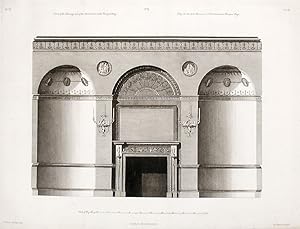
Section of the Chimneyside of the Antichamber in the Principal Story
Published by London, 1775
Seller: Donald A. Heald Rare Books (ABAA), New York, NY, U.S.A.
Seller rating 5 out of 5 stars
Art / Print / Poster
Engraving by Joshua Record. In excellent condition. An elegant engraving showing the chimney in the anteroom of Lord Derby's house in Grosvenor Square, London. Robert and his brother James Adam forever changed the face of British architecture by introducing innovative Classical design ideas. From 1754-57, Robert lived in Italy where he had a long productive friendship with Piranesi, which was inspirational for both men. Adam's first book, on Diocletian's palace in Dalmatia, is clearly very like the archaeological investigations Piranesi was making at the same time of similar ruins. Piranesi's friendship and passion for Roman Classicism were seminal influences on Adam, and the greatest single factor, other than his own talent, in the work Adam produced on his return to England. Upon his return, the brothers launched their career by building the Adelphi from the Thames to the Strand in London, which although not a commercial success at the time, included one of London's most cherished buildings, the Adelphi Theatre. Together, the Adam brothers designed and built some of the most famous buildings in England, including such bastions of English architecture as Kenwood House, Keddlestone Manor, and Syon House. To the interiors of their English country houses, the Adams brought wonderful ornamental elements in niches, lunettes, festoons and reliefs. Their classically designed buildings were so numerous in London that they changed the prevailing feel of the city and established their brand of neo-Classicism as the model of elegance and importance. It is asserted that the brothers originated the concept of the uniform facade attached to the typical English row house, an architectural device that distinguishes London buildings. This monumental contribution is evidenced in the Adams' designs for Portland Place and Fitzroy Square, and these were used as architectural models for the whole city. The brothers brought their talents into other areas by designing furniture to complement their beautiful interiors and by creating and publishing a treatise of design entitled 'Works in Architecture'. The work was published in three volumes over an extended span of time, beginning in 1773, with the final volume being published posthumously in 1822. Cf. Brunet I.47; cf. Lowndes I, p.8; DNB; Wilton-Ely, The Mind and Art of Giovanni Battista Piranesi.
-
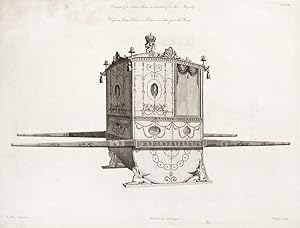
Design of a Sedan Chair as executed for Her Majesty
Published by London, 1775
Seller: Donald A. Heald Rare Books (ABAA), New York, NY, U.S.A.
Seller rating 5 out of 5 stars
Art / Print / Poster
Engraving by P. Begbie. In excellent condition with the exception of some paper discolouration on the upper margin. A fine engraving of the sedan chair designed for Queen Charlotte. Robert and his brother James Adam forever changed the face of British architecture by introducing innovative Classical design ideas. From 1754-57, Robert lived in Italy where he had a long productive friendship with Piranesi, which was inspirational for both men. Adam's first book, on Diocletian's palace in Dalmatia, is clearly very like the archaeological investigations Piranesi was making at the same time of similar ruins. Piranesi's friendship and passion for Roman Classicism were seminal influences on Adam, and the greatest single factor, other than his own talent, in the work Adam produced on his return to England. Upon his return, the brothers launched their career by building the Adelphi from the Thames to the Strand in London, which although not a commercial success at the time, included one of London's most cherished buildings, the Adlephi Theatre. Together, the Adam brothers designed and built some of the most famous buildings in England, including such bastions of English architecture as Kenwood House, Keddlestone Manor, and Syon House. To the interiors of their English country houses, the Adams brought wonderful ornamental elements in niches, lunettes, festoons and reliefs. Their classically designed buildings were so numerous in London that they changed the prevailing feel of the city and established their brand of neo-Classicism as the model of elegance and importance. It is asserted that the brothers originated the concept of the uniform facade attached to the typical English row house, an architectural device that distinguishes London buildings. This monumental contribution is evidenced in the Adams' designs for Portland Place and Fitzroy Square, and these were used as architectural models for the whole city. The brothers brought their talents into other areas by designing furniture to complement their beautiful interiors and by creating and publishing a treatise of design entitled 'Works in Architecture'. The work was published in three volumes over an extended span of time, beginning in 1773, with the final volume being published posthumously in 1822. Cf. Brunet I.47; cf. Lowndes I, p.8; DNB; Wilton-Ely, The Mind and Art of Giovanni Battista Piranesi.
-
![Seller image for Section of one End of the Hall, next to the great Apartment [and] Section of one End of the Hall, next to the private Apartment for sale by Donald A. Heald Rare Books (ABAA)](https://pictures.abebooks.com/inventory/md/md31967065273.jpg)
Section of one End of the Hall, next to the great Apartment [and] Section of one End of the Hall, next to the private Apartment
Published by [London, 1779
Seller: Donald A. Heald Rare Books (ABAA), New York, NY, U.S.A.
Seller rating 5 out of 5 stars
Art / Print / Poster
Engraving by T. White. A fine engraving of a grand hallway at Syon House from Robert Adam's seminal work on British architecture. Robert and his brother James Adam forever changed the face of British architecture by introducing innovative Classical design ideas. From 1754-57, Robert lived in Italy where he had a long productive friendship with Piranesi, which was inspirational for both men. Adam's first book, on Diocletian's palace in Dalmatia, is clearly very like the archaeological investigations Piranesi was making at the same time of similar ruins. Piranesi's friendship and passion for Roman Classicism were seminal influences on Adam, and the greatest single factor, other than his own talent, in the work Adam produced on his return to England. Upon his return, the brothers launched their career by building the Adelphi from the Thames to the Strand in London, which although not a commercial success at the time, included one of London's most cherished buildings, the Adlephi Theatre. Together, the Adam brothers designed and built some of the most famous buildings in England, including such bastions of English architecture as Kenwood House, Keddlestone Manor, and Syon House. To the interiors of their English country houses, the Adams brought wonderful ornamental elements in niches, lunettes, festoons and reliefs. Their classically designed buildings were so numerous in London that they changed the prevailing feel of the city and established their brand of neo-Classicism as the model of elegance and importance. It is asserted that the brothers originated the concept of the uniform facade attached to the typical English row house, an architectural device that distinguishes London buildings. This monumental contribution is evidenced in the Adams' designs for Portland Place and Fitzroy Square, and these were used as architectural models for the whole city. The brothers brought their talents into other areas by designing furniture to complement their beautiful interiors and by creating and publishing a treatise of design entitled 'Works in Architecture'. The work was published in three volumes over an extended span of time, beginning in 1773, with the final volume being published posthumously in 1822. Cf. Brunet I.47; cf. Lowndes I, p.8; DNB; Wilton-Ely, The Mind and Art of Giovanni Battista Piranesi.
-

Design of a Ceiling, in the Etruscan Taste, Executed in the Countess of Derby's Dressing Room
Published by [London], 1777
Seller: Donald A. Heald Rare Books (ABAA), New York, NY, U.S.A.
Seller rating 5 out of 5 stars
Art / Print / Poster
Copper engraving. Engraved by B. Pastorini. In excellent condition. An elegant engraving depicting the beautiful ceiling design in the countess of Derby's dressing room in her celebrated house in Grosvenor Square, London. Robert and his brother James Adam forever changed the face of British architecture by introducing innovative Classical design ideas. From 1754-57, Robert lived in Italy where he had a long productive friendship with Piranesi, which was inspirational for both men. Adam's first book, on Diocletian's palace in Dalmatia, is clearly very like the archaeological investigations Piranesi was making at the same time of similar ruins. Piranesi's friendship and passion for Roman Classicism were seminal influences on Adam, and the greatest single factor, other than his own talent, in the work Adam produced on his return to England. Upon his return, the brothers launched their career by building the Adelphi from the Thames to the Strand in London, which although not a commercial success at the time, included one of London's most cherished buildings, the Adlephi Theatre. Together, the Adam brothers designed and built some of the most famous buildings in England, including such bastions of English architecture as Kenwood House, Keddlestone Manor, and Syon House. To the interiors of their English country houses, the Adams brought wonderful ornamental elements in niches, lunettes, festoons and reliefs. Their classically designed buildings were so numerous in London that they changed the prevailing feel of the city and established their brand of neo-Classicism as the model of elegance and importance. It is asserted that the brothers originated the concept of the uniform facade attached to the typical English row house, an architectural device that distinguishes London buildings. This monumental contribution is evidenced in the Adams' designs for Portland Place and Fitzroy Square, and these were used as architectural models for the whole city. The brothers brought their talents into other areas by designing furniture to complement their beautiful interiors and by creating and publishing a treatise of design entitled 'Works in Architecture'. The work was published in three volumes over an extended span of time, beginning in 1773, with the final volume being published posthumously in 1822. Cf. Brunet I.47; cf. Lowndes I, p.8; DNB; Wilton-Ely, The Mind and Art of Giovanni Battista Piranesi.
-

Section of one of the sides of the Great Room, or Library at Kenwood
Published by London, 1774
Seller: Donald A. Heald Rare Books (ABAA), New York, NY, U.S.A.
Seller rating 5 out of 5 stars
Art / Print / Poster
Engraving, by J. Zucchi. A fine architectural engraving of the interior of Kenwood House, in Hampstead, London, re-modelled in 1761-1773, and now home to the Iveagh Bequest picture collection. Robert and his brother James Adam forever changed the face of British architecture by introducing innovative Classical design ideas. From 1754-57, Robert lived in Italy where he had a long productive friendship with Piranesi, which was inspirational for both men. Adam's first book, on Diocletian's palace in Dalmatia, is clearly very like the archaeological investigations Piranesi was making at the same time of similar ruins. Piranesi's friendship and passion for Roman Classicism were seminal influences on Adam, and the greatest single factor, other than his own talent, in the work Adam produced on his return to England. Upon his return, the brothers launched their career by building the Adelphi from the Thames to the Strand in London, which although not a commercial success at the time, included one of London's most cherished buildings, the Adelphi Theatre. Together, the Adam brothers designed and built some of the most famous buildings in England, including such bastions of English architecture as Kenwood House, Keddlestone Manor, and Syon House. To the interiors of their English country houses, the Adams brought wonderful ornamental elements in niches, lunettes, festoons and reliefs. Their classically designed buildings were so numerous in London that they changed the prevailing feel of the city and established their brand of neo-Classicism as the model of elegance and importance. It is asserted that the brothers originated the concept of the uniform facade attached to the typical English row house, an architectural device that distinguishes London buildings. This monumental contribution is evidenced in the Adams' designs for Portland Place and Fitzroy Square, and these were used as architectural models for the whole city. The brothers brought their talents into other areas by designing furniture to complement their beautiful interiors and by creating and publishing a treatise of design entitled 'Works in Architecture'. The work was published in three volumes over an extended span of time, beginning in 1773, with the final volume being published posthumously in 1822. Cf. Brunet I.47; cf. Lowndes I, p.8; DNB; Wilton-Ely, The Mind and Art of Giovanni Battista Piranesi.
-

Various Furnishings, Including Decorative Clocks, an Ornamental Knocker, and Two Hanging Lights
Published by London, 1775
Seller: Donald A. Heald Rare Books (ABAA), New York, NY, U.S.A.
Seller rating 5 out of 5 stars
Art / Print / Poster
Engraving by P. Begbie. In excellent condition with the exception of being trimmed just outside the platemark on the left margin. An elegant engraving depicting various furnishings designed by Robert and James Adam, including decorative clocks, an ornamental knocker and two elaborate hanging lights. Robert and his brother James Adam forever changed the face of British architecture by introducing innovative Classical design ideas. From 1754-57, Robert lived in Italy where he had a long productive friendship with Piranesi, which was inspirational for both men. Adam's first book, on Diocletian's palace in Dalmatia, is clearly very like the archaeological investigations Piranesi was making at the same time of similar ruins. Piranesi's friendship and passion for Roman Classicism were seminal influences on Adam, and the greatest single factor, other than his own talent, in the work Adam produced on his return to England. Upon his return, the brothers launched their career by building the Adelphi from the Thames to the Strand in London, which although not a commercial success at the time, included one of London's most cherished buildings, the Adlephi Theatre. Together, the Adam brothers designed and built some of the most famous buildings in England, including such bastions of English architecture as Kenwood House, Keddlestone Manor, and Syon House. To the interiors of their English country houses, the Adams brought wonderful ornamental elements in niches, lunettes, festoons and reliefs. Their classically designed buildings were so numerous in London that they changed the prevailing feel of the city and established their brand of neo-Classicism as the model of elegance and importance. It is asserted that the brothers originated the concept of the uniform facade attached to the typical English row house, an architectural device that distinguishes London buildings. This monumental contribution is evidenced in the Adams' designs for Portland Place and Fitzroy Square, and these were used as architectural models for the whole city. The brothers brought their talents into other areas by designing furniture to complement their beautiful interiors and by creating and publishing a treatise of design entitled 'Works in Architecture'. The work was published in three volumes over an extended span of time, beginning in 1773, with the final volume being published posthumously in 1822. Cf. Brunet I.47; cf. Lowndes I, p.8; DNB; Wilton-Ely, The Mind and Art of Giovanni Battista Piranesi.
-
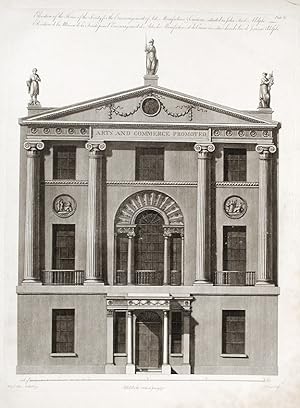
Elevation of the House of the Society for the Encouragement of Arts, Manufacturers & Commerce, Situated in John Street, Adelphi
Published by London, 1775
Seller: Donald A. Heald Rare Books (ABAA), New York, NY, U.S.A.
Seller rating 5 out of 5 stars
Art / Print / Poster
Engraving by T. Vivares. In excellent condition with the exception of some paper discolouration in the bottom right corner of the sheet. A fine architectural engraving of a part of the vast Adelphi development in London; the largest project undertaken by the Adam brothers. Robert and his brother James Adam forever changed the face of British architecture by introducing innovative Classical design ideas. From 1754-57, Robert lived in Italy where he had a long productive friendship with Piranesi, which was inspirational for both men. Adam's first book, on Diocletian's palace in Dalmatia, is clearly very like the archaeological investigations Piranesi was making at the same time of similar ruins. Piranesi's friendship and passion for Roman Classicism were seminal influences on Adam, and the greatest single factor, other than his own talent, in the work Adam produced on his return to England. Upon his return, the brothers launched their career by building the Adelphi from the Thames to the Strand in London, which although not a commercial success at the time, included one of London's most cherished buildings, the Adelphi Theatre. Together, the Adam brothers designed and built some of the most famous buildings in England, including such bastions of English architecture as Kenwood House, Keddlestone Manor, and Syon House. To the interiors of their English country houses, the Adams brought wonderful ornamental elements in niches, lunettes, festoons and reliefs. Their classically designed buildings were so numerous in London that they changed the prevailing feel of the city and established their brand of neo-Classicism as the model of elegance and importance. It is asserted that the brothers originated the concept of the uniform facade attached to the typical English row house, an architectural device that distinguishes London buildings. This monumental contribution is evidenced in the Adams' designs for Portland Place and Fitzroy Square, and these were used as architectural models for the whole city. The brothers brought their talents into other areas by designing furniture to complement their beautiful interiors and by creating and publishing a treatise of design entitled 'Works in Architecture'. The work was published in three volumes over an extended span of time, beginning in 1773, with the final volume being published posthumously in 1822. Cf. Brunet I.47; cf. Lowndes I, p.8; DNB; Wilton-Ely, The Mind and Art of Giovanni Battista Piranesi.
-

Chimneypiece and Table in the Hall of Shelburne House
Published by London, 1778
Seller: Donald A. Heald Rare Books (ABAA), New York, NY, U.S.A.
Seller rating 5 out of 5 stars
Art / Print / Poster
Copper engraving. Engraved by Caldwell. In excellent condition with the exception of a waterstain in middle of sheet. Left margin is trimmed just outside platemark. An elegant engraving of a fireplace and table at Shelburne House in Berkeley Square, in London. Robert and his brother James Adam forever changed the face of British architecture by introducing innovative Classical design ideas. From 1754-57, Robert lived in Italy where he had a long productive friendship with Piranesi, which was inspirational for both men. Adam's first book, on Diocletian's palace in Dalmatia, is clearly very like the archaeological investigations Piranesi was making at the same time of similar ruins. Piranesi's friendship and passion for Roman Classicism were seminal influences on Adam, and the greatest single factor, other than his own talent, in the work Adam produced on his return to England. Upon his return, the brothers launched their career by building the Adelphi from the Thames to the Strand in London, which although not a commercial success at the time, included one of London's most cherished buildings, the Adlephi Theatre. Together, the Adam brothers designed and built some of the most famous buildings in England, including such bastions of English architecture as Kenwood House, Keddlestone Manor, and Syon House. To the interiors of their English country houses, the Adams brought wonderful ornamental elements in niches, lunettes, festoons and reliefs. Their classically designed buildings were so numerous in London that they changed the prevailing feel of the city and established their brand of neo-Classicism as the model of elegance and importance. It is asserted that the brothers originated the concept of the uniform facade attached to the typical English row house, an architectural device that distinguishes London buildings. This monumental contribution is evidenced in the Adams' designs for Portland Place and Fitzroy Square, and these were used as architectural models for the whole city. The brothers brought their talents into other areas by designing furniture to complement their beautiful interiors and by creating and publishing a treatise of design entitled 'Works in Architecture'. The work was published in three volumes over an extended span of time, beginning in 1773, with the final volume being published posthumously in 1822. Cf. Brunet I.47; cf. Lowndes I, p.8; DNB; Wilton-Ely, The Mind and Art of Giovanni Battista Piranesi.
-

Section of Two Sides of the Porter's Hall
Published by London, 1778
Seller: Donald A. Heald Rare Books (ABAA), New York, NY, U.S.A.
Seller rating 5 out of 5 stars
Art / Print / Poster
Copper engraving. Engraved by P. Mazell. In excellent condition. An elegant engraving the Porter's Lodge at Shelburne House in Berkeley Square, in London. Robert and his brother James Adam forever changed the face of British architecture by introducing innovative Classical design ideas. From 1754-57, Robert lived in Italy where he had a long productive friendship with Piranesi, which was inspirational for both men. Adam's first book, on Diocletian's palace in Dalmatia, is clearly very like the archaeological investigations Piranesi was making at the same time of similar ruins. Piranesi's friendship and passion for Roman Classicism were seminal influences on Adam, and the greatest single factor, other than his own talent, in the work Adam produced on his return to England. Upon his return, the brothers launched their career by building the Adelphi from the Thames to the Strand in London, which although not a commercial success at the time, included one of London's most cherished buildings, the Adlephi Theatre. Together, the Adam brothers designed and built some of the most famous buildings in England, including such bastions of English architecture as Kenwood House, Keddlestone Manor, and Syon House. To the interiors of their English country houses, the Adams brought wonderful ornamental elements in niches, lunettes, festoons and reliefs. Their classically designed buildings were so numerous in London that they changed the prevailing feel of the city and established their brand of neo-Classicism as the model of elegance and importance. It is asserted that the brothers originated the concept of the uniform facade attached to the typical English row house, an architectural device that distinguishes London buildings. This monumental contribution is evidenced in the Adams' designs for Portland Place and Fitzroy Square, and these were used as architectural models for the whole city. The brothers brought their talents into other areas by designing furniture to complement their beautiful interiors and by creating and publishing a treatise of design entitled 'Works in Architecture'. The work was published in three volumes over an extended span of time, beginning in 1773, with the final volume being published posthumously in 1822. Cf. Brunet I.47; cf. Lowndes I, p.8; DNB; Wilton-Ely, The Mind and Art of Giovanni Battista Piranesi.
-

Designs for the Chimney Piece and Curtain Cornice at Sutton Park
Published by London, 1775
Seller: Donald A. Heald Rare Books (ABAA), New York, NY, U.S.A.
Seller rating 5 out of 5 stars
Art / Print / Poster
Engraving by B. Pastorini. In excellent condition. An elegant engraving showing the decorations of the chimney piece and curtain cornices at Sutton Park House, in North Yorkshire. Robert and his brother James Adam forever changed the face of British architecture by introducing innovative Classical design ideas. From 1754-57, Robert lived in Italy where he had a long productive friendship with Piranesi, which was inspirational for both men. Adam's first book, on Diocletian's palace in Dalmatia, is clearly very like the archaeological investigations Piranesi was making at the same time of similar ruins. Piranesi's friendship and passion for Roman Classicism were seminal influences on Adam, and the greatest single factor, other than his own talent, in the work Adam produced on his return to England. Upon his return, the brothers launched their career by building the Adelphi from the Thames to the Strand in London, which although not a commercial success at the time, included one of London's most cherished buildings, the Adlephi Theatre. Together, the Adam brothers designed and built some of the most famous buildings in England, including such bastions of English architecture as Kenwood House, Keddlestone Manor, and Syon House. To the interiors of their English country houses, the Adams brought wonderful ornamental elements in niches, lunettes, festoons and reliefs. Their classically designed buildings were so numerous in London that they changed the prevailing feel of the city and established their brand of neo-Classicism as the model of elegance and importance. It is asserted that the brothers originated the concept of the uniform facade attached to the typical English row house, an architectural device that distinguishes London buildings. This monumental contribution is evidenced in the Adams' designs for Portland Place and Fitzroy Square, and these were used as architectural models for the whole city. The brothers brought their talents into other areas by designing furniture to complement their beautiful interiors and by creating and publishing a treatise of design entitled 'Works in Architecture'. The work was published in three volumes over an extended span of time, beginning in 1773, with the final volume being published posthumously in 1822. Cf. Brunet I.47; cf. Lowndes I, p.8; DNB; Wilton-Ely, The Mind and Art of Giovanni Battista Piranesi.
-

Design of a Chimney Piece executed in the Great Saloon of the Queens House / A Chimney Piece Designed for one of the Rooms in St. James's Palace
Published by London, 1775
Seller: Donald A. Heald Rare Books (ABAA), New York, NY, U.S.A.
Seller rating 5 out of 5 stars
Art / Print / Poster
Engraving by D. Cunego. In excellent condition with the exception of being trimmed just outside the platemark on left margin. Some paper discolouration on left margin and 1" loss lower left corner. A fine engraving of the fireplaces at St. James's Palace and the Queen's House in London. Robert and his brother James Adam forever changed the face of British architecture by introducing innovative Classical design ideas. From 1754-57, Robert lived in Italy where he had a long productive friendship with Piranesi, which was inspirational for both men. Adam's first book, on Diocletian's palace in Dalmatia, is clearly very like the archaeological investigations Piranesi was making at the same time of similar ruins. Piranesi's friendship and passion for Roman Classicism were seminal influences on Adam, and the greatest single factor, other than his own talent, in the work Adam produced on his return to England. Upon his return, the brothers launched their career by building the Adelphi from the Thames to the Strand in London, which although not a commercial success at the time, included one of London's most cherished buildings, the Adlephi Theatre. Together, the Adam brothers designed and built some of the most famous buildings in England, including such bastions of English architecture as Kenwood House, Keddlestone Manor, and Syon House. To the interiors of their English country houses, the Adams brought wonderful ornamental elements in niches, lunettes, festoons and reliefs. Their classically designed buildings were so numerous in London that they changed the prevailing feel of the city and established their brand of neo-Classicism as the model of elegance and importance. It is asserted that the brothers originated the concept of the uniform facade attached to the typical English row house, an architectural device that distinguishes London buildings. This monumental contribution is evidenced in the Adams' designs for Portland Place and Fitzroy Square, and these were used as architectural models for the whole city. The brothers brought their talents into other areas by designing furniture to complement their beautiful interiors and by creating and publishing a treatise of design entitled 'Works in Architecture'. The work was published in three volumes over an extended span of time, beginning in 1773, with the final volume being published posthumously in 1822. Cf. Brunet I.47; cf. Lowndes I, p.8; DNB; Wilton-Ely, The Mind and Art of Giovanni Battista Piranesi.
-

Section Of One Of The Sides Of The Great Room, Or Library At Kenwood.
Published by London, UK: Zucchi., 1774
Seller: Wittenborn Art Books, San Francisco, CA, U.S.A.
Seller rating 5 out of 5 stars
Art / Print / Poster
Condition: Good. 18.5" x 15" Very Good. Architectural engraving. This engraving depicts the interior of Kenwood House, in Hampstead, London, which was re-modelled in 1761 - 1773.
-

Design for Pier Glass.
Published by London, 1775
Seller: Donald A. Heald Rare Books (ABAA), New York, NY, U.S.A.
Seller rating 5 out of 5 stars
Art / Print / Poster
Engraving by P. Begbie. In excellent condition with the exception of two tears on right margin. A fine architectural engraving of ornate mirrors and tables from Robert Adam's seminal work on British architecture. Robert and his brother James Adam forever changed the face of British architecture by introducing innovative Classical design ideas. From 1754-57, Robert lived in Italy where he had a long productive friendship with Piranesi, which was inspirational for both men. Adam's first book, on Diocletian's palace in Dalmatia, is clearly very like the archaeological investigations Piranesi was making at the same time of similar ruins. Piranesi's friendship and passion for Roman Classicism were seminal influences on Adam, and the greatest single factor, other than his own talent, in the work Adam produced on his return to England. Upon his return, the brothers launched their career by building the Adelphi from the Thames to the Strand in London, which although not a commercial success at the time, included one of London's most cherished buildings, the Adlephi Theatre. Together, the Adam brothers designed and built some of the most famous buildings in England, including such bastions of English architecture as Kenwood House, Keddlestone Manor, and Syon House. To the interiors of their English country houses, the Adams brought wonderful ornamental elements in niches, lunettes, festoons and reliefs. Their classically designed buildings were so numerous in London that they changed the prevailing feel of the city and established their brand of neo-Classicism as the model of elegance and importance. It is asserted that the brothers originated the concept of the uniform facade attached to the typical English row house, an architectural device that distinguishes London buildings. This monumental contribution is evidenced in the Adams' designs for Portland Place and Fitzroy Square, and these were used as architectural models for the whole city. The brothers brought their talents into other areas by designing furniture to complement their beautiful interiors and by creating and publishing a treatise of design entitled 'Works in Architecture'. The work was published in three volumes over an extended span of time, beginning in 1773, with the final volume being published posthumously in 1822. Cf. Brunet I.47; cf. Lowndes I, p.8; DNB; Wilton-Ely, The Mind and Art of Giovanni Battista Piranesi.
-

Elevation of the North Front of Kenwood, towards the Court. Elevation of the South Front of Kenwood, towards the Gardens
Published by London, 1775
Seller: Donald A. Heald Rare Books (ABAA), New York, NY, U.S.A.
Seller rating 5 out of 5 stars
Art / Print / Poster
Engraving by T. Miller. In excellent condition with the exception of a water stain at the bottom of the sheet. Top left corner of sheet is missing. A fine architectural engraving of Kenwood House, in Hampstead, London, re-modelled in 1761-1773, and now home to the Iveagh Bequest picture collection. Robert and his brother James Adam forever changed the face of British architecture by introducing innovative Classical design ideas. From 1754-57, Robert lived in Italy where he had a long productive friendship with Piranesi, which was inspirational for both men. Adam's first book, on Diocletian's palace in Dalmatia, is clearly very like the archaeological investigations Piranesi was making at the same time of similar ruins. Piranesi's friendship and passion for Roman Classicism were seminal influences on Adam, and the greatest single factor, other than his own talent, in the work Adam produced on his return to England. Upon his return, the brothers launched their career by building the Adelphi from the Thames to the Strand in London, which although not a commercial success at the time, included one of London's most cherished buildings, the Adlephi Theatre. Together, the Adam brothers designed and built some of the most famous buildings in England, including such bastions of English architecture as Kenwood House, Keddlestone Manor, and Syon House. To the interiors of their English country houses, the Adams brought wonderful ornamental elements in niches, lunettes, festoons and reliefs. Their classically designed buildings were so numerous in London that they changed the prevailing feel of the city and established their brand of neo-Classicism as the model of elegance and importance. It is asserted that the brothers originated the concept of the uniform facade attached to the typical English row house, an architectural device that distinguishes London buildings. This monumental contribution is evidenced in the Adams' designs for Portland Place and Fitzroy Square, and these were used as architectural models for the whole city. The brothers brought their talents into other areas by designing furniture to complement their beautiful interiors and by creating and publishing a treatise of design entitled 'Works in Architecture'. The work was published in three volumes over an extended span of time, beginning in 1773, with the final volume being published posthumously in 1822. Cf. Brunet I.47; cf. Lowndes I, p.8; DNB; Wilton-Ely, The Mind and Art of Giovanni Battista Piranesi.
-

Miscellaneous Designs of Various Pieces of Furniture, done for Different Persons, which are here Introduced in Order to Give More Utility and Diversity to the Work, and Contains as Follows
Published by London, 1775
Seller: Donald A. Heald Rare Books (ABAA), New York, NY, U.S.A.
Seller rating 5 out of 5 stars
Art / Print / Poster
Engraving by B. Pastorini. In excellent condition. A fine engraving of various pieces of ornate furniture, from Robert Adam's seminal work on British architecture. Robert and his brother James Adam forever changed the face of British architecture by introducing innovative Classical design ideas. From 1754-57, Robert lived in Italy where he had a long productive friendship with Piranesi, which was inspirational for both men. Adam's first book, on Diocletian's palace in Dalmatia, is clearly very like the archaeological investigations Piranesi was making at the same time of similar ruins. Piranesi's friendship and passion for Roman Classicism were seminal influences on Adam, and the greatest single factor, other than his own talent, in the work Adam produced on his return to England. Upon his return, the brothers launched their career by building the Adelphi from the Thames to the Strand in London, which although not a commercial success at the time, included one of London's most cherished buildings, the Adlephi Theatre. Together, the Adam brothers designed and built some of the most famous buildings in England, including such bastions of English architecture as Kenwood House, Keddlestone Manor, and Syon House. To the interiors of their English country houses, the Adams brought wonderful ornamental elements in niches, lunettes, festoons and reliefs. Their classically designed buildings were so numerous in London that they changed the prevailing feel of the city and established their brand of neo-Classicism as the model of elegance and importance. It is asserted that the brothers originated the concept of the uniform facade attached to the typical English row house, an architectural device that distinguishes London buildings. This monumental contribution is evidenced in the Adams' designs for Portland Place and Fitzroy Square, and these were used as architectural models for the whole city. The brothers brought their talents into other areas by designing furniture to complement their beautiful interiors and by creating and publishing a treatise of design entitled 'Works in Architecture'. The work was published in three volumes over an extended span of time, beginning in 1773, with the final volume being published posthumously in 1822. Cf. Brunet I.47; cf. Lowndes I, p.8; DNB; Wilton-Ely, The Mind and Art of Giovanni Battista Piranesi.
-

Elevation of a House at Whitehall Restore as a Board Room for the Paymaster General & Commissioners of Chelsea Hospital & Office for Invalids
Published by London, 1775
Seller: Donald A. Heald Rare Books (ABAA), New York, NY, U.S.A.
Seller rating 5 out of 5 stars
Art / Print / Poster
Engraving by R. Blyth. In excellent condition, except for mild discolouration lower left. An elegant engraving showing the facade of a house in Whitehall, used as the offices for Chelsea Hospital. Robert and his brother James Adam forever changed the face of British architecture by introducing innovative Classical design ideas. From 1754-57, Robert lived in Italy where he had a long productive friendship with Piranesi, which was inspirational for both men. Adam's first book, on Diocletian's palace in Dalmatia, is clearly very like the archaeological investigations Piranesi was making at the same time of similar ruins. Piranesi's friendship and passion for Roman Classicism were seminal influences on Adam, and the greatest single factor, other than his own talent, in the work Adam produced on his return to England. Upon his return, the brothers launched their career by building the Adelphi from the Thames to the Strand in London, which although not a commercial success at the time, included one of London's most cherished buildings, the Adlephi Theatre. Together, the Adam brothers designed and built some of the most famous buildings in England, including such bastions of English architecture as Kenwood House, Keddlestone Manor, and Syon House. To the interiors of their English country houses, the Adams brought wonderful ornamental elements in niches, lunettes, festoons and reliefs. Their classically designed buildings were so numerous in London that they changed the prevailing feel of the city and established their brand of neo-Classicism as the model of elegance and importance. It is asserted that the brothers originated the concept of the uniform facade attached to the typical English row house, an architectural device that distinguishes London buildings. This monumental contribution is evidenced in the Adams' designs for Portland Place and Fitzroy Square, and these were used as architectural models for the whole city. The brothers brought their talents into other areas by designing furniture to complement their beautiful interiors and by creating and publishing a treatise of design entitled 'Works in Architecture'. The work was published in three volumes over an extended span of time, beginning in 1773, with the final volume being published posthumously in 1822. Cf. Brunet I.47; cf. Lowndes I, p.8; DNB; Wilton-Ely, The Mind and Art of Giovanni Battista Piranesi.
-
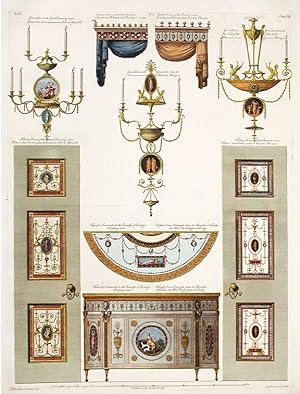
Contains some of the Parts at large of the Finishing and Furniture of the Earl of Derby's House
Published by London, 1777
Seller: Donald A. Heald Rare Books (ABAA), New York, NY, U.S.A.
Seller rating 5 out of 5 stars
Art / Print / Poster
Copper engraving with original hand colouring. Engraved by B. Pastorini. An elegant engraving depicting a collection of ornate furniture in the Earl of Derby's celebrated house in Grosvenor Square, London. Robert and his brother James Adam forever changed the face of British architecture by introducing innovative Classical design ideas. From 1754-57, Robert lived in Italy where he had a long productive friendship with Piranesi, which was inspirational for both men. Adam's first book, on Diocletian's palace in Dalmatia, is clearly very like the archaeological investigations Piranesi was making at the same time of similar ruins. Piranesi's friendship and passion for Roman Classicism were seminal influences on Adam, and the greatest single factor, other than his own talent, in the work Adam produced on his return to England. Upon his return, the brothers launched their career by building the Adelphi from the Thames to the Strand in London, which although not a commercial success at the time, included one of London's most cherished buildings, the Adelphi Theatre. Together, the Adam brothers designed and built some of the most famous buildings in England, including such bastions of English architecture as Kenwood House, Keddlestone Manor, and Syon House. To the interiors of their English country houses, the Adams brought wonderful ornamental elements in niches, lunettes, festoons and reliefs. Their classically designed buildings were so numerous in London that they changed the prevailing feel of the city and established their brand of neo-Classicism as the model of elegance and importance. It is asserted that the brothers originated the concept of the uniform facade attached to the typical English row house, an architectural device that distinguishes London buildings. This monumental contribution is evidenced in the Adams' designs for Portland Place and Fitzroy Square, and these were used as architectural models for the whole city. The brothers brought their talents into other areas by designing furniture to complement their beautiful interiors and by creating and publishing a treatise of design entitled 'Works in Architecture'. The work was published in three volumes over an extended span of time, beginning in 1773, with the final volume being published posthumously in 1822. Cf. Brunet I.47; cf. Lowndes I, p.8; DNB; Wilton-Ely, The Mind and Art of Giovanni Battista Piranesi.
-
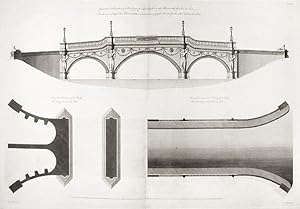
Geometrical elevation of a Bridge to be built over the River in the Garden at Sion. Plan of the Foundations of the Bridge. Plan of the Carriage and Footways of the Bridge
Published by London, 1775
Seller: Donald A. Heald Rare Books (ABAA), New York, NY, U.S.A.
Seller rating 5 out of 5 stars
Art / Print / Poster
Engraving by T. Miller. In excellent condition with the exception of some very faint off-setting. A fine engraving of a proposed bridge over the river at Sion House in London. Robert and his brother James Adam forever changed the face of British architecture by introducing innovative Classical design ideas. From 1754-57, Robert lived in Italy where he had a long productive friendship with Piranesi, which was inspirational for both men. Adam's first book, on Diocletian's palace in Dalmatia, is clearly very like the archaeological investigations Piranesi was making at the same time of similar ruins. Piranesi's friendship and passion for Roman Classicism were seminal influences on Adam, and the greatest single factor, other than his own talent, in the work Adam produced on his return to England. Upon his return, the brothers launched their career by building the Adelphi from the Thames to the Strand in London, which although not a commercial success at the time, included one of London's most cherished buildings, the Adlephi Theatre. Together, the Adam brothers designed and built some of the most famous buildings in England, including such bastions of English architecture as Kenwood House, Keddlestone Manor, and Syon House. To the interiors of their English country houses, the Adams brought wonderful ornamental elements in niches, lunettes, festoons and reliefs. Their classically designed buildings were so numerous in London that they changed the prevailing feel of the city and established their brand of neo-Classicism as the model of elegance and importance. It is asserted that the brothers originated the concept of the uniform facade attached to the typical English row house, an architectural device that distinguishes London buildings. This monumental contribution is evidenced in the Adams' designs for Portland Place and Fitzroy Square, and these were used as architectural models for the whole city. The brothers brought their talents into other areas by designing furniture to complement their beautiful interiors and by creating and publishing a treatise of design entitled 'Works in Architecture'. The work was published in three volumes over an extended span of time, beginning in 1773, with the final volume being published posthumously in 1822. Cf. Brunet I.47; cf. Lowndes I, p.8; DNB; Wilton-Ely, The Mind and Art of Giovanni Battista Piranesi.
-
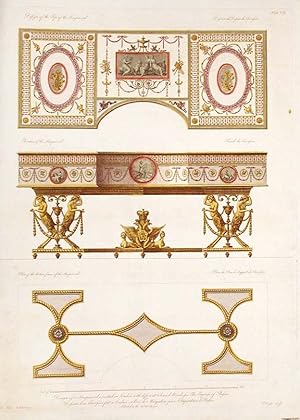
Design of a Harpsichord executed in London, with different coloured woods, for the Empress of Russia
Published by London, 1775
Seller: Donald A. Heald Rare Books (ABAA), New York, NY, U.S.A.
Seller rating 5 out of 5 stars
Art / Print / Poster
Copper engraving with original hand colouring. Engraving by P. Begbie. A fine engraving of an ornate harpsichord designed for the Empress of Russia. Robert and his brother James Adam forever changed the face of British architecture by introducing innovative Classical design ideas. From 1754-57, Robert lived in Italy where he had a long productive friendship with Piranesi, which was inspirational for both men. Adam's first book, on Diocletian's palace in Dalmatia, is clearly very like the archaeological investigations Piranesi was making at the same time of similar ruins. Piranesi's friendship and passion for Roman Classicism were seminal influences on Adam, and the greatest single factor, other than his own talent, in the work Adam produced on his return to England. Upon his return, the brothers launched their career by building the Adelphi from the Thames to the Strand in London, which although not a commercial success at the time, included one of London's most cherished buildings, the Adelphi Theatre. Together, the Adam brothers designed and built some of the most famous buildings in England, including such bastions of English architecture as Kenwood House, Keddlestone Manor, and Syon House. To the interiors of their English country houses, the Adams brought wonderful ornamental elements in niches, lunettes, festoons and reliefs. Their classically designed buildings were so numerous in London that they changed the prevailing feel of the city and established their brand of neo-Classicism as the model of elegance and importance. It is asserted that the brothers originated the concept of the uniform facade attached to the typical English row house, an architectural device that distinguishes London buildings. This monumental contribution is evidenced in the Adams' designs for Portland Place and Fitzroy Square, and these were used as architectural models for the whole city. The brothers brought their talents into other areas by designing furniture to complement their beautiful interiors and by creating and publishing a treatise of design entitled 'Works in Architecture'. The work was published in three volumes over an extended span of time, beginning in 1773, with the final volume being published posthumously in 1822. Cf. Brunet I.47; cf. Lowndes I, p.8; DNB; Wilton-Ely, The Mind and Art of Giovanni Battista Piranesi.
-

Section of One end and One Side of the Second Withdrawing-room
Published by London, 1775
Seller: Donald A. Heald Rare Books (ABAA), New York, NY, U.S.A.
Seller rating 5 out of 5 stars
Art / Print / Poster
Engraving by Joshua Record. In excellent condition with the exception of some minor foxing across the sheet and some waterstaining along the upper margin. A decorative engraving by the celebrated architect Robert Adam, depicting an elegant room in Lord Derby's house in Grosvenor Square, London. Robert and his brother James Adam forever changed the face of British architecture by introducing innovative Classical design ideas. From 1754-57, Robert lived in Italy where he had a long productive friendship with Piranesi, which was inspirational for both men. Adam's first book, on Diocletian's palace in Dalmatia, is clearly very like the archaeological investigations Piranesi was making at the same time of similar ruins. Piranesi's friendship and passion for Roman Classicism were seminal influences on Adam, and the greatest single factor, other than his own talent, in the work Adam produced on his return to England. Upon his return, the brothers launched their career by building the Adelphi from the Thames to the Strand in London, which although not a commercial success at the time, included one of London's most cherished buildings, the Adlephi Theatre. Together, the Adam brothers designed and built some of the most famous buildings in England, including such bastions of English architecture as Kenwood House, Keddlestone Manor, and Syon House. To the interiors of their English country houses, the Adams brought wonderful ornamental elements in niches, lunettes, festoons and reliefs. Their classically designed buildings were so numerous in London that they changed the prevailing feel of the city and established their brand of neo-Classicism as the model of elegance and importance. It is asserted that the brothers originated the concept of the uniform facade attached to the typical English row house, an architectural device that distinguishes London buildings. This monumental contribution is evidenced in the Adams' designs for Portland Place and Fitzroy Square, and these were used as architectural models for the whole city. The brothers brought their talents into other areas by designing furniture to complement their beautiful interiors and by creating and publishing a treatise of design entitled 'Works in Architecture'. The work was published in three volumes over an extended span of time, beginning in 1773, with the final volume being published posthumously in 1822. Cf. Brunet I.47; cf. Lowndes I, p.8; DNB; Wilton-Ely, The Mind and Art of Giovanni Battista Piranesi.
-

The Spendthrift. "No Rake that rov'd the garden round." First edition of the broadside.
Published by England: circa 1800, 1800
Seller: Wittenborn Art Books, San Francisco, CA, U.S.A.
Seller rating 5 out of 5 stars
Art / Print / Poster
Condition: Good. Etching and engraving top; with letterpress below the image. 35 x 24cm. Very rare. Similar to British Museum number 1935,0522.2.120 and Museum number 2010,7081.2109. Also similar to Reverse image of Colonial Williamsburg Object number 1967-338. From the collection of Frederick Gale Ruffner Jr (1926-2014) , the founder of Gale Research, Detroit.


