
Ainu (26 results)

- Softcover
Seller: Bolerium Books Inc., San Francisco, CA, U.S.A.Bolerium Books Inc.
Contact seller5-star sellerCondition: Used
US$ 23.50
Free ShippingShips within U.S.A.Quantity: 1 available
Paperback. 191p., wraps, profusely illus., old price sticker on rear wrap, else very good condition.

Published by George Newnes, Ltd. 1951
- Softcover
- Periodical
Seller: Shore Books, London, United KingdomShore Books
Contact seller5-star sellerCondition: Used - Very good
US$ 4.54
US$ 14.70 shippingShips from United Kingdom to U.S.A.Quantity: 1 available
Soft cover. Condition: Very Good. 84 pages. Illustrated. Exploring The Green Hell (Brazil), The Mystery of Lost Creek Mine (British Columbia), Among the Hairy Ainu (Japan). (SL#253).

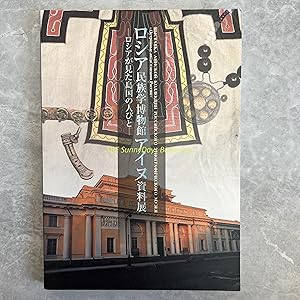
Ainu Beauty: The world created with kamuy. Materials held by the Russian Museum of Ethnology and the Omsk Art Museum
The Foundation for Research and Promotion of Ainu Culture; Hakodate City Musuem; Hokkaido Obihiro Museum of Art; Obihiro Centennial City Museum; The Museum of Kyoto
Published by Tokachi Mainichi Newspaper Co. 2009
- Softcover
Seller: Books From California, Simi Valley, CA, U.S.A.Books From California
Contact seller4-star sellerCondition: Used - Very good
US$ 35.00
US$ 4.99 shippingShips within U.S.A.Quantity: 1 available
Paperback. Condition: Very Good. Japanese, Russian, and English language text. Profusely illustrated.

Language: English
Published by Independently published 2026
Series: The Ology - The God Study, Book 3 of 3. Book 3 of 3 - The Ology - The God Study
- Softcover
- Print on Demand
Seller: California Books, Miami, FL, U.S.A.California Books
Contact seller4-star sellerCondition: New
US$ 22.00
Free ShippingShips within U.S.A.Quantity: Over 20 available
Condition: New. Print on Demand.

The Ology: The God Study -Volume 2
Gibbons, Russell; Maure, RasEli Ainu Umkhati Senussi; Gibborim, Raziel
Language: English
Published by Independently published 2026
Series: The Ology - The God Study, Book 2 of 3. Book 2 of 3 - The Ology - The God Study
- Softcover
- Print on Demand
Seller: California Books, Miami, FL, U.S.A.California Books
Contact seller4-star sellerCondition: New
US$ 22.00
Free ShippingShips within U.S.A.Quantity: Over 20 available
Condition: New. Print on Demand.
Language: English
Published by Independently Published 2026
Series: The Ology - The God Study, Book 3 of 3. Book 3 of 3 - The Ology - The God Study
- Softcover
- Print on Demand
Seller: PBShop.store US, Wood Dale, IL, U.S.A.PBShop.store US
Contact seller5-star sellerCondition: New
US$ 22.88
Free ShippingShips within U.S.A.Quantity: Over 20 available
PAP. Condition: New. New Book. Shipped from UK. THIS BOOK IS PRINTED ON DEMAND. Established seller since 2000.
Language: English
Published by Independently Published 2026
Series: The Ology - The God Study, Book 2 of 3. Book 2 of 3 - The Ology - The God Study
- Softcover
- Print on Demand
Seller: PBShop.store US, Wood Dale, IL, U.S.A.PBShop.store US
Contact seller5-star sellerCondition: New
US$ 24.31
Free ShippingShips within U.S.A.Quantity: Over 20 available
PAP. Condition: New. New Book. Shipped from UK. THIS BOOK IS PRINTED ON DEMAND. Established seller since 2000.
Language: English
Published by Independently Published 2026
Series: The Ology - The God Study, Book 3 of 3. Book 3 of 3 - The Ology - The God Study
- Softcover
- Print on Demand
Seller: PBShop.store UK, Fairford, GLOS, United KingdomPBShop.store UK
Contact seller5-star sellerCondition: New
US$ 22.81
US$ 4.40 shippingShips from United Kingdom to U.S.A.Quantity: Over 20 available
PAP. Condition: New. New Book. Delivered from our UK warehouse in 4 to 14 business days. THIS BOOK IS PRINTED ON DEMAND. Established seller since 2000.
Language: English
Published by Independently Published 2026
Series: The Ology - The God Study, Book 2 of 3. Book 2 of 3 - The Ology - The God Study
- Softcover
- Print on Demand
Seller: PBShop.store UK, Fairford, GLOS, United KingdomPBShop.store UK
Contact seller5-star sellerCondition: New
US$ 22.77
US$ 5.56 shippingShips from United Kingdom to U.S.A.Quantity: Over 20 available
PAP. Condition: New. New Book. Delivered from our UK warehouse in 4 to 14 business days. THIS BOOK IS PRINTED ON DEMAND. Established seller since 2000.
Monthly picture book Tadanori Yokoo Japanese Book
utsunoki akari's brilliant transformation story vs Akino uno, "what do you hear from the Ainu clan?"
Published by Subaru Library, china 1980
- Softcover
Seller: Sunny Day Bookstore, SINGAPORE, , SingaporeSunny Day Bookstore
Contact seller4-star sellerCondition: Used - Fine
US$ 60.00
US$ 15.00 shippingShips from Singapore to U.S.A.Quantity: 1 available
Condition: Fine. KOS02202840.
Quarterly World of Creation 1986 No. 57
Umehara Takeshi âThe Ainu thought of giving oneself upâ and others
Published by Shogakukan Inc. 1986
- Softcover
Seller: Sunny Day Bookstore, SINGAPORE, , SingaporeSunny Day Bookstore
Contact seller4-star sellerCondition: Used - Fine
US$ 60.00
US$ 15.00 shippingShips from Singapore to U.S.A.Quantity: 1 available
Condition: Fine. Number of books: 1.
[Magazine] World 295
Special Feature: The 1970s and the Japanese Constitution - Yasuo Ishimoto Eio Hayashi Susumu Ishida Seiichi Hirota et al. Haruo Tomiyama Tetsuo Inukai (mysterious Ainu people) Tadayasu Sakai (review.
Published by Iwanami Shoten 1970
- Softcover
Seller: Sunny Day Bookstore, SINGAPORE, , SingaporeSunny Day Bookstore
Contact seller4-star sellerCondition: Used - Fine
US$ 60.00
US$ 15.00 shippingShips from Singapore to U.S.A.Quantity: 1 available
Condition: Fine. The book is in fine condition.
Published by The Asahi Shimbun Company 1949
- Softcover
Seller: Sunny Day Bookstore, SINGAPORE, , SingaporeSunny Day Bookstore
Contact seller4-star sellerCondition: Used - Fine
US$ 60.00
US$ 15.00 shippingShips from Singapore to U.S.A.Quantity: 1 available
Condition: Fine. Number of books: 1 book.
âEzo Erotic Films: From Sadayoshi Kodama to Mt. Hirasawaâ Exhibition Record 1992
Asahikawa Museum of Art Hokkaido Edited by Hokkaido Museum of Modern Art Hidehito Shinmei (The World of Ainu Sex Films) / Commentary on the Artist's Works (Sadayoshi Kodama Hakyo Kakizaki Hajima Tan.
Published by Hokkaido Asahikawa Art Museum Hokkaido Museum of Modern Art 1992
- Softcover
Seller: Sunny Day Bookstore, SINGAPORE, , SingaporeSunny Day Bookstore
Contact seller4-star sellerCondition: Used - Fine
US$ 60.00
US$ 15.00 shippingShips from Singapore to U.S.A.Quantity: 1 available
Condition: Fine. The book is in fine condition.
Art Shincho January 1992 Special Feature: Japan at the Museum of Fine Arts Boston (Visiting the ancient city of Boston/Ernest F. Ferronosa/Visiting the Oriental Department of the Museum of Fine Arts B.
Ainu chiefs drawn by Hakyo Kakizaki a retainer of the Matsumae clan / Serialized Ryosuke Handa's foreign book hunting 20 The future form of the deceased child / Yasuhiko Nishimura (Chugoku of heaven.
Published by Shinchosha 1992
- Softcover
Seller: Sunny Day Bookstore, SINGAPORE, , SingaporeSunny Day Bookstore
Contact seller4-star sellerCondition: Used - Fine
US$ 60.00
US$ 15.00 shippingShips from Singapore to U.S.A.Quantity: 1 available
Condition: Fine. The book is in fine condition.
Geijutsu Shincho July 1999 (Vol. 50 No. 7) Special feature/The whole world is paying attention now! Let's learn from the Ainu people of the north
Ainu: The brave people of the north / Simple life in the north / Faith Full of gods 31st Japan Art Award Shomei Tomatsu Akira Tomita History's secret story: The man who saved the Japanese people of .
Published by Shinchosha 1999
- Softcover
Seller: Sunny Day Bookstore, SINGAPORE, , SingaporeSunny Day Bookstore
Contact seller4-star sellerCondition: Used - Fine
US$ 60.00
US$ 15.00 shippingShips from Singapore to U.S.A.Quantity: 1 available
Condition: Fine. The book is in fine condition.

- Hardcover
Seller: Antiquariat Kai Groß, Gleichen OT Bischhausen, , GermanyAntiquariat Kai Groß
Contact seller5-star sellerCondition: Used
US$ 213.86
US$ 55.37 shippingShips from Germany to U.S.A.Quantity: 1 available
4 Tle (in 3 Bde). XXXI,936/XXIX,1035 S., Ln. 1-2. (Veröffentlichungen des Ostasien-Instituts der Ruhr-Universität Bochum; Band 38).
 More images
Published by Tsutomu Ai Cultural Promotion and Research Promotion Organization 2005
- Softcover
Seller: Sunny Day Bookstore, SINGAPORE, , SingaporeSunny Day Bookstore
Contact seller4-star sellerCondition: Used - Fine
US$ 65.00
US$ 15.00 shippingShips from Singapore to U.S.A.Quantity: 1 available
Condition: Fine. The book is in fine condition.
Ainu Culture Unearthed: Recreating Medieval and Modern Ages in the North
The Foundation for Research and Promotion for Ainu Culture, Edited By
Published by Kushiro Board of Education, Kushiro, Japan 2001
- Softcover
- First Edition
Seller: BOOKMARK, Auckland, , New ZealandBOOKMARK
Contact seller3-star sellerCondition: Used - Very good
US$ 59.67
US$ 27.00 shippingShips from New Zealand to U.S.A.Quantity: 1 available
Soft Copy. Condition: VG+. None. First Japanese Edition. Faint dusting of just a few small smudges to beige cover with illustrations of Ainu culture tools, et al. Edges: light couple of small smudges. Text in Japanese and English. Nice clean contents. Colour illustrations. Binding is As New. 196p.

AYNU. UNA CULTURA INDÍGENA DEL JAPÓ
BRU, RICARD; CASADO PARDO, QUERALT; TAKANORI, NAAKAY; NAKAI; TOMOE, YAHATA; NATIONAL AINU MUSEUM,
- Softcover
Seller: Librerias Prometeo y Proteo, malaga, MA, SpainLibrerias Prometeo y Proteo
Contact seller2-star sellerCondition: New
US$ 3.56
US$ 80.75 shippingShips from Spain to U.S.A.Quantity: 1 available
Rústica. Condition: New. Dust Jacket Condition: Nuevo. 01. Aquest llibre neix de lexposició Aynu. Una cultura indígena del Japó al Museu Etnològic i de Cultures del Món. Se centra en el poble ainu i la seva cultura, posant de relleu la seva lluita per preservar el llegat cultural i projectar-se al futur. També aprofundeix en lor…igen de les colleccions ainus que es conserven a Catalunya i al Museu Etnològic i de Cultures del Món, oferint una aproximació única a aquest poble indígena del nord de larxipèlag japonès. LIBRO.

Published by Smithsonian Institution, Washington 1890
Seller: Cosmo Books, Shropshire., United KingdomCosmo Books
Contact seller5-star sellerCondition: Used - Very good
US$ 66.76
US$ 15.90 shippingShips from United Kingdom to U.S.A.Quantity: 1 available
Booklet - Unbound Pages. Condition: Very Good. Hitchcock presents a substantial ethnographic study of the Ainu of northern Japan, describing their physical characteristics, customs, beliefs, material culture, and language, richly illustrated with plates, figures, and a map. 74 Pages, 8 plates, 19 figures, 1 map in text. An authe…ntic standalone article, extracted from a larger volume. Not a reprint or reproduction, but an original work in its own right. Preserved in a modern card cover, prepared for practicality - an unassuming but serviceable presentation that favours function over finery. Size: 16 x 24 cms. Category: Smithsonian Institution; New Arrivals; Cosmo Books : 29 years on ABE, 47 years taking care of customers. A bookseller you can rely on.

Published by Tallinn 1974
- Hardcover
Seller: BiblioEra, Everett, MA, U.S.A.BiblioEra
Contact seller1-star sellerCondition: Used - Good
US$ 199.00
US$ 9.99 shippingShips within U.S.A.Quantity: 1 available
Hardcover. Condition: Good. In Russian. Schmidt, Ainu Alexandrovna. Lenin's Plan to Build a Marxist Party. Tallinn: TPI, 1974. All images are for identification of editions only. Several books of the same edition may be available. Please feel free to request photos of available books.SKU7101370.
Published by Imperial Education Society Publishing Department 1940
- Softcover
Seller: Sunny Day Bookstore, SINGAPORE, , SingaporeSunny Day Bookstore
Contact seller4-star sellerCondition: Used - Fine
US$ 813.00
US$ 15.00 shippingShips from Singapore to U.S.A.Quantity: 1 available
Condition: Fine. Number of books: 1.
 More images
Published by No date. (1950s?)., [Japan]. 1950
Seller: Asia Bookroom ANZAAB/ILAB, Canberra, ACT, AustraliaAsia Bookroom ANZAAB/ILAB
Contact seller5-star sellerCondition: Used
US$ 79.24
US$ 21.25 shippingShips from Australia to U.S.A.Quantity: 1 available
Six colour post cards, 14.5 x 10cm, pictorial folder measuring 16.5 x 11.5cm, captions in Japanese and English on reverse. Minor wear paper folder but otherwise very good. Six colour post cards featuring Ainu people in their traditional costumes, performing their rituals and dances. The Japanese text on the envelope says that th…e Ainus are the only "primitive people" in Japan, and they need to be studied.
- Hardcover
- First Edition
Seller: Fahrenheit 451 Antiquarian Booksellers, Nieuwerbrug, NetherlandsFahrenheit 451 Antiquarian Booksellers
Contact seller4-star sellerCondition: Used
US$ 297.03
US$ 41.53 shippingShips from Netherlands to U.S.A.Quantity: 1 available
Tokyo, Kato Masao for Japan Broadcasting Coporation NHK (Nippon Hoso Kyokai), 1965, 1st ed., 566 pag., coloured photogr. frontispiece, b/w illustrations, numerous music examples, text in Japanese with a summary in English, original cloth lettered in white with dustjacket and original lettered board slipcase, quarto (27 x 19,5 cm….). = Rare. With loosely inserted presentation-leaflet: "With the compliments of the N H K (Japan Broadcasting Corporation) Tokyo. This book entitled "Traditional Ainu Music" contains 440 pieces of music scores and recorded sheets (containing 64 music pieces) of the traditional music of the Ainu, the aboriginal race of Japan now living in Hokkaido, Japan's northern-most island, and whose way of living has been assimilated to that of the Japanese. We hope that this book compiled after 3 years of researches and investigations conducted by NHK will be of some use in researches of ethnic music. (An English outline is given at the end of the volume).".
 More images
Published by [19th century]
Seller: Peter Harrington. ABA/ ILAB., London, United KingdomPeter Harrington. ABA/ ILAB.
Contact seller5-star sellerCondition: Used
US$ 30,965.75
US$ 29.40 shippingShips from United Kingdom to U.S.A.Quantity: 1 available
A vibrant late-Edo rendition of the most popular early modern work to depict the customs and lifestyles of the Ainu people. This example shows one Ainu creation myth, "The Tale of the Dog Ancestor", traditional Ainu dress such as the sapanpe headband and tamasay necklace, hunting practices, housing, and ceremonies like the Ioman…te bear sacrifice. In the 18th and early 19th centuries, the Tokugawa shogunate recognized the need to survey and prepare the north of Japan against a possible Russian incursion. They commissioned a number of geographer-explorers to survey the island of Ezo (now Hokkaido). One of them was Murakami Shimanojo (1764-1808), who was sent to the region in 1799 by the senior councillor Matsudaira Sadanobu (1758-1829). He wrote his observations in the manuscript Ezo-shima kikan (original held in the Tokyo National Museum, accession number QB-10015) in 1800, which "endures as among the best ethnographic renditions of late eighteenth-century Ainu life" (Walker, p. 289). Murakami wrote that "I hope to avoid losing the past descriptions of the Ainu and show them to those who have never seen them" (Irimoto, p. 63). Indeed, his descriptions and illustrations of Ainu culture were so popular that over 65 manuscript copies have been traced in institutions. Each of these manuscripts is unique, containing a different selection of the over 100 illustrations in Murakami's original. This is because "the manuscripts that survive today were not just based on the complete original, but also on the author's earlier drafts and partial copies" (Azuma, p. 73). The drawing style of each example is individual to its copyist, with this present manuscript distinguished by its use of bright yellow shades. This copy opens with a retelling of one Ainu creation myth popular among the mainland Japanese: "The Tale of the Dog Ancestor". According to the myth, "Long ago, a goddess arrived on the coast of Shizunai. She was alone and carried many rare objects. but had no house to weather the winds and storms, nor any way to hunt for food. As she began to starve, a dog ran up to her barking and wagging its tail. She followed the dog to a cave and made her home there. The dog ran to the coast to get her seafood, and he ran to the hills and fields to gather her fruits and nuts, saving her life. Over time she fathered the dog's child. As such, it is said that the women of the Ainu are descended from the goddess and the men are descended from dogs" (Matoba, p. 27). This is only one of many Ainu creation stories, but it became the most popular among the Japanese colonizers of Hokkaido as it claimed the Ainu were descended from animals. The manuscript continues by describing traditional clothing and jewellery, such as the sapanpe headband and tamasay necklace. It also shows an arm that had been heavily tattooed, a centuries-old Ainu tradition passed through the matrilineal line. Facial and arm tattoos were a staple part of the Ainu religion, being a prerequisite for women to both marry and enter into the afterlife. However, Japanese colonizers associated tattooing with crime, as they commonly used it as a punishment and means to identify thieves and murderers. Therefore the Edo and Meiji governments made multiple attempts to ban the practice following Hokkaido's colonization. Other scenes in the manuscript include seal hunting and the Iomante bear sacrifice. This festival was one of the most important in traditional Ainu culture, depicted here over five leaves. Through this sacrifice, the Ainu believed they were "sending off" (the literal meaning of iomante) their gods back to the spirit world. It was banned under animal protection laws in 1955, and while this ban was rescinded in 2007, the practice has not been revived in its original form. This copy ends with an inside view of an Ainu house, the Tai-fu-kari dance, the ukari fight used to settle disputes, and a musician playing the tonkori zither. Altogether, it is valuable as a window into pre-colonial Hokkaido, tempered by the lens of its colonizers. Matoba Mitsuaki, Gendaigo de yomu Ezo-shima kikan - Ainu-e bunken, 2021; Azuma Shunsuke, "'Ezoshima kikan' shahon no kenkyu ichi", Hokkaido Hakubutsukan Kenkyu Kiyo, vol. 9, 2024; Irimoto Takashi, "Northern Studies in Japan", Japanese Review of Cultural Anthropology, vol. 5, 2004; Brett L. Walker, "Mamiya Rinzo and the Japanese exploration of Sakhalin Island: cartography and empire", Journal of Historical Geography, vol. 33, 2007. Oblong folio (268 x 382 mm). Hand-coloured illustrations in text. Together, 48 sheets of manuscript in black ink, each sheet filled on one side with text and illustrations, bound in contemporary light brown paper wrappers, black cloth backstrip. Housed in a black cloth flat-back box by the Chelsea Bindery. Later ownership stamp of one Harada in red and near-contemporary seal in black to f. [1] recto. Vertical crease throughout where folio has been folded in half, moderate foxing, illustrations bright: a very good example.


