Order Total (1 Item Items):
Shipping Destination:

Albert Kivilas (1 results)
Skip to main search results
Search filters
Product Type
- All Product Types
- Books (1)
- Magazines & Periodicals (No further results match this refinement)
- Comics (No further results match this refinement)
- Sheet Music (No further results match this refinement)
- Art, Prints & Posters (No further results match this refinement)
- Photographs (No further results match this refinement)
- Maps (No further results match this refinement)
- Manuscripts & Paper Collectibles (No further results match this refinement)
Condition Learn more
- New (No further results match this refinement)
- As New, Fine or Near Fine (No further results match this refinement)
- Very Good or Good (1)
- Fair or Poor (No further results match this refinement)
- As Described (No further results match this refinement)
Binding
- All Bindings
- Hardcover (No further results match this refinement)
- Softcover (1)
Collectible Attributes
- First Edition (No further results match this refinement)
- Signed (No further results match this refinement)
- Dust Jacket (No further results match this refinement)
- Seller-Supplied Images (1)
- Not Print on Demand (1)
Language (1)
Price
- Any Price
- Under US$ 25 (No further results match this refinement)
- US$ 25 to US$ 50 (No further results match this refinement)
- Over US$ 50
Free Shipping
- Free Shipping to U.S.A. (No further results match this refinement)
Seller Location
Seller Rating
-
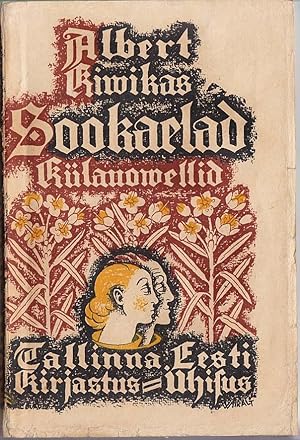
Sookaelad : külajutud (Bog Myrtle : Village tales)
Published by Tallinna Eesti Kirjastus-Ühistus, Tallinn, 1927
Soft cover. Condition: Very Good. 2nd Edition. Estonian language. Octavo 15 x 22 cm. Weight 200 gr. Wrappers, 179 pp. The book is in Very Good condition without any visible defects, losses, remarks and stains. Frayed cover edges, creases across cover corners, small piece broken off of front cover bottom right corner; internally occasional fingerprints. Current book is the author's first collection of short stories written in a village realism style. Seven stories about village life according to critics' estimate considered the best writer's achievement related to the early creation period. The book was firstly given for publishing in 1918, but part of the book was lost during the war. So the book came out in summer of 1919 under the pseudonym Mart Karus in very limited print run and included five novels. Present second enlarged edition (7 novels) in addition to original modernist cover design is greatly illustrated with 10 full-page graphic drawings by Eduard Wiiralt. Illustrations are created in artist original style with strong grotesque elements. Albert Kivikas (1898-1978) became one of the few writers in Estonia to experiment with futurism. His early pieces were meant to irritate the petit bourgeois. Later Kivikas, a sensitive perceiver of the changes in the social and aesthetic realm, became the eager supporter of and campaigner for neo-realism. He abandoned his bohemian convictions and devoted himself to the Republic. His best works are novels and short stories dealing with war and social problems in the rural environment. Eduard Wiiralt (18981954) is considered as the most remarkable master of Estonian graphic art in the first half of his century. home and abroad. His works were displayed at international shows of graphics. Wiiralt's art always includes a play of symbols, wicked exhaustion, apocalyptic apparitions, a battle with sensuality and a concession thereto, inspiration, and imagination. An imagination that functions through a trained He acquired recognition both at hand and genius.