
Angle Lee (26 results)

- Softcover
Seller: WorldofBooks, Goring-By-Sea, WS, United KingdomWorldofBooks
Contact seller5-star sellerCondition: Used - Fine
US$ 9.03
US$ 7.42 shippingShips from United Kingdom to U.S.A.Quantity: 1 available
Paperback. Condition: Fine. Alan Bay (illustrator).

- Softcover
- Print on Demand
Seller: California Books, Miami, FL, U.S.A.California Books
Contact seller4-star sellerCondition: New
US$ 15.00
Free ShippingShips within U.S.A.Quantity: Over 20 available
Condition: New. Print on Demand.
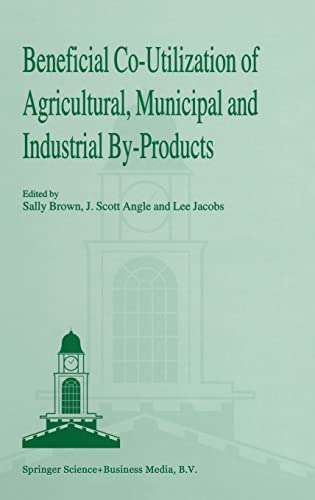
Beneficial Co-Utilization of Agricultural, Municipal and
Brown, Sally L. [Editor]; Angle, J. Scott [Editor]; Jacobs, Lee W. [Editor];
- Hardcover
Seller: Alplaus Books, Alplaus, NY, U.S.A.Alplaus Books
Contact seller5-star sellerCondition: Used - Good
US$ 77.88
US$ 7.00 shippingShips within U.S.A.Quantity: 1 available
Hardcover. Condition: Good. Hardbound without dust jacket, as issued. Name on inside front cover, else unmarked with moderate wear.
THe Complete Book of Pottery Making [Chilton's creative crafts series]
Kenny, John B. ; Kenny, Carla [art, David Silverman, Marguerite Drewry, Lyle Perkins, Marie Nishimura, Pat Casad, Daniel Rhodes, Steven Kemenyffy, Irene Batt, Boxley-Ramos, Marguerite Wildenhaim, Charlene deJori, Betsy Stoinoff, Gig Greenwood, Franconeri Lo Scriccolo, Lee Magdanz, Armand Henault, Warren Angle, Lee Rosen, Tommy Thurmond, Ann Paul, Lewis Snyder, Peter Meadows, Celeste Simon, Jacqueline Lerat, Bruce Brekenridge, Ted Randall, Jerry Friedman]
- Softcover
Seller: Joseph Valles - Books, Stockbridge, GA, U.S.A.Joseph Valles - Books
Contact seller5-star sellerCondition: Used - Fine
US$ 69.00
US$ 16.95 shippingShips within U.S.A.Quantity: 1 available
Soft cover. Condition: Fine. No Jacket. 2nd Edition. 2nd edition, 11th printing ; xv, 310 p., [8] leaves of plates : ill. ; 27 cm. ; ISBN: 0801959330 (pbk.); 9780801959332 (pbk.) LCCN: 76-302 ; LC: TT920; Dewey: 738 ; OCLC: 2662498 ; "Concise instructions and over 300 illustrations explain how to work with clay, the potter's whe…el, molds, and kilns. Includes firing information." ; Stiff paper wrappers ; features artwork by David F. Silverman, Marguerite Drewry, Lyle Perkins, Marie Nishimura, Pat Casad, Daniel Rhodes, Steven Kemenyffy, Irene Batt, Boxley-Ramos, Marguerite Wildenhaim, Charlene deJori, Betsy Stoinoff, Gig Greenwood, Franconeri Lo Scriccolo, Lee Magdanz, Armand Henault, Warren Angle, Lee Rosen, Tommy Thurmond, Ann Paul, Lewis Snyder, Peter Meadows, Celeste Simon, Jacqueline Lerat, Bruce Brekenridge, Ted Randall, and Jerry Friedman ; FINE. Book.

- Softcover
Seller: Ria Christie Collections, Uxbridge, United KingdomRia Christie Collections
Contact seller5-star sellerCondition: New
US$ 132.19
US$ 15.87 shippingShips from United Kingdom to U.S.A.Quantity: Over 20 available
Condition: New. In.

Beneficial Co-Utilization of Agricultural, Municipal and Industrial By-Products
Brown, Sally (EDT); Angle, J. Scott (EDT); Jacobs, Lee (EDT)
- Hardcover
Seller: GreatBookPrices, Columbia, MD, U.S.A.GreatBookPrices
Contact seller5-star sellerCondition: Used - As new
US$ 153.80
US$ 2.64 shippingShips within U.S.A.Quantity: Over 20 available
Condition: As New. Unread book in perfect condition.
- Hardcover
Seller: Ria Christie Collections, Uxbridge, United KingdomRia Christie Collections
Contact seller5-star sellerCondition: New
US$ 146.15
US$ 15.87 shippingShips from United Kingdom to U.S.A.Quantity: Over 20 available
Condition: New. In.
Beneficial Co-Utilization of Agricultural, Municipal and Industrial By-Products
Brown, Sally (EDT); Angle, J. Scott (EDT); Jacobs, Lee (EDT)
- Hardcover
Seller: GreatBookPrices, Columbia, MD, U.S.A.GreatBookPrices
Contact seller5-star sellerCondition: New
US$ 159.18
US$ 2.64 shippingShips within U.S.A.Quantity: Over 20 available
Condition: New.
Beneficial Co-Utilization of Agricultural, Municipal and Industrial By-Products
Brown, Sally (EDT); Angle, J. Scott (EDT); Jacobs, Lee (EDT)
- Hardcover
Seller: GreatBookPricesUK, Woodford Green, United KingdomGreatBookPricesUK
Contact seller5-star sellerCondition: New
US$ 146.14
US$ 19.87 shippingShips from United Kingdom to U.S.A.Quantity: Over 20 available
Condition: New.
- Softcover
Seller: Books Puddle, New York, NY, U.S.A.Books Puddle
Contact seller4-star sellerCondition: New
US$ 166.07
US$ 3.99 shippingShips within U.S.A.Quantity: 4 available
Condition: New. pp. xvi + 430.
Beneficial Co-Utilization of Agricultural, Municipal and Industrial By-Products
Brown, Sally (EDT); Angle, J. Scott (EDT); Jacobs, Lee (EDT)
- Hardcover
Seller: GreatBookPricesUK, Woodford Green, United KingdomGreatBookPricesUK
Contact seller5-star sellerCondition: Used - As new
US$ 162.47
US$ 19.87 shippingShips from United Kingdom to U.S.A.Quantity: Over 20 available
Condition: As New. Unread book in perfect condition.

- Hardcover
Seller: AHA-BUCH GmbH, Einbeck, GermanyAHA-BUCH GmbH
Contact seller5-star sellerCondition: New
US$ 108.95
US$ 73.36 shippingShips from Germany to U.S.A.Quantity: 2 available
Buch. Condition: Neu. Druck auf Anfrage Neuware - Printed after ordering - The potential for blending residuals to create valuable products that are publicly accepted is an example of recycling at its best. Previously, much of the research done on reuse of residuals has centered on potential negative effects. Generally, blending… of materials has been done in a relatively haphazard fashion. There is a growing understanding that residuals can be deliberately mixed for specific end uses. This is the initial phase of transition from residuals disposal to product development. The XXII Annual Beltsville Symposium focused on the range of factors that need to be taken into account for any co-utilization program to be successful. The proceedings include research reports as well as reports from the private sector. Potential uses for co-utilization products as well as areas requiring more research are outlined.
 More images
- Softcover
Seller: preigu, Osnabrück, Germanypreigu
Contact seller5-star sellerCondition: New
US$ 111.98
US$ 79.99 shippingShips from Germany to U.S.A.Quantity: 5 available
Taschenbuch. Condition: Neu. Beneficial Co-Utilization of Agricultural, Municipal and Industrial by-Products | Sally L. Brown (u. a.) | Taschenbuch | xvi | Englisch | 2012 | Springer | EAN 9789401061285 | Verantwortliche Person für die EU: Springer Verlag GmbH, Tiergartenstr. 17, 69121 Heidelberg, juergen[dot]hartmann[at]springe…r[dot]com | Anbieter: preigu.
Beneficial Co-Utilization of Agricultural, Municipal and Industrial by-Products
Brown, Sally L. (Edited by)/ Angle, J. Scott (Edited by)/ Jacobs, Lee W. (Edited by)
- Softcover
Seller: Revaluation Books, Exeter, , United KingdomRevaluation Books
Contact seller5-star sellerCondition: New
US$ 180.65
US$ 16.56 shippingShips from United Kingdom to U.S.A.Quantity: 2 available
Paperback. Condition: Brand New. 430 pages. 9.45x6.30x1.02 inches. In Stock.

- Softcover
Seller: AHA-BUCH GmbH, Einbeck, GermanyAHA-BUCH GmbH
Contact seller5-star sellerCondition: New
US$ 134.59
US$ 72.66 shippingShips from Germany to U.S.A.Quantity: 1 available
Taschenbuch. Condition: Neu. Druck auf Anfrage Neuware - Printed after ordering - Co-utilization or blending of residuals offers a unique opportunity to develop products with particular characteristics that are able to target specific customer needs. The very notion of deliberately blending by-products suggests that the recyclin…g and beneficial reuse industries are taking a quantitative step forward towards developing products rather than simply reusing residuals. At the same time that this step provides unique opportunities, it also presents unique challenges. The science associated with the beneficial use of one product may not apply when that product is mixed with another residual. Blending of materials may alter the chemistry of the components of the mixture. This may offer additional benefits, as in the case of disease suppression in composts, or present unexpected problems, as the use of lime-stabilized biosolids has done in Maryland. This book consists of the proceedings of the Beltsville Symposium. The organizers of the Symposium attempted to structure a meeting that would outline both the potential benefits of co-utilization as well as concerns. The editors have divided the proceedings into sections that describe the practical basis for co-utilization of residuals as well as the potential benefits. Specific considerations are described. Finally, case studies include descriptions of successful operations and data that detail results of research involving co-utilization materials. Blending of materials for specific objectives needs to be the focus of any successful co-utilization effort. The scientific implications of the mix need to be determined before a product can be used properly.
Beneficial Co-Utilization of Agricultural, Municipal and Industrial By-Products
Brown, Sally (Editor)/ Angle, J. Scott (Editor)/ Jacobs, Lee (Editor)
- Hardcover
Seller: Revaluation Books, Exeter, , United KingdomRevaluation Books
Contact seller5-star sellerCondition: New
US$ 197.96
US$ 16.56 shippingShips from United Kingdom to U.S.A.Quantity: 2 available
Hardcover. Condition: Brand New. 1st edition. 430 pages. 10.00x7.00x1.25 inches. In Stock.

- Hardcover
Seller: moluna, Greven, , Germanymoluna
Contact seller5-star sellerCondition: New
US$ 165.94
US$ 55.98 shippingShips from Germany to U.S.A.Quantity: Over 20 available
Gebunden. Condition: New. The potential for blending residuals to create valuable products that are publicly accepted is an example of recycling at its best. Previously, much of the research done on reuse of residuals has centered on potential negative effects. Generally, blending o.

- Hardcover
Seller: Chiron Media, Wallingford, , United KingdomChiron Media
Contact seller5-star sellerCondition: New
US$ 307.42
US$ 20.52 shippingShips from United Kingdom to U.S.A.Quantity: 5 available
Hardcover. Condition: New.
- Softcover
- Print on Demand
Seller: Brook Bookstore On Demand, Napoli, NA, ItalyBrook Bookstore On Demand
Contact seller3-star sellerCondition: New
US$ 101.50
US$ 7.77 shippingShips from Italy to U.S.A.Quantity: Over 20 available
Condition: new. Questo è un articolo print on demand.

- Hardcover
- Print on Demand
Seller: BuchWeltWeit Ludwig Meier e.K., Bergisch Gladbach, , GermanyBuchWeltWeit Ludwig Meier e.K.
Contact seller5-star sellerCondition: New
US$ 100.69
US$ 26.28 shippingShips from Germany to U.S.A.Quantity: 2 available
Buch. Condition: Neu. This item is printed on demand - it takes 3-4 days longer - Neuware -The potential for blending residuals to create valuable products that are publicly accepted is an example of recycling at its best. Previously, much of the research done on reuse of residuals has centered on potential negative effects. Gen…erally, blending of materials has been done in a relatively haphazard fashion. There is a growing understanding that residuals can be deliberately mixed for specific end uses. This is the initial phase of transition from residuals disposal to product development. The XXII Annual Beltsville Symposium focused on the range of factors that need to be taken into account for any co-utilization program to be successful. The proceedings include research reports as well as reports from the private sector. Potential uses for co-utilization products as well as areas requiring more research are outlined. 452 pp. Englisch.

- Softcover
- Print on Demand
Seller: BuchWeltWeit Ludwig Meier e.K., Bergisch Gladbach, , GermanyBuchWeltWeit Ludwig Meier e.K.
Contact seller5-star sellerCondition: New
US$ 113.33
US$ 26.28 shippingShips from Germany to U.S.A.Quantity: 2 available
Taschenbuch. Condition: Neu. This item is printed on demand - it takes 3-4 days longer - Neuware -Co-utilization or blending of residuals offers a unique opportunity to develop products with particular characteristics that are able to target specific customer needs. The very notion of deliberately blending by-products suggests t…hat the recycling and beneficial reuse industries are taking a quantitative step forward towards developing products rather than simply reusing residuals. At the same time that this step provides unique opportunities, it also presents unique challenges. The science associated with the beneficial use of one product may not apply when that product is mixed with another residual. Blending of materials may alter the chemistry of the components of the mixture. This may offer additional benefits, as in the case of disease suppression in composts, or present unexpected problems, as the use of lime-stabilized biosolids has done in Maryland. This book consists of the proceedings of the Beltsville Symposium. The organizers of the Symposium attempted to structure a meeting that would outline both the potential benefits of co-utilization as well as concerns. The editors have divided the proceedings into sections that describe the practical basis for co-utilization of residuals as well as the potential benefits. Specific considerations are described. Finally, case studies include descriptions of successful operations and data that detail results of research involving co-utilization materials. Blending of materials for specific objectives needs to be the focus of any successful co-utilization effort. The scientific implications of the mix need to be determined before a product can be used properly. 452 pp. Englisch.

- Softcover
- Print on Demand
Seller: moluna, Greven, , Germanymoluna
Contact seller5-star sellerCondition: New
US$ 108.60
US$ 55.98 shippingShips from Germany to U.S.A.Quantity: Over 20 available
Condition: New. Dieser Artikel ist ein Print on Demand Artikel und wird nach Ihrer Bestellung fuer Sie gedruckt. Co-utilization or blending of residuals offers a unique opportunity to develop products with particular characteristics that are able to target specific customer needs. The very notion of deliberately blending by-prod…ucts suggests that the recycling and ben.
- Softcover
- Print on Demand
Seller: Majestic Books, Hounslow, , United KingdomMajestic Books
Contact seller4-star sellerCondition: New
US$ 173.40
US$ 8.61 shippingShips from United Kingdom to U.S.A.Quantity: 4 available
Condition: New. Print on Demand pp. xvi + 430.
- Softcover
- Print on Demand
Seller: Biblios, frankfurt am main, HESSE, GermanyBiblios
Contact seller4-star sellerCondition: New
US$ 181.56
US$ 11.37 shippingShips from Germany to U.S.A.Quantity: 4 available
Condition: New. PRINT ON DEMAND pp. xvi + 430.
- Hardcover
- Print on Demand
Seller: THE SAINT BOOKSTORE, Southport, , United KingdomTHE SAINT BOOKSTORE
Contact seller5-star sellerCondition: New
US$ 173.35
US$ 21.21 shippingShips from United Kingdom to U.S.A.Quantity: Over 20 available
Hardback. Condition: New. This item is printed on demand. New copy - Usually dispatched within 5-9 working days.

- Softcover
- Print on Demand
Seller: buchversandmimpf2000, Emtmannsberg, BAYE, Germanybuchversandmimpf2000
Contact seller5-star sellerCondition: New
US$ 125.92
US$ 68.56 shippingShips from Germany to U.S.A.Quantity: 1 available
Taschenbuch. Condition: Neu. This item is printed on demand - Print on Demand Titel. Neuware -Co-utilization or blending of residuals offers a unique opportunity to develop products with particular characteristics that are able to target specific customer needs. The very notion of deliberately blending by-products suggests that…the recycling and beneficial reuse industries are taking a quantitative step forward towards developing products rather than simply reusing residuals. At the same time that this step provides unique opportunities, it also presents unique challenges. The science associated with the beneficial use of one product may not apply when that product is mixed with another residual. Blending of materials may alter the chemistry of the components of the mixture. This may offer additional benefits, as in the case of disease suppression in composts, or present unexpected problems, as the use of lime-stabilized biosolids has done in Maryland. This book consists of the proceedings of the Beltsville Symposium. The organizers of the Symposium attempted to structure a meeting that would outline both the potential benefits of co-utilization as well as concerns. The editors have divided the proceedings into sections that describe the practical basis for co-utilization of residuals as well as the potential benefits. Specific considerations are described. Finally, case studies include descriptions of successful operations and data that detail results of research involving co-utilization materials. Blending of materials for specific objectives needs to be the focus of any successful co-utilization effort. The scientific implications of the mix need to be determined before a product can be used properly.Springer-Verlag KG, Sachsenplatz 4-6, 1201 Wien 452 pp. Englisch.


