Order Total (1 Item Items):
Shipping Destination:

Barendregt Whigham (1 results)
Skip to main search results
Search filters
Product Type
- All Product Types
- Books (1)
- Magazines & Periodicals (No further results match this refinement)
- Comics (No further results match this refinement)
- Sheet Music (No further results match this refinement)
- Art, Prints & Posters (No further results match this refinement)
- Photographs (No further results match this refinement)
- Maps (No further results match this refinement)
- Manuscripts & Paper Collectibles (No further results match this refinement)
Condition Learn more
- New (No further results match this refinement)
- As New, Fine or Near Fine (No further results match this refinement)
- Very Good or Good (No further results match this refinement)
- Fair or Poor (No further results match this refinement)
- As Described (1)
Binding
- All Bindings
- Hardcover (1)
- Softcover (No further results match this refinement)
Collectible Attributes
- First Edition (No further results match this refinement)
- Signed (No further results match this refinement)
- Dust Jacket (No further results match this refinement)
- Seller-Supplied Images (1)
- Not Print on Demand (1)
Language (1)
Price
- Any Price
- Under US$ 25 (No further results match this refinement)
- US$ 25 to US$ 50 (No further results match this refinement)
- Over US$ 50
Free Shipping
- Free Shipping to U.S.A. (No further results match this refinement)
Seller Location
Seller Rating
-
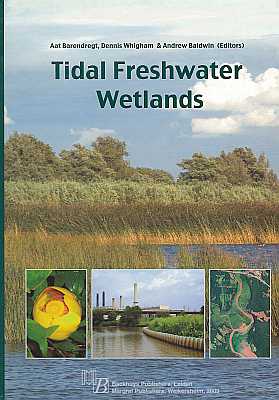
Tidal freshwater wetlands occur in the upper part of estuaries, where fresh water from the river is influenced by tides. Sedimentation is prominent in the tidal freshwater zone; mud flats become elevated and may become fertile agriculture areas after reclamation. Many prominent cities (e.g., Hamburg, Rotterdam, Philadelphia, Washington, DC) were founded in or near tidal freshwater systems, resulting in their loss or degradation. A number of characteristic plant and animal species occur in tidal freshwater wetlands, reflecting their unique biological, chemical, and physical processes. These communities are distributed over different subsystems, such as the river, tidal creeks, reed and bulrush marshes, higher marshes, and various types of tidal swamp forest. Productivity of tidal freshwater wetlands is similar to that of salt marshes but plant and macrofaunal diversity are higher. Sets of case studies illustrate various conditions from Europe and North America. While many tidal freshwater wetlands have disappeared, during the last decades restoration projects have been initiated to conserve this diverse and productive ecosystem. Leiden & Weikersheim. Backhuys Publishers & Margraf Publishers. 320 pp., num. figs, hardback 4.