Blakley Christopher (22 results)

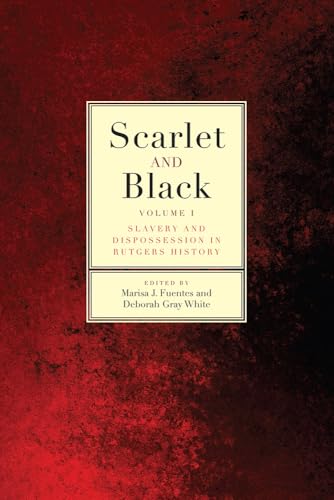
Scarlet and Black: Slavery and Dispossession in Rutgers History (Volume 1)
Fuentes, Marisa J. [Editor]; White, Deborah Gray [Editor]; Adams, Beatrice J. [Contributor]; Armstead, Shauni [Contributor]; Bayker, Jesse [Contributor]; Blakley, Christopher [Contributor]; Boyd, Kendra [Contributor]; Carey, Miya [Contributor]; Esty, Kaisha [Contributor]; Fuentes, Marisa J. [Contributor]; Johnson, Tracey [Contributor]; Manuel, Daniel [Contributor]; Pujols, Jomaira Salas [Contributor]; Sutter, Brenann [Contributor]; Townsend, Camilla [Contributor]; Walker, Pamela N. [Contributor]; Wiesner, Caitlin Reed [Contributor]; White, Deborah Gray [Contributor]; Wierda, Meagan [Contributor];
- Softcover
Seller: Your Online Bookstore, Houston, U.S.A.Your Online Bookstore
Contact seller5-star sellerCondition: Used - Fair
US$ 4.31
Free ShippingShips within U.S.A.Quantity: 1 available
paperback. Condition: Fair.

Published by Universal Studios 2012-10-09 00:00:00 2012
Seller: R Bookmark, Youngtown, U.S.A.R Bookmark
Contact seller5-star sellerCondition: Used - Good
US$ 3.25
US$ 6.13 shippingShips within U.S.A.Quantity: 1 available
DVD. Condition: Used - Good.

- Hardcover
Seller: PBShop.store UK, Fairford, United KingdomPBShop.store UK
Contact seller5-star sellerCondition: New
US$ 43.37
US$ 6.69 shippingShips from United Kingdom to U.S.A.Quantity: 2 available
HRD. Condition: New. New Book. Shipped from UK. Established seller since 2000.

- Hardcover
Seller: GreatBookPrices, Columbia, U.S.A.GreatBookPrices
Contact seller5-star sellerCondition: New
US$ 47.41
US$ 2.64 shippingShips within U.S.A.Quantity: Over 20 available
Condition: New.

- Hardcover
Seller: Rarewaves.com USA, London, United KingdomRarewaves.com USA
Contact seller5-star sellerCondition: New
US$ 52.04
Free ShippingShips from United Kingdom to U.S.A.Quantity: 1 available
Hardback. Condition: New. In the early modern British Atlantic world, the comparison of enslaved people to animals, particularly dogs, cattle, or horses, was a common device used by enslavers to dehumanize and otherwise reduce the existence of the enslaved. Letters, memoirs, and philosophical treatises of the enslaved and former…ly enslaved bear testament to the methods used to dehumanize them. In Empire of Brutality, Christopher Michael Blakley explores how material relationships between enslaved people and animals bolstered the intellectual dehumanization of the enslaved. By reconsidering dehumanization in the light of human-animal relations, Blakley offers new insights into the horrific institution later challenged by Black intellectuals in multiple ways.Using the correspondence of the Royal African Company, specimen catalogs and scientific papers of the Royal Society, plantation inventories and manuals, and diaries kept by slaveholders, Blakley describes human-animal networks spanning from Britain's slave castles and outposts throughout western Africa to plantations in the Caribbean and American Southeast. They combine approaches from environmental history, history of science, and philosophy to examine slavery from the ground up and from the perspectives of the enslaved. Blakley's work reveals how African captives who became commodified through exchanges of cowry sea snails between slavers in the Bight of Benin later went on to collect zoological specimens in Barbados and Virginia for institutions such as the Royal Society. On plantations, where enslaved people labored alongside cattle, donkeys, horses, and other animals to make the agricultural fortunes of slaveholders, Blakley shows how the enslaved resisted these human-animal pairings by stealing animals for their own purposes--such as fugitives who escaped their slaveholder's grasp by riding stolen horses. Because of experiences like these, writers and thinkers of African descent who survived slavery later attacked the institution in public as fundamentally dehumanizing, one that corrupted the humanity of both slaveholders and the enslaved.

- Hardcover
Seller: BargainBookStores, Grand Rapids, U.S.A.BargainBookStores
Contact seller5-star sellerCondition: New
US$ 54.26
Free ShippingShips within U.S.A.Quantity: 5 available
Hardback or Cased Book. Condition: New. Empire of Brutality: Enslaved People and Animals in the British Atlantic World. Book.

- Hardcover
Seller: GreatBookPrices, Columbia, U.S.A.GreatBookPrices
Contact seller5-star sellerCondition: Used - As new
US$ 56.70
US$ 2.64 shippingShips within U.S.A.Quantity: Over 20 available
Condition: As New. Unread book in perfect condition.

- Hardcover
Seller: Rarewaves USA, OSWEGO, U.S.A.Rarewaves USA
Contact seller5-star sellerCondition: New
US$ 63.65
Free ShippingShips within U.S.A.Quantity: Over 20 available
Hardback. Condition: New. In the early modern British Atlantic world, the comparison of enslaved people to animals, particularly dogs, cattle, or horses, was a common device used by enslavers to dehumanize and otherwise reduce the existence of the enslaved. Letters, memoirs, and philosophical treatises of the enslaved and former…ly enslaved bear testament to the methods used to dehumanize them. In Empire of Brutality, Christopher Michael Blakley explores how material relationships between enslaved people and animals bolstered the intellectual dehumanization of the enslaved. By reconsidering dehumanization in the light of human-animal relations, Blakley offers new insights into the horrific institution later challenged by Black intellectuals in multiple ways.Using the correspondence of the Royal African Company, specimen catalogs and scientific papers of the Royal Society, plantation inventories and manuals, and diaries kept by slaveholders, Blakley describes human-animal networks spanning from Britain's slave castles and outposts throughout western Africa to plantations in the Caribbean and American Southeast. They combine approaches from environmental history, history of science, and philosophy to examine slavery from the ground up and from the perspectives of the enslaved. Blakley's work reveals how African captives who became commodified through exchanges of cowry sea snails between slavers in the Bight of Benin later went on to collect zoological specimens in Barbados and Virginia for institutions such as the Royal Society. On plantations, where enslaved people labored alongside cattle, donkeys, horses, and other animals to make the agricultural fortunes of slaveholders, Blakley shows how the enslaved resisted these human-animal pairings by stealing animals for their own purposes--such as fugitives who escaped their slaveholder's grasp by riding stolen horses. Because of experiences like these, writers and thinkers of African descent who survived slavery later attacked the institution in public as fundamentally dehumanizing, one that corrupted the humanity of both slaveholders and the enslaved.

- Hardcover
Seller: THE SAINT BOOKSTORE, Southport, United KingdomTHE SAINT BOOKSTORE
Contact seller5-star sellerCondition: New
US$ 51.06
US$ 17.95 shippingShips from United Kingdom to U.S.A.Quantity: 2 available
Hardback. Condition: New. New copy - Usually dispatched within 4 working days.

- Hardcover
Seller: Kennys Bookshop and Art Galleries Ltd., Galway, IrelandKennys Bookshop and Art Galleries Ltd.
Contact seller5-star sellerCondition: New
US$ 64.70
US$ 12.20 shippingShips from Ireland to U.S.A.Quantity: 1 available
Condition: New.

- Hardcover
Seller: GreatBookPricesUK, Woodford Green, United KingdomGreatBookPricesUK
Contact seller5-star sellerCondition: Used - As new
US$ 62.38
US$ 19.99 shippingShips from United Kingdom to U.S.A.Quantity: 2 available
Condition: As New. Unread book in perfect condition.

- Hardcover
Seller: Ria Christie Collections, Uxbridge, United KingdomRia Christie Collections
Contact seller5-star sellerCondition: New
US$ 69.24
US$ 15.97 shippingShips from United Kingdom to U.S.A.Quantity: Over 20 available
Condition: New. In.

- Hardcover
Seller: GreatBookPricesUK, Woodford Green, United KingdomGreatBookPricesUK
Contact seller5-star sellerCondition: New
US$ 67.51
US$ 19.99 shippingShips from United Kingdom to U.S.A.Quantity: 2 available
Condition: New.

- Hardcover
Seller: Kennys Bookstore, Olney, U.S.A.Kennys Bookstore
Contact seller5-star sellerCondition: New
US$ 76.99
US$ 10.50 shippingShips within U.S.A.Quantity: 1 available
Condition: New.

- Hardcover
Seller: Revaluation Books, Exeter, United KingdomRevaluation Books
Contact seller5-star sellerCondition: New
US$ 76.44
US$ 16.66 shippingShips from United Kingdom to U.S.A.Quantity: 2 available
Hardcover. Condition: Brand New. 236 pages. 9.00x6.25x1.00 inches. In Stock.

- Hardcover
Seller: Rarewaves USA United, OSWEGO, U.S.A.Rarewaves USA United
Contact seller5-star sellerCondition: New
US$ 67.52
US$ 50.00 shippingShips within U.S.A.Quantity: Over 20 available
Hardback. Condition: New. In the early modern British Atlantic world, the comparison of enslaved people to animals, particularly dogs, cattle, or horses, was a common device used by enslavers to dehumanize and otherwise reduce the existence of the enslaved. Letters, memoirs, and philosophical treatises of the enslaved and former…ly enslaved bear testament to the methods used to dehumanize them. In Empire of Brutality, Christopher Michael Blakley explores how material relationships between enslaved people and animals bolstered the intellectual dehumanization of the enslaved. By reconsidering dehumanization in the light of human-animal relations, Blakley offers new insights into the horrific institution later challenged by Black intellectuals in multiple ways.Using the correspondence of the Royal African Company, specimen catalogs and scientific papers of the Royal Society, plantation inventories and manuals, and diaries kept by slaveholders, Blakley describes human-animal networks spanning from Britain's slave castles and outposts throughout western Africa to plantations in the Caribbean and American Southeast. They combine approaches from environmental history, history of science, and philosophy to examine slavery from the ground up and from the perspectives of the enslaved. Blakley's work reveals how African captives who became commodified through exchanges of cowry sea snails between slavers in the Bight of Benin later went on to collect zoological specimens in Barbados and Virginia for institutions such as the Royal Society. On plantations, where enslaved people labored alongside cattle, donkeys, horses, and other animals to make the agricultural fortunes of slaveholders, Blakley shows how the enslaved resisted these human-animal pairings by stealing animals for their own purposes--such as fugitives who escaped their slaveholder's grasp by riding stolen horses. Because of experiences like these, writers and thinkers of African descent who survived slavery later attacked the institution in public as fundamentally dehumanizing, one that corrupted the humanity of both slaveholders and the enslaved.

- Hardcover
Seller: Rarewaves.com UK, London, United KingdomRarewaves.com UK
Contact seller5-star sellerCondition: New
US$ 49.14
US$ 86.63 shippingShips from United Kingdom to U.S.A.Quantity: 1 available
Hardback. Condition: New. In the early modern British Atlantic world, the comparison of enslaved people to animals, particularly dogs, cattle, or horses, was a common device used by enslavers to dehumanize and otherwise reduce the existence of the enslaved. Letters, memoirs, and philosophical treatises of the enslaved and former…ly enslaved bear testament to the methods used to dehumanize them. In Empire of Brutality, Christopher Michael Blakley explores how material relationships between enslaved people and animals bolstered the intellectual dehumanization of the enslaved. By reconsidering dehumanization in the light of human-animal relations, Blakley offers new insights into the horrific institution later challenged by Black intellectuals in multiple ways.Using the correspondence of the Royal African Company, specimen catalogs and scientific papers of the Royal Society, plantation inventories and manuals, and diaries kept by slaveholders, Blakley describes human-animal networks spanning from Britain's slave castles and outposts throughout western Africa to plantations in the Caribbean and American Southeast. They combine approaches from environmental history, history of science, and philosophy to examine slavery from the ground up and from the perspectives of the enslaved. Blakley's work reveals how African captives who became commodified through exchanges of cowry sea snails between slavers in the Bight of Benin later went on to collect zoological specimens in Barbados and Virginia for institutions such as the Royal Society. On plantations, where enslaved people labored alongside cattle, donkeys, horses, and other animals to make the agricultural fortunes of slaveholders, Blakley shows how the enslaved resisted these human-animal pairings by stealing animals for their own purposes--such as fugitives who escaped their slaveholder's grasp by riding stolen horses. Because of experiences like these, writers and thinkers of African descent who survived slavery later attacked the institution in public as fundamentally dehumanizing, one that corrupted the humanity of both slaveholders and the enslaved.

- Hardcover
- Print on Demand
Seller: Revaluation Books, Exeter, United KingdomRevaluation Books
Contact seller5-star sellerCondition: New
US$ 62.16
US$ 16.66 shippingShips from United Kingdom to U.S.A.Quantity: 2 available
Hardcover. Condition: Brand New. 236 pages. 9.00x6.25x1.00 inches. In Stock. This item is printed on demand.

- Hardcover
- Print on Demand
Seller: THE SAINT BOOKSTORE, Southport, United KingdomTHE SAINT BOOKSTORE
Contact seller5-star sellerCondition: New
US$ 68.28
US$ 17.95 shippingShips from United Kingdom to U.S.A.Quantity: Over 20 available
Hardback. Condition: New. This item is printed on demand. New copy - Usually dispatched within 5-9 working days.

- Hardcover
- Print on Demand
Seller: moluna, Greven, Germanymoluna
Contact seller4-star sellerCondition: New
US$ 64.88
US$ 56.94 shippingShips from Germany to U.S.A.Quantity: Over 20 available
Condition: New. Dieser Artikel ist ein Print on Demand Artikel und wird nach Ihrer Bestellung fuer Sie gedruckt. Über den AutorChristopher Michael Blakley teaches American and global history at California State University, Northridge, and interdisciplinary writing and research seminars at Occidental College.Klappentext.
More images- Hardcover
- Print on Demand
Seller: preigu, Osnabrück, Germanypreigu
Contact seller5-star sellerCondition: New
US$ 67.35
US$ 81.37 shippingShips from Germany to U.S.A.Quantity: 5 available
Buch. Condition: Neu. Empire of Brutality | Enslaved People and Animals in the British Atlantic World | Christopher Michael Blakley | Buch | Einband - fest (Hardcover) | Englisch | 2023 | Louisiana State University Press | EAN 9780807178867 | Verantwortliche Person für die EU: Libri GmbH, Europaallee 1, 36244 Bad Hersfeld, gpsr[…at]libri[dot]de | Anbieter: preigu Print on Demand.

- Hardcover
- Print on Demand
Seller: AHA-BUCH GmbH, Einbeck, GermanyAHA-BUCH GmbH
Contact seller5-star sellerCondition: New
US$ 83.60
US$ 73.03 shippingShips from Germany to U.S.A.Quantity: 1 available
Buch. Condition: Neu. nach der Bestellung gedruckt Neuware - Printed after ordering - In the early modern British Atlantic world, the comparison of enslaved people to animals, particularly dogs, cattle, or horses, was a common device used by enslavers to dehumanize and otherwise reduce the existence of the enslaved. Letters, mem…oirs, and philosophical treatises of the enslaved and formerly enslaved bear testament to the methods used to dehumanize them. In Empire of Brutality, Christopher Michael Blakley explores how material relationships between enslaved people and animals bolstered the intellectual dehumanization of the enslaved. By reconsidering dehumanization in the light of human-animal relations, Blakley offers new insights into the horrific institution later challenged by Black intellectuals in multiple ways. Using the correspondence of the Royal African Company, specimen catalogs and scientific papers of the Royal Society, plantation inventories and manuals, and diaries kept by slaveholders, Blakley describes human-animal networks spanning from Britain's slave castles and outposts throughout western Africa to plantations in the Caribbean and American Southeast. They combine approaches from environmental history, history of science, and philosophy to examine slavery from the ground up and from the perspectives of the enslaved. Blakley's work reveals how African captives who became commodified through exchanges of cowry sea snails between slavers in the Bight of Benin later went on to collect zoological specimens in Barbados and Virginia for institutions such as the Royal Society. On plantations, where enslaved people labored alongside cattle, donkeys, horses, and other animals to make the agricultural fortunes of slaveholders, Blakley shows how the enslaved resisted these human-animal pairings by stealing animals for their own purposes--such as fugitives who escaped their slaveholder's grasp by riding stolen horses. Because of experiences like these, writers and thinkers of African descent who survived slavery later attacked the institution in public as fundamentally dehumanizing, one that corrupted the humanity of both slaveholders and the enslaved.