
Bororo (10 results)
Language: Spanish
Published by G y J España Ediciones, S.L. S en C., Marqués de Villamagna, 4, 28001 Madrid 1999
- Softcover
Seller: páginafilia, Villavieja del Lozoya, M, Spainpáginafilia
Contact seller5-star sellerCondition: Used - Fine
US$ 4.64
US$ 16.64 shippingShips from Spain to U.S.A.Quantity: 1 available
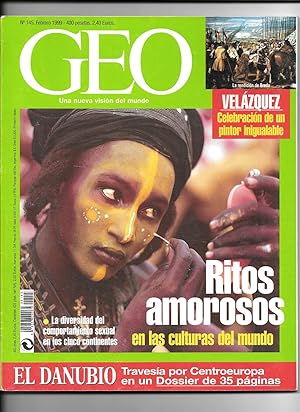
Encuadernación de tapa blanda. Condition: Aceptable. Dust Jacket Condition: Aceptable. Revista mensual número 145. Febrero 1999. Publica las ilustraciones, mapas y reportajes sobre los diversos temas con referencia a: Tailandia El espectacular país de los tal. Japón Los macacos del frío. Ritos amorosos Viaje alrededor del sexo.…Nuevos alimentos Sabor diseñado en el laboratorio. El Danubio. Velázquez 400 años del genio sevillano. Y Proyecto araucaria En defensa de la diversidad humana y natural. Portada: Hombre bororo maquillándose (foto: Carol Beckwith). Arriba: La rendición de Breda, cuadro de Diego Velázquez (foto: Oronoz). (illustrator).

Published by Galería Arte Actual, Santiago de Chile. Texto de Nemesio Antúnez 1987
- Softcover
- First Edition
Seller: Librería Monte Sarmiento, Santiago, SANTI, ChileLibrería Monte Sarmiento
Contact seller5-star sellerCondition: Used - Good
US$ 18.91
US$ 38.00 shippingShips from Chile to U.S.A.Quantity: 1 available
Encuadernación de tapa blanda. Condition: Aceptable. 1ª Edición. (4)p. ; 22x22 cms., ilustraciones b/n y color. 50 grs. Marcas de humedad en bordes de cubiertas y páginas. Pintura chilena (BN-6).
Published by Patrimonio Cultural de Chile, Santiago 2004
- Hardcover
Seller: ANARTIST, New York, NY, U.S.A.ANARTIST
Contact seller5-star sellerHardcover with dustjacket, 120 pages; in Spanish; as new condition; clean and crisp; no internal marks. Foreign shipping may be extra.

Published by Ograma, Santiago de Chile 2003
- Hardcover
- First Edition
Seller: Librería Monte Sarmiento, Santiago, SANTI, ChileLibrería Monte Sarmiento
Contact seller5-star sellerCondition: Used - Fine
US$ 53.19
US$ 38.00 shippingShips from Chile to U.S.A.Quantity: 1 available
Encuadernación de tapa dura. Condition: Excelente. 1ª Edición. 115p. 31x30 cm. Ilust. en b/n y a color. 1090 grs. B5.
Published by Patrimonio Cultural de Chile, Santiago de Chile 2004
- Hardcover
- First Edition
Seller: Librería Monte Sarmiento, Santiago, SANTI, ChileLibrería Monte Sarmiento
Contact seller5-star sellerCondition: Used - As new
US$ 63.82
US$ 38.00 shippingShips from Chile to U.S.A.Quantity: 1 available
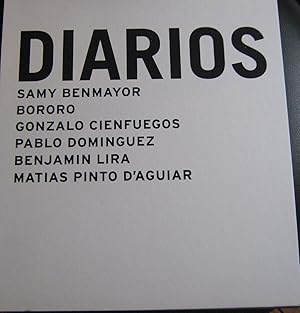
Encuadernación de tapa dura. Condition: Como Nuevo. 1ª Edición. 119p. 32x28 cm. Ilust. a color y algunas en b/n. 1500 grs. (MS2) 75573.
Published by Patrimonio Cultural de Chile, Santiago de Chile 2004
- Hardcover
- First Edition
Seller: Librería Monte Sarmiento, Santiago, SANTI, ChileLibrería Monte Sarmiento
Contact seller5-star sellerCondition: Used - As new
US$ 68.55
US$ 38.00 shippingShips from Chile to U.S.A.Quantity: 1 available
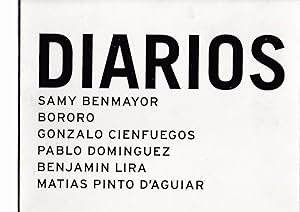
Encuadernación de tapa dura. Condition: Como Nuevo. 1ª Edición. 119p. 32x28 cm. Ilust. a color y algunas en b/n. 1500 grs. B13.
Published by No Registra 2003
Seller: LIBROS EL CID CAMPEADOR, Santiago de Chile, , ChileLIBROS EL CID CAMPEADOR
Contact seller5-star sellerCondition: Used
US$ 85.10
US$ 35.00 shippingShips from Chile to U.S.A.Quantity: 1 available
(ZZA1) - Santiago de Chile - Textos de Antonio Gil. Dibujos de Bororo - Contiene 118 páginas - Encuadernado en cartoné - Buen estado. hardcover.

- Art Print
Seller: Antiquariat Martin Barbian & Grund GbR, Saarbruecken, , GermanyAntiquariat Martin Barbian & Grund GbR
Contact seller5-star sellerCondition: Used
US$ 35.46
US$ 51.64 shippingShips from Germany to U.S.A.Quantity: 1 available
Farblithographie nach C. von den Steinen, 1897, 13x21 cm *Die Bororo sind ein Macro-Ge sprechendes indigenes Volk aus dem Süden von Mato Grosso, Brasilien.

- Hardcover
Seller: Antiquariat Sabine Keune, Aachen, , GermanyAntiquariat Sabine Keune
Contact seller5-star sellerCondition: Used
US$ 685.52
US$ 34.43 shippingShips from Germany to U.S.A.Quantity: 1 available
Mit ganzs. farbigen Siebdrucken. o. O.o.V. 30,5 x 23,5 cm. 10 nn. Bl. Lwd. mit aufgewalzten farbigen Deckelill. Privatdruck. Bilder und Texte im Siebdruckverfahren gedruckt. Handeinband. Vermutlich ein Unikat. Der Künstler konnte leider nicht ermittelt werden. Der Text ist ein Märchen der Bororo, ein indigenes Volk aus dem südli…chen Teil der Hochebene des Mato Grosso (Brasilien). Siehe "Die Jaguarzwillinge" S. 60-63. Leipzig u. Weimar. Kiepenheuer 1968. Erstmals erschienen 1958 im Erich Röth Verlag. Hier wurden die Initialen nach brasilianischen Indigenenmotiven von Diether Röth gestaltet, einem Sammler und Herausgeber von Märchenbänden. Die Darstellungen in vorliegendem Band erinnern stark daran. Zu den Bororo s. Claude Lévi-Strauss. Traurige Tropen.
 More images
- Photo
Seller: Max Rambod Inc, Woodland Hills, CA, U.S.A.Max Rambod Inc
Contact seller5-star sellerIndigenous South American real photo postcards and photographs of Bororo and Mapuche people in Brazil and Chile, circa 1900 to 1910, preserving early twentieth century views of Indigenous family life, dress, childhood, settlement, travel, and labor across several distinct communities. Bororo subjects in Mato Grosso appear in clo…se portrait format under the printed heading "Missions Salésiennes," including a child holding a parrot, four seated children captioned "Petits Bororos chrétiens," and an adult man posed before a thatched structure wearing crescent chest ornaments and armbands. Mapuche women and children appear in Chilean postcards titled "Mapuches, Niñas araucanas," "Indias mapuches con niños," and "Mapuches Mujeres y niños araucanos," with braided hair, long dresses, shawls, bead adornment, and multi-generational family groupings. The Mapuche, an Indigenous people of south-central Chile and adjacent Argentina, had long resisted Spanish rule before Chilean military conquest and land seizure reshaped the conditions under which such portraits were made in the late nineteenth and early twentieth centuries. Photo archive of 11 photographs, including 8 real photo postcards and 3 silver gelatin photographs, ranging from postcard size to small snapshot format, Brazil, Chile, and northern South America, circa 1900 to 1910. The Bororo material centers on frontal portrait studies printed in French as "Brésil, Matto Grosso," with figures placed outdoors or before vernacular architecture and presented with close attention to ornament, pose, and age. The Mapuche cards are more varied in grouping: one shows three young women standing together in dark garments with braided hair and jewelry; another gathers two elderly women, two younger mothers, a baby, and two children beneath the title "Indias mapuches con niños"; a related card of women and children bears a Chilean stamp and a French manuscript note on the front identifying the women as those of a cacique. The three photographs move beyond posed portraiture. One records Indigenous people seated on the ground in a dry landscape wearing broad sun hats beside baskets of food and goods, with a small dog in the background and the verso caption "Indians on the way to [illegible]." Another records three Indigenous men standing bare-chested before vernacular structures in Vichada, while a companion photograph isolates one man before the same settlement. A weaving scene captioned "Indian woman weaving" and a market or village scene with men, baskets, and goods outside an adobe building widen the group from ethnographic portrait types to scenes of movement, work, and exchange. Children, mothers, elders, travelers, weavers, and men p osed within village settingsappear across the group. Dress, hair, jewelry, baskets, animals, thatched and adobe structures, and handwritten captions keep the photographs and postcards grounded in specific lived environments even where ethnographic titles or missionary framing shape the captions. Light to moderate edge wear, corner rubbing, scattered toning, manuscript and postal markings to versos, one Chilean stamp, and some surface wear consistent with age; overall good condition. The group preserves Indigenous family relations, material culture, travel, labor, and village life across several early twentieth century South American communities.


