

Order Total (1 Item Items):
Shipping Destination:

Bremer Scott (33 results)
Skip to main search results
Search filters
Product Type
- All Product Types
- Books (33)
- Magazines & Periodicals (No further results match this refinement)
- Comics (No further results match this refinement)
- Sheet Music (No further results match this refinement)
- Art, Prints & Posters (No further results match this refinement)
- Photographs (No further results match this refinement)
- Maps (No further results match this refinement)
- Manuscripts & Paper Collectibles (No further results match this refinement)
Condition Learn more
- New (25)
- As New, Fine or Near Fine (3)
- Very Good or Good (5)
- Fair or Poor (No further results match this refinement)
- As Described (No further results match this refinement)
Binding
Collectible Attributes
- First Edition (1)
- Signed (No further results match this refinement)
- Dust Jacket (1)
- Seller-Supplied Images (16)
- Not Print on Demand (28)
Language (2)
Free Shipping
Seller Location
Seller Rating
-

And Send the Sun Tomorrow : A Journal of My Father's Last Days
Published by Winston Press, Inc., Minneapolis, MN, 1979
ISBN 10: 003049396X ISBN 13: 9780030493966
Soft cover. Condition: Good. Pages are clean and unmarked. Cover corners and edges are lightly rubbed. Binding is tight. X-Library.
-

-

Changing Seasonality: How Communities Are Revising Their Seasons (Paperback or Softback)
Language: English
Published by de Gruyter 6/30/2025, 2025
ISBN 10: 3112216083 ISBN 13: 9783112216088
Paperback or Softback. Condition: New. Changing Seasonality: How Communities Are Revising Their Seasons. Book.
-

Tyler Perry's Why Did I Get Married?: The Play
Published by Liosngate Pictures Entertainment 2006-06-27 00:00:00, 2006
dvd. Condition: Used - Good.
-

Condition: As New. Unread book in perfect condition.
-
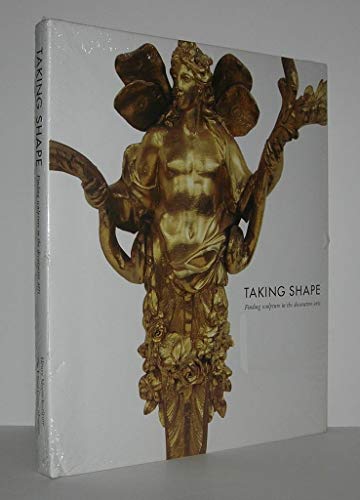
Taking Shape: Finding Sculpture in the Decorative Arts
Language: English
Published by Getty Publications, Los Angeles, CA, 2009
ISBN 10: 0892369639 ISBN 13: 9780892369638
Hardcover. Condition: Very Good+. Dust Jacket Condition: Very Good+. Near fine in near fine dust jacket. No markings, no bookplate, no remainder mark. No jacket chips or tears.
-

PAP. Condition: New. New Book. Shipped from UK. Established seller since 2000.
-

Taking Shape: Finding Sculpture in the Decorative Arts
Language: English
Published by J. Paul Getty Museum, 2009
ISBN 10: 0892369639 ISBN 13: 9780892369638
hardcover. Condition: Very Good. J. Paul Getty Museum; Los Angeles, 2009. Hardcover. A Very Good, grey cloth binding with gilt lettering on spine, binding sturdy and intact, scratch mark rear pastedown, mild scattered foxing to text block edges and pastedown/endpaper margins, very few pages with small nicks to edges, in a Very Good, some handling/scuff marks to panels, bit of edge/corner wear, some offsetting to front panel, very mild scattered foxing to verso panel/flap margins, Dust wrapper. A nice, clean and unmarked copy. 4to[quarto or approx. 11.5 x 13.5 inches], 209pp., appendices, color and b&w illustrations. We pack securely and ship daily with delivery confirmation on every book. The picture on the listing page is of the actual book for sale. Additional Scan(s) are available for any item, please inquire.Please note: Oversized books/sets MAY require additional postage then what is quoted for 2.2lb book.
-
Changing Seasonality
Seller: PBShop.store UK, Fairford, GLOS, United Kingdom
Seller rating 5 out of 5 stars

PAP. Condition: New. New Book. Shipped from UK. Established seller since 2000.
-

Ruthless Lobby Card #8 1948 Sydney Greenstreet with Scott, Lynn & Hayward!
Published by Eagle Lion, 1948
No Binding. Condition: Very Good. A VG or better original release 11 x 14 lobby card. Size: 11" X 14". Book.
-
-
Condition: New.
-
Changing Seasonality : How Communities Are Revising Their Seasons
Seller: GreatBookPricesUK, Woodford Green, United Kingdom
Seller rating 5 out of 5 stars
US$ 32.36
US$ 20.03 shipping
Ships from United Kingdom to U.S.A.Quantity: Over 20 available
Add to basketCondition: New.
-
Changing Seasonality : How Communities Are Revising Their Seasons
Seller: GreatBookPricesUK, Woodford Green, United Kingdom
Seller rating 5 out of 5 stars
US$ 33.22
US$ 20.03 shipping
Ships from United Kingdom to U.S.A.Quantity: Over 20 available
Add to basketCondition: As New. Unread book in perfect condition.
-
Condition: New.
-

Taschenbuch. Condition: Neu. Neuware -Communities worldwide are critically re-examining their seasonal cultures and calendars. As cultural frameworks, seasons have long patterned community life and provided repertoires for living by annual rhythms. In a chaotic world, the seasons - winter, the monsoon and so on - can feel like stable cultural landmarks for reckoning time and orienting our communities. Seasons are rooted in our pasts and reproduced in our present. They act as schemes for synchronising community activities and professional practices, and as symbol systems for interpreting what happens in the world. But on closer inspection, seasons can be unstable and unreliable. Their meanings can change over time. Seasonal cultures evolve with environments and communities' worldviews, values, technologies and practices, affecting how people perceive seasonal patterns and behave accordingly. Calendars are contested, especially now. Communities today find themselves in a moment of accelerated and intersecting changes - from climate to social, political, and technological - that are destabilizing seasonal cultures. How they reorient themselves to shifting patterns may affect whether seasonal rhythms serve as resources, or lead people down maladaptive pathways. A focus on seasonal cultures builds on multi-disciplinary work. The social sciences, from anthropology to sociology, have long studied how seasons order people's sense of time, social life, relationship to the environment, and politics. In the humanities, seasons play an important role in literature, art, archaeology and history. This book advances scholarship in these fields, and enriches it with extrascientific insights from practice, to open up exiting new directions in climate adaptation.
-
Changing Seasonality: How Communities are Revising their Seasons
Seller: Kennys Bookshop and Art Galleries Ltd., Galway, GY, Ireland
Seller rating 5 out of 5 stars
First Edition
Condition: New. 2025. 1st Edition. perfect. . . . . .
-
Condition: New. 2025. 1st Edition. perfect. . . . . . Books ship from the US and Ireland.
-

Changing Seasonality : How Communities are Revising their Seasons
Language: English
Published by De Gruyter, De Gruyter Jan 2025, 2025
ISBN 10: 3112216083 ISBN 13: 9783112216088
Taschenbuch. Condition: Neu. Neuware - Communities worldwide are critically re-examining their seasonal cultures and calendars. As cultural frameworks, seasons have long patterned community life and provided repertoires for living by annual rhythms. In a chaotic world, the seasons - winter, the monsoon and so on - can feel like stable cultural landmarks for reckoning time and orienting our communities. Seasons are rooted in our pasts and reproduced in our present. They act as schemes for synchronising community activities and professional practices, and as symbol systems for interpreting what happens in the world. But on closer inspection, seasons can be unstable and unreliable. Their meanings can change over time. Seasonal cultures evolve with environments and communities' worldviews, values, technologies and practices, affecting how people perceive seasonal patterns and behave accordingly. Calendars are contested, especially now. Communities today find themselves in a moment of accelerated and intersecting changes - from climate to social, political, and technological - that are destabilizing seasonal cultures. How they reorient themselves to shifting patterns may affect whether seasonal rhythms serve as resources, or lead people down maladaptive pathways. A focus on seasonal cultures builds on multi-disciplinary work. The social sciences, from anthropology to sociology, have long studied how seasons order people's sense of time, social life, relationship to the environment, and politics. In the humanities, seasons play an important role in literature, art, archaeology and history. This book advances scholarship in these fields, and enriches it with extrascientific insights from practice, to open up exiting new directions in climate adaptation.
-

Taschenbuch. Condition: Neu. Changing Seasonality | How Communities are Revising their Seasons | Arjan Wardekker (u. a.) | Taschenbuch | XIII | Englisch | 2025 | De Gruyter | EAN 9783112216088 | Verantwortliche Person für die EU: Walter de Gruyter GmbH, De Gruyter GmbH, Genthiner Str. 13, 10785 Berlin, productsafety[at]degruyterbrill[dot]com | Anbieter: preigu.
-

Hardback. Condition: New. Communities worldwide are critically re-examining their seasonal cultures and calendars. As cultural frameworks, seasons have long patterned community life and provided repertoires for living by annual rhythms. In a chaotic world, the seasons - winter, the monsoon and so on - can feel like stable cultural landmarks for reckoning time and orienting our communities. Seasons are rooted in our pasts and reproduced in our present. They act as schemes for synchronising community activities and professional practices, and as symbol systems for interpreting what happens in the world. But on closer inspection, seasons can be unstable and unreliable. Their meanings can change over time. Seasonal cultures evolve with environments and communities' worldviews, values, technologies and practices, affecting how people perceive seasonal patterns and behave accordingly. Calendars are contested, especially now. Communities today find themselves in a moment of accelerated and intersecting changes - from climate to social, political, and technological - that are destabilizing seasonal cultures. How they reorient themselves to shifting patterns may affect whether seasonal rhythms serve as resources, or lead people down maladaptive pathways. A focus on seasonal cultures builds on multi-disciplinary work. The social sciences, from anthropology to sociology, have long studied how seasons order people's sense of time, social life, relationship to the environment, and politics. In the humanities, seasons play an important role in literature, art, archaeology and history. This book advances scholarship in these fields, and enriches it with extrascientific insights from practice, to open up exiting new directions in climate adaptation.
-

Changing Seasonality: How Communities are Revising their Seasons
Seller: Ria Christie Collections, Uxbridge, United Kingdom
Seller rating 5 out of 5 stars
US$ 109.31
US$ 16.00 shipping
Ships from United Kingdom to U.S.A.Quantity: Over 20 available
Add to basketCondition: New. In.
-

Changing Seasonality
Seller: Rarewaves.com USA, London, LONDO, United Kingdom
Seller rating 5 out of 5 stars
US$ 133.76
Free Shipping
Ships from United Kingdom to U.S.A.Quantity: Over 20 available
Add to basketHardback. Condition: New. Communities worldwide are critically re-examining their seasonal cultures and calendars. As cultural frameworks, seasons have long patterned community life and provided repertoires for living by annual rhythms. In a chaotic world, the seasons - winter, the monsoon and so on - can feel like stable cultural landmarks for reckoning time and orienting our communities. Seasons are rooted in our pasts and reproduced in our present. They act as schemes for synchronising community activities and professional practices, and as symbol systems for interpreting what happens in the world. But on closer inspection, seasons can be unstable and unreliable. Their meanings can change over time. Seasonal cultures evolve with environments and communities' worldviews, values, technologies and practices, affecting how people perceive seasonal patterns and behave accordingly. Calendars are contested, especially now. Communities today find themselves in a moment of accelerated and intersecting changes - from climate to social, political, and technological - that are destabilizing seasonal cultures. How they reorient themselves to shifting patterns may affect whether seasonal rhythms serve as resources, or lead people down maladaptive pathways. A focus on seasonal cultures builds on multi-disciplinary work. The social sciences, from anthropology to sociology, have long studied how seasons order people's sense of time, social life, relationship to the environment, and politics. In the humanities, seasons play an important role in literature, art, archaeology and history. This book advances scholarship in these fields, and enriches it with extrascientific insights from practice, to open up exiting new directions in climate adaptation.
-

US$ 100.08
US$ 56.03 shipping
Ships from Germany to U.S.A.Quantity: Over 20 available
Add to basketHardcover. Condition: New. Scott Bremer, University of Bergen, Norway. Arjan Wardekker, University of Bergen, Norway. Communities worldwide are critically re-examining their seasonal cultures and calendars. As cultural framework.
-

Hardback. Condition: New. Communities worldwide are critically re-examining their seasonal cultures and calendars. As cultural frameworks, seasons have long patterned community life and provided repertoires for living by annual rhythms. In a chaotic world, the seasons - winter, the monsoon and so on - can feel like stable cultural landmarks for reckoning time and orienting our communities. Seasons are rooted in our pasts and reproduced in our present. They act as schemes for synchronising community activities and professional practices, and as symbol systems for interpreting what happens in the world. But on closer inspection, seasons can be unstable and unreliable. Their meanings can change over time. Seasonal cultures evolve with environments and communities' worldviews, values, technologies and practices, affecting how people perceive seasonal patterns and behave accordingly. Calendars are contested, especially now. Communities today find themselves in a moment of accelerated and intersecting changes - from climate to social, political, and technological - that are destabilizing seasonal cultures. How they reorient themselves to shifting patterns may affect whether seasonal rhythms serve as resources, or lead people down maladaptive pathways. A focus on seasonal cultures builds on multi-disciplinary work. The social sciences, from anthropology to sociology, have long studied how seasons order people's sense of time, social life, relationship to the environment, and politics. In the humanities, seasons play an important role in literature, art, archaeology and history. This book advances scholarship in these fields, and enriches it with extrascientific insights from practice, to open up exiting new directions in climate adaptation.
-

Buch. Condition: Neu. Changing Seasonality | How Communities are Revising their Seasons | Scott Bremer (u. a.) | Buch | XIII | Englisch | 2024 | De Gruyter | EAN 9783111245515 | Verantwortliche Person für die EU: Walter de Gruyter GmbH, De Gruyter GmbH, Genthiner Str. 13, 10785 Berlin, productsafety[at]degruyterbrill[dot]com | Anbieter: preigu.
-

Buch. Condition: Neu. Neuware - Communities worldwide are critically re-examining their seasonal cultures and calendars. As cultural frameworks, seasons have long patterned community life and provided repertoires for living by annual rhythms. In a chaotic world, the seasons - winter, the monsoon and so on - can feel like stable cultural landmarks for reckoning time and orienting our communities. Seasons are rooted in our pasts and reproduced in our present. They act as schemes for synchronising community activities and professional practices, and as symbol systems for interpreting what happens in the world. But on closer inspection, seasons can be unstable and unreliable. Their meanings can change over time. Seasonal cultures evolve with environments and communities' worldviews, values, technologies and practices, affecting how people perceive seasonal patterns and behave accordingly. Calendars are contested, especially now. Communities today find themselves in a moment of accelerated and intersecting changes - from climate to social, political, and technological - that are destabilizing seasonal cultures. How they reorient themselves to shifting patterns may affect whether seasonal rhythms serve as resources, or lead people down maladaptive pathways. A focus on seasonal cultures builds on multi-disciplinary work. The social sciences, from anthropology to sociology, have long studied how seasons order people's sense of time, social life, relationship to the environment, and politics. In the humanities, seasons play an important role in literature, art, archaeology and history. This book advances scholarship in these fields, and enriches it with extrascientific insights from practice, to open up exiting new directions in climate adaptation.
-
Condition: Sehr gut. Zustand: Sehr gut | Seiten: 264 | Sprache: Englisch | Produktart: Bücher | Keine Beschreibung verfügbar.
-

Changing Seasonality
Language: English
Published by De Gruyter, De Gruyter Jun 2025, 2025
ISBN 10: 3112216083 ISBN 13: 9783112216088
Seller: BuchWeltWeit Ludwig Meier e.K., Bergisch Gladbach, Germany
Seller rating 5 out of 5 stars
Taschenbuch. Condition: Neu. This item is printed on demand - it takes 3-4 days longer - Neuware -Communities worldwide are critically re-examining their seasonal cultures and calendars. As cultural frameworks, seasons have long patterned community life and provided repertoires for living by annual rhythms. In a chaotic world, the seasons - winter, the monsoon and so on - can feel like stable cultural landmarks for reckoning time and orienting our communities. Seasons are rooted in our pasts and reproduced in our present. They act as schemes for synchronising community activities and professional practices, and as symbol systems for interpreting what happens in the world. But on closer inspection, seasons can be unstable and unreliable. Their meanings can change over time. Seasonal cultures evolve with environments and communities' worldviews, values, technologies and practices, affecting how people perceive seasonal patterns and behave accordingly. Calendars are contested, especially now. Communities today find themselves in a moment of accelerated and intersecting changes - from climate to social, political, and technological - that are destabilizing seasonal cultures. How they reorient themselves to shifting patterns may affect whether seasonal rhythms serve as resources, or lead people down maladaptive pathways. A focus on seasonal cultures builds on multi-disciplinary work. The social sciences, from anthropology to sociology, have long studied how seasons order people's sense of time, social life, relationship to the environment, and politics. In the humanities, seasons play an important role in literature, art, archaeology and history. This book advances scholarship in these fields, and enriches it with extrascientific insights from practice, to open up exiting new directions in climate adaptation. 268 pp. Englisch.
-

Changing Seasonality
Seller: Rheinberg-Buch Andreas Meier eK, Bergisch Gladbach, Germany
Seller rating 5 out of 5 stars
Taschenbuch. Condition: Neu. This item is printed on demand - it takes 3-4 days longer - Neuware -Communities worldwide are critically re-examining their seasonal cultures and calendars. As cultural frameworks, seasons have long patterned community life and provided repertoires for living by annual rhythms. In a chaotic world, the seasons - winter, the monsoon and so on - can feel like stable cultural landmarks for reckoning time and orienting our communities. Seasons are rooted in our pasts and reproduced in our present. They act as schemes for synchronising community activities and professional practices, and as symbol systems for interpreting what happens in the world. But on closer inspection, seasons can be unstable and unreliable. Their meanings can change over time. Seasonal cultures evolve with environments and communities' worldviews, values, technologies and practices, affecting how people perceive seasonal patterns and behave accordingly. Calendars are contested, especially now. Communities today find themselves in a moment of accelerated and intersecting changes - from climate to social, political, and technological - that are destabilizing seasonal cultures. How they reorient themselves to shifting patterns may affect whether seasonal rhythms serve as resources, or lead people down maladaptive pathways. A focus on seasonal cultures builds on multi-disciplinary work. The social sciences, from anthropology to sociology, have long studied how seasons order people's sense of time, social life, relationship to the environment, and politics. In the humanities, seasons play an important role in literature, art, archaeology and history. This book advances scholarship in these fields, and enriches it with extrascientific insights from practice, to open up exiting new directions in climate adaptation. 268 pp. Englisch.


