
Collinson General (3 results)

Language: English
Published by EGYPT GENERAL MISSION, UNITED KINGDOM 1939
- Softcover
Seller: EllaandRupert, belfast, United KingdomEllaandRupert
Contact seller5-star sellerCondition: Used - Poor
US$ 31.22
US$ 5.50 shippingShips from United Kingdom to U.S.A.Quantity: 1 available
Soft cover. Condition: Poor. STAPLED BOOKLET - APPROX 7 X 5 " - 15 PAGES - COVERS RUBBED FADED STAINED - STAPLES RUSTED -.

Language: English
Published by Royal Engineers Institute, London 1903
- Hardcover
Seller: Beach Hut Books, Lingfield, , United KingdomBeach Hut Books
Contact seller5-star sellerCondition: Used - Very good
US$ 41.43
US$ 24.13 shippingShips from United Kingdom to U.S.A.Quantity: 1 available
Hardcover. Condition: Very Good. No Jacket. 1/2" closed tear at head of spine. Bookplates.
 More images
Published by Sampson Low, Marston, Searle, & Rivington., London 1889
- Hardcover
- First Edition
Seller: Sapience Bookstore, Hexham, , United KingdomSapience Bookstore
Contact seller3-star sellerCondition: Used - Good
US$ 3,728.40
US$ 29.90 shippingShips from United Kingdom to U.S.A.Quantity: 1 available
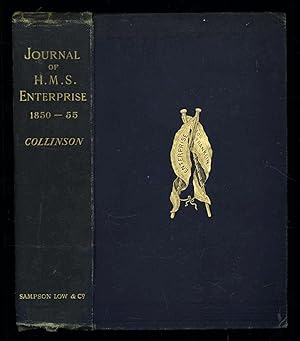
Hardcover. Condition: Good. No Jacket. 1st Edition. Good. Publishers cloth, embossed with gilt lettering and emblem to upper cover. Front hinge cracked. Gift inscription in contemporaneous hand to free front endpaper. A touch of foxing. Two of the maps have a dog-eared fore-edge where they have not been folded quite flush with t…he page edges. Illustrated with tissue-guarded colour frontispiece of the ship, tissue-guarded portrait of the author and 6 fold-out maps. xi, [i], 531pp, 32pp of publishers ads to rear. FIRST EDITION of the posthumously published journal by the captain who came closest to the site where Franklin's expedition ended. "In 1849 Collinson was appointed to command an expedition for the relief of Sir John Franklin, by way of the Bering Strait; he himself had command of the Enterprise, and with him was Commander Robert Le Mesurier McClure in the Investigator. The two ships sailed together from Plymouth on 20 January 1850 but unfortunately separated in the neighbourhood of Cape Horn and did not meet again. The Enterprise passed Point Barrow, Alaska, on 21 August, but the ice forced Collinson to return south and winter in Hong Kong. In 1851 he was again hampered by ice and in 1852 was frozen in at Cambridge Bay for the winter. In 1853 the Enterprise was caught in the ice at Camden Bay, and there passed a third winter. She reached Point Barrow on 8 August 1854, after being shut up in the Arctic, entirely on her own resources, for upwards of three years. Of the many who had searched for Franklin, Collinson came closest to the place where the expedition had ended. Collinson's addition to geographical knowledge on this Arctic trip was very considerable, and would have been tantamount to the discovery of the north-west passage, had this not been already actually achieved by the men of the Investigator" (DNB). Arctic Bibliography 3351; Hill 337; Ricks p 68; Tourville 986.


