
Corso Marta (28 results)

- Softcover
Seller: libreriauniversitaria.it, Occhiobello, RO, Italylibreriauniversitaria.it
Contact seller4-star sellerCondition: New
US$ 12.85
US$ 20.50 shippingShips from Italy to U.S.A.Quantity: 2 available
Condition: NEW.
- Softcover
Seller: Revaluation Books, Exeter, United KingdomRevaluation Books
Contact seller5-star sellerCondition: New
US$ 21.32
US$ 13.39 shippingShips from United Kingdom to U.S.A.Quantity: 1 available
Paperback. Condition: Brand New. Italian language. 7.17x6.93x0.32 inches. In Stock.

- Softcover
Seller: Revaluation Books, Exeter, United KingdomRevaluation Books
Contact seller5-star sellerCondition: New
US$ 101.83
US$ 16.74 shippingShips from United Kingdom to U.S.A.Quantity: 2 available
Paperback. Condition: Brand New. 01 edition. 218 pages. 10.75x8.00x0.50 inches. In Stock.

- Hardcover
Seller: Books From California, Simi Valley, CA, U.S.A.Books From California
Contact seller4-star sellerCondition: Used - Very good
US$ 119.89
US$ 4.99 shippingShips within U.S.A.Quantity: 1 available
hardcover. Condition: Very Good.

Millet and What Else?: The Wider Context of the Adoption of Millet Cultivation in Europe
Kirleis, Wiebke (Editor)/ Dal Corso, Marta (Editor)/ Filipovic, Dragana (Editor)
- Softcover
Seller: Revaluation Books, Exeter, United KingdomRevaluation Books
Contact seller5-star sellerCondition: New
US$ 114.57
US$ 20.09 shippingShips from United Kingdom to U.S.A.Quantity: 2 available
Paperback. Condition: Brand New. 320 pages. 11.00x8.27x0.83 inches. In Stock.

- Hardcover
Seller: Revaluation Books, Exeter, United KingdomRevaluation Books
Contact seller5-star sellerCondition: New
US$ 305.51
US$ 16.74 shippingShips from United Kingdom to U.S.A.Quantity: 2 available
Hardcover. Condition: Brand New. 01 edition. 218 pages. 11.50x8.75x0.75 inches. In Stock.
Millet and What Else?: The Wider Context of the Adoption of Millet Cultivation in Europe
Kirleis, Wiebke (Editor)/ Dal Corso, Marta (Editor)/ Filipovic, Dragana (Editor)
- Hardcover
Seller: Revaluation Books, Exeter, United KingdomRevaluation Books
Contact seller5-star sellerCondition: New
US$ 343.68
US$ 20.09 shippingShips from United Kingdom to U.S.A.Quantity: 2 available
Hardcover. Condition: Brand New. 320 pages. 11.00x8.27x0.98 inches. In Stock.
- Softcover
Seller: Solibri, Epone, FranceSolibri
Contact seller4-star sellerCondition: Used - Fine
US$ 13.53
US$ 64.53 shippingShips from France to U.S.A.Quantity: 1 available
Condition: fine. très bon état. Optez pour nos livres d'occasion en très bon état, et soutenez l'insertion sociale et l'écologie en leur offrant une seconde vie. 378935-2 - Oswald hip-hop, Henke, Alessandra, PASSEPARTOUT, 2012.

Maidanetske 2013. New excavations at a Trypilia mega-site (Stud. z. Archäol. in Ostmitteleuropa, 16)
- Hardcover
Seller: Joseph Burridge Books, Dagenham, United KingdomJoseph Burridge Books
Contact seller5-star sellerCondition: New
US$ 151.75
US$ 36.16 shippingShips from United Kingdom to U.S.A.Quantity: 1 available
Hardcover. Condition: New. 174 pages, Illustrations, maps : 31 cm. English with some Cyrillic, Ukrainian.

- Hardcover
Seller: Joseph Burridge Books, Dagenham, United KingdomJoseph Burridge Books
Contact seller5-star sellerCondition: New
US$ 179.34
US$ 36.16 shippingShips from United Kingdom to U.S.A.Quantity: 1 available
Hardcover. Condition: New. 232 pages, numerous (mostly col.) ill., 30 cm.

- Hardcover
Seller: Joseph Burridge Books, Dagenham, United KingdomJoseph Burridge Books
Contact seller5-star sellerCondition: New
US$ 193.14
US$ 36.16 shippingShips from United Kingdom to U.S.A.Quantity: 1 available
Hardcover. Condition: New. 287 pages : illustrations ; 31 cm.
- Softcover
- Print on Demand
Seller: BuchWeltWeit Ludwig Meier e.K., Bergisch Gladbach, GermanyBuchWeltWeit Ludwig Meier e.K.
Contact seller5-star sellerCondition: New
US$ 52.94
US$ 26.27 shippingShips from Germany to U.S.A.Quantity: 2 available
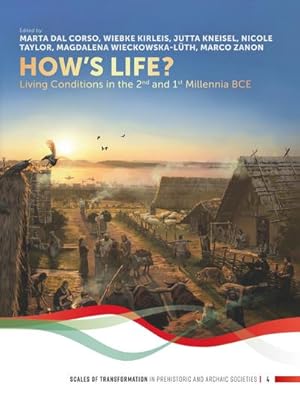
Taschenbuch. Condition: Neu. This item is printed on demand - it takes 3-4 days longer - Neuware -The Bronze Age and Early Iron Age saw many developments in metalworking, social structure, food production, nutrition, and diet. At the same time, networks in Europe intensified and human impact on the environment changed in charact…er. What influence did these transformations have on daily life Which proxies can researchers use to study these topics This volume presents scientific contributions from different fields of expertise within modern archaeology in order to investigate past living conditions through aspects of the archaeological record related to production (e.g. of food and metal), well-being (e.g. diet, health), human relations (e.g. violence), and the local environment (e.g. pollution, waste disposal, and water management). It also critically addresses contemporary graphic representations of Bronze Age living conditions. This volume compiles papers from a session with the same title organized for an international open workshop of the Graduate School 'Human Development in Landscapes', entitled 'Socio-Environmental Dynamics over the Last 12,000 Years: The Development of Landscapes IV', which took place in 2017, in Kiel, Germany. Publications detailing overarching core research on subsistence systems, societal transformations, and resilience versus rupture dynamics already exist. With this volume, we aim to provide a closer look at everyday life in past communities.ContentsIntroductionPart 1. Life in Action: Metal Production, Health Conditions and Dietary choicesCopper Output, Demand for Wood and Energy Expenditure - Evaluating Economic Aspects of Bronze Age MetallurgyJohanna BrinkmannWarriors' Lives. The Skeletal Sample from the Bronze Age Battlefield Site in the Tollense Valley, Northeastern GermanyGundula Lidke, Ute Brinker, Annemarie Schramm, Detlef Jantzen, Thomas TerbergerEnvironmental Imposition or Ancient Farmers' Choice A Study of the Presence of 'Inferior' Legumes in the Bronze Age Carpathian Basin (Hungary)Sonja Filatova, Ferenc Gyulai, Wiebke KirleisPart 2. The Place of Living: Routine Activities, the Management of Waste and of Natural ResourcesThe Fossil Plant remains of the Early Bronze Age site Rothenkirchen on Rügen. Inside Distribution Patterns as a Mirror of HousekeepingAlmuth AlslebenWaste Disposal In The Bronze Age: Plants In Pits At Wismar-Wendorf, Northern GermanyDragana Filipovic Frank Mewis, Lars Saalow, Jens-Peter Schmidt, Wiebke KirleisAn Overview of Olive Trees in the Eastern Mediterranean during the Mid-Late Holocene: Selective Exploitation or Established Arboriculture Asli Oflaz, Walter Dörfler, Mara WeineltOn-site Palaeoecological Investigations from the Hünenburg Hillfort-Settlement Complex, with Special Reference to Non-pollen PalynomorphsMagdalena Wieckowska-Lüth, Immo HeskePart 3. Living the Past: The (Graphic) Representation of Past Living ConditionsCreating an Understanding of Life in and around a Bronze Age House through Science-based Artist ImpressionsYvonne F. van AmerongenCase Study 'How Was Life in Early Bronze Age Bruszczewo' - Archaeology and the View of Prehistory in Reconstruction ImagesJutta Kneisel 220 pp. Englisch.

Language: English
Published by Sidestone Press|Sidestone Press Academics, 2019
- Softcover
- Print on Demand
Seller: moluna, Greven, Germanymoluna
Contact seller5-star sellerCondition: New
US$ 44.76
US$ 55.95 shippingShips from Germany to U.S.A.Quantity: Over 20 available
Condition: New. Dieser Artikel ist ein Print on Demand Artikel und wird nach Ihrer Bestellung fuer Sie gedruckt. This book examines Bronze Age and Iron Age developments such as metalworking, social structure, food production, nutrition, diet, the intensification if European networks and human impact on the environment. What infl…uence did these developments have on dai.

- Softcover
- Print on Demand
Seller: moluna, Greven, Germanymoluna
Contact seller5-star sellerCondition: New
US$ 57.93
US$ 55.95 shippingShips from Germany to U.S.A.Quantity: Over 20 available
Condition: New. Dieser Artikel ist ein Print on Demand Artikel und wird nach Ihrer Bestellung fuer Sie gedruckt. Broomcorn/common/proso millet (Panicum miliaceum) is a cereal crop that originated in East Asia and was transferred westward to Europe, where it was introduced in the mid-2nd millennium BCE, at the height of the Bronz…e Age. Archaeobotanists from the Collabo.

- Softcover
- Print on Demand
Seller: buchversandmimpf2000, Emtmannsberg, BAYE, Germanybuchversandmimpf2000
Contact seller5-star sellerCondition: New
US$ 52.94
US$ 68.53 shippingShips from Germany to U.S.A.Quantity: 1 available
Taschenbuch. Condition: Neu. This item is printed on demand - Print on Demand Titel. Neuware -The Bronze Age and Early Iron Age saw many developments in metalworking, social structure, food production, nutrition, and diet. At the same time, networks in Europe intensified and human impact on the environment changed in character.…What influence did these transformations have on daily life Which proxies can researchers use to study these topics This volume presents scientific contributions from different fields of expertise within modern archaeology in order to investigate past living conditions through aspects of the archaeological record related to production (e.g. of food and metal), well-being (e.g. diet, health), human relations (e.g. violence), and the local environment (e.g. pollution, waste disposal, and water management). It also critically addresses contemporary graphic representations of Bronze Age living conditions.This volume compiles papers from a session with the same title organized for an international open workshop of the Graduate School ¿Human Development in Landscapes¿, entitled ¿Socio-Environmental Dynamics over the Last 12,000 Years: The Development of Landscapes IV¿, which took place in 2017, in Kiel, Germany. Publications detailing overarching core research on subsistence systems, societal transformations, and resilience versus rupture dynamics already exist. With this volume, we aim to provide a closer look at everyday life in past communities.ContentsIntroductionPart 1. Life in Action: Metal Production, Health Conditions and Dietary choicesCopper Output, Demand for Wood and Energy Expenditure ¿ Evaluating Economic Aspects of Bronze Age MetallurgyJohanna BrinkmannWarriors¿ Lives. The Skeletal Sample from the Bronze Age Battlefield Site in the Tollense Valley, Northeastern GermanyGundula Lidke, Ute Brinker, Annemarie Schramm, Detlef Jantzen, Thomas TerbergerEnvironmental Imposition or Ancient Farmers¿ Choice A Study of the Presence of ¿Inferior¿ Legumes in the Bronze Age Carpathian Basin (Hungary)Sonja Filatova, Ferenc Gyulai, Wiebke KirleisPart 2. The Place of Living: Routine Activities, the Management of Waste and of Natural ResourcesThe Fossil Plant remains of the Early Bronze Age site Rothenkirchen on Rügen. Inside Distribution Patterns as a Mirror of HousekeepingAlmuth AlslebenWaste Disposal In The Bronze Age: Plants In Pits At Wismar-Wendorf, Northern GermanyDragana Filipovi¿ Frank Mewis, Lars Saalow, Jens-Peter Schmidt, Wiebke KirleisAn Overview of Olive Trees in the Eastern Mediterranean during the Mid-Late Holocene: Selective Exploitation or Established Arboriculture Asli Oflaz, Walter Dörfler, Mara WeineltOn-site Palaeoecological Investigations from the Hünenburg Hillfort¿Settlement Complex, with Special Reference to Non-pollen PalynomorphsMagdalena Wieckowska-Lüth, Immo HeskePart 3. Living the Past: The (Graphic) Representation of Past Living ConditionsCreating an Understanding of Life in and around a Bronze Age House through Science-based Artist ImpressionsYvonne F. van AmerongenCase Study ¿How Was Life in Early Bronze Age Bruszczewö ¿ Archaeology and the View of Prehistory in Reconstruction ImagesJutta KneiselBooks on Demand GmbH, Überseering 33, 22297 Hamburg 220 pp. Englisch.

- Softcover
- Print on Demand
Seller: preigu, Osnabrück, Germanypreigu
Contact seller5-star sellerCondition: New
US$ 46.53
US$ 79.95 shippingShips from Germany to U.S.A.Quantity: 5 available
Taschenbuch. Condition: Neu. How's Life? | Marta Dal Corso (u. a.) | Taschenbuch | 220 S. | Englisch | 2019 | Sidestone Press Academics | EAN 9789088908019 | Verantwortliche Person für die EU: BoD - Books on Demand, In de Tarpen 42, 22848 Norderstedt, info[at]bod[dot]de | Anbieter: preigu Print on Demand.

- Softcover
- Print on Demand
Seller: AHA-BUCH GmbH, Einbeck, GermanyAHA-BUCH GmbH
Contact seller5-star sellerCondition: New
US$ 55.52
US$ 73.16 shippingShips from Germany to U.S.A.Quantity: 1 available
Taschenbuch. Condition: Neu. nach der Bestellung gedruckt Neuware - Printed after ordering - The Bronze Age and Early Iron Age saw many developments in metalworking, social structure, food production, nutrition, and diet. At the same time, networks in Europe intensified and human impact on the environment changed in character. W…hat influence did these transformations have on daily life Which proxies can researchers use to study these topics This volume presents scientific contributions from different fields of expertise within modern archaeology in order to investigate past living conditions through aspects of the archaeological record related to production (e.g. of food and metal), well-being (e.g. diet, health), human relations (e.g. violence), and the local environment (e.g. pollution, waste disposal, and water management). It also critically addresses contemporary graphic representations of Bronze Age living conditions. This volume compiles papers from a session with the same title organized for an international open workshop of the Graduate School 'Human Development in Landscapes', entitled 'Socio-Environmental Dynamics over the Last 12,000 Years: The Development of Landscapes IV', which took place in 2017, in Kiel, Germany. Publications detailing overarching core research on subsistence systems, societal transformations, and resilience versus rupture dynamics already exist. With this volume, we aim to provide a closer look at everyday life in past communities.ContentsIntroductionPart 1. Life in Action: Metal Production, Health Conditions and Dietary choicesCopper Output, Demand for Wood and Energy Expenditure - Evaluating Economic Aspects of Bronze Age MetallurgyJohanna BrinkmannWarriors' Lives. The Skeletal Sample from the Bronze Age Battlefield Site in the Tollense Valley, Northeastern GermanyGundula Lidke, Ute Brinker, Annemarie Schramm, Detlef Jantzen, Thomas TerbergerEnvironmental Imposition or Ancient Farmers' Choice A Study of the Presence of 'Inferior' Legumes in the Bronze Age Carpathian Basin (Hungary)Sonja Filatova, Ferenc Gyulai, Wiebke KirleisPart 2. The Place of Living: Routine Activities, the Management of Waste and of Natural ResourcesThe Fossil Plant remains of the Early Bronze Age site Rothenkirchen on Rügen. Inside Distribution Patterns as a Mirror of HousekeepingAlmuth AlslebenWaste Disposal In The Bronze Age: Plants In Pits At Wismar-Wendorf, Northern GermanyDragana Filipovic Frank Mewis, Lars Saalow, Jens-Peter Schmidt, Wiebke KirleisAn Overview of Olive Trees in the Eastern Mediterranean during the Mid-Late Holocene: Selective Exploitation or Established Arboriculture Asli Oflaz, Walter Dörfler, Mara WeineltOn-site Palaeoecological Investigations from the Hünenburg Hillfort-Settlement Complex, with Special Reference to Non-pollen PalynomorphsMagdalena Wieckowska-Lüth, Immo HeskePart 3. Living the Past: The (Graphic) Representation of Past Living ConditionsCreating an Understanding of Life in and around a Bronze Age House through Science-based Artist ImpressionsYvonne F. van AmerongenCase Study 'How Was Life in Early Bronze Age Bruszczewo' - Archaeology and the View of Prehistory in Reconstruction ImagesJutta Kneisel.

- Softcover
- Print on Demand
Seller: buchversandmimpf2000, Emtmannsberg, BAYE, Germanybuchversandmimpf2000
Contact seller5-star sellerCondition: New
US$ 70.59
US$ 68.53 shippingShips from Germany to U.S.A.Quantity: 1 available
Taschenbuch. Condition: Neu. This item is printed on demand - Print on Demand Titel. Neuware -Broomcorn/common/proso millet (Panicum miliaceum) is a cereal crop that originated in East Asia and was transferred westward to Europe, where it was introduced in the mid-2nd millennium BCE, at the height of the Bronze Age. Archaeobotan…ists from the Collaborative Research Centre 1266, supported by many colleagues, conducted a large-scale programme of radiocarbon dating of millet grains from prehistoric Europe. They discovered that the spread of this crop on the continent happened quickly, extending far and wide. What do we know about the (pre)history of this crop in Europe The workshop organised by the CRC 1266 at Kiel University in 2019 encouraged the discussion on the circumstances and consequences of early broomcorn millet cultivation in Europe. This book brings together many of the workshop papers and reflects the diverse topics and research areas covered. The contributions inform us on the range of cultivated and collected plants from the time before and after the start of millet cultivation in Europe; present the cultural setting in which millet arrived; discuss possible reasons driving the acceptance of this innovation; and reconstruct possible uses of millet and the methods of its cultivation, processing and storage. Not just the plant economy, but also the animal economy is represented, since millet was and is grown for both humans and animals. Techniques used to trace millet archaeologically are continually being developed or improved, and this book describes the application of a few of them. This broad-based compilation of papers adds another layer to the dynamic picture of the Bronze Age and the interconnected continent. It also illustrates the complexity of the research on the diffusion of agricultural innovations.Books on Demand GmbH, Überseering 33, 22297 Hamburg 328 pp. Englisch.

- Softcover
- Print on Demand
Seller: preigu, Osnabrück, Germanypreigu
Contact seller5-star sellerCondition: New
US$ 60.17
US$ 79.95 shippingShips from Germany to U.S.A.Quantity: 5 available
Taschenbuch. Condition: Neu. Millet and What Else? | Wiebke Kirleis (u. a.) | Taschenbuch | Englisch | 2022 | Sidestone Press Academics | EAN 9789464270150 | Verantwortliche Person für die EU: preigu GmbH & Co. KG, Lengericher Landstr. 19, 49078 Osnabrück, mail[at]preigu[dot]de | Anbieter: preigu Print on Demand.

- Softcover
- Print on Demand
Seller: AHA-BUCH GmbH, Einbeck, GermanyAHA-BUCH GmbH
Contact seller5-star sellerCondition: New
US$ 74.07
US$ 75.34 shippingShips from Germany to U.S.A.Quantity: 1 available
Taschenbuch. Condition: Neu. nach der Bestellung gedruckt Neuware - Printed after ordering - Broomcorn/common/proso millet (Panicum miliaceum) is a cereal crop that originated in East Asia and was transferred westward to Europe, where it was introduced in the mid-2nd millennium BCE, at the height of the Bronze Age. Archaeobotani…sts from the Collaborative Research Centre 1266, supported by many colleagues, conducted a large-scale programme of radiocarbon dating of millet grains from prehistoric Europe. They discovered that the spread of this crop on the continent happened quickly, extending far and wide.What do we know about the (pre)history of this crop in Europe The workshop organised by the CRC 1266 at Kiel University in 2019 encouraged the discussion on the circumstances and consequences of early broomcorn millet cultivation in Europe. This book brings together many of the workshop papers and reflects the diverse topics and research areas covered. The contributions inform us on the range of cultivated and collected plants from the time before and after the start of millet cultivation in Europe; present the cultural setting in which millet arrived; discuss possible reasons driving the acceptance of this innovation; and reconstruct possible uses of millet and the methods of its cultivation, processing and storage. Not just the plant economy, but also the animal economy is represented, since millet was and is grown for both humans and animals. Techniques used to trace millet archaeologically are continually being developed or improved, and this book describes the application of a few of them.This broad-based compilation of papers adds another layer to the dynamic picture of the Bronze Age and the interconnected continent. It also illustrates the complexity of the research on the diffusion of agricultural innovations.

Language: English
Published by Sidestone Press|Sidestone Press Academics, 2019
- Hardcover
- Print on Demand
Seller: moluna, Greven, Germanymoluna
Contact seller5-star sellerCondition: New
US$ 123.74
US$ 55.95 shippingShips from Germany to U.S.A.Quantity: Over 20 available
Condition: New. Dieser Artikel ist ein Print on Demand Artikel und wird nach Ihrer Bestellung fuer Sie gedruckt. This book examines Bronze Age and Iron Age developments such as metalworking, social structure, food production, nutrition, diet, the intensification if European networks and human impact on the environment. What infl…uence did these developments have on dai.

Language: English
Published by Sidestone Press|Sidestone Press Academics, 2022
- Hardcover
- Print on Demand
Seller: moluna, Greven, Germanymoluna
Contact seller5-star sellerCondition: New
US$ 132.51
US$ 55.95 shippingShips from Germany to U.S.A.Quantity: Over 20 available
Condition: New. Dieser Artikel ist ein Print on Demand Artikel und wird nach Ihrer Bestellung fuer Sie gedruckt. Broomcorn/common/proso millet (Panicum miliaceum) is a cereal crop that originated in East Asia and was transferred westward to Europe, where it was introduced in the mid-2nd millennium BCE, at the height of the Bronz…e Age. Archaeobotanists from the Collabo.

- Hardcover
- Print on Demand
Seller: preigu, Osnabrück, Germanypreigu
Contact seller5-star sellerCondition: New
US$ 128.34
US$ 79.95 shippingShips from Germany to U.S.A.Quantity: 5 available
Buch. Condition: Neu. How's Life? | Marta Dal Corso (u. a.) | Buch | 220 S. | Englisch | 2019 | Sidestone Press Academics | EAN 9789088908026 | Verantwortliche Person für die EU: BoD - Books on Demand, In de Tarpen 42, 22848 Norderstedt, info[at]bod[dot]de | Anbieter: preigu Print on Demand.

- Hardcover
- Print on Demand
Seller: preigu, Osnabrück, Germanypreigu
Contact seller5-star sellerCondition: New
US$ 137.40
US$ 79.95 shippingShips from Germany to U.S.A.Quantity: 5 available
Buch. Condition: Neu. Millet and What Else? | Wiebke Kirleis (u. a.) | Buch | Englisch | 2022 | Sidestone Press Academics | EAN 9789464270167 | Verantwortliche Person für die EU: preigu GmbH & Co. KG, Lengericher Landstr. 19, 49078 Osnabrück, mail[at]preigu[dot]de | Anbieter: preigu Print on Demand.

- Hardcover
- Print on Demand
Seller: buchversandmimpf2000, Emtmannsberg, BAYE, Germanybuchversandmimpf2000
Contact seller5-star sellerCondition: New
US$ 158.82
US$ 68.53 shippingShips from Germany to U.S.A.Quantity: 1 available
Buch. Condition: Neu. This item is printed on demand - Print on Demand Titel. Neuware -The Bronze Age and Early Iron Age saw many developments in metalworking, social structure, food production, nutrition, and diet. At the same time, networks in Europe intensified and human impact on the environment changed in character. What in…fluence did these transformations have on daily life Which proxies can researchers use to study these topics This volume presents scientific contributions from different fields of expertise within modern archaeology in order to investigate past living conditions through aspects of the archaeological record related to production (e.g. of food and metal), well-being (e.g. diet, health), human relations (e.g. violence), and the local environment (e.g. pollution, waste disposal, and water management). It also critically addresses contemporary graphic representations of Bronze Age living conditions.This volume compiles papers from a session with the same title organized for an international open workshop of the Graduate School ¿Human Development in Landscapes¿, entitled ¿Socio-Environmental Dynamics over the Last 12,000 Years: The Development of Landscapes IV¿, which took place in 2017, in Kiel, Germany. Publications detailing overarching core research on subsistence systems, societal transformations, and resilience versus rupture dynamics already exist. With this volume, we aim to provide a closer look at everyday life in past communities.ContentsIntroductionPart 1. Life in Action: Metal Production, Health Conditions and Dietary choicesCopper Output, Demand for Wood and Energy Expenditure ¿ Evaluating Economic Aspects of Bronze Age MetallurgyJohanna BrinkmannWarriors¿ Lives. The Skeletal Sample from the Bronze Age Battlefield Site in the Tollense Valley, Northeastern GermanyGundula Lidke, Ute Brinker, Annemarie Schramm, Detlef Jantzen, Thomas TerbergerEnvironmental Imposition or Ancient Farmers¿ Choice A Study of the Presence of ¿Inferior¿ Legumes in the Bronze Age Carpathian Basin (Hungary)Sonja Filatova, Ferenc Gyulai, Wiebke KirleisPart 2. The Place of Living: Routine Activities, the Management of Waste and of Natural ResourcesThe Fossil Plant remains of the Early Bronze Age site Rothenkirchen on Rügen. Inside Distribution Patterns as a Mirror of HousekeepingAlmuth AlslebenWaste Disposal In The Bronze Age: Plants In Pits At Wismar-Wendorf, Northern GermanyDragana Filipovi¿ Frank Mewis, Lars Saalow, Jens-Peter Schmidt, Wiebke KirleisAn Overview of Olive Trees in the Eastern Mediterranean during the Mid-Late Holocene: Selective Exploitation or Established Arboriculture Asli Oflaz, Walter Dörfler, Mara WeineltOn-site Palaeoecological Investigations from the Hünenburg Hillfort¿Settlement Complex, with Special Reference to Non-pollen PalynomorphsMagdalena Wieckowska-Lüth, Immo HeskePart 3. Living the Past: The (Graphic) Representation of Past Living ConditionsCreating an Understanding of Life in and around a Bronze Age House through Science-based Artist ImpressionsYvonne F. van AmerongenCase Study ¿How Was Life in Early Bronze Age Bruszczewö ¿ Archaeology and the View of Prehistory in Reconstruction ImagesJutta KneiselBooks on Demand GmbH, Überseering 33, 22297 Hamburg 220 pp. Englisch.

- Hardcover
- Print on Demand
Seller: AHA-BUCH GmbH, Einbeck, GermanyAHA-BUCH GmbH
Contact seller5-star sellerCondition: New
US$ 160.72
US$ 74.61 shippingShips from Germany to U.S.A.Quantity: 1 available
Buch. Condition: Neu. nach der Bestellung gedruckt Neuware - Printed after ordering - The Bronze Age and Early Iron Age saw many developments in metalworking, social structure, food production, nutrition, and diet. At the same time, networks in Europe intensified and human impact on the environment changed in character. What inf…luence did these transformations have on daily life Which proxies can researchers use to study these topics This volume presents scientific contributions from different fields of expertise within modern archaeology in order to investigate past living conditions through aspects of the archaeological record related to production (e.g. of food and metal), well-being (e.g. diet, health), human relations (e.g. violence), and the local environment (e.g. pollution, waste disposal, and water management). It also critically addresses contemporary graphic representations of Bronze Age living conditions.This volume compiles papers from a session with the same title organized for an international open workshop of the Graduate School 'Human Development in Landscapes', entitled 'Socio-Environmental Dynamics over the Last 12,000 Years: The Development of Landscapes IV', which took place in 2017, in Kiel, Germany. Publications detailing overarching core research on subsistence systems, societal transformations, and resilience versus rupture dynamics already exist. With this volume, we aim to provide a closer look at everyday life in past communities.ContentsIntroductionPart 1. Life in Action: Metal Production, Health Conditions and Dietary choicesCopper Output, Demand for Wood and Energy Expenditure - Evaluating Economic Aspects of Bronze Age MetallurgyJohanna BrinkmannWarriors' Lives. The Skeletal Sample from the Bronze Age Battlefield Site in the Tollense Valley, Northeastern GermanyGundula Lidke, Ute Brinker, Annemarie Schramm, Detlef Jantzen, Thomas TerbergerEnvironmental Imposition or Ancient Farmers' Choice A Study of the Presence of 'Inferior' Legumes in the Bronze Age Carpathian Basin (Hungary)Sonja Filatova, Ferenc Gyulai, Wiebke KirleisPart 2. The Place of Living: Routine Activities, the Management of Waste and of Natural ResourcesThe Fossil Plant remains of the Early Bronze Age site Rothenkirchen on Rügen. Inside Distribution Patterns as a Mirror of HousekeepingAlmuth AlslebenWaste Disposal In The Bronze Age: Plants In Pits At Wismar-Wendorf, Northern GermanyDragana Filipovic Frank Mewis, Lars Saalow, Jens-Peter Schmidt, Wiebke KirleisAn Overview of Olive Trees in the Eastern Mediterranean during the Mid-Late Holocene: Selective Exploitation or Established Arboriculture Asli Oflaz, Walter Dörfler, Mara WeineltOn-site Palaeoecological Investigations from the Hünenburg Hillfort-Settlement Complex, with Special Reference to Non-pollen PalynomorphsMagdalena Wieckowska-Lüth, Immo HeskePart 3. Living the Past: The (Graphic) Representation of Past Living ConditionsCreating an Understanding of Life in and around a Bronze Age House through Science-based Artist ImpressionsYvonne F. van AmerongenCase Study 'How Was Life in Early Bronze Age Bruszczewo' - Archaeology and the View of Prehistory in Reconstruction ImagesJutta Kneisel.

- Hardcover
- Print on Demand
Seller: buchversandmimpf2000, Emtmannsberg, BAYE, Germanybuchversandmimpf2000
Contact seller5-star sellerCondition: New
US$ 170.58
US$ 68.53 shippingShips from Germany to U.S.A.Quantity: 1 available
Buch. Condition: Neu. This item is printed on demand - Print on Demand Titel. Neuware -Broomcorn/common/proso millet (Panicum miliaceum) is a cereal crop that originated in East Asia and was transferred westward to Europe, where it was introduced in the mid-2nd millennium BCE, at the height of the Bronze Age. Archaeobotanists fr…om the Collaborative Research Centre 1266, supported by many colleagues, conducted a large-scale programme of radiocarbon dating of millet grains from prehistoric Europe. They discovered that the spread of this crop on the continent happened quickly, extending far and wide.What do we know about the (pre)history of this crop in Europe The workshop organised by the CRC 1266 at Kiel University in 2019 encouraged the discussion on the circumstances and consequences of early broomcorn millet cultivation in Europe. This book brings together many of the workshop papers and reflects the diverse topics and research areas covered. The contributions inform us on the range of cultivated and collected plants from the time before and after the start of millet cultivation in Europe; present the cultural setting in which millet arrived; discuss possible reasons driving the acceptance of this innovation; and reconstruct possible uses of millet and the methods of its cultivation, processing and storage. Not just the plant economy, but also the animal economy is represented, since millet was and is grown for both humans and animals. Techniques used to trace millet archaeologically are continually being developed or improved, and this book describes the application of a few of them.This broad-based compilation of papers adds another layer to the dynamic picture of the Bronze Age and the interconnected continent. It also illustrates the complexity of the research on the diffusion of agricultural innovations.Books on Demand GmbH, Überseering 33, 22297 Hamburg 328 pp. Englisch.

- Hardcover
- Print on Demand
Seller: AHA-BUCH GmbH, Einbeck, GermanyAHA-BUCH GmbH
Contact seller5-star sellerCondition: New
US$ 172.63
US$ 76.79 shippingShips from Germany to U.S.A.Quantity: 1 available
Buch. Condition: Neu. nach der Bestellung gedruckt Neuware - Printed after ordering - Broomcorn/common/proso millet (Panicum miliaceum) is a cereal crop that originated in East Asia and was transferred westward to Europe, where it was introduced in the mid-2nd millennium BCE, at the height of the Bronze Age. Archaeobotanists fro…m the Collaborative Research Centre 1266, supported by many colleagues, conducted a large-scale programme of radiocarbon dating of millet grains from prehistoric Europe. They discovered that the spread of this crop on the continent happened quickly, extending far and wide.What do we know about the (pre)history of this crop in Europe The workshop organised by the CRC 1266 at Kiel University in 2019 encouraged the discussion on the circumstances and consequences of early broomcorn millet cultivation in Europe. This book brings together many of the workshop papers and reflects the diverse topics and research areas covered. The contributions inform us on the range of cultivated and collected plants from the time before and after the start of millet cultivation in Europe; present the cultural setting in which millet arrived; discuss possible reasons driving the acceptance of this innovation; and reconstruct possible uses of millet and the methods of its cultivation, processing and storage. Not just the plant economy, but also the animal economy is represented, since millet was and is grown for both humans and animals. Techniques used to trace millet archaeologically are continually being developed or improved, and this book describes the application of a few of them.This broad-based compilation of papers adds another layer to the dynamic picture of the Bronze Age and the interconnected continent. It also illustrates the complexity of the research on the diffusion of agricultural innovations.


