Order Total (1 Item Items):
Shipping Destination:

Danovsky (1 results)
Author:
danovsky
Refine with Advanced Search
Skip to main search results
Search filters
Product Type
- All Product Types
- Books (1)
- Magazines & Periodicals (No further results match this refinement)
- Comics (No further results match this refinement)
- Sheet Music (No further results match this refinement)
- Art, Prints & Posters (No further results match this refinement)
- Photographs (No further results match this refinement)
- Maps (No further results match this refinement)
- Manuscripts & Paper Collectibles (No further results match this refinement)
Condition Learn more
- New (No further results match this refinement)
- As New, Fine or Near Fine (No further results match this refinement)
- Very Good or Good (No further results match this refinement)
- Fair or Poor (No further results match this refinement)
- As Described (1)
Binding
- All Bindings
- Hardcover (1)
- Softcover (No further results match this refinement)
Collectible Attributes
- First Edition (No further results match this refinement)
- Signed (No further results match this refinement)
- Dust Jacket (No further results match this refinement)
- Seller-Supplied Images (1)
- Not Print on Demand (1)
Language (1)
Price
- Any Price
- Under US$ 25 (No further results match this refinement)
- US$ 25 to US$ 50 (No further results match this refinement)
- Over US$ 50
Free Shipping
- Free Shipping to U.S.A. (No further results match this refinement)
Seller Location
Seller Rating
-
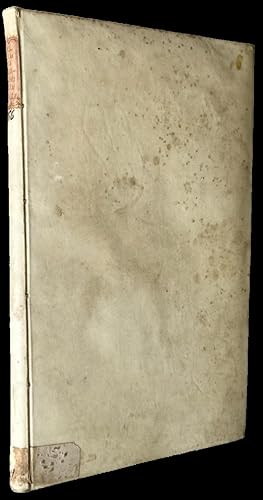
Accurate vorstellung der sämtlichen churfürst trouppen. Accurate Vorstellung der Samtlichen Churfürsts Sächsitz : TROUPPEN. Worinnen zur eigentlichen Kentnis der Uniform von jedem Regimente ein Officier und Semeiner in völliger Montirung und ganzer Statur nach dem Leben abgebildet sind. Nebst beigefügter Nachricht der Urkunde. 1.) Von der Stiftung. 2). denen Chefs 3) der Stärcke und. 4) der in Friedenszeiten habenden Garni?ons jeden Regiments oder separirten corps heraus gegeben und gezeichnet von. Carl Aug. v. Danowsky Lieut. ci devant des Ingen. [Présentation précise de l'ensemble des troupes de l'électorat de Saxe. Dans laquelle, pour la connaissance réelle de l'uniforme de chaque régiment, un officier et un semainier sont représentés en action en tenue complète et en pleine stature. Avec le message joint du certificat. 1.) De la fondation. 2). Des chefs. 3) de force et. 4) De la garnison en temps de paix de chaque régiment ou en corps séparé. Délivré et signé par Carl Aug. V. Danow
Published by Sans lieu, 1766. 1766, 1766
Seller: JF LETENNEUR LIVRES RARES, Saint Briac sur mer, France
Association Member: ILAB
Seller rating 5 out of 5 stars

1 vol in-4° (257 x 160 mm.) manuscrit en langue allemande rédigé à l'encre brune de : [1] f. dépliant (page de titre à l'encre rouge et noir dans un encadrement orné d'un blason, de pavillons et d'armes dessinés au lavis d'encre), [33] ff. comportant deux à trois gouaches d'officiers en uniforme pour un total de 67 dessins polychromes titrés surmontant des tableaux explicatifs. Ex-libris armorié gravé " Christian Ernest Grafzustolberg" contrecollé au dos du 1er plat. Plein vélin d'époque, dos lisse, titre doré avec date manuscrite, tranches jaspées de rouge. Très beau manuscrit militaire illustré de 67 dessins polychromes présentant l'ensemble des troupes de l'électorat de Saxe en Allemagne, travail exécuté par le lieutenant ingénieur Carl Auguste Von Danowsky très certainement pour le comte Christian de Stolberg-Wernigerode, (1691-1771) dont il porte l'ex-libris. L'électorat de Saxe était un État du Saint-Empire romain germanique qui joua un rôle majeur dans l'histoire de l'Allemagne, situé au centre du pays. Il est né du duché de Saxe-Wittemberg en 1356, lors de la Bulle d'or promulguée par l'empereur Charles IV. Il disparaît lors de la dissolution du Saint-Empire en 1806. Lee dernier électeur, Frédéric-Auguste III, allié à Napoléon Ier, devient alors roi de Saxe. Par sa position géographique, cet état a été ainsi souvent été impliqué dans des conflits et d'où l'importance de son armée. Dans son titre, richement enluminé et surmonté d'un blason, le lieutenant Daniovsky annonce son objectif de représenter pour chaque régiment un officier et un semainier (sous-officier) en action en tenue complète et en pleine stature. Chacun des 31 feuillets est consacré à un régiment. Il comporte un titre et deux à trois gouaches d'officiers en uniforme surmontant un tableau explicatif sur 4 colonnes : 1.) De la fondation. 2). Des chefs. 3) Des unités. 4) De la garnison en temps de paix de chaque régiment ou en corps séparé. Chaque portrait a été finement exécuté par cet officier ingénieur aux talents d'artiste en coloris trés vifs (gouache, aquarelle, or et argent): Gardes du Corps, Carabiniers, Cuirassiers, Chevaux légers, gardes Suisses, Grenadiers, Infanterie, Fusillers, Mousquetaires, Invalides, Ingénieurs, Artillerie, Canonier et Hussards. Provenance : ex-libris gravé de Christian-Ernest, comte de Stolberg-Wernigerode, (1691-1771), homme politique allemand membre de la Maison de Stolberg. De 1710 à 1771, il gouverne le comté de Wernigerode, ville de Saxe-Anhalt en Allemagne.située dans les montagnes du Harz, qui devient une dépendance de Brandebourg-Prusse en 1714. Chevalier de l'Ordre de l'Aigle noir et Ordre de l'Union parfaite, il sert son cousin du côté de sa mère, le roi Christian VI de Danemark, en tant que conseiller privé de 1735 à 1745. Sous son règne, une grande activité de construction est entreprise dans le comté de Wernigerode. Le Lustgarten (Jardin d'Agrément) à Wernigerode est remodelé dans le style français et une Orangerie est installée. Il est également responsable de la construction du Wolkenhäuschen ("Cabane dans les Nuages"), un petit refuge sur le Brocken, la plus haute montagne du Harz. Il est très probable que ce comte soit le commanditaire du présent manuscrit Précieux document d'une prestigieuse provenance demeuré très frais. 1 vol. 4to (257 x 160 mm.) manuscript in German written in brown ink of : [1] folding leaf (title page in red and black ink in a frame decorated with a coat of arms, flags and weapons drawn in ink wash), [33] ff. comprising two to three gouaches of officers in uniform for a total of 67 titled polychrome drawings surmounting explanatory tables. Engraved armorial bookplate "Christian Ernest Grafzustolberg" pasted on the back cover. Full contemporary vellum, smooth spine, gilt title with handwritten date, red speckled edges. Beautiful military manuscript illustrated with 67 polychrome drawings presenting all the troops of the Electorate of Saxony in Germany, work executed by the lieutenant engineer Carl Auguste Von Danowsky most certainly for the count Christian de Stolberg-Wernigerode, (1691-1771) whose ex-libris it bears. The Electorate of Saxony was a state of the Holy Roman Empire which played a major role in the history of Germany, located in the center of the country. It was born from the duchy of Saxony-Wittemberg in 1356, during the Golden Bull promulgated by Emperor Charles IV. It disappeared with the dissolution of the Holy Roman Empire in 1806. The last elector, Frederick-Augustus III, allied with Napoleon I, became King of Saxony. Due to its geographical position, this state was often involved in conflicts and hence the importance of its army. In his title, richly illuminated and surmounted by a coat of arms, Lieutenant Daniovsky announces his objective to represent for each regiment an officer and a semainier (non-commissioned officer) in action in full dress and in full stature. Each of the 31 sheets is dedicated to a regiment. It includes a title and two to three gouaches of officers in uniform surmounting an explanatory table in 4 columns: 1.) Of the foundation. 2). Of the leaders. 3) Units. 4) Of the peacetime garrison of each regiment or separate corps. Each portrait has been finely executed by this engineer officer with artistic talents in very vivid colors (gouache, watercolor, gold and silver): Gardes du Corps, Carabiniers, Cuirassiers, Chevaux légers, Gardes Suisses, Grenadiers, Infantry, Fusillers, Mousquetaires, Invalides, Engineers, Artillery, Canonier and Hussards. Provenance: engraved bookplate of Christian-Ernest, Count of Stolberg-Wernigerode, (1691-1771), German politician and member of the House of Stolberg. From 1710 to 1771, he governed the county of Wernigerode, a town in Saxony-Anhalt, Germany, located in the Harz Mountains, which became a dependency of Brandenburg-Prussia in 1714. Knight of the Order of the Black Eagle and Order of the Perfect Union, he served his cousin on his mother's side, King Christian VI of Den.