

Order Total (1 Item Items):
Shipping Destination:

Extract (147 results)
Author:
extract
Refine with Advanced Search
Skip to main search results
Search filters
Product Type
- All Product Types
- Books (137)
- Magazines & Periodicals (8)
- Comics (No further results match this refinement)
- Sheet Music (No further results match this refinement)
- Art, Prints & Posters (2)
- Photographs (No further results match this refinement)
- Maps (No further results match this refinement)
- Manuscripts & Paper Collectibles (No further results match this refinement)
Condition Learn more
Binding
Collectible Attributes
Language (5)
Free Shipping
Seller Location
Seller Rating
-

Dr. Price's Delicious Desserts : Containing Practical Recipes Carefully Selected and Tested : Excellent, Simple, Delicate
Language: English
Published by Hardpress Publishing, 2013
ISBN 10: 1313966681 ISBN 13: 9781313966689
PAP. Condition: New. New Book. Shipped from UK. Established seller since 2000.
-

Some New Selected Recipes From the Baker Extract Co.
Language: English
Published by Baker Extract Company, Springfield, Massachusetts & Portland, Maine
Staple-Bound Wraps. Condition: Good. This little cookbook has some very light soiling on the covers with some light edge wear and bumped corners. Text is clean, tight and bright. No date of publication available, but your grandmother probably used this book!!! Scarce & collectible!!!
-
Some New Selected Recipes : Tested and Proved Good
Language: English
Published by Baker Extract Co., Springfield, Ma, 1910
First Edition
Soft cover. Condition: Good. First Edition. A scarce small advertising cookbook promoting Baker Extract recipes. Good overall with one nick to the cover top corner. We ship fast.
-

Soft cover. Condition: Good. 120 pages. Richard Pankhurst "Sylvia Pankhurst and the Italian Anti-Fascist Movement" / Alison Macleod "John MacDiarmid's Ghost" / Andy Croft "Extract from 'Letter to Randall Swingler" / Andy Croft "Randall Swingler and 1956" (BT#38).
-
Dr. Price's Delicious Desserts : Containing Practical Recipes Carefully Selected and Tested : Excellent, Simple, Delicate
Language: English
Published by Hardpress Publishing, 2013
ISBN 10: 1313966681 ISBN 13: 9781313966689
Seller: PBShop.store UK, Fairford, GLOS, United Kingdom
Seller rating 5 out of 5 stars

US$ 18.63
US$ 4.35 shipping
Ships from United Kingdom to U.S.A.Quantity: 15 available
Add to basketPAP. Condition: New. New Book. Shipped from UK. Established seller since 2000.
-
A Parable: The Fifty-First Chapter of Genesis
Language: English
Published by Philip C Duschnes, United Kingdom, 1943
Seller: Pendleburys - the bookshop in the hills, Llanwrda, United Kingdom
Seller rating 5 out of 5 stars
US$ 10.70
US$ 15.22 shipping
Ships from United Kingdom to U.S.A.Quantity: 1 available
Add to basketpaperback. Condition: Very Good. No Jacket. a booklet type Christmas offering from the bookselling company of Philip and Fanny Duschnes, dated December 1943. Blue paper wraps with cord and a paper title to the front cover. Frontis in colours, A very good copy.
-
108 Sensible Recipes
Published by Springfield, MA & Portland, ME, 1921
Seller: Willis Monie-Books, ABAA, Cooperstown, NY, U.S.A.
Association Member: ABAA ESA ILAB
Seller rating 5 out of 5 stars
softcover. Condition: Very Good. In an envelope; issued by Baker's Flavoring Extracts Company.
-

PAP. Condition: New. New Book. Shipped from UK. Established seller since 2000.
-

PAP. Condition: New. New Book. Shipped from UK. Established seller since 2000.
-
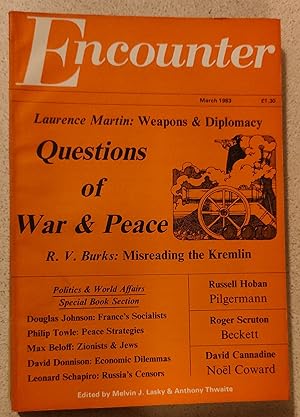
Encounter March 1983 / Russell Hoban "Pilgermann" (novel extract) / Laurence Martin "Can there be National Security in an Insecure Age?" / R V Burks "The Arcane Art of Kremlinology"/ David Cannadine "Noel Coward" / Roger Scruton "Minimal Beckett" / Edward Pearce "Paper Flower Power2 / Alain Touraine "The Clash of Generations" /Bohdan Nahaylo "The Protests in Pushkin Square" / Algernon Rumbold "Ganghi: A Political Saint?"
Published by Encounter, 1983
Magazine / Periodical
Soft cover. Condition: Very Good. 96 pages. Russell Hoban "Pilgermann" (novel extract) / Laurence Martin "Can there be National Security in an Insecure Age?" / R V Burks "The Arcane Art of Kremlinology"/ David Cannadine "Noel Coward" / Roger Scruton "Minimal Beckett" / Edward Pearce "Paper Flower Power2 / Alain Touraine "The Clash of Generations" /Bohdan Nahaylo "The Protests in Pushkin Square" / Algernon Rumbold "Ganghi: A Political Saint?".
-

Dr Price's Delicious Desserts 1
Language: English
Published by HardPress Publishing, 2019
ISBN 10: 1406976717 ISBN 13: 9781406976717
PAP. Condition: New. New Book. Shipped from UK. Established seller since 2000.
-
CAKE RECIPES: Bakers Pure Vanilla. (Advertising Leaflet)
Published by Baker Extract Company, Springfield, MA, 1939
Seller: Peter L. Masi - books, MONTAGUE, MA, U.S.A.
Association Member: SNEAB
Seller rating 4 out of 5 stars

Leaflet. Condition: Used - Very Good. 1939. (16) pages. 5 color illustrations of baked goods, recipes for cakes, frosting, brownies, cupcakes. 8 x 12" sheet folding to 4 x 3" VG.
-
Culinary Wrinkles Practical Recipes for Using Armour's Extract of Beef Classic Reprint
Seller: PBShop.store UK, Fairford, GLOS, United Kingdom
Seller rating 5 out of 5 stars
US$ 27.72
US$ 4.35 shipping
Ships from United Kingdom to U.S.A.Quantity: 15 available
Add to basketPAP. Condition: New. New Book. Shipped from UK. Established seller since 2000.
-
Dr Price's Delicious Desserts Containin Practical Recipes Carefully Selected and Tested Excellent, Simple, Delicate Classic Reprint
Seller: PBShop.store UK, Fairford, GLOS, United Kingdom
Seller rating 5 out of 5 stars
US$ 28.02
US$ 4.35 shipping
Ships from United Kingdom to U.S.A.Quantity: 15 available
Add to basketPAP. Condition: New. New Book. Shipped from UK. Established seller since 2000.
-
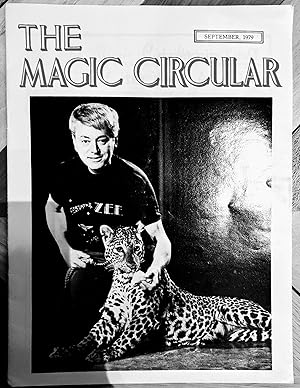
The Magic Circular September 1979 (Zee and Scorpio on cover) / This Is Your Life - Eric Williams/ S H Sharpe "Through Magic-Coloured Spectacles" / Johnny Cooper "'Act' as Known" / Henrique "Mutterings" / Douglas Haig "Another extract from the Diary of Elizabeth Walker in 1833"
Published by Magic Circle, 1979
Magazine / Periodical
Soft cover. Condition: Very Good. 20 pages. This Is Your Life - Eric Williams/ S H Sharpe "Through Magic-Coloured Spectacles" / Johnny Cooper "'Act' as Known" / Henrique "Mutterings" / Douglas Haig "Another extract from the Diary of Elizabeth Walker in 1833" (VM10).
-
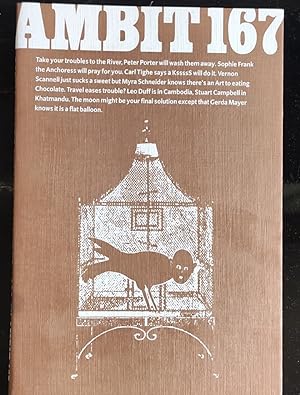
Soft cover. Condition: Very Good. 96 pages. 2 Peter Porter River Poems Mike Foreman Picture 5 Sophie Frank The Window: An Extract Charles Shearer Pictures 17 Brian Biddle Poems 20 Judy Kendall Poems 22 Sam Jury Digital Imagery, Painting & Printmaking 28 Gary Allen Poems 31 Geoff Nicholson 99 Scenes from Somebody Else's Life Mike Foreman Pictures 35 Atar Hadari City of Heaven 36 Sid Thomas American Duet 38 Ellis Sharp Two Short Fictions Mike Foreman Picture 40 Maria Jastrzębska Poems 42 Andrzej Klimowski The Secret 48 Vernon Scannell The Year of the Crab 54 Michael Walker Poems 56 Burns, Gahagan, Markham Reviews 61 Carl Tighe KssssS: Extracts Ken Cox Picture 74 Diana Syder Protestations of Innocence Mike Foreman Picture 76 Leo Duff Cambodian Sketchbook, April 2001 82 Stuart B Campbell Poems 84 Reviews Casterton, Lomas, Scanned 90 John O'Donoghue Poems 92 Myra Schneider Poems 95 Gerda Mayer Balloon with Message Mike Foreman Picture 96 Ron Sandford Portrait of Paul Clarvis.
-

Zusammenfassung: Rich Dad, Poor Dad: Review & Analyse des Buchs von Robert Kiyosaki
Language: German
Published by Independently published, 2019
ISBN 10: 1081402784 ISBN 13: 9781081402785
Condition: very good. Gut/Very good: Buch bzw. Schutzumschlag mit wenigen Gebrauchsspuren an Einband, Schutzumschlag oder Seiten. / Describes a book or dust jacket that does show some signs of wear on either the binding, dust jacket or pages.
-
Dr Price's Delicious Desserts 1
Language: English
Published by HardPress Publishing, 2019
ISBN 10: 1406976717 ISBN 13: 9781406976717
Seller: PBShop.store UK, Fairford, GLOS, United Kingdom
Seller rating 5 out of 5 stars
US$ 29.74
US$ 4.35 shipping
Ships from United Kingdom to U.S.A.Quantity: 15 available
Add to basketPAP. Condition: New. New Book. Shipped from UK. Established seller since 2000.
-

Purple Dyeing: Ancient and Modern (Shorey Historical Series)
Seller: Magnus Berglund, Book Seller, Sutter Creek, CA, U.S.A.
Seller rating 5 out of 5 stars
Soft cover. Condition: Very Good. Limited Edition. Facsimile reproduction of 1972 edition. Extract from early Smithsonian Report.
-
Choice Selections from Mother Goose's Melodies for Young and Old. With Some Additions.
Published by Pond's Extract Company, New York, 1889
Seller: Jeffrey H. Marks, Rare Books, ABAA, Rochester, NY, U.S.A.
Seller rating 5 out of 5 stars
By One of the Family. Illustrated edition. 12mo, publisher's illustrated wrappers. A few corners creased; tiny stain at the upper corner of the front wrapper. The text of the rhymes has been altered to feature Pond's Extract.
-

Soft cover. Condition: Very Good. 96 pages. 3 Catherine Eisner The House that looks like Hitler 4 Joseph Alien / Orly Orbach Seasons 7 Tim Vyner Drawing London 2012 14 Gina Wisker / Michael Foreman Whales and Crises 16 Julien Campredon, trans, by Rosemary Canavan / Mireille Fauchon Burning Punks for the Love of Elves 25 Douglas Thompson / Michael Foreman Icarus 28 Jenny Powell / Ken Cox Normandy 31 Paul Binding / Charles Shearer Extract from After Brock 34 Stuart Pickford Ana Mladic Remembers her Father 36 Robert Cole / Astrid Chesney Nero and his Mother 39 Matt Messana / Michael Foreman Gravity 45 Dorothy Fryd Mare Crisium 46 Jehane Markham / Charles Shearer The Appointment 49 Douglas Basford Piss-Poor Extempore 50 Rachel Burns Run 51 Michael Foreman Tidbits from the Bawdy Bard 55 Regi Claire / Ken Cox The Tasting 64 Miles Salter Birds 66 Deborah Sellers / Michael Foreman In What Was Shade 68 Reviews of Griffiths, Foley O'Donoghue, Schneider, Crocker, Dunmore, Moore, Riviere, Pusteria, Murphy 75 N S Thompson After Experience 77 Samuel Brookes Mutations 82 Thomas Land / Chris Pig Peace Conference 84 David Gaffney / Mike Foreman New Ultra Short Fiction 92 Alistair Heys Within Wood 94 Linda Rose Parkes The Girl Who Wants to Kiss Him Again 96 Ron Sandford Portrait of Alistair Heys.
-

Critical Quarterly Spring 1965 / A R Jones "Necessity and Freedom - the poetry of Robert Lowell, Sylvia Plath and Anne Sexton" / J P Stern "Fran Kafka: The Labyrinth of Guilt" / John Holloway "The Critical Theory of Yvor Winters" / Richard Hoggart "George Orwell and 'The Road to Wigan Pier'" / John Wain "Wildtrack (extract) (poem)
Published by Oxford University Press, 1965
Magazine / Periodical
Soft cover. Condition: Very Good. 96 pages. A R Jones "Necessity and Freedom - the poetry of Robert Lowell, Sylvia Plath and Anne Sexton" / J P Stern "Fran Kafka: The Labyrinth of Guilt" / John Holloway "The Critical Theory of Yvor Winters" / Richard Hoggart "George Orwell and 'The Road to Wigan Pier'" / John Wain "Wildtrack (extract) (poem) (U.P.).
-

HRD. Condition: New. New Book. Shipped from UK. Established seller since 2000.
-
Flavor Materials 1979 - Reference list of flavoring substances in use in the United States
Published by Allured Publishing Corporation, Wheaton, IL, 1979
First Edition
Condition: Very Good. Dust Jacket Condition: None. 144 pages. Owner inscription on cover. Cover corners lightly creased, very modest edgewear to spine. With black & white and color period advertisements. Internally very good. Record # 600109.
-
Original Trade Card - "L'art architectural. Style Gothique. Fontaine (Schoner Brunnen) et eglise Notre Dame a Nuremberg. Veritable Extrait de viande Liebig."
Language: French
Seller: Barry Cassidy Rare Books, Sacramento, CA, U.S.A.
Seller rating 5 out of 5 stars
No Binding. Condition: Collectible-Fine. Text is in French. Original trade card with a composite color illustration depicting examples of the Gothic style including the fountain, Schoner Brunnen, and cathedral, Eglise Notre-Dame, in Nuremberg, Germany. Promotional text for Liebig's Meat Extract and a summary of the Gothic style on back. No date, circa 1885-1910s. 2 3/4" x 4 1/2." Trade card is virtually pristine and intact. A Fine copy. Trade card for Liebig's Extract of Meat Company that promotes its meat (beef) extract. The story of Liebig's began when German chemist Justus von Liebig (1803-1873) made a concentrated beef extract in 1847. Liebig promoted the extract as an economical way to consume beef. In 1865, Liebig's Extract of Meat Company was officially established in London. The beef extract became the company's signature product and achieved much popularity in middle-class European households by the 1860s. However, the extract's selling point as a beef substitute shifted to a flavoring ingredient when scientists proved the extract had little to no nutritive value. The company released more products over the years including the OXO brand bouillon cube in 1911. Trade cards were antique business cards that first became popular during the late seventeenth century in Paris and Lyon, France and London, England. Trade cards were often given by business owners and proprietors to patrons and customers as a way to promote their businesses. Prior to the use of street addresses, some trade cards had maps so clients could locate the associated business. Many of these cards also incorporated elaborate designs, illustrations, and other decorative features. Trade cards became popular in the United States during the nineteenth century in the period after the Civil War. The late nineteenth century also saw the advent of trade card collecting as a hobby. While they are no longer in use, trade cards influenced the formation of trading cards and were the predecessors of modern-day business cards.
-
Original Trade Card - "L'art architectural. Style Roman. Cathedrale de Worms. Veritable Extrait de viande Liebig."
Language: French
Seller: Barry Cassidy Rare Books, Sacramento, CA, U.S.A.
Seller rating 5 out of 5 stars
No Binding. Condition: Collectible-Fine. Text is in French. Original trade card with a composite color illustration depicting examples of the Roman style including the Worms Cathedral in Worms, Germany. Promotional text for Liebig's Meat Extract and a summary of the Roman style on back. No date, circa 1885-1910s. 2 3/4" x 4 1/2." Trade card is virtually pristine and intact. A Fine copy. Trade card for Liebig's Extract of Meat Company that promotes its meat (beef) extract. The story of Liebig's began when German chemist Justus von Liebig (1803-1873) made a concentrated beef extract in 1847. Liebig promoted the extract as an economical way to consume beef. In 1865, Liebig's Extract of Meat Company was officially established in London. The beef extract became the company's signature product and achieved much popularity in middle-class European households by the 1860s. However, the extract's selling point as a beef substitute shifted to a flavoring ingredient when scientists proved the extract had little to no nutritive value. The company released more products over the years including the OXO brand bouillon cube in 1911. Trade cards were antique business cards that first became popular during the late seventeenth century in Paris and Lyon, France and London, England. Trade cards were often given by business owners and proprietors to patrons and customers as a way to promote their businesses. Prior to the use of street addresses, some trade cards had maps so clients could locate the associated business. Many of these cards also incorporated elaborate designs, illustrations, and other decorative features. Trade cards became popular in the United States during the nineteenth century in the period after the Civil War. The late nineteenth century also saw the advent of trade card collecting as a hobby. While they are no longer in use, trade cards influenced the formation of trading cards and were the predecessors of modern-day business cards.
-
Original Trade Card - "L'art architectural. Style de la Renaissance. L'hotel Peller a Nuremberg. Veritable Extrait de viande Liebig."
Language: French
Seller: Barry Cassidy Rare Books, Sacramento, CA, U.S.A.
Seller rating 5 out of 5 stars
No Binding. Condition: Collectible-Fine. Text is in French. Original trade card with a composite color illustration depicting examples of the Renaissance style including Hotel Peller (now known as Pellerhaus), a residence commissioned by Martin Peller in Nuremberg, Germany. Promotional text for Liebig's Meat Extract and a summary of the Renaissance style on back. No date, circa 1885-1910s. 2 3/4" x 4 1/2." Trade card is virtually pristine and intact. A Fine copy. Trade card for Liebig's Extract of Meat Company that promotes its meat (beef) extract. The story of Liebig's began when German chemist Justus von Liebig (1803-1873) made a concentrated beef extract in 1847. Liebig promoted the extract as an economical way to consume beef. In 1865, Liebig's Extract of Meat Company was officially established in London. The beef extract became the company's signature product and achieved much popularity in middle-class European households by the 1860s. However, the extract's selling point as a beef substitute shifted to a flavoring ingredient when scientists proved the extract had little to no nutritive value. The company released more products over the years including the OXO brand bouillon cube in 1911. Trade cards were antique business cards that first became popular during the late seventeenth century in Paris and Lyon, France and London, England. Trade cards were often given by business owners and proprietors to patrons and customers as a way to promote their businesses. Prior to the use of street addresses, some trade cards had maps so clients could locate the associated business. Many of these cards also incorporated elaborate designs, illustrations, and other decorative features. Trade cards became popular in the United States during the nineteenth century in the period after the Civil War. The late nineteenth century also saw the advent of trade card collecting as a hobby. While they are no longer in use, trade cards influenced the formation of trading cards and were the predecessors of modern-day business cards.
-
Original Trade Card - "L'art architectural. Style Rococo. Le Zwinger chateau de dans la cour du electoral Dresde. Veritable Extrait de viande Liebig."
Language: French
Seller: Barry Cassidy Rare Books, Sacramento, CA, U.S.A.
Seller rating 5 out of 5 stars
No Binding. Condition: Collectible-Fine. Text is in French. Original trade card with a composite color illustration depicting examples of the Rococo art movement including Zwinger Palace in Dresden, Germany. Promotional text for Liebig's Meat Extract and a summary of the Rococo style on back. No date, circa 1885-1910s. 2 3/4" x 4 1/2." Trade card is virtually pristine and intact. A Fine copy. Trade card for Liebig's Extract of Meat Company that promotes its meat (beef) extract. The story of Liebig's began when German chemist Justus von Liebig (1803-1873) made a concentrated beef extract in 1847. Liebig promoted the extract as an economical way to consume beef. In 1865, Liebig's Extract of Meat Company was officially established in London. The beef extract became the company's signature product and achieved much popularity in middle-class European households by the 1860s. However, the extract's selling point as a beef substitute shifted to a flavoring ingredient when scientists proved the extract had little to no nutritive value. The company released more products over the years including the OXO brand bouillon cube in 1911. Trade cards were antique business cards that first became popular during the late seventeenth century in Paris and Lyon, France and London, England. Trade cards were often given by business owners and proprietors to patrons and customers as a way to promote their businesses. Prior to the use of street addresses, some trade cards had maps so clients could locate the associated business. Many of these cards also incorporated elaborate designs, illustrations, and other decorative features. Trade cards became popular in the United States during the nineteenth century in the period after the Civil War. The late nineteenth century also saw the advent of trade card collecting as a hobby. While they are no longer in use, trade cards influenced the formation of trading cards and were the predecessors of modern-day business cards.
-
Original Trade Card - "Liebig Fleish-Extrakt.; Odyssee - 6. Die Probe mit dem Bogen des Odysseus."
Language: German
Published by Cologne, Germany?
Seller: Barry Cassidy Rare Books, Sacramento, CA, U.S.A.
Seller rating 5 out of 5 stars
No Binding. Condition: Collectible-Fine. Text is in German. Original trade card with a color illustration of a scene from Homer's Odyssey. Odysseus is shown in his disguise as a beggar with a drawn bow, about to successfully shoot an arrow through the holes of twelve upturned axes to prove to his wife Penelope that it is indeed he who has returned. An explanation of the myth is on the back. No date, circa 1910s-1930s. 4 1/2" x 2 3/4." Purple "96" stamp to the side on back. Trade card is virtually pristine and intact. A Fine copy. Trade card for Liebig's Extract of Meat Company that promotes its meat (beef) extract. The number "6" of this card suggests it may be part of a collectable series. The story of Liebig's began when German chemist Justus von Liebig (1803-1873) made a concentrated beef extract in 1847. Liebig promoted the extract as an economical way to consume beef. In 1865, Liebig's Extract of Meat Company was officially established in London. The beef extract became the company's signature product and achieved much popularity in middle-class European households by the 1860s. However, the extract's selling point as a beef substitute shifted to a flavoring ingredient when scientists proved the extract had little to no nutritive value. The company released more products over the years including the OXO brand bouillon cube in 1911. Trade cards were antique business cards that first became popular during the late seventeenth century in Paris and Lyon, France and London, England. Trade cards were often given by business owners and proprietors to patrons and customers as a way to promote their businesses. Prior to the use of street addresses, some trade cards had maps so clients could locate the associated business. Many of these cards also incorporated elaborate designs, illustrations, and other decorative features. Trade cards became popular in the United States during the nineteenth century in the period after the Civil War. The late nineteenth century also saw the advent of trade card collecting as a hobby. While they are no longer in use, trade cards influenced the formation of trading cards and were the predecessors of modern-day business cards.
-
Original Trade Card - "Liebig Fleish-Extrakt.; Odyssee - 2. Hermes bringt Odysseus das Wunderkraut."
Language: German
Published by Cologne, Germany?
Seller: Barry Cassidy Rare Books, Sacramento, CA, U.S.A.
Seller rating 5 out of 5 stars
No Binding. Condition: Collectible-Fine. Text is in German. Original trade card with a color illustration of a scene from Homer's Odyssey. Hermes is shown giving Odysseus a magic herb that will cure his men of a spell that has turned them into pigs. An explanation of the myth is on the back. No date, circa 1910s-1930s. 4 1/2" x 2 3/4." Trade card is virtually pristine and intact. A Fine copy. Trade card for Liebig's Extract of Meat Company that promotes its meat (beef) extract. The number "2" of this card suggests it may be part of a collectable series. The story of Liebig's began when German chemist Justus von Liebig (1803-1873) made a concentrated beef extract in 1847. Liebig promoted the extract as an economical way to consume beef. In 1865, Liebig's Extract of Meat Company was officially established in London. The beef extract became the company's signature product and achieved much popularity in middle-class European households by the 1860s. However, the extract's selling point as a beef substitute shifted to a flavoring ingredient when scientists proved the extract had little to no nutritive value. The company released more products over the years including the OXO brand bouillon cube in 1911. Trade cards were antique business cards that first became popular during the late seventeenth century in Paris and Lyon, France and London, England. Trade cards were often given by business owners and proprietors to patrons and customers as a way to promote their businesses. Prior to the use of street addresses, some trade cards had maps so clients could locate the associated business. Many of these cards also incorporated elaborate designs, illustrations, and other decorative features. Trade cards became popular in the United States during the nineteenth century in the period after the Civil War. The late nineteenth century also saw the advent of trade card collecting as a hobby. While they are no longer in use, trade cards influenced the formation of trading cards and were the predecessors of modern-day business cards.


