Order Total (1 Item Items):
Shipping Destination:

Fluctibus Robert (12 results)
Skip to main search results
Search filters
Product Type
- All Product Types
- Books (12)
- Magazines & Periodicals (No further results match this refinement)
- Comics (No further results match this refinement)
- Sheet Music (No further results match this refinement)
- Art, Prints & Posters (No further results match this refinement)
- Photographs (No further results match this refinement)
- Maps (No further results match this refinement)
- Manuscripts & Paper Collectibles (No further results match this refinement)
Condition Learn more
- New (5)
- As New, Fine or Near Fine (No further results match this refinement)
- Very Good or Good (1)
- Fair or Poor (No further results match this refinement)
- As Described (6)
Binding
Collectible Attributes
- First Edition (No further results match this refinement)
- Signed (No further results match this refinement)
- Dust Jacket (No further results match this refinement)
- Seller-Supplied Images (6)
- Not Print on Demand (11)
Language (2)
Free Shipping
Seller Location
Seller Rating
-

PAP. Condition: New. New Book. Shipped from UK. Established seller since 2000.
-
Schutzschrift f?r die Aechtheit der Rosenkreutzergesellschaft (Classic Reprint)
Seller: PBShop.store UK, Fairford, GLOS, United Kingdom
Seller rating 5 out of 5 stars

US$ 33.17
US$ 6.73 shipping
Ships from United Kingdom to U.S.A.Quantity: 15 available
Add to basketPAP. Condition: New. New Book. Shipped from UK. Established seller since 2000.
-

HRD. Condition: New. New Book. Shipped from UK. Established seller since 2000.
-
Schutzschrift f?r die Aechtheit der Rosenkreutzergesellschaft (Classic Reprint)
Seller: PBShop.store UK, Fairford, GLOS, United Kingdom
Seller rating 5 out of 5 stars
US$ 42.85
US$ 6.73 shipping
Ships from United Kingdom to U.S.A.Quantity: 15 available
Add to basketHRD. Condition: New. New Book. Shipped from UK. Established seller since 2000.
-
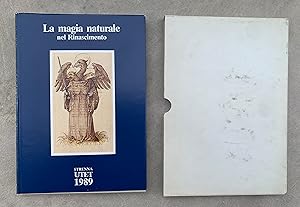
La magia naturale nel Rinascimento. Testi di Agrippa, Cardano, Fludd
Published by Torino, UTET (Corso Raffaello, 28) - TIPOGRAFIA TORINESE S.P.A. (stampa), Torino, 1989
Seller: Studio bibliografico De Carlo, Carmagnola, TO, Italy
Seller rating 4 out of 5 stars

Condition: Buono (Good). I ed. Strenna UTET 1989. Introduzione di Paolo Rossi. Traduzioni e note di Silvia Parigi. VIII/134+(2)=136/cart./sovraccoperta patinata con grafica in blu marine e bianco e con illustrazione a colori al primo piatto (Johannes Stabius, Caricatura di Johannes Trithemius (Wien, Oesterreichische Nationalbibliothek, ms. 3227, c. 6 r).). Illustrazioni a colori f.t. di cui una a libretto. Stato buono (lieve usura della sovraccoperta ai margini - segno da rimozione di etichetta in quarta di copertina - fogli di guardia leggermente bruniti). Book.
-

The English Rosicrucian - Life and writings
Published by Kessinger Publishing Company s.d., s.n.
Seller: BACCHETTA GIORGIO - ALFEA RARE BOOKS, Milano, MI, Italy
Seller rating 4 out of 5 stars
Volume: 1 26x19,3 cm., in brossura, pagg. XVI, 260, alcune illustrazioni nel testo, in inglese, buone condizioni.
-
US$ 22.27
Free Shipping
Ships from United Kingdom to U.S.A.Quantity: Over 20 available
Add to basketPaperback. Condition: New. Print on Demand. This book is a reproduction of an important historical work, digitally reconstructed using state-of-the-art technology to preserve the original format. In rare cases, an imperfection in the original, such as a blemish or missing page, may be replicated in the book. print-on-demand item.
-
Condition: Hervorragend. Zustand: Hervorragend | Seiten: 342 | Sprache: Deutsch | Produktart: Bücher | Keine Beschreibung verfügbar.
-
Tractatus Secundus, De Naturae Simia seu Technica macrocosmi historia. Tractatus Secundi Pars VI: De Arte Militari. First edition.
Published by Frankfurt: Johann Theodore de Bry, 1624
Seller: Wittenborn Art Books, San Francisco, CA, U.S.A.
Seller rating 5 out of 5 stars
Condition: Good. 4to. , 19.5 x 30.3cm. Sewn with old cover sheet, pp. 343-421; colophon on p. 420.Robert Fludd (1574-1637), an English physician, wrote several works on Rosicrucianism. This particular work is more encyclopedic, covering optics, the musical intervals, perspective drawing, hydraulic engineering, construction of lifting machines, military engineering and many other mundane matters.OCLC Number / Unique Identifier: 492925139.
-
![Seller image for Schutzschrift für die Aechtheit der Rosenkreutzergesellschaft. Wegen seiner überaus großen Seltenheit und Wichtigkeit auf Begehren aus dem Lateinischen ins Deutsche, zugleich mit einigen Anmerkungen übersetzt, von AdaMah Booz [d.i. Adam Michael/Melchior Birkholz]. Dtsch. Erstausg. for sale by Versandantiquariat Hans-Jürgen Lange](https://pictures.abebooks.com/inventory/md/md31669498577.jpg)
Schutzschrift für die Aechtheit der Rosenkreutzergesellschaft. Wegen seiner überaus großen Seltenheit und Wichtigkeit auf Begehren aus dem Lateinischen ins Deutsche, zugleich mit einigen Anmerkungen übersetzt, von AdaMah Booz [d.i. Adam Michael/Melchior Birkholz]. Dtsch. Erstausg.
Published by Leipzig, Adam Friedrich Böhme, 1782., 1782
Seller: Versandantiquariat Hans-Jürgen Lange, Wietze, Germany
Seller rating 1 out of 5 stars

9 Bll., 320 S., mit Kapitelvignetten u. 1 Textkupfer, 8°, Goldgepr. Halbleder mit Kopfgoldschnitt u. Rotschnitt Wolfstieg 42291: "Selten"; Kloss 2483; Ferguson I, 284. - Deutsche Erstausg. von: Tractatus Apologeticus Integritatem Societatis de Rosea Cruce defendens. Lugd. Batavorum 1617; gegen die Angriffe des Andreas Libavius. - Im Vorwort unterzeichnet mit "AdaM Birchwood. X. den 18. Jänner 1782", darunter ein magisches Quadrat mit der vierfachen Zahlenfolge 1-4. Das Textkupfer (S.141) zeigt das Horoskop zur "Künstlichen Himmelsbeschafenheit für die Zeit der zwischen dem Saturnus und Jupiter im Jahre 1603 [.]". Umfangreiche Anmerkungen von Birkholz (1746-1818) mit zahlr. Literaturangaben. - Zur ideengeschichtlichen Position des englischen Mediziners, Chemikers u. Alchemisten Robert Fludd (1574-1637) siehe H. Schick: Die geheime Geschichte der Rosenkreuzer (Schwarzenburg 1980, S. 257-270). Genaue Bibliographie bei Craven 1902. - Einband min. fleckig; Innendeckel mit sehr kl. Nrn.-Aufkleber; Buchblock auf den ersten u. letzten Blättern etwas braunfleckig; ein schönes Expl. aus der "Charlesworth Masonic Library" (Deckelprägung, innen keine Stempel oder Bibliothekseintragungen).
-
![Seller image for Schutzschrift für die Aechtheit der Rosenkreutzergesellschaft. Wegen seiner überaus großen Seltenheit und Wichtigkeit auf Begehren aus dem Lateinischen ins Deutsche, zugleich mit einigen Anmerkungen übersetzt, von AdaMah Booz [d.i. Adam Michael/Melchior Birkholz]. Dtsch. Erstausg. for sale by Versandantiquariat Hans-Jürgen Lange](https://pictures.abebooks.com/inventory/md/md31087590015.jpg)
Schutzschrift für die Aechtheit der Rosenkreutzergesellschaft. Wegen seiner überaus großen Seltenheit und Wichtigkeit auf Begehren aus dem Lateinischen ins Deutsche, zugleich mit einigen Anmerkungen übersetzt, von AdaMah Booz [d.i. Adam Michael/Melchior Birkholz]. Dtsch. Erstausg.
Published by Leipzig, Adam Friedrich Böhme, 1782., 1782
Seller: Versandantiquariat Hans-Jürgen Lange, Wietze, Germany
Seller rating 1 out of 5 stars
9 Bll., 320 S., mit Kapitelvignetten u. 1 Textkupfer, Kl.-8°, Neues Leinen mit Rückentext Wolfstieg 42291: "Selten"; Kloss 2483; Ferguson I, 284. - Deutsche Erstausg. von: Tractatus Apologeticus Integritatem Societatis de Rosea Cruce defendens. Lugd. Batavorum 1617; gegen die Angriffe des Andreas Libavius. - Im Vorwort unterzeichnet mit "AdaM Birchwood. X. den 18. Jänner 1782", darunter ein magisches Quadrat mit der vierfachen Zahlenfolge 1-4. Das Textkupfer (S.141) zeigt das Horoskop zur "Künstlichen Himmelsbeschafenheit für die Zeit der zwischen dem Saturnus und Jupiter im Jahre 1603 [.]". Umfangreiche Anmerkungen von Birkholz (1746-1818) mit zahlr. Literaturangaben. - Zur ideengeschichtlichen Position des englischen Mediziners, Chemikers u. Alchemisten Robert Fludd (1574-1637) siehe H. Schick: Die geheime Geschichte der Rosenkreuzer (Schwarzenburg 1980, S. 257-270). Genaue Bibliographie bei Craven 1902. - Titel mit kl. Besitzervermerken von alter Hand, sonst ein gutes Expl.
-
Published by Goudae, Petrus Rammazenius, 1638., 1638
Seller: Librairie Camille Sourget, Paris, France
Association Member: ILAB
Seller rating 4 out of 5 stars
Posthumous first edition of Robert Fludd's last essay, dealing with Creation. Sir William Osler, Biblotheca Osleriana : A catalogue of books illustrating the history of medecine and science, n°2629; DSB V, 47ff. - Ferguson I, 284. - Wheeler Gift 112-113. - Mottelay S. 554. - Gardner 237 & 236. - Wellcome I, 2331 & 2332. - Poggendorff I, 763 (nur Tl. I). - Osler 2629. In his work, Robert Fludd (1574-1638), one of the most famous English philosophers and alchemists, demonstrates the equality between the Sun - source of light and life - and God. 'In the first half of the seventeenth century [Fludd] was one of England's best known philosophers. Certainly few Englishmen of his day managed to draw the attention of such a distinguished group as Kepler, Mersenne, and Gassendi - each of whom wrote at least one work discussing, and usually complaining of, Fludd's theories. To many Europeans he seemed the most prominent of all English philosophers of his day 'Fludd, like most other Renaissance scientists, and certainly like all Paracelsians, had a bitter hatred of Aristotle even though Aristotelian influences are evident throughout his work. As his authority he preferred to turn to God's two books of revelation - one, His written book, the Holy Scriptures, and the other, nature, God's book of Creation Fludd stated that the origin of all things may be sought in the dark chaos (potential unity) from which arose the light (divine illumination or actual unity). He affirmed that there is true unity in this dichotomy since "Light was unto the eternall unity all one with darkness, though unto our weak capacities they are opposite in property". Continuing, he explained that it was from the darkness or shades of the chaos through the divine light that there appeared the waters which are the pervasive matter of all other substances. This is then true Mosaic philosophy, which is built upon the three primary elements of darkness, light, and the waters or the Spirit of the Lord. And it is with the aid of this divine knowledge that we may bring order even out of the confusion found in the writings of the ancients on the subject. With a careful analysis of their texts Fludd showed that when Aristotle wrote of the prima materia, Plat of the hyle, Hermes of the umbra horrenda, Pythagoras of the "symbolical unity", and Hippocrates of the deformed chaos, they were all writing in reality of the darkness or the dark abyss of Moses. Similarly by some name or another all of these philosophers knew something of the Mosaic "light" and "waters". However, in their interpretations they often varied far from the truth and it is to the works of Plato and the Pymander of Hermes that the true adept is urged to go for enlightenment' (Debus, The English Paracelsians pp. 105-109). Disciple of Paracelsus, he mostly defends in this famous work the magnetic medicine, which leads him to the transplantatory one: Fludd thus exposes the virtues of the transplantation of a disease between men, animals and plants. The edition encloses at the end Fludd's answer to the refutation of this work published by the Scottish priest Foster: Responsum ad Hoplocrisma-Spongum M. Fosteri (Ibid., id., 1638 - 30 ll.). The work is illustrated with a copper-engraved title (repeated at the beginning of the second part) and with about 30 engravings in the text including 4 copper-engravings. Beautiful copy preserved in its brown calf binding from the start of the 18th century. Provenance: A N. Brugière de Lamotte (engraved ex-libris) and contemporary handwritten ex-libris on the title.