

Order Total (1 Item Items):
Shipping Destination:

Gensemer Robert (36 results)
Skip to main search results
Search filters
Product Type
- All Product Types
- Books (36)
- Magazines & Periodicals (No further results match this refinement)
- Comics (No further results match this refinement)
- Sheet Music (No further results match this refinement)
- Art, Prints & Posters (No further results match this refinement)
- Photographs (No further results match this refinement)
- Maps (No further results match this refinement)
- Manuscripts & Paper Collectibles (No further results match this refinement)
Condition Learn more
Binding
Collectible Attributes
- First Edition (No further results match this refinement)
- Signed (No further results match this refinement)
- Dust Jacket (No further results match this refinement)
- Seller-Supplied Images (5)
- Not Print on Demand (36)
Language (2)
Free Shipping
Seller Location
Seller Rating
-

Beginning Golf
Language: English
Published by Morton Publishing Company, Englewood, CO, 1986
ISBN 10: 0895821532 ISBN 13: 9780895821539
Soft Cover. Condition: Fair. Wraps rubbed with moderate edgewear. Tiny amount of markings in text. Size: 8vo - 7¾" - 9¾" Tall.
-

Beginning Golf
Language: English
Published by Morton Publishing Company, 1994
ISBN 10: 0895822644 ISBN 13: 9780895822642
Paperback. Condition: Very Good. No Jacket. May have limited writing in cover pages. Pages are unmarked. ~ ThriftBooks: Read More, Spend Less.
-

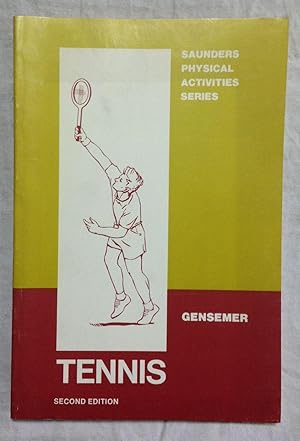
Tennis -- Second Edition -- (Saunders Physical Activities Series)
Language: English
Published by W. B. Saunders Company, 1975
Trade Paperback. Condition: Good. Trade Paperback -- Good -- Clean and tight -- Illustrations throughout -- Second Edition.
-

Trade Paperback. Condition: Used - Good. Shelf wear.
-

Paperback. Condition: Fair. 3RD PRINTING. SORRY MAYBE JUST A READING COPY. 108 PAGE TEXT HAS NO LOOSE PAGES. TENNIS. 6'' X 9''. WE USE BUBBLE MAILERS.
-

Condition: good. This book is in good condition, with minimal signs of wear and tear.
-

Paperback. Condition: Very Good. No Jacket. May have limited writing in cover pages. Pages are unmarked. ~ ThriftBooks: Read More, Spend Less.
-
Paperback. Condition: Good.
-

Physical Education: Perspectives, Inquiry, Applications
Language: English
Published by McGraw-Hill Humanities/Social Sciences/Languages, 1994
ISBN 10: 069715243X ISBN 13: 9780697152435
Condition: Very Good. Very Good Condition. Five star seller - Buy with confidence!
-
Physical Education: Perspectives, Inquiry, Applications
Language: English
Published by McGraw-Hill Humanities/Social Sc, 1994
ISBN 10: 069715243X ISBN 13: 9780697152435
Paperback. Condition: Good.
-
US$ 31.03
US$ 16.78 shipping
Ships from United Kingdom to U.S.A.Quantity: 1 available
Add to basketPaperback. Condition: Brand New. 8.50x5.50x1.00 inches. In Stock.
-
23x15, Xp, 108p. Rústica. Buen estado.
-
Tennis (Major Problems in Clinical Surgery)
Language: English
Published by W.B. Saunders Company, 1975
ISBN 10: 0721641105 ISBN 13: 9780721641102
Seller: Phatpocket Limited, Waltham Abbey, HERTS, United Kingdom
Seller rating 5 out of 5 stars

US$ 47.03
US$ 14.28 shipping
Ships from United Kingdom to U.S.A.Quantity: 1 available
Add to basketCondition: Good. Your purchase helps support Sri Lankan Children's Charity 'The Rainbow Centre'. Ex-library, so some stamps and wear, but in good overall condition. Our donations to The Rainbow Centre have helped provide an education and a safe haven to hundreds of children who live in appalling conditions.
-

US$ 27.71
US$ 40.28 shipping
Ships from United Kingdom to U.S.A.Quantity: 3 available
Add to basketCondition: New.
-
Paperback. Condition: New. In shrink wrap. Looks like an interesting title!
-

Scientific Review of Cyanide Ecotoxicology and Evaluation of Ambient Water Quality Criteria
Seller: PBShop.store UK, Fairford, GLOS, United Kingdom
Seller rating 5 out of 5 stars
US$ 169.75
US$ 6.74 shipping
Ships from United Kingdom to U.S.A.Quantity: 10 available
Add to basketPAP. Condition: New. New Book. Shipped from UK. Established seller since 2000.
-
-

Scientific Review of Cyanide Ecotoxicology and Evaluation of Ambient Water Quality Criteria
Seller: GreatBookPricesUK, Woodford Green, United Kingdom
Seller rating 5 out of 5 stars
US$ 169.74
US$ 20.14 shipping
Ships from United Kingdom to U.S.A.Quantity: 10 available
Add to basketCondition: New.
-
Condition: As New. Unread book in perfect condition.
-
-
Scientific Review of Cyanide Ecotoxicology and Evaluation of Ambient Water Quality Criteria
Seller: Ria Christie Collections, Uxbridge, United Kingdom
Seller rating 5 out of 5 stars
US$ 186.20
US$ 16.08 shipping
Ships from United Kingdom to U.S.A.Quantity: 10 available
Add to basketCondition: New. In.
-
Scientific Review of Cyanide Ecotoxicology and Evaluation of Ambient Water Quality Criteria (Paperback)
Language: English
Published by IWA Publishing, London, 2007
ISBN 10: 1843397536 ISBN 13: 9781843397533
Paperback. Condition: new. Paperback. The USEPAs ambient water quality criteria (AWQC) for cyanide were developed in 1984. Recently, however, concerns have arisen that the AWQC for cyanide have been problematic to implement and may not accurately reflect either the toxic forms or bioavailable concentrations of cyanide in water, sediments, and tissues of aquatic organisms. Also, the cyanide criteria typically have been implemented based on total cyanide concentrations rather than the free cyanide concentrations that formed the basis of the criteria calculations. New knowledge on cyanide toxicity, cyanide speciation and its measurement, and the relative toxicity of bioavailable cyanide species suggested that a re-evaluation of the aquatic toxicity data and chemistry that serve as the basis of the current national criteria is warranted. In response to these concerns, studies sponsored by the Water Environment Research Foundation (WERF) evaluated the formation and fate of cyanide in municipal wastewater effluents. Kavanaugh et al. (2003) evaluated the reliability of several analytical methods for measurement of cyanide species at low (ppb) concentrations, along with studies to evaluate the sources, transport, and fate of cyanide species in wastewater treatment plants (WWTPs) and receiving waters. Results indicated that potentially toxic forms of cyanide can be generated in WWTPs from several chemical processes, including dissociation of thiocyanate by chlorination or UV disinfection, chlorination in the presence of residual ammonia, nitrosation, and photolysis of ferrocyanate. Models were developed for predicting the fate of these compounds in surface waters downstream of WWTP effluents to establish where organisms might be most at risk from cyanide exposure. While implementation of these results could assist in the development of site-specific water quality standards for cyanide, a more thorough update to the National AWQC was warranted to apply our more current scientific understanding of cyanide toxicology to the derivation of aquatic life criteria. The present study was therefore undertaken to review and update knowledge of the aquatic toxicity of cyanide, and to develop recommended updates to the existing national AWQC to enhance the scientific basis of the concentrations and chemical forms of cyanide specified for protection of aquatic organisms. This update was conducted according to USEPA guidance for derivation of AWQC for protection of aquatic life, and is based both on an extensive literature review and on new toxicity studies that fill key data gaps. This re-evaluation of cyanide criteria also includes consideration of impacts on benthic (sediment) organisms, wildlife that consume aquatic biota, and possible effects to threatened and endangered species to ensure that revised criteria are adequately protective of the entire aquatic ecosystem. The USEPA's ambient water quality criteria (AWQC) for cyanide were developed in 1984. Recently, however, concerns have arisen that the AWQC for cyanide have been problematic to implement and may not accurately reflect either the toxic forms or bioavailable concentrations of cyanide in water, sediments, and tissues of aquatic organisms. Also, the cyanide criteria typically have been implemented based on total cyanide concentrations rather than the free cyanide concentrations that formed the basis of the criteria calculations. New knowledge on cyanide toxicity, cyanide speciation and its measurement, and the relative toxicity of bioavailable cyanide species suggested that a re-evaluation of the aquatic toxicity data and chemistry that serve as the basis of the current national criteria is warranted. In response to these concerns, studies sponsored by the Water Environment Research Foundation (WERF) evaluated the formation and fate of cyanide in municipal wastewater effluents. Kavanaugh et al. Shipping may be from multiple locations in the US or from the UK, depending on stock availability.
-
US$ 150.30
US$ 55.04 shipping
Ships from United Kingdom to U.S.A.Quantity: 10 available
Add to basketCondition: NEW.
-
US$ 196.37
US$ 8.73 shipping
Ships from United Kingdom to U.S.A.Quantity: 3 available
Add to basketCondition: New. pp. 120 6:B&W 8.25 x 11 in or 280 x 210 mm Perfect Bound on White w/Gloss Lam.
-
Scientific Review of Cyanide Ecotoxicology and Evaluation of Ambient Water Quality Criteria
Seller: GreatBookPricesUK, Woodford Green, United Kingdom
Seller rating 5 out of 5 stars
US$ 191.96
US$ 20.14 shipping
Ships from United Kingdom to U.S.A.Quantity: 10 available
Add to basketCondition: As New. Unread book in perfect condition.
-
Paperback. Condition: New. The USEPA's ambient water quality criteria (AWQC) for cyanide were developed in 1984. Recently, however, concerns have arisen that the AWQC for cyanide have been problematic to implement and may not accurately reflect either the toxic forms or bioavailable concentrations of cyanide in water, sediments, and tissues of aquatic organisms. Also, the cyanide criteria typically have been implemented based on total cyanide concentrations rather than the free cyanide concentrations that formed the basis of the criteria calculations. New knowledge on cyanide toxicity, cyanide speciation and its measurement, and the relative toxicity of bioavailable cyanide species suggested that a re-evaluation of the aquatic toxicity data and chemistry that serve as the basis of the current national criteria is warranted. In response to these concerns, studies sponsored by the Water Environment Research Foundation (WERF) evaluated the formation and fate of cyanide in municipal wastewater effluents. Kavanaugh et al. (2003) evaluated the reliability of several analytical methods for measurement of cyanide species at low (ppb) concentrations, along with studies to evaluate the sources, transport, and fate of cyanide species in wastewater treatment plants (WWTPs) and receiving waters. Results indicated that potentially toxic forms of cyanide can be generated in WWTPs from several chemical processes, including dissociation of thiocyanate by chlorination or UV disinfection, chlorination in the presence of residual ammonia, nitrosation, and photolysis of ferrocyanate. Models were developed for predicting the fate of these compounds in surface waters downstream of WWTP effluents to establish where organisms might be most at risk from cyanide exposure. While implementation of these results could assist in the development of site-specific water quality standards for cyanide, a more thorough update to the National AWQC was warranted to apply our more current scientific understanding of cyanide toxicology to the derivation of aquatic life criteria. The present study was therefore undertaken to review and update knowledge of the aquatic toxicity of cyanide, and to develop recommended updates to the existing national AWQC to enhance the scientific basis of the concentrations and chemical forms of cyanide specified for protection of aquatic organisms. This update was conducted according to USEPA guidance for derivation of AWQC for protection of aquatic life, and is based both on an extensive literature review and on new toxicity studies that fill key data gaps. This re-evaluation of cyanide criteria also includes consideration of impacts on benthic (sediment) organisms, wildlife that consume aquatic biota, and possible effects to threatened and endangered species to ensure that revised criteria are adequately protective of the entire aquatic ecosystem.
-
Condition: New. pp. 120.
-
Scientific Review of Cyanide Ecotoxicology and Evaluation of Ambient Water Quality Criteria (WERF Research Report Series)
Seller: Kennys Bookshop and Art Galleries Ltd., Galway, GY, Ireland
Seller rating 5 out of 5 stars
Condition: New. 2007. paperback. . . . . .
-
Scientific Review of Cyanide Ecotoxicology and Evaluation of Ambient Water Quality Criteria
Seller: Rarewaves.com USA, London, LONDO, United Kingdom
Seller rating 5 out of 5 stars
Paperback. Condition: New. The USEPA's ambient water quality criteria (AWQC) for cyanide were developed in 1984. Recently, however, concerns have arisen that the AWQC for cyanide have been problematic to implement and may not accurately reflect either the toxic forms or bioavailable concentrations of cyanide in water, sediments, and tissues of aquatic organisms. Also, the cyanide criteria typically have been implemented based on total cyanide concentrations rather than the free cyanide concentrations that formed the basis of the criteria calculations. New knowledge on cyanide toxicity, cyanide speciation and its measurement, and the relative toxicity of bioavailable cyanide species suggested that a re-evaluation of the aquatic toxicity data and chemistry that serve as the basis of the current national criteria is warranted. In response to these concerns, studies sponsored by the Water Environment Research Foundation (WERF) evaluated the formation and fate of cyanide in municipal wastewater effluents. Kavanaugh et al. (2003) evaluated the reliability of several analytical methods for measurement of cyanide species at low (ppb) concentrations, along with studies to evaluate the sources, transport, and fate of cyanide species in wastewater treatment plants (WWTPs) and receiving waters. Results indicated that potentially toxic forms of cyanide can be generated in WWTPs from several chemical processes, including dissociation of thiocyanate by chlorination or UV disinfection, chlorination in the presence of residual ammonia, nitrosation, and photolysis of ferrocyanate. Models were developed for predicting the fate of these compounds in surface waters downstream of WWTP effluents to establish where organisms might be most at risk from cyanide exposure. While implementation of these results could assist in the development of site-specific water quality standards for cyanide, a more thorough update to the National AWQC was warranted to apply our more current scientific understanding of cyanide toxicology to the derivation of aquatic life criteria. The present study was therefore undertaken to review and update knowledge of the aquatic toxicity of cyanide, and to develop recommended updates to the existing national AWQC to enhance the scientific basis of the concentrations and chemical forms of cyanide specified for protection of aquatic organisms. This update was conducted according to USEPA guidance for derivation of AWQC for protection of aquatic life, and is based both on an extensive literature review and on new toxicity studies that fill key data gaps. This re-evaluation of cyanide criteria also includes consideration of impacts on benthic (sediment) organisms, wildlife that consume aquatic biota, and possible effects to threatened and endangered species to ensure that revised criteria are adequately protective of the entire aquatic ecosystem.
-
Condition: New. pp. 120.


