
Graphic Georges (6 results)

Published by The Graphic, London 1897
- Softcover
Seller: Sequitur Books, Boonsboro, MD, U.S.A.Sequitur Books
Contact seller5-star sellerCondition: Used - Fair
US$ 25.00
US$ 4.97 shippingShips within U.S.A.Quantity: 1 available
Paperback. Condition: Fair. 58 pages : illustrations ; 42 cm. Softcover. Tear to front cover, with loss to 1/5 at bottom corner. Clean, unmarked pages.
- Hardcover
- First Edition
Seller: Antiquariat UEBUE, Zürich, SwitzerlandAntiquariat UEBUE
Contact seller5-star sellerCondition: Used - Fine
US$ 153.15
US$ 30.87 shippingShips from Switzerland to U.S.A.Quantity: 1 available
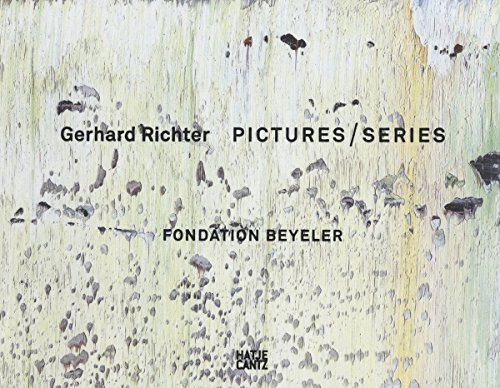
Hardcover. Condition: Sehr gut. 1. Auflage. Z : 192 pp., 225 ills. clothbound - This extensive monograph is the first to present the complete range of the numerous works Richter realized as series, cycles, and spaces. It includes figurative paintings, such as landscapes, still lifes, and portraits, many of which are based on pho…tographs, such as the series S. and Child, a personal and intimate variation on the traditional subject of the Madonna and Child. It also features abstract works, for which Richter draws from a changing repertoire of forms and colors to produce both small and monumental paintings. This generously sized volume reveals an astonishing spectrum of Richter s paintings in all of their dimensions and techniques.

Published by Brussels: RTBF 1 1995
- Manuscript
Seller: Wittenborn Art Books, San Francisco, CA, U.S.A.Wittenborn Art Books
Contact seller4-star sellerCondition: Used - Good
US$ 50.00
US$ 10.00 shippingShips within U.S.A.Quantity: 1 available
Condition: Good. Black and white glossy photograph. 5 x 7 inches. Very Good. Printed in Belgium. Promotional photo for the Belgian RTBF 1 television program Double 7 featuring Mariann Perilleux, Robert Frère, and Bernard Perpette.
 More images
Published by s.l., 1919-1925 1925
- Signed
- Manuscript
Seller: Kotte Autographs GmbH, Roßhaupten, , GermanyKotte Autographs GmbH
Contact seller5-star sellerCondition: Used
US$ 16,547.52
US$ 22.95 shippingShips from Germany to U.S.A.Quantity: 1 available
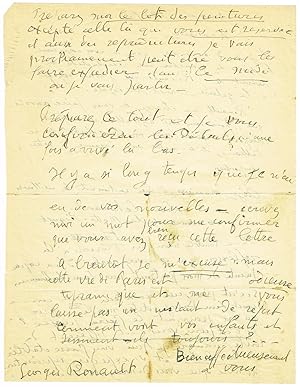
4to. 6 pages, 1 page in-12 avec adresse au verso (carte-lettre). À l'éditeur tchèque Josef Florian. [11.X.1919], nouvelles de sa santé et de sa famille après la guerre Il donne l'adresse d'Ambroise Vollard et évoque son travail sur Miserere : « J'ai encore 60 eaux-fortes à faire il faut encore des années de labeur. Cela paraîtra… en albums de 50 l'un et l'autre : Miserere et Guerre ». Le prix sera « très élevé », mais il essaiera de lui obtenir 15 %. Il va lui envoyer une photo « du portrait à l'huile de moi ». Quant au Léon Bloy, il ne sait s'il le publiera chez Vollard ou d'autres, mais ce ne sera pas avant la fin de l'année. Il compatit à la souffrance de Florian : « Je sais ce que c'est que la maladie et je peux très très très bien faire ceci et plus si vous désirez et avec joie ». Il conclut « en souvenir de Léon Bloy et aussi un peu de moi votre serviteur dans la douleur que je connais si bien » ; et il ajoute : « Je suis content du poème sur vous. Cela porte pour l'instant ce titre - Litanies du malheur » 1er mai 1925 : à la suite d'une lettre de Léon Lehmann parlant du portrait qu'il a fait de Rouault, il donne son accord pour que Lehmann en fasse une copie : « si c'est pour un amateur cossu comme disait Léon Bloy dites moi le prix qu'on pourrait le faire payer ? Si c'est pour vous c'est différent » Lundi. Il lui a envoyé l'estampe La belle-mère : « Sur les petites une quinzaine je note ma prédilection pour 8 estampes marquées derrière d'un rond rouge [] Vous avez à vous dédié tout l'album Miserere et ma meilleure chanson si du moins mon coeur ne m'a pas trompé ». Il lui demande, en vue d'une exposition, de copier dans les cinq albums de ses Chansons « les plus typiques avec votre belle écriture dans un format maniable » ; et il conclut : « Espérance et charité : soeurs bien aimées ». - On joint 2 L.A.S de Léon Lehmann, qui se fait l'intermédiaire de Rouault (1921-1925) ; et la copie manuscrite (9 pages in-4, par Mme Rouault et Léon Lehmann), avec corrections autographes de Rouault, du long poème dédié à Josef Florian.

Published by N. p. o. d.
- Manuscript
Seller: Kotte Autographs GmbH, Roßhaupten, , GermanyKotte Autographs GmbH
Contact seller5-star sellerCondition: Used
US$ 7,682.78
US$ 22.95 shippingShips from Germany to U.S.A.Quantity: 1 available
4to. 3 pp. The larger manuscript comprises seven poems, three of which (recto) connected to Rouault's aquatint-album Miserere, executed between 1922 and 1927 and published in 1948, entitled "L'Illuminé" (9 verses), Les aliénés (7 verses) and an untitled poem of 17 verses starting: "Je suis l'aveugle | vif alerte | gai | comme un… oiseau pillard". A poem of 19 verses dedicated to Jacques Maritain, "en souvenir de son dévouement" and a quatrain inspired by the 1913 acquittal of Madame Lamberjack, who shot her husband, the cyclist Émile Lamberjack on 22 January 1913 are from an unpublished album of poems surrounding Versailles, while the poem of 17 verses entitled "La petite parisienne" belongs to an album of "Types internationaux". The final poem on the verso is entitled "Pour vous donner une idée des Grotesques". - The second manuscript is a beautiful single poem of 43 verses that shares its title "Le Verlaine du Faubourg" with Rouault's 1914 painted portrait of the Paul Verlaine: "C'est lui le Verlaine | des parlotes populaires | mais il a gardé "son chant" | au plus profond de son cur-enfant []".

Published by N. p. o. d.
- Manuscript
Seller: Kotte Autographs GmbH, Roßhaupten, , GermanyKotte Autographs GmbH
Contact seller5-star sellerCondition: Used
US$ 1,772.95
US$ 22.95 shippingShips from Germany to U.S.A.Quantity: 1 available
193 x 140 mm each. Photographic reproductions of works by Rouault with his inscriptions. Three works are part of the famous "Miserere" series of aquatints (192227), entitled: "Jean-François", "Dame du Haut Quartier", "Nous sommes fous". The photographs of "Jésus toujours flagellé" and "Se réfugie en ton coeur / Va nu pieds de ma…lheur" are marked as ensemble no. 1 and 2. The final object is entitled "Gens de bon ton". - Together with the catalogue of an exhibition of paintings and ceramic works at Galerie E. Druet, 21 February5 March 1910) with a preface by Jacques Favelle.


