Order Total (1 Item Items):
Shipping Destination:

Heavily Annotated (2 results)
Skip to main search results
Search filters
Product Type
- All Product Types
- Books (2)
- Magazines & Periodicals (No further results match this refinement)
- Comics (No further results match this refinement)
- Sheet Music (No further results match this refinement)
- Art, Prints & Posters (No further results match this refinement)
- Photographs (No further results match this refinement)
- Maps (No further results match this refinement)
- Manuscripts & Paper Collectibles (No further results match this refinement)
Condition Learn more
- New (No further results match this refinement)
- As New, Fine or Near Fine (No further results match this refinement)
- Very Good or Good (No further results match this refinement)
- Fair or Poor (No further results match this refinement)
- As Described (2)
Binding
- All Bindings
- Hardcover (2)
- Softcover (No further results match this refinement)
Collectible Attributes
- First Edition (1)
- Signed (No further results match this refinement)
- Dust Jacket (No further results match this refinement)
- Seller-Supplied Images (2)
- Not Print on Demand (2)
Language (1)
Price
- Any Price
- Under US$ 25 (No further results match this refinement)
- US$ 25 to US$ 50 (No further results match this refinement)
- Over US$ 50
Free Shipping
- Free Shipping to U.S.A. (No further results match this refinement)
Seller Location
Seller Rating
-
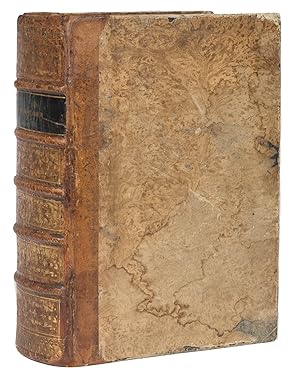
Promptuarium Divini Iuris et Utriusque Humani, Pontificii & Caesarei.
Publication Date: 1520
Seller: The Lawbook Exchange, Ltd., ABAA ILAB, Clark, NJ, U.S.A.
Association Member: ABAA ESA ILAB
Seller rating 5 out of 5 stars

Paris: Henri Estienne & Simon de Colines, 1520. (illustrator). Paris: Henri Estienne & Simon de Colines, 1520. An Impressive, Alphabetically Digested Synthesis of Divine Law Montholon, Jean de [d.1528]. Promptuarium Divini Iuris et Utriusq[ue] Humani, Pontificii & C[a]esarei Celebriores Eiusdem Divini Iuris, & Historias / & Sententias, Humanis Iuribus Tum Annotatas Tum Elucidatas, Sub Alphabetia Serie Complectens. Paris: In Aedibus Henrici Stephani [and Simon de Colines], 1520. Two volumes in one. [vi], CCCCX, [2]; CCCXXXI, [6] ff. Lacking final blank. Folio (12" x 8-1/4"; 30.48 x 20.95 cm). Later (nineteenth-century) quarter sheep over marbled boards, gilt spine with raised bands and lettering piece, patterned edges, endpapers renewed. Moderate rubbing, scuffing and faint dampstaining to boards, somewhat heavier rubbing to extremities, joints discreetly mended with calf at head, light wear to board edges, corners reinforced, hinges cracked, vertical crease to front free endpaper. First title page printed within woodcut border with personifications of divine, canon and civil law, occasional woodcut initials throughout, main text surrounded by linear gloss. Moderate toning to interior, dampstain to upper gutter causing recurrent tearing throughout text block, affecting legibility of a few leaves of first index and, occasionally, side notes, occasional faint dampstaining, somewhat heavier to last quarter of text block, light foxing and soiling in a few places, first several leaves, second title page and final leaf neatly reinforced at gutter, negligible light worming to lower right corner of last forty or so leaves, clean tears to fore and bottom edges of final leaf neatly mended on verso not affecting text. Early annotations, underlining and manicules throughout text in at least two hands, many annotations affected by trimming at fore-edge. An impressive volume. $1,500. * Only edition. This volume marks a pivotal moment in the history of the book. It was the first work printed by Simon de Colines, the legendary French Renaissance printer. Colines took over the shop of Henri Estienne (Stephanus) upon the latter's death in 1520; the final dedicatory leaf of this work is the first recorded appearance of Colines' name in print (Schreiber). Montholon, a distinguished cardinal and jurist, produced this Promptuarium as an exhaustive, alphabetically digested guide to Divine Law, harmonized with human (Civil and Canon).
-
Codice dei Delitti e Delle Pene pel Regno D'Italia
Publication Date: 1810
Seller: The Lawbook Exchange, Ltd., ABAA ILAB, Clark, NJ, U.S.A.
Association Member: ABAA ESA ILAB
Seller rating 5 out of 5 stars
First Edition
Milano: Dalla Reale Stamperia, 1810. 1st ed. (illustrator). Milano: Dalla Reale Stamperia, 1810. 1st ed. Interleaved and Annotated First Italian Edition of the 1810 Napoleonic Penal Code [Kingdom of Italy]. [Piantanida, Luigi (b.1770)]. Codice dei Delitti e Delle Pene pel Regno D'Italia. Edizione Ufficiale. Milan: Dalla Reale Stamperia, 1810. 176 pp. Interleaved. Octavo (8-3/4" x 6-1/4"; 22.2 x 15.9 cm). Contemporary paper boards, inked title to spine, ownership signatures ("Piantanida") to front board and front pastedown, edges untrimmed, later (illegible) ownership signature to rear pastedown. Light rubbing to boards, moderate rubbing to extremities, corners bumped, stitching of text block loosening slightly but secure. Light toning to interior, occasional very faint dampstaining to top-edge, lower corner of leaf 6a (pp. 81-82) lacking without loss to text. Text block fully interleaved (2 ff. between each page) with ruled paper, 64 pp. of annotations to ruled leaves in an early hand. A wide-margined, uncut copy with interesting contemporary annotations. $1,500. * This is the first official Italian translation of the landmark 1810 French Penal Code (Code Penal), which was formally introduced into the Kingdom of Italy under Napoleon's direct rule on January 1, 1811. Divided into four books, the code governs criminal responsibility, sentencing, felonies/misdemeanors, and minor police violations. It marked a sharp authoritarian turn from earlier revolutionary ideals, reinstating branding, life imprisonment, and a sweeping application of the death penalty and hard labor. Crucially, it established an absolute standard of criminal responsibility that disregarded mitigating circumstances, while simultaneously granting judges immense discretionary power in sentencing. The ownership marks strongly suggest this copy belonged to the prominent Milanese jurist and lawyer Luigi Piantanida (b. 1770). An ardent supporter of the Napoleonic regime, Piantanida famously dedicated his major legal treatise, Della Giurisprudenza Marittima-Commerciale Antica e Moderna (1806-1808), to the Emperor. The 64 pages of detailed, early manuscript annotations provide a fascinating window into how the code was applied in real-time. The notes specifically track subsequent amendments, imperial decrees, and evolving case law up to 1813-just before the collapse of Napoleonic rule in Italy. Interleaved copies with extensive, authoritative com.