

Order Total (1 Item Items):
Shipping Destination:

Holly Borham (22 results)
Skip to main search results
Search filters
Product Type
- All Product Types
- Books (22)
- Magazines & Periodicals (No further results match this refinement)
- Comics (No further results match this refinement)
- Sheet Music (No further results match this refinement)
- Art, Prints & Posters (No further results match this refinement)
- Photographs (No further results match this refinement)
- Maps (No further results match this refinement)
- Manuscripts & Paper Collectibles (No further results match this refinement)
Condition Learn more
- New (17)
- As New, Fine or Near Fine (2)
- Very Good or Good (3)
- Fair or Poor (No further results match this refinement)
- As Described (No further results match this refinement)
Binding
- All Bindings
- Hardcover (No further results match this refinement)
- Softcover (22)
Collectible Attributes
- First Edition (No further results match this refinement)
- Signed (No further results match this refinement)
- Dust Jacket (No further results match this refinement)
- Seller-Supplied Images (8)
- Not Print on Demand (22)
Language (1)
Free Shipping
Seller Location
Seller Rating
-

The Circulating Lifeblood of Ideas: Leo Steinberg's Library of Prints
Language: English
Published by Blanton Museum of Art, 2023
ISBN 10: 1646570340 ISBN 13: 9781646570348
Seller: Wonder Book, Frederick, MD, U.S.A.
Seller rating 5 out of 5 stars

Condition: Good. Good condition. A copy that has been read but remains intact. May contain markings such as bookplates, stamps, limited notes and highlighting, or a few light stains.
-

The Circulating Lifeblood of Ideas: Leo Steinbergâs Library of Prints
Language: English
Published by Blanton Museum of Art, 2023
ISBN 10: 1646570340 ISBN 13: 9781646570348
Condition: very_good. Fast Free Shipping â" Very Good condition book with a firm cover and clean pages. Shows normal use and some light wear or limited notes markings. A solid, nice copy to enjoy.
-
The Circulating Lifeblood of Ideas: Leo Steinbergâs Library of Prints
Language: English
Published by Blanton Museum of Art, 2023
ISBN 10: 1646570340 ISBN 13: 9781646570348
paperback. Condition: Good. Connecting readers with great books since 1972! Used textbooks may not include companion materials such as access codes, etc. May have some wear or writing/highlighting. We ship orders daily and Customer Service is our top priority!
-

Circulating Lifeblood of Ideas : Leo Steinberg's Library of Prints
Language: English
Published by Blanton Museum of Art, 2023
ISBN 10: 1646570340 ISBN 13: 9781646570348
Condition: New.
-

The Circulating Lifeblood of Ideas: Leo Steinberg's Library of Prints
Language: English
Published by Marquand Books Inc, US, 2023
ISBN 10: 1646570340 ISBN 13: 9781646570348
Paperback. Condition: New. How the influential American art historian used his print collection to theorize body language and the concept of the copyBeginning in the early 1960s, with only the meager budget of a part-time art history professor, Leo Steinberg (1920-2011) amassed a collection of more than 3,500 prints spanning the medium's 500-year history in the West. Steinberg's prints formed a visual library that shaped his scholarship in fundamental ways. His collection, incorporating the work of artists both famous and obscure, illuminates his claim that before photography, prints functioned as the "circulating lifeblood of ideas," disseminating figures and styles across boundaries. Through close observation of his prints, Steinberg developed some of his most innovative arguments about the instructive richness of the copy and the expressive potential of body language. This lavishly illustrated volume examines the development of Steinberg's remarkable collection and its role in his scholarship. It also serves as an introduction to the history of Western printmaking that these works broadly encompass.
-
Circulating Lifeblood of Ideas : Leo Steinberg's Library of Prints
Language: English
Published by Blanton Museum of Art, 2023
ISBN 10: 1646570340 ISBN 13: 9781646570348
Condition: As New. Unread book in perfect condition.
-

The Circulating Lifeblood of Ideas: Leo Steinberg's Library of Prints
Language: English
Published by Marquand Books Inc, US, 2023
ISBN 10: 1646570340 ISBN 13: 9781646570348
Seller: Rarewaves.com USA, London, LONDO, United Kingdom
Seller rating 5 out of 5 stars
Paperback. Condition: New. How the influential American art historian used his print collection to theorize body language and the concept of the copyBeginning in the early 1960s, with only the meager budget of a part-time art history professor, Leo Steinberg (1920-2011) amassed a collection of more than 3,500 prints spanning the medium's 500-year history in the West. Steinberg's prints formed a visual library that shaped his scholarship in fundamental ways. His collection, incorporating the work of artists both famous and obscure, illuminates his claim that before photography, prints functioned as the "circulating lifeblood of ideas," disseminating figures and styles across boundaries. Through close observation of his prints, Steinberg developed some of his most innovative arguments about the instructive richness of the copy and the expressive potential of body language. This lavishly illustrated volume examines the development of Steinberg's remarkable collection and its role in his scholarship. It also serves as an introduction to the history of Western printmaking that these works broadly encompass.
-
The Circulating Lifeblood of Ideas: Leo Steinberg's Library of Prints
Seller: PBShop.store UK, Fairford, GLOS, United Kingdom
Seller rating 5 out of 5 stars
PAP. Condition: New. New Book. Shipped from UK. Established seller since 2000.
-
Paperback. Condition: new. Paperback. How the influential American art historian used his print collection to theorize body language and the concept of the copyBeginning in the early 1960s, with only the meager budget of a part-time art history professor, Leo Steinberg (19202011) amassed a collection of more than 3,500 prints spanning the mediums 500-year history in the West. Steinbergs prints formed a visual library that shaped his scholarship in fundamental ways. His collection, incorporating the work of artists both famous and obscure, illuminates his claim that before photography, prints functioned as the "circulating lifeblood of ideas," disseminating figures and styles across boundaries. Through close observation of his prints, Steinberg developed some of his most innovative arguments about the instructive richness of the copy and the expressive potential of body language. This lavishly illustrated volume examines the development of Steinbergs remarkable collection and its role in his scholarship. It also serves as an introduction to the history of Western printmaking that these works broadly encompass. Shipping may be from multiple locations in the US or from the UK, depending on stock availability.
-
The Circulating Lifeblood of Ideas: Leo Steinberg's Library of Prints
Language: English
Published by Blanton Museum of Art, 2023
ISBN 10: 1646570340 ISBN 13: 9781646570348
Seller: Ria Christie Collections, Uxbridge, United Kingdom
Seller rating 5 out of 5 stars
US$ 41.39
US$ 16.15 shipping
Ships from United Kingdom to U.S.A.Quantity: 11 available
Add to basketCondition: New. In.
-

Circulating Lifeblood of Ideas : Leo Steinberg's Library of Prints
Language: English
Published by Blanton Museum of Art, 2023
ISBN 10: 1646570340 ISBN 13: 9781646570348
Seller: GreatBookPricesUK, Woodford Green, United Kingdom
Seller rating 5 out of 5 stars
US$ 37.31
US$ 20.22 shipping
Ships from United Kingdom to U.S.A.Quantity: 5 available
Add to basketCondition: New.
-
The Circulating Lifeblood of Ideas: Leo Steinberg's Library of Prints
Language: English
Published by Blanton Museum of Art 2023-09-05, 2023
ISBN 10: 1646570340 ISBN 13: 9781646570348
US$ 41.01
US$ 20.88 shipping
Ships from United Kingdom to U.S.A.Quantity: 1 available
Add to basketPaperback. Condition: New.
-
Circulating Lifeblood of Ideas : Leo Steinberg's Library of Prints
Language: English
Published by Blanton Museum of Art, 2023
ISBN 10: 1646570340 ISBN 13: 9781646570348
Seller: GreatBookPricesUK, Woodford Green, United Kingdom
Seller rating 5 out of 5 stars
US$ 42.53
US$ 20.22 shipping
Ships from United Kingdom to U.S.A.Quantity: 5 available
Add to basketCondition: As New. Unread book in perfect condition.
-
Circulating Lifeblood Ideas Leo Steinbpb
Language: English
Published by Blanton Museum of Art, 2023
ISBN 10: 1646570340 ISBN 13: 9781646570348
Seller: Kennys Bookshop and Art Galleries Ltd., Galway, GY, Ireland
Seller rating 5 out of 5 stars
Condition: New.
-
The Circulating Lifeblood of Ideas: Leo Steinberg's Library of Prints
Language: English
Published by Blanton Museum of Art, 2023
ISBN 10: 1646570340 ISBN 13: 9781646570348
US$ 50.24
US$ 16.85 shipping
Ships from United Kingdom to U.S.A.Quantity: 1 available
Add to basketPaperback. Condition: Brand New. 163 pages. 10.25x8.25x0.50 inches. In Stock.
-
The Circulating Lifeblood of Ideas: Leo Steinbergâs Library of Prints
Seller: THE SAINT BOOKSTORE, Southport, United Kingdom
Seller rating 5 out of 5 stars
US$ 43.24
US$ 24.80 shipping
Ships from United Kingdom to U.S.A.Quantity: 5 available
Add to basketPaperback / softback. Condition: New. New copy - Usually dispatched within 4 working days.
-
Circulating Lifeblood Ideas Leo Steinbpb
Language: English
Published by Blanton Museum of Art, 2023
ISBN 10: 1646570340 ISBN 13: 9781646570348
Condition: New.
-
CIRCULATING LIFEBLOOD IDEAS LEO STEINBPB
Language: English
Published by Blanton Museum of Art, 2023
ISBN 10: 1646570340 ISBN 13: 9781646570348
US$ 37.32
US$ 55.26 shipping
Ships from United Kingdom to U.S.A.Quantity: 1 available
Add to basketCondition: NEW.
-

The Circulating Lifeblood of Ideas: Leo Steinberg's Library of Prints
Language: English
Published by Marquand Books Inc, US, 2023
ISBN 10: 1646570340 ISBN 13: 9781646570348
Paperback. Condition: New. How the influential American art historian used his print collection to theorize body language and the concept of the copyBeginning in the early 1960s, with only the meager budget of a part-time art history professor, Leo Steinberg (1920-2011) amassed a collection of more than 3,500 prints spanning the medium's 500-year history in the West. Steinberg's prints formed a visual library that shaped his scholarship in fundamental ways. His collection, incorporating the work of artists both famous and obscure, illuminates his claim that before photography, prints functioned as the "circulating lifeblood of ideas," disseminating figures and styles across boundaries. Through close observation of his prints, Steinberg developed some of his most innovative arguments about the instructive richness of the copy and the expressive potential of body language. This lavishly illustrated volume examines the development of Steinberg's remarkable collection and its role in his scholarship. It also serves as an introduction to the history of Western printmaking that these works broadly encompass.
-
Paperback. Condition: new. Paperback. How the influential American art historian used his print collection to theorize body language and the concept of the copyBeginning in the early 1960s, with only the meager budget of a part-time art history professor, Leo Steinberg (19202011) amassed a collection of more than 3,500 prints spanning the mediums 500-year history in the West. Steinbergs prints formed a visual library that shaped his scholarship in fundamental ways. His collection, incorporating the work of artists both famous and obscure, illuminates his claim that before photography, prints functioned as the "circulating lifeblood of ideas," disseminating figures and styles across boundaries. Through close observation of his prints, Steinberg developed some of his most innovative arguments about the instructive richness of the copy and the expressive potential of body language. This lavishly illustrated volume examines the development of Steinbergs remarkable collection and its role in his scholarship. It also serves as an introduction to the history of Western printmaking that these works broadly encompass. Shipping may be from our Sydney, NSW warehouse or from our UK or US warehouse, depending on stock availability.
-
The Circulating Lifeblood of Ideas: Leo Steinberg's Library of Prints
Language: English
Published by Marquand Books Inc Okt 2023, 2023
ISBN 10: 1646570340 ISBN 13: 9781646570348
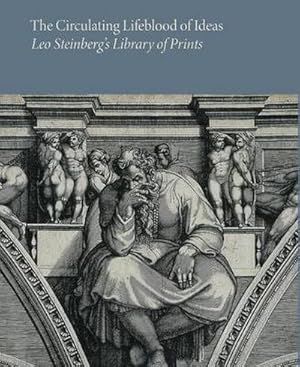
Taschenbuch. Condition: Neu. Neuware - How the influential American art historian used his print collection to theorize body language and the concept of the copyBeginning in the early 1960s, with only the meager budget of a part-time art history professor, Leo Steinberg (1920-2011) amassed a collection of more than 3,500 prints spanning the medium's 500-year history in the West. Steinberg's prints formed a visual library that shaped his scholarship in fundamental ways. His collection, incorporating the work of artists both famous and obscure, illuminates his claim that before photography, prints functioned as the 'circulating lifeblood of ideas,' disseminating figures and styles across boundaries. Through close observation of his prints, Steinberg developed some of his most innovative arguments about the instructive richness of the copy and the expressive potential of body language. This lavishly illustrated volume examines the development of Steinberg's remarkable collection and its role in his scholarship. It also serves as an introduction to the history of Western printmaking that these works broadly encompass.
-

The Circulating Lifeblood of Ideas: Leo Steinberg's Library of Prints
Language: English
Published by Marquand Books Inc, US, 2023
ISBN 10: 1646570340 ISBN 13: 9781646570348
US$ 41.21
US$ 87.60 shipping
Ships from United Kingdom to U.S.A.Quantity: 3 available
Add to basketPaperback. Condition: New. How the influential American art historian used his print collection to theorize body language and the concept of the copyBeginning in the early 1960s, with only the meager budget of a part-time art history professor, Leo Steinberg (1920-2011) amassed a collection of more than 3,500 prints spanning the medium's 500-year history in the West. Steinberg's prints formed a visual library that shaped his scholarship in fundamental ways. His collection, incorporating the work of artists both famous and obscure, illuminates his claim that before photography, prints functioned as the "circulating lifeblood of ideas," disseminating figures and styles across boundaries. Through close observation of his prints, Steinberg developed some of his most innovative arguments about the instructive richness of the copy and the expressive potential of body language. This lavishly illustrated volume examines the development of Steinberg's remarkable collection and its role in his scholarship. It also serves as an introduction to the history of Western printmaking that these works broadly encompass.
