

Order Total (1 Item Items):
Shipping Destination:

Illustrations Howard Simon (6 results)
Skip to main search results
Search filters
Product Type
- All Product Types
- Books (6)
- Magazines & Periodicals (No further results match this refinement)
- Comics (No further results match this refinement)
- Sheet Music (No further results match this refinement)
- Art, Prints & Posters (No further results match this refinement)
- Photographs (No further results match this refinement)
- Maps (No further results match this refinement)
- Manuscripts & Paper Collectibles (No further results match this refinement)
Condition Learn more
- New (No further results match this refinement)
- As New, Fine or Near Fine (2)
- Very Good or Good (2)
- Fair or Poor (No further results match this refinement)
- As Described (2)
Binding
- All Bindings
- Hardcover (2)
- Softcover (No further results match this refinement)
Collectible Attributes
Language (2)
Free Shipping
- Free Shipping to U.S.A. (No further results match this refinement)
Seller Location
Seller Rating
-
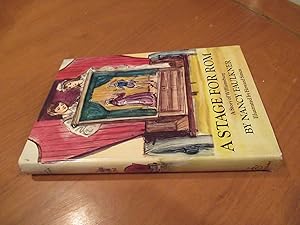
A Stage For Rom: A Story Of Williamsburg
Language: English
Published by Doubleday & Comnpany, Garden City, 1962
Seller: Arroyo Seco Books, Pasadena, Member IOBA, Pasadena, CA, U.S.A.
Association Member: IOBA
Seller rating 4 out of 5 stars

First Edition
Hardcover. Condition: Near Fine. Dust Jacket Condition: Near Fine. 1st Edition. 206 Pp. Green Boards, Gilt. First Edition (Stated). Near Fine In Near Fine Dj Priced $2.95. Owner's Information On Front Pastedown.
-

Condition: Very Good+.
-

Hardcover. Condition: Very Good. Dust Jacket Included. 1st Edition. First edition. Orig. cloth with illustrated endpapers. Top of spine bumped, very good in about very good dust jacket which is chipped at top and bottom of spine; about one half-inch is missing from the top, taking away the first letter of the author's name, and about the same from the bottom. The chip at the top of the spine extends onto the upper left corner of the front panel and a bit also onto the extreme upper right corner of the back panel, not affecting anything of importance. The front flap, front endpaper, and first few pages show trace marks left by a paperclip. Otherwise the interior is clean and unmarked. Jacket has a drawing in colors on the front panel, and besides the illustrated endpapers there are six full-page black-and-white illustrations and numerous black-and-white vignettes throughout the text. Osceola Buddy is a mule whose conversations with other mules supply most of the book's dialogue. This book is interesting for its local color about agricultural life in southern Florida in the 1930s, including the farm labor done by African-American adults and children. There is a brief mention of Seminole Indians. Effie Power was an early supporter of Langston Hughes and provided the introduction to his 1932 poetry collection The Dream Keeper. at the time of writing this book she was living in Florida. Scarce in dust jacket.
-

Jedediah Smith: Trade and Trail Breaker
Published by Press of the Pioneers, Inc, New York, 1936
Seller: Lorne Bair Rare Books, ABAA, Winchester, VA, U.S.A.
Association Member: ABAA ILAB IOBA
Seller rating 5 out of 5 stars

First Edition
Dust Jacket Condition: dj. First Edition. First Printing. Octavo (23.5cm); red cloth, with titles stamped in gilt on spine; dustjacket; xvi,233,[3]pp; illus. Early owners inscription to front endpaper, old bookseller's description clipped and tipped onto front pastedown, with some offsetting to pastedowns from binders glue; Near Fine. Dustjacket is unclipped (priced $3.75), sunned at spine and panels, modest wear, with several shallow losses and small tears; Very Good.
-
Rococo [First Book of the Black Manikin Press / Limited Edition #473 of 500]
Published by Edward W. Titus, at the Sign of the Black Manikin, Paris, 1926
Seller: Blind-Horse-Books (ABAA), DeLand, FL, U.S.A.
Association Member: ABAA ESA FABA ILAB IOBA
Seller rating 5 out of 5 stars
Condition: Near Fine. Illustrations by Howard Simon (illustrator). Limited Edition #473 of 500. The true first book printed by Edward W. Titus at his legendary Rue Delambre press, establishing the aesthetic blueprint for his Paris expatriate circle. This edition perfectly merges the refined letterpress typography of Titus with Howard Simon's delicate modernist woodcut illustrations. It stands as the essential foundational document for one of the most significant fine press imprints of the 1920s American expatriate movement. KEY FEATURES +++ Visuals: Features three elegant, tipped-in woodcut illustrations by Howard Simon, with the first plate signed by the artist in the matrix. +++ Binding: Original quarter white parchment spine with gilt titles over blue-grey paper-covered boards, boasting a sharp blue paste-on paper label to the upper cover. +++ Content: Collects Dunning's introspective, refined modernist verse, representing his key collaboration within Ezra Pound's Paris circle. +++ Associated Names: Edward W. Titus (Publisher); Howard Simon (Illustrator); Ezra Pound (Circle Associate). +++ Imprint: Paris: Edward W. Titus, at the Sign of the Black Manikin, 1926. Limited Edition, this being copy #473 of only 500 printed. +++ Specs: 9 x 5.25 inches tall / unpaginated [22 pages]. CONDITION: Near Fine. The bindings are tight and square, holding firmly. Internally, the text block is clean and free of markings, displaying light, even age-toning, and remaining completely unopened after the preliminary leaves. The exterior shows moderate shelf handling, characterized by even toning and faint hand-soiling to the parchment spine, light rubbing to the extremities, and typical endpaper offsetting to the corners. HISTORICAL SIGNIFICANCE - Edward W. Titus was an American expatriate bookseller, critic, and publisher whose Rue Delambre shop operated as a vital node of literary modernism, neighboring Sylvia Beach's Shakespeare and Company. By founding the Black Manikin Press, Titus merged classical fine-press craftsmanship with modern aesthetic experimentation, creating a platform that championed controversial and innovative writers who were excluded from mainstream commercial streams. Rococo matters precisely because it is the opening salvo of this publishing crusade. Before Titus took on the financial and legal risks of printing Lady Chatterley's Lover or funding the early booklets of Anaïs Nin, he utilized Dunning's verse and Simon's engravings to test the limits of his handset typography and establish his reputation among international collectors. SCHOLARLY FEATURES +++ Expatriate Fine Press: Functions as the inaugural publication of Titus's Sign of the Black Manikin Press, setting the high typographic standard that would later produce early milestones for Anaïs Nin, D.H. Lawrence, and Henry Miller. +++ Modernist Illustration: Showcases early, masterful Paris-period woodcuts by Howard Simon, whose printmaking captured the intricate, delicate imagery of the lost generation poets. +++ Poetic Lineage: Documents Ralph Cheever Dunning's place as a central, tragic figure in the expatriate avant-garde, whose traditional yet deeply introspective verse was heavily championed by Ezra Pound in the transatlantic review. SUBJECTS: Black Manikin Press, Edward W. Titus, Paris Expatriate Printing, Howard Simon, Modernist Illustration, Modernist Poetry, Fine Press, Rue Delambre. GENRES: Limited Edition, Private Press, Illustrated Book.
-
Jews Without Money [Presentation Copy to Charles Erskine Scott Wood]
Published by Horace Liveright, New York, 1930
Seller: Lorne Bair Rare Books, ABAA, Winchester, VA, U.S.A.
Association Member: ABAA ILAB IOBA
Seller rating 5 out of 5 stars
Signed
Second Printing (same year as the first). Octavo (21cm); black cloth, with titles stamped in gilt on spine and front cover; illustrated endpapers; [12],13-309,[3]pp; illus. Inscribed by the author in year of publication the half-title page: "To Erskine and Sara / with never-ceasing affection / Sincerely & fraternally / Michael Gold." Further inscribed, by Wood: "From Erskine & Sara to their dear friend Max Rosenberg - echoing the above - The Cats / July 1930." A tight, clean copy in the original cloth binding; board corners lightly bumped and a few mild taps to board edges, the endpapers illustrated after woodcuts by Howard Simon. Solidly Very Good, lacking the scarce dustwrapper. A great association copy, inscribed by Gold to one of the leading leftist intellectuals and authors of his time. Wood (1852-1944) was a self-styled anarchist, aesthete, and painter. As an attorney in the 1920s he defended a number of prominent figures on the left, including the anarchist lecturer Emma Goldman, and contributed prolifically to the radical periodicals of the period. With his second wife Sara Bard Field, he was a long-time resident of Los Gatos, California, and was known for entertaining visitors at the estate "The Cats," mentioned in the present inscription. Interestingly, Wood did not have a reputation for sympathy with doctrinaire Marxist thought; it seems unlikely that Gold would have written Wood such an effusive inscription even a few years later, as during the Great Depression he would rise to become one of the leading apparatchiks in the CPUSA. Signed.


![Seller image for Rococo [First Book of the Black Manikin Press / Limited Edition #473 of 500] for sale by Blind-Horse-Books (ABAA)](https://pictures.abebooks.com/inventory/md/md32230514754.jpg)
![Seller image for Jews Without Money [Presentation Copy to Charles Erskine Scott Wood] for sale by Lorne Bair Rare Books, ABAA](https://pictures.abebooks.com/inventory/md/md32370059948.jpg)