Order Total (1 Item Items):
Shipping Destination:

Johnston Ohn (2 results)
Skip to main search results
Search filters
Product Type
- All Product Types
- Books (2)
- Magazines & Periodicals (No further results match this refinement)
- Comics (No further results match this refinement)
- Sheet Music (No further results match this refinement)
- Art, Prints & Posters (No further results match this refinement)
- Photographs (No further results match this refinement)
- Maps (No further results match this refinement)
- Manuscripts & Paper Collectibles (No further results match this refinement)
Condition Learn more
- New (No further results match this refinement)
- As New, Fine or Near Fine (No further results match this refinement)
- Very Good or Good (No further results match this refinement)
- Fair or Poor (No further results match this refinement)
- As Described (2)
Binding
- All Bindings
- Hardcover (1)
- Softcover (No further results match this refinement)
Collectible Attributes
- First Edition (1)
- Signed (No further results match this refinement)
- Dust Jacket (No further results match this refinement)
- Seller-Supplied Images (2)
- Not Print on Demand (2)
Language (1)
Price
- Any Price
- Under US$ 25 (No further results match this refinement)
- US$ 25 to US$ 50
- Over US$ 50
Free Shipping
- Free Shipping to U.S.A. (No further results match this refinement)
Seller Location
Seller Rating
-

Canadian Folk Songs (Old and New)
Published by J.M. Dent, London
Seller: Burton Lysecki Books, ABAC/ILAB, Winnipeg, MB, Canada
Seller rating 5 out of 5 stars

1927. (Hardcover) Good to very good, no dust jacket. 105pp. The corners and the top and bottom of the spine are lightly worn, the back endpaper has been torn out and there is a previous owner's inscription. Illustrations by Frank H. Johnston. (Music, Folk Music).
-
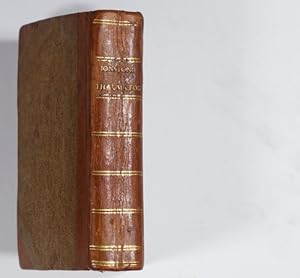
Thaumatographia naturalis, in decem classes distincta, in quibus admiranda 1 Coeli. 2 Elementorum. 3 Meteororum. 4 Fossilium. 5 Plantarum. 6 Avium. 7 Quadrupedum. 8 Exanguium. 9 Piscium. 10 Hominis.
Publication Date: 1665
Seller: Antiq. F.-D. Söhn - Medicusbooks.Com, Marburg, Germany
Seller rating 5 out of 5 stars
First Edition
Amstelodami, Joannem Janssonium, Waesberge Elizeum Weyerstraet, 1665, 12°, 495, (3) pp., Frontispiece, Halbledereinband d.Zt.; trotz drei kleiner Wuemgänge ein feines Expl. A unillustrated pocket guide, issued in duodecimo format on "admiranda" or wonders of nature organized in ten categories (heaven, earth, and topics relating to meteors, fossils or minerals, plants, birds, quadrupeds, insects and bloodless animals, fish, and humans). Jonston s most popular work on "admiranda" or wonders of nature organised into ten categories (heaven, earth, and topics relating to meteors, fossils or minerals, plants, birds, quadrupeds, insects and bloodless animals, fish, and humans). The work draws heavily from classical sources such as Aristotle, Pliny, and Seneca, but also from the more recent work of Aldrovandi, and in the section on plants includes descriptions of the flora and fauna of the New World, as well as tobacco. Each section is headed by a useful index to its contents, and the work concludes with a poem in praise of Jonston by the Bohemian poet Venceslaus Clemens. Jonston was the author of many works on natural history, medicine an other topics. Although his work was criticized for lack of originality, he undisputably made a significant contribution to the popularity of natural history during the first half of the seventeenth century. John Jonston (1603-1675) emigrated from Poland to Scotland in 1622 and studied natural history at St. Andrew s for four years. He received the degree of Doctor of Physic from both Leyden and Cambridge. Despite the compact size of Thaumaturgia, his earliest work, its wide range of material prefigures his later, large-scale works on Fish, Insects, Birds, and Trees, made possible by his extensive travel through Europe and access to its libraries, as well as firsthand observation. Venceslaus Clemens (1589-1640?), Protestant and prolific Neo-Latin poet, was forced to leave his native Bohemia after the Battle of White Mountain. His Gustavis, printed the same year as the Thaumatographia describes the anguish of exile and praises Gustavus Adolphus and the victory of the Swedish Army at the Battle of Breitenfeld, which Clemens credits as saving the Protestant cause in Europe. Garrison-Morton 287 (1st. Ed.1632).