
Lee Orient (6 results)

Published by Chinese Culture University Press
- Softcover
Seller: Budget Books, Pasadena, CA, U.S.A.Budget Books
Contact seller5-star sellerCondition: Used - Fine
US$ 12.00
US$ 5.00 shippingShips within U.S.A.Quantity: 1 available
Soft cover. Condition: Fine. Pages are clean and unmarked; binding is tight; cover shows slight shelf wear. Text in English.
Published by Olive Meadows Press, Poway, CA 1980
- Softcover
- First Edition
Seller: Archer's Used and Rare Books, Kent, OH, U.S.A.Archer's Used and Rare Books
Contact seller5-star sellerCondition: Used - Near fine
US$ 12.15
US$ 5.50 shippingShips within U.S.A.Quantity: 1 available
Softcover. Condition: Near Fine. No Dust Jacket. 1st edition. c1980. Near Fine. Quantity Available: 1. Category: Eastern Philosophy; Pictures of this item not already displayed here available upon request. Inventory No: 18340.
Published by The Confucius-Mencius Society, Taipie, Taiwan, Republic of China 1982
- Softcover
Seller: Blue Heron Books, Claremont, CA, U.S.A.Blue Heron Books
Contact seller5-star sellerCondition: Used - Very good
US$ 15.00
US$ 5.50 shippingShips within U.S.A.Quantity: 1 available
Soft Binding. Condition: Very Good. No Jacket. Authorized Taipai Edition. Minor shelf wear of covers. Very clean inside.
Published by Chinese Culture University Press
- Softcover
Seller: Bingo Used Books, Vancouver, WA, U.S.A.Bingo Used Books
Contact seller5-star sellerCondition: Used - Near fine
US$ 14.00
US$ 6.99 shippingShips within U.S.A.Quantity: 1 available
Soft cover. Condition: Near Fine. Trade paperback in near fine condition.
 More images
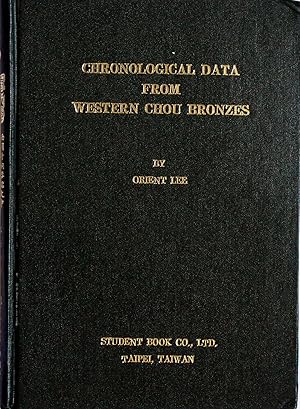
Published by Student Book Co., Ltd., Taipei
- Hardcover
Seller: Chesil Books, DORCHESTER, , United KingdomChesil Books
Contact seller4-star sellerCondition: Used - Very good
US$ 25.84
US$ 16.96 shippingShips from United Kingdom to U.S.A.Quantity: 1 available
Hardback. Condition: Very Good. nd (1967 or later?); pp [1], 61 and 90. Some staining on the inside front cover where the glue fixing the end paper appears to have seeped through but otherwise in very good condition. The book is in two parts, the first largely in English and the second part in Chinese but also with tables in ara…bic numerals. As the title indicates it's a study of chronological and related information found by studying Western Chou bronzes. NOTE: on account of the size and weight of this books the postage cost will be LESS than the amount (which must be) shown and will be advised before an order is confirmed. The Western Chou, or Zhou, period was from 1046-771 BC and in 1928 archaeological excavation began around the relevant area of the Shang dynasty and yielded significant and rich artifacts until the work was interrupted by WWII, subsequently falling to looting and destruction until guided excavation began again in 1975.
Language: English
Published by Chinese Culture University Press 1994
- Hardcover
Seller: GridFreed, San Diego, CA, U.S.A.GridFreed
Contact seller5-star sellerhardcover. Condition: New. Paperback. In shrink wrap. Looks like an interesting title.
