
Lipman Daniel (53 results)

- Softcover
Seller: Bookmans, tucson, AZ, U.S.A.Bookmans
Contact seller5-star sellerCondition: Used - Good
US$ 2.50
US$ 3.99 shippingShips within U.S.A.Quantity: 1 available
Paperback. Condition: Good. Satisfaction 100% guaranteed.

- Softcover
Seller: Powell's Bookstores Chicago, ABAA, Chicago, IL, U.S.A.Powell's Bookstores Chicago, ABAA
Contact seller4-star sellerCondition: Used
US$ 10.50
US$ 4.50 shippingShips within U.S.A.Quantity: 6 available
paperback. Condition: Used-Very Good. Minimal shelf wear, clean internals. May have remainder mark.
- Softcover
Seller: Book House in Dinkytown, IOBA, Minneapolis, MN, U.S.A.Book House in Dinkytown, IOBA
Contact seller5-star sellerCondition: Used - Good
US$ 15.00
US$ 6.50 shippingShips within U.S.A.Quantity: 1 available
paperback. Condition: Good. Good paperback copy from a personal collection (NOT ex-library). Spine is uncreased, binding tight and sturdy. Light shelfwear to wraps. Pen underlining/marginalia and highlighting to about first half of text. Ships same or next day from Dinkytown, Minneapolis, Minnesota.

Judaism and ethics
Silver, Daniel Jeremy (ed. ); Jacob Neusner, Solomon Freehoff, Irwin M. Blank, Eugene Lipman.
- Hardcover
Seller: Kisharon Langdon New Chapters, HARROW, United KingdomKisharon Langdon New Chapters
Contact seller3-star sellerCondition: Used - Good
US$ 10.68
US$ 13.40 shippingShips from United Kingdom to U.S.A.Quantity: 1 available
Condition: Good. Sold by the UK. Charity Kisharon Langdon. Supporting young people with disabilities.
- Softcover
Seller: Webster's Bookstore Cafe, Inc., State College, PA, U.S.A.Webster's Bookstore Cafe, Inc.
Contact seller5-star sellerCondition: Used - Good
US$ 19.49
US$ 5.49 shippingShips within U.S.A.Quantity: 1 available
paperback. Condition: Good. Slight bend in lower corner from improper storage. Light shelf wear. Else clean and tight.
- Softcover
Seller: GreatBookPrices, Columbia, MD, U.S.A.GreatBookPrices
Contact seller5-star sellerCondition: Used - As new
US$ 36.85
US$ 2.64 shippingShips within U.S.A.Quantity: Over 20 available
Condition: As New. Unread book in perfect condition.
- Softcover
Seller: PBShop.store UK, Fairford, GLOS, United KingdomPBShop.store UK
Contact seller5-star sellerCondition: New
US$ 34.02
US$ 6.73 shippingShips from United Kingdom to U.S.A.Quantity: 15 available
PAP. Condition: New. New Book. Shipped from UK. Established seller since 2000.
- Softcover
Seller: GreatBookPrices, Columbia, MD, U.S.A.GreatBookPrices
Contact seller5-star sellerCondition: New
US$ 38.10
US$ 2.64 shippingShips within U.S.A.Quantity: Over 20 available
Condition: New.

- Softcover
Seller: Rarewaves USA, OSWEGO, IL, U.S.A.Rarewaves USA
Contact seller5-star sellerCondition: New
US$ 41.17
Free ShippingShips within U.S.A.Quantity: Over 20 available
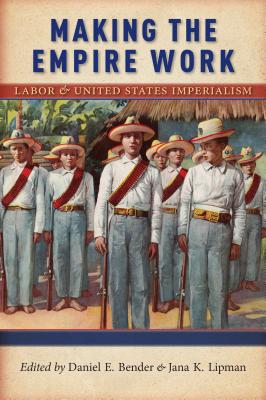
Paperback. Condition: New. Millions of laborers, from the Philippines to the Caribbean, performed the work of the United States empire. Forging a global economy connecting the tropics to the industrial center, workers harvested sugar, cleaned hotel rooms, provided sexual favors, and filled military ranks. Placing working men and… women at the center of the long history of the U.S. empire, these essays offer new stories of empire that intersect with the "grand narratives" of diplomatic affairs at the national and international levels. Missile defense, Cold War showdowns, development politics, military combat, tourism, and banana economics share something in common-they all have labor histories. This collection challenges historians to consider the labor that formed, worked, confronted, and rendered the U.S. empire visible. The U.S. empire is a project of global labor mobilization, coercive management, military presence, and forced cultural encounter. Together, the essays in this volume recognize the United States as a global imperial player whose systems of labor mobilization and migration stretched from Central America to West Africa to the United States itself. Workers are also the key actors in this volume. Their stories are multi-vocal, as workers sometimes defied the U.S. empire's rhetoric of civilization, peace, and stability and at other times navigated its networks or benefited from its profits. Their experiences reveal the gulf between the American 'denial of empire' and the lived practice of management, resource exploitation, and military exigency. When historians place labor and working people at the center, empire appears as a central dynamic of U.S. history.
- Softcover
Seller: BargainBookStores, Grand Rapids, MI, U.S.A.BargainBookStores
Contact seller5-star sellerCondition: New
US$ 43.00
Free ShippingShips within U.S.A.Quantity: 5 available
Paperback or Softback. Condition: New. Making the Empire Work: Labor and United States Imperialism. Book.
- Softcover
Seller: Brook Bookstore On Demand, Napoli, NA, ItalyBrook Bookstore On Demand
Contact seller3-star sellerCondition: New
US$ 39.55
US$ 7.87 shippingShips from Italy to U.S.A.Quantity: Over 20 available
Condition: new.
- Softcover
Seller: Revaluation Books, Exeter, , United KingdomRevaluation Books
Contact seller5-star sellerCondition: New
US$ 37.65
US$ 13.41 shippingShips from United Kingdom to U.S.A.Quantity: 1 available
Paperback. Condition: Brand New. 96 pages. 9.75x7.00x0.25 inches. In Stock.
- Softcover
Seller: Majestic Books, Hounslow, , United KingdomMajestic Books
Contact seller4-star sellerCondition: New
US$ 41.38
US$ 8.72 shippingShips from United Kingdom to U.S.A.Quantity: 3 available
Condition: New. 384.
- Softcover
Seller: GreatBookPricesUK, Woodford Green, United KingdomGreatBookPricesUK
Contact seller5-star sellerCondition: New
US$ 33.99
US$ 20.12 shippingShips from United Kingdom to U.S.A.Quantity: Over 20 available
Condition: New.
- Softcover
Seller: Kennys Bookshop and Art Galleries Ltd., Galway, GY, IrelandKennys Bookshop and Art Galleries Ltd.
Contact seller5-star sellerCondition: New
US$ 42.58
US$ 12.15 shippingShips from Ireland to U.S.A.Quantity: Over 20 available
Condition: New. 2015. Paperback. . . . . .
 More images
- Hardcover
Seller: Aeon Bookstore, New York, NY, U.S.A.Aeon Bookstore
Contact seller5-star sellerCondition: Used - Very good
US$ 50.00
US$ 5.00 shippingShips within U.S.A.Quantity: 1 available
Hardcover. Condition: Very Good. Dust Jacket Condition: Very Good. An excellent copy of this on Judaism in practice, which is one book in the series "Princeton Readings in Religion." Binding is solid, sturdy, and square. Interior is crisp, clean, and free of marks. Dust jacket has some light overall scuffing, and is a little wor…n along the top and bottom edges. Front cover has two small marks at the top near the spine. DJ is now protected in brodart. Overall a great copy of this text.
- Softcover
Seller: THE SAINT BOOKSTORE, Southport, , United KingdomTHE SAINT BOOKSTORE
Contact seller5-star sellerCondition: New
US$ 34.01
US$ 21.88 shippingShips from United Kingdom to U.S.A.Quantity: Over 20 available
Paperback / softback. Condition: New. New copy - Usually dispatched within 4 working days.
- Softcover
Seller: GreatBookPricesUK, Woodford Green, United KingdomGreatBookPricesUK
Contact seller5-star sellerCondition: Used - As new
US$ 40.39
US$ 20.12 shippingShips from United Kingdom to U.S.A.Quantity: Over 20 available
Condition: As New. Unread book in perfect condition.
- Softcover
Seller: Books Puddle, New York, NY, U.S.A.Books Puddle
Contact seller4-star sellerCondition: New
US$ 56.03
US$ 3.99 shippingShips within U.S.A.Quantity: 3 available
Condition: New. 384.
- Softcover
Seller: Kennys Bookstore, Olney, MD, U.S.A.Kennys Bookstore
Contact seller5-star sellerCondition: New
US$ 49.53
US$ 10.50 shippingShips within U.S.A.Quantity: Over 20 available
Condition: New. 2015. Paperback. . . . . . Books ship from the US and Ireland.
- Softcover
Seller: Grand Eagle Retail, Bensenville, IL, U.S.A.Grand Eagle Retail
Contact seller5-star sellerCondition: New
US$ 60.77
Free ShippingShips within U.S.A.Quantity: 1 available
Paperback. Condition: new. Paperback. Millions of laborers, from the Philippines to the Caribbean, performed the work of the United States empire. Forging a global economy connecting the tropics to the industrial center, workers harvested sugar, cleaned hotel rooms, provided sexual favors, and filled military ranks. Placing work…ing men and women at the center of the long history of the U.S. empire, these essays offer new stories of empire that intersect with the "grand narratives" of diplomatic affairs at the national and international levels. Missile defense, Cold War showdowns, development politics, military combat, tourism, and banana economics share something in commonthey all have labor histories. This collection challenges historians to consider the labor that formed, worked, confronted, and rendered the U.S. empire visible. The U.S. empire is a project of global labor mobilization, coercive management, military presence, and forced cultural encounter. Together, the essays in this volume recognize the United States as a global imperial player whose systems of labor mobilization and migration stretched from Central America to West Africa to the United States itself. Workers are also the key actors in this volume. Their stories are multi-vocal, as workers sometimes defied the U.S. empire's rhetoric of civilization, peace, and stability and at other times navigated its networks or benefited from its profits. Their experiences reveal the gulf between the American 'denial of empire' and the lived practice of management, resource exploitation, and military exigency. When historians place labor and working people at the center, empire appears as a central dynamic of U.S. history. Millions of laborers, from the Philippines to the Caribbean, performed the work of the United States empire. Forging a global economy connecting the tropics to the industrial center, workers harvested sugar, cleaned hotel rooms, provided sexual favors, and filled military ranks. Placing working men and women at the center of the long history of the U.S. empire, these essays offer new stories of empire that intersect with the “grand narratives” of diplomatic affairs at the national and international levels. Missile defense, Cold War showdowns, development politics, military combat, tourism, and banana economics share something in common—they all have labor histories. This collection challenges historians to consider the labor that formed, worked, confronted, and rendered the U.S. empire visible. The U.S. empire is a project of global labor mobilization, coercive management, military presence, and forced cultural encounter. Together, the essays in this volume recognize the United States as a global imperial player whose systems of labor mobilization and migration stretched from Central America to West Africa to the United States itself. Workers are also the key actors in this volume. Their stories are multi-vocal, as workers sometimes defied the U.S. empire’s rhetoric of civilization, peace, and stability and at other times navigated its networks or benefited from its profits. Their experiences reveal the gulf between the American ‘denial of empire’ and the lived practice of management, resource exploitation, and military exigency. When historians place labor and working people at the center, empire appears as a central dynamic of U.S. history. Shipping may be from multiple locations in the US or from the UK, depending on stock availability.
- Softcover
Seller: Ria Christie Collections, Uxbridge, United KingdomRia Christie Collections
Contact seller5-star sellerCondition: New
US$ 54.27
US$ 16.07 shippingShips from United Kingdom to U.S.A.Quantity: Over 20 available
Condition: New. In.
- Softcover
Seller: Chiron Media, Wallingford, , United KingdomChiron Media
Contact seller5-star sellerCondition: New
US$ 49.86
US$ 20.78 shippingShips from United Kingdom to U.S.A.Quantity: 10 available
PF. Condition: New.
- Softcover
Seller: Revaluation Books, Exeter, , United KingdomRevaluation Books
Contact seller5-star sellerCondition: New
US$ 61.92
US$ 16.77 shippingShips from United Kingdom to U.S.A.Quantity: 2 available
Paperback. Condition: Brand New. 374 pages. 9.25x6.25x1.00 inches. In Stock.

- Softcover
Seller: Rarewaves USA United, OSWEGO, IL, U.S.A.Rarewaves USA United
Contact seller5-star sellerCondition: New
US$ 44.54
US$ 50.00 shippingShips within U.S.A.Quantity: Over 20 available
Paperback. Condition: New. Millions of laborers, from the Philippines to the Caribbean, performed the work of the United States empire. Forging a global economy connecting the tropics to the industrial center, workers harvested sugar, cleaned hotel rooms, provided sexual favors, and filled military ranks. Placing working men and… women at the center of the long history of the U.S. empire, these essays offer new stories of empire that intersect with the "grand narratives" of diplomatic affairs at the national and international levels. Missile defense, Cold War showdowns, development politics, military combat, tourism, and banana economics share something in common-they all have labor histories. This collection challenges historians to consider the labor that formed, worked, confronted, and rendered the U.S. empire visible. The U.S. empire is a project of global labor mobilization, coercive management, military presence, and forced cultural encounter. Together, the essays in this volume recognize the United States as a global imperial player whose systems of labor mobilization and migration stretched from Central America to West Africa to the United States itself. Workers are also the key actors in this volume. Their stories are multi-vocal, as workers sometimes defied the U.S. empire's rhetoric of civilization, peace, and stability and at other times navigated its networks or benefited from its profits. Their experiences reveal the gulf between the American 'denial of empire' and the lived practice of management, resource exploitation, and military exigency. When historians place labor and working people at the center, empire appears as a central dynamic of U.S. history.
 More images
- Hardcover
Seller: librairie sciardet, ALLEMANS-DU-DROPT, Francelibrairie sciardet
Contact seller3-star sellerCondition: Used - Fine
US$ 21.46
US$ 25.58 shippingShips from France to U.S.A.Quantity: 1 available
Couverture rigide. Condition: Très bon. Paris, Louis Arnette, 1920. Un volume broché de format in 8° de 310 pp.; portrait en frontispice. Bon état. Rare. Ecrits prometteurs d'un jeune surdoué des lettres mort à 17 ans de la grippe espagnole.

- Softcover
Seller: moluna, Greven, , Germanymoluna
Contact seller5-star sellerCondition: New
US$ 50.93
US$ 56.71 shippingShips from Germany to U.S.A.Quantity: Over 20 available
Condition: New. KlappentextMillions of laborers, from the Philippines to the Caribbean, performed the work of the United States empire. Forging a global economy connecting the tropics to the industrial center, workers harvested sugar, cleaned hotel r.
- Softcover
Seller: AussieBookSeller, Truganina, VIC, AustraliaAussieBookSeller
Contact seller5-star sellerCondition: New
US$ 80.28
US$ 37.00 shippingShips from Australia to U.S.A.Quantity: 1 available
Paperback. Condition: new. Paperback. Millions of laborers, from the Philippines to the Caribbean, performed the work of the United States empire. Forging a global economy connecting the tropics to the industrial center, workers harvested sugar, cleaned hotel rooms, provided sexual favors, and filled military ranks. Placing work…ing men and women at the center of the long history of the U.S. empire, these essays offer new stories of empire that intersect with the "grand narratives" of diplomatic affairs at the national and international levels. Missile defense, Cold War showdowns, development politics, military combat, tourism, and banana economics share something in commonthey all have labor histories. This collection challenges historians to consider the labor that formed, worked, confronted, and rendered the U.S. empire visible. The U.S. empire is a project of global labor mobilization, coercive management, military presence, and forced cultural encounter. Together, the essays in this volume recognize the United States as a global imperial player whose systems of labor mobilization and migration stretched from Central America to West Africa to the United States itself. Workers are also the key actors in this volume. Their stories are multi-vocal, as workers sometimes defied the U.S. empire's rhetoric of civilization, peace, and stability and at other times navigated its networks or benefited from its profits. Their experiences reveal the gulf between the American 'denial of empire' and the lived practice of management, resource exploitation, and military exigency. When historians place labor and working people at the center, empire appears as a central dynamic of U.S. history. Millions of laborers, from the Philippines to the Caribbean, performed the work of the United States empire. Forging a global economy connecting the tropics to the industrial center, workers harvested sugar, cleaned hotel rooms, provided sexual favors, and filled military ranks. Placing working men and women at the center of the long history of the U.S. empire, these essays offer new stories of empire that intersect with the “grand narratives” of diplomatic affairs at the national and international levels. Missile defense, Cold War showdowns, development politics, military combat, tourism, and banana economics share something in common—they all have labor histories. This collection challenges historians to consider the labor that formed, worked, confronted, and rendered the U.S. empire visible. The U.S. empire is a project of global labor mobilization, coercive management, military presence, and forced cultural encounter. Together, the essays in this volume recognize the United States as a global imperial player whose systems of labor mobilization and migration stretched from Central America to West Africa to the United States itself. Workers are also the key actors in this volume. Their stories are multi-vocal, as workers sometimes defied the U.S. empire’s rhetoric of civilization, peace, and stability and at other times navigated its networks or benefited from its profits. Their experiences reveal the gulf between the American ‘denial of empire’ and the lived practice of management, resource exploitation, and military exigency. When historians place labor and working people at the center, empire appears as a central dynamic of U.S. history. Shipping may be from our Sydney, NSW warehouse or from our UK or US warehouse, depending on stock availability.

- Softcover
Seller: AHA-BUCH GmbH, Einbeck, GermanyAHA-BUCH GmbH
Contact seller5-star sellerCondition: New
US$ 65.16
US$ 72.52 shippingShips from Germany to U.S.A.Quantity: 2 available
Taschenbuch. Condition: Neu. Neuware - Millions of laborers, from the Philippines to the Caribbean, performed the work of the United States empire. Forging a global economy connecting the tropics to the industrial center, workers harvested sugar, cleaned hotel rooms, provided sexual favors, and filled military ranks. Placing wor…king men and women at the center of the long history of the U.S. empire, these essays offer new stories of empire that intersect with the 'grand narratives' of diplomatic affairs at the national and international levels. Missile defense, Cold War showdowns, development politics, military combat, tourism, and banana economics share something in common-they all have labor histories. This collection challenges historians to consider the labor that formed, worked, confronted, and rendered the U.S. empire visible. The U.S. empire is a project of global labor mobilization, coercive management, military presence, and forced cultural encounter. Together, the essays in this volume recognize the United States as a global imperial player whose systems of labor mobilization and migration stretched from Central America to West Africa to the United States itself. Workers are also the key actors in this volume. Their stories are multi-vocal, as workers sometimes defied the U.S. empire's rhetoric of civilization, peace, and stability and at other times navigated its networks or benefited from its profits. Their experiences reveal the gulf between the American 'denial of empire' and the lived practice of management, resource exploitation, and military exigency. When historians place labor and working people at the center, empire appears as a central dynamic of U.S. history.

Published by Fischbacher 1921
Seller: Démons & Merveilles, Joinville, FranceDémons & Merveilles
Contact seller5-star sellerCondition: Used - Fine
US$ 29.81
US$ 25.47 shippingShips from France to U.S.A.Quantity: 1 available
Condition: Fine. 1921. 81 pages. Fine.


