

Order Total (1 Item Items):
Shipping Destination:

Lisa Schekede (1 results)
Skip to main search results
Search filters
Product Type
- All Product Types
- Books (1)
- Magazines & Periodicals (No further results match this refinement)
- Comics (No further results match this refinement)
- Sheet Music (No further results match this refinement)
- Art, Prints & Posters (No further results match this refinement)
- Photographs (No further results match this refinement)
- Maps (No further results match this refinement)
- Manuscripts & Paper Collectibles (No further results match this refinement)
Condition Learn more
- New (No further results match this refinement)
- As New, Fine or Near Fine (No further results match this refinement)
- Very Good or Good (No further results match this refinement)
- Fair or Poor (No further results match this refinement)
- As Described (1)
Binding
- All Bindings
- Hardcover (1)
- Softcover (No further results match this refinement)
Collectible Attributes
- First Edition (No further results match this refinement)
- Signed (No further results match this refinement)
- Dust Jacket (1)
- Seller-Supplied Images (1)
- Not Print on Demand (1)
Language (1)
Price
- Any Price
- Under US$ 25 (No further results match this refinement)
- US$ 25 to US$ 50 (No further results match this refinement)
- Over US$ 50
Free Shipping
- Free Shipping to U.S.A. (No further results match this refinement)
Seller Location
Seller Rating
-
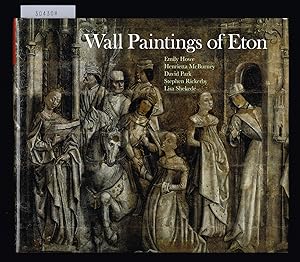
Wall Paintings of Eton.
Seller: Hatt Rare Books ILAB & CINOA, Hägersten, Sweden
Seller rating 5 out of 5 stars

Publisher's boards, pictorial dustjacket. As new. London, Scala Publishers, 2012. Oblong 4to. 24 x 28 cms. Richly illustrated in colour throughout. With bibliography and index. "Arguably the most important extant late medieval mural in northern Europe." - - - "The two magnificent wall painting schemes celebrated here are each of them rare and important survivals. The extensive and sophisticated programme devoted to the Miracles of the Virgin, which was executed in Eton College chapel in the late fifteenth century and is arguably the most important extant late medieval mural in northern Europe, was first rediscovered in 1847, although hidden again soon after by new seating. The early sixteenth-century mural of a lively school scene on the wall of the Head Master's Chambers only came to light in 2005. That two such major and significant creations should be found adorning the walls of a single institution is truly remarkable, and represents the inspiration for this major new study of both schemes. Wall Paintings of Eton both examines the major new discovery and builds on the wide range of scholarship devoted to the Miracles, the discussion enhanced by detailed technical analysis of each scheme. Each is shown to be connected with one of the two major early phases of building works at Eton, as personified in two of the College's early Provosts, William Waynflete and Roger Lupton. The Miracles of the Virgin marks the completion, under the patronage of Waynfete, of the choir of the church dedicated to Our Lady of Eton, begun but never finished by Henry VI. The school scene coincides with the next major building phase under Lupton, which was concerned with the improvement of the secular buildings. Separated in time by only about 30 years, the two works are shown to represent two rather different strands of artistic development in England. While the religious murals in the chapel are a lavish commission, designed for public consumption and representing a glorious flowering medieval art, the single secular scene in the Head Master's Chambers was intended for a private audience and, with its classical quotations and interest in characterisation, reflects rather the humanist ideals of the Tudor period. - - - Part I is devoted to a full discussion of the Miracles sequence: dating and iconography; religious context and function; artistic links and influences; history and treatment; and the findings of the recent technical examination of the paintings. This is followed by a full catalogue of the individual scenes and figures portrayed in the painting programme, with specially commissioned full-page photographs of each surviving scene. - - - Part II provides a full exploration of the school mural, and in particular the significance of the classical inscriptions it contains; the light it throws on the nature of school life at Eton; its iconographical sources and relationship to other contemporary depictions of school life; and its materials and techniques" (publisher).
