
Master Print (2 results)

Published by 'Mindscape,, 1111
- Softcover
Seller: Sigrun Wuertele buchgenie_de, Altenburg, GermanySigrun Wuertele buchgenie_de
Contact seller5-star sellerCondition: Used - Fine
US$ 7.31
US$ 43.35 shippingShips from Germany to U.S.A.Quantity: 1 available
Add to basketCondition: sehr gut - gebraucht. Broschiert Sehr guter Zustand, ohne Namenseintrag Gewicht über 1 kg, Versand ins Ausland nur auf Anfrage Zustand: 2, sehr gut - gebraucht, Broschiert 'Mindscape, , 1111 , printmaster grafikverzeichnis 7.0, Master, Print.
 More images
Published by France Privately Printed 1622-1623, 1623
- Hardcover
Seller: Buddenbrooks, Inc., Newburyport, MA, U.S.A.Buddenbrooks, Inc.
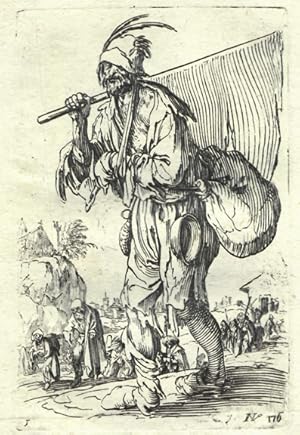
Contact seller5-star sellerFirst of the Edition. With a description in Italian penned to the inside wrapper and a collation and description on two pages in German for each of the plates, additional ephemeral items depicting other Callot engravings slipped into the volume. With 38 copper plates, 32 of beggars and 6 of knights in fine dress. Small Folio 215… x 167 mm. a large copy, the collection bound into old cloth covered flexible boards, hand written title to the tipped on plate at the cover. 38 pp. A very fine survival, all the plates in very pleasing condition. FIRST OF THE EDITION. The notes in Italian written at the front of the volume describe the work slightly differently, calling the engravings original figures of hunchbacks and cripples while the notes and collation done in German refer to the work as Die Bettler, the Beggars, as it has been known through history. The 38 figures in this book were copied from the originals, as can be seen below in figure 34, in which it is written "In Bas. no p. il Remondini". Jacques Callot]; c. 1592 1635) was a baroque printmaker and draftsman from the Duchy of Lorraine[. He is an important person in the development of the old master print, having made more than 1,400 etchings that chronicled the life of his period, featuring soldiers, clowns, drunkards, Gypsies, beggars, as well as court life. He also etched many religious and military images, and many prints featured extensive landscapes in their background. Callot was born and died in Nancy, the capital of Lorraine, now in France. He came from an important family (his father was master of ceremonies at the court of the Duke), and he often describes himself as having noble status in the inscriptions to his prints. At the age of fifteen he was apprenticed to a goldsmith, but soon afterward travelled to Rome where he learned engraving from an expatriate Frenchman, Philippe Thomassin. He probably then studied etching with Antonio Tempesta in Florence, where he lived from 1612 to 1621. More than 2,000 preparatory drawings and studies for prints survive, but no paintings by him are known, and he probably never trained as a painter. During his period in Florence he became an independent master, and worked often for the Medici court. After the death of Cosimo II de' Medici during 1621, he returned to Nancy where he lived for the rest of his life, visiting Paris and the Netherlands later during the decade. He was commissioned by the courts of Lorraine, France and Spain, and by publishers, mostly in Paris. Although he remained in Nancy, his prints were distributed widely through Europe; Rembrandt was a keen collector of them. His technique was exceptional, and was helped by important technical advances he made. He developed the échoppe, a type of etching-needle with a slanting oval section at the end, which enabled etchers to create a swelling line, as engravers were able to do. He also seems to have been responsible for an improved recipe for the etching ground that coated the plate and was removed to form the image, using lute-makers varnish rather than a wax-based formula. This enabled lines to be etched more deeply, prolonging the life of the plate in printing, and also greatly reducing the risk of "foul-biting", such that acid gets through the ground to the plate where it is not intended to, producing spots or blotches on the image. Previously the risk of foul-biting had always been present, preventing an engraver from investing too much time on a single plate that risked being ruined by foul-biting. Now etchers could do the very detailed work that was previously the monopoly of engravers, and Callot made good use of the new possibilities. He also made more extensive and sophisticated use of multiple "stoppings-out" than previous etchers had done. This is the technique of letting the acid dissolve lightly over the whole plate, then stopping-out those parts of the work which the artist wishes to keep shallow by covering them with ground before bathing the plate.
