

Order Total (1 Item Items):
Shipping Destination:

Michael Boyd John Barrett (23 results)
Skip to main search results
Search filters
Product Type
- All Product Types
- Books (23)
- Magazines & Periodicals (No further results match this refinement)
- Comics (No further results match this refinement)
- Sheet Music (No further results match this refinement)
- Art, Prints & Posters (No further results match this refinement)
- Photographs (No further results match this refinement)
- Maps (No further results match this refinement)
- Manuscripts & Paper Collectibles (No further results match this refinement)
Condition Learn more
- New (18)
- As New, Fine or Near Fine (4)
- Very Good or Good (No further results match this refinement)
- Fair or Poor (No further results match this refinement)
- As Described (1)
Binding
Collectible Attributes
- First Edition (1)
- Signed (No further results match this refinement)
- Dust Jacket (No further results match this refinement)
- Seller-Supplied Images (9)
- Not Print on Demand (20)
Language (2)
Free Shipping
Seller Location
Seller Rating
-

From Stonehenge to Mycenae: The Challenges of Archaeological Interpretation
Book 19 of 22: Debates in ArchaeologyLanguage: English
Published by Bloomsbury Publishing, 2020
ISBN 10: 1350190829 ISBN 13: 9781350190825
PAPERBACK. Condition: Veyr Good. Bloomsbury Publishing. PAPERBACK. 2020. 1350190829 :Binding: PaperbackSubject: Social Science | ArchaeologyVendor: Bloomsbury Publishing PLC . Veyr Good.
-

-

From Stonehenge to Mycenae
Book 19 of 22: Debates in ArchaeologyLanguage: English
Published by Bloomsbury Publishing PLC, GB, 2020
ISBN 10: 1350190829 ISBN 13: 9781350190825
Seller: Rarewaves.com USA, London, LONDO, United Kingdom
Seller rating 5 out of 5 stars

US$ 43.70
Free Shipping
Ships from United Kingdom to U.S.A.Quantity: Over 20 available
Add to basketPaperback. Condition: New. This book reconsiders how we can understand archaeology on a grand scale by abandoning the claims that material remains stand for the people and institutions that produced them, or that genetic change somehow caused cultural change. Our challenge is to understand the worlds that made great projects like the building of Stonehenge or Mycenae possible. The radiocarbon revolution made the old view that the architecture of Mycenae influenced the building of Stonehenge untenable. But the recent use of 'big data' and of genetic histories have led archaeology back to a worldview where 'big problems' are assumed to require 'big solutions'.Making an animated plea for bottom-up rather than top-down solutions, the authors consider how life was made possible by living in the local and materially distinct worlds of the period. By considering how people once built connections between each other through their production and use of things, their movement between and occupancy of places, and their treatment of the dead, we learn about the kinds of identities that people constructed for themselves. Stonehenge did not require an architect from Mycenae for it to be built, but the builders of Stonehenge and Mycenae would have shared a mutual recognition of the kinds of humans that they were, and the kinds of practices these monuments were once host to.
-

Condition: As New. Unread book in perfect condition.
-
From Stonehenge to Mycenae: The Challenges of Archaeological Interpretation (Debates in Archaeology)
Book 19 of 22: Debates in ArchaeologySeller: Ria Christie Collections, Uxbridge, United Kingdom
Seller rating 5 out of 5 stars
US$ 43.06
US$ 15.98 shipping
Ships from United Kingdom to U.S.A.Quantity: Over 20 available
Add to basketCondition: New. In.
-

From Stonehenge to Mycenae : The Challenges of Archaeological Interpretation
Book 19 of 22: Debates in ArchaeologySeller: GreatBookPricesUK, Woodford Green, United Kingdom
Seller rating 5 out of 5 stars
US$ 41.00
US$ 20.01 shipping
Ships from United Kingdom to U.S.A.Quantity: Over 20 available
Add to basketCondition: New.
-
From Stonehenge to Mycenae : The Challenges of Archaeological Interpretation
Book 19 of 22: Debates in ArchaeologySeller: GreatBookPricesUK, Woodford Green, United Kingdom
Seller rating 5 out of 5 stars
US$ 46.43
US$ 20.01 shipping
Ships from United Kingdom to U.S.A.Quantity: Over 20 available
Add to basketCondition: As New. Unread book in perfect condition.
-
From Stonehenge to Mycenae: The Challenges of Archaeological Interpretation (Debates in Archaeology)
Book 19 of 22: Debates in ArchaeologyLanguage: English
Published by Bloomsbury Publishing, 2020
ISBN 10: 1350190829 ISBN 13: 9781350190825
Condition: New. pp. 216.
-
From Stonehenge to Mycenae: The Challenges of Archaeological Interpretation
Book 19 of 22: Debates in ArchaeologyLanguage: English
Published by Bloomsbury USA Academic, 2020
ISBN 10: 1350190829 ISBN 13: 9781350190825
US$ 65.44
US$ 13.34 shipping
Ships from United Kingdom to U.S.A.Quantity: 2 available
Add to basketPaperback. Condition: Brand New. reprint edition. 201 pages. 8.25x5.25x0.50 inches. In Stock.
-

From Stonehenge to Mycenae: The Challenges of Archaeological Interpretation
Published by Bloomsbury Academic, London, 2021
Seller: Wheeler's Bookshop, Midhurst, West Sussex, United Kingdom
Seller rating 5 out of 5 stars
First Edition
US$ 34.35
US$ 22.41 shipping
Ships from United Kingdom to U.S.A.Quantity: 1 available
Add to basketSoftcover. Condition: Fine. First softcover printing. Debates in Arcaeology series. 8vo. 201 pp. B/w photos, maps, plans. As-new. FINE.
-

From Stonehenge to Mycenae: The Challenges of Archaeological Interpretation (Debates in Archaeology)
Book 19 of 22: Debates in ArchaeologyUS$ 78.38
US$ 29.34 shipping
Ships from United Kingdom to U.S.A.Quantity: 1 available
Add to baskethardcover. Condition: Fine. New & unread, however may have light shelf wear to cover face, edges or corners. Shipped from the UK within 2 business days of order being placed.
-

Kartoniert / Broschiert. Condition: New. Written by a major scholar who has not until now voiced his opinion on this debate.
-
From Stonehenge to Mycenae: The Challenges of Archaeological Interpretation (Debates in Archaeology)
Book 19 of 22: Debates in ArchaeologyUS$ 87.51
US$ 29.34 shipping
Ships from United Kingdom to U.S.A.Quantity: 2 available
Add to baskethardcover. Condition: New. Shipped from the UK within 2 business days of order being placed.
-

From Stonehenge to Mycenae
Book 19 of 22: Debates in ArchaeologyLanguage: English
Published by Bloomsbury Publishing PLC, GB, 2020
ISBN 10: 1350190829 ISBN 13: 9781350190825
US$ 41.02
US$ 86.70 shipping
Ships from United Kingdom to U.S.A.Quantity: Over 20 available
Add to basketPaperback. Condition: New. This book reconsiders how we can understand archaeology on a grand scale by abandoning the claims that material remains stand for the people and institutions that produced them, or that genetic change somehow caused cultural change. Our challenge is to understand the worlds that made great projects like the building of Stonehenge or Mycenae possible. The radiocarbon revolution made the old view that the architecture of Mycenae influenced the building of Stonehenge untenable. But the recent use of 'big data' and of genetic histories have led archaeology back to a worldview where 'big problems' are assumed to require 'big solutions'.Making an animated plea for bottom-up rather than top-down solutions, the authors consider how life was made possible by living in the local and materially distinct worlds of the period. By considering how people once built connections between each other through their production and use of things, their movement between and occupancy of places, and their treatment of the dead, we learn about the kinds of identities that people constructed for themselves. Stonehenge did not require an architect from Mycenae for it to be built, but the builders of Stonehenge and Mycenae would have shared a mutual recognition of the kinds of humans that they were, and the kinds of practices these monuments were once host to.
-

From Stonehenge to Mycenae
Book 19 of 22: Debates in ArchaeologyLanguage: English
Published by Bloomsbury Publishing PLC, GB, 2019
ISBN 10: 1474291899 ISBN 13: 9781474291897
Seller: Rarewaves.com USA, London, LONDO, United Kingdom
Seller rating 5 out of 5 stars
Hardback. Condition: New. This book reconsiders how we can understand archaeology on a grand scale by abandoning the claims that material remains stand for the people and institutions that produced them, or that genetic change somehow caused cultural change. Our challenge is to understand the worlds that made great projects like the building of Stonehenge or Mycenae possible. The radiocarbon revolution made the old view that the architecture of Mycenae influenced the building of Stonehenge untenable. But the recent use of 'big data' and of genetic histories have led archaeology back to a worldview where 'big problems' are assumed to require 'big solutions'.Making an animated plea for bottom-up rather than top-down solutions, the authors consider how life was made possible by living in the local and materially distinct worlds of the period. By considering how people once built connections between each other through their production and use of things, their movement between and occupancy of places, and their treatment of the dead, we learn about the kinds of identities that people constructed for themselves. Stonehenge did not require an architect from Mycenae for it to be built, but the builders of Stonehenge and Mycenae would have shared a mutual recognition of the kinds of humans that they were, and the kinds of practices these monuments were once host to.
-
From Stonehenge to Mycenae: The Challenges of Archaeological Interpretation (Debates in Archaeology)
Book 19 of 22: Debates in ArchaeologyLanguage: English
Published by Bloomsbury Academic 2019-05-16, 2019
ISBN 10: 1474291899 ISBN 13: 9781474291897
US$ 128.96
US$ 20.66 shipping
Ships from United Kingdom to U.S.A.Quantity: 1 available
Add to basketHardcover. Condition: New.
-
From Stonehenge to Mycenae
Book 19 of 22: Debates in ArchaeologyLanguage: English
Published by Bloomsbury Publishing, 2019
ISBN 10: 1474291899 ISBN 13: 9781474291897
Condition: New.
-
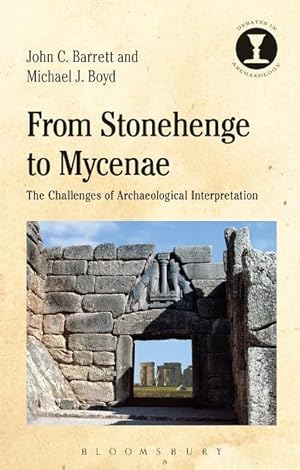
From Stonehenge to Mycenae: The Challenges of Archaeological Interpretation
Book 19 of 22: Debates in ArchaeologyUS$ 139.12
US$ 55.96 shipping
Ships from Germany to U.S.A.Quantity: Over 20 available
Add to basketGebunden. Condition: New.
-

From Stonehenge to Mycenae
Book 19 of 22: Debates in ArchaeologyLanguage: English
Published by Bloomsbury Publishing PLC, GB, 2019
ISBN 10: 1474291899 ISBN 13: 9781474291897
US$ 133.77
US$ 86.70 shipping
Ships from United Kingdom to U.S.A.Quantity: 2 available
Add to basketHardback. Condition: New. This book reconsiders how we can understand archaeology on a grand scale by abandoning the claims that material remains stand for the people and institutions that produced them, or that genetic change somehow caused cultural change. Our challenge is to understand the worlds that made great projects like the building of Stonehenge or Mycenae possible. The radiocarbon revolution made the old view that the architecture of Mycenae influenced the building of Stonehenge untenable. But the recent use of 'big data' and of genetic histories have led archaeology back to a worldview where 'big problems' are assumed to require 'big solutions'.Making an animated plea for bottom-up rather than top-down solutions, the authors consider how life was made possible by living in the local and materially distinct worlds of the period. By considering how people once built connections between each other through their production and use of things, their movement between and occupancy of places, and their treatment of the dead, we learn about the kinds of identities that people constructed for themselves. Stonehenge did not require an architect from Mycenae for it to be built, but the builders of Stonehenge and Mycenae would have shared a mutual recognition of the kinds of humans that they were, and the kinds of practices these monuments were once host to.
-
From Stonehenge to Mycenae: The Challenges of Archaeological Interpretation
Book 19 of 22: Debates in ArchaeologyLanguage: English
Published by Bloomsbury USA Academic, 2019
ISBN 10: 1474291899 ISBN 13: 9781474291897
US$ 229.73
US$ 13.34 shipping
Ships from United Kingdom to U.S.A.Quantity: 2 available
Add to basketHardcover. Condition: Brand New. 256 pages. 9.00x5.75x0.75 inches. In Stock.
-
From Stonehenge to Mycenae: The Challenges of Archaeological Interpretation (Debates in Archaeology)
Book 19 of 22: Debates in ArchaeologyLanguage: English
Published by Bloomsbury Publishing, 2020
ISBN 10: 1350190829 ISBN 13: 9781350190825
Condition: New. Print on Demand pp. 216.
-
From Stonehenge to Mycenae: The Challenges of Archaeological Interpretation (Debates in Archaeology)
Book 19 of 22: Debates in ArchaeologyLanguage: English
Published by Bloomsbury Publishing, 2020
ISBN 10: 1350190829 ISBN 13: 9781350190825
Condition: New. PRINT ON DEMAND pp. 216.
-
From Stonehenge to Mycenae: The Challenges of Archaeological Interpretation
Book 19 of 22: Debates in ArchaeologyLanguage: English
Published by Bloomsbury USA Academic, 2019
ISBN 10: 1474291899 ISBN 13: 9781474291897
US$ 152.79
US$ 13.34 shipping
Ships from United Kingdom to U.S.A.Quantity: 1 available
Add to basketHardcover. Condition: Brand New. 256 pages. 9.00x5.75x0.75 inches. In Stock. This item is printed on demand.


