

Order Total (1 Item Items):
Shipping Destination:

Millen Gilmore (10 results)
Skip to main search results
Search filters
Product Type
- All Product Types
- Books (10)
- Magazines & Periodicals (No further results match this refinement)
- Comics (No further results match this refinement)
- Sheet Music (No further results match this refinement)
- Art, Prints & Posters (No further results match this refinement)
- Photographs (No further results match this refinement)
- Maps (No further results match this refinement)
- Manuscripts & Paper Collectibles (No further results match this refinement)
Condition Learn more
- New (No further results match this refinement)
- As New, Fine or Near Fine (No further results match this refinement)
- Very Good or Good (3)
- Fair or Poor (No further results match this refinement)
- As Described (7)
Binding
Collectible Attributes
Language (1)
Free Shipping
Seller Location
Seller Rating
-

Paperback. first PB. 59, very good -fine, , reading crease (INTERRACIAL NOVEL), paperback,
-

Sweet Man
Published by Pyramid Books, published in arrangement with The Viking Press, New York, 1952
Seller: Attic Books (ABAC, ILAB), London, ON, Canada
Seller rating 5 out of 5 stars

First Edition
Softcover. Condition: Good. PB Giant. G59. 238, [2] p. 16.5 cm. Paperback. Crease in bottom front corner. Some tears to top corners. Pages browned. John Henry was born to trouble - women trouble! First published in 1930. Complete and unabridged.
-
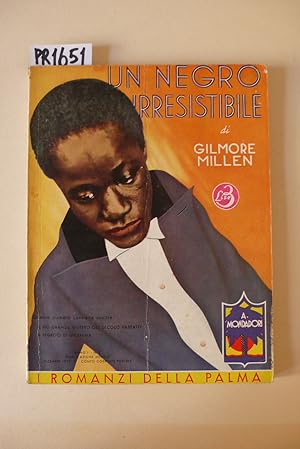
Un negro irresistibile
Published by Mondadori, Milano, Milano, 1932
Seller: Studio Bibliografico Restivo Navarra, Enna, EN, Italy
Seller rating 5 out of 5 stars
Brossura. (Categ. Letteratura straniera) - (In 8.vo cm. 19x24,5) - (Legatura : Br. ed. figurata) - (Ed. : prima italiana) - (pp. 112) - (Collana : I romanzi della Palma - n. 8) Testo su due colonne, ill.ni di Giorgio Dabovich. Trad. Farcito de Vinea Ottavio. piccole mende al dorso.
-
![Seller image for Sweet Man [*SIGNED*] for sale by ReadInk, ABAA/IOBA](https://pictures.abebooks.com/inventory/md/md32317472697.jpg)
Sweet Man [*SIGNED*]
Published by The Viking Press, New York, 1930
Seller: ReadInk, ABAA/IOBA, Los Angeles, CA, U.S.A.
Association Member: ABAA ILAB IOBA
Seller rating 5 out of 5 stars
First Edition Signed
Hardcover. Condition: Good. First Edition. (no dust jacket) [moderate wear to corners, light bumping to several; spine cloth a little faded and spine lettering mostly rubbed away; front endpaper removed with consequent cracking of front hinge; vintage bookseller's label (The Satyr Book Shop, Hollywood) on rear pastedown]. SIGNED by the author (no inscription) on the half-title page. "The story of John Henry, the negro vagabond, son of a mulatto and a white man." The pages of the book "teem with elemental and casual passion, love, hate, murder, a horrible lynching, the racy life of old Beale Street, the sophisticated life of a decadent household in Hollywood." (Quoted from the dust jacket, not present on this copy.) The Hollywood reference is a little misleading; although the last part of the novel takes place in Los Angeles, there are only a few offhand references to anything relating to the movie business. (John Henry becomes the chauffeur and then the lover of a Beverly Hills woman whose husband is in banking and real estate; there's an interesting passage where the lady orders John to drive her to a nightclub on Central Avenue.) The author, a native of Memphis (where most of the novel's action takes place), was a newspaperman for the Los Angeles Herald and Express; he also reportedly had a brief fling at screenwriting, but that doesn't seem to have resulted in any credits. A curious L.A. newspaper item from 1931 stated that he had "retired from motion-picture writing and has gone into hiding in order to finish his new novel [which] will not be another Negro novel but will deal with a California figure in a California background." As nearly as I can determine, this second book was never completed or published. Millen died in 1937 from burns suffered in a fire started when he fell asleep with a lighted cigarette in his hand. Signed by Author.
-
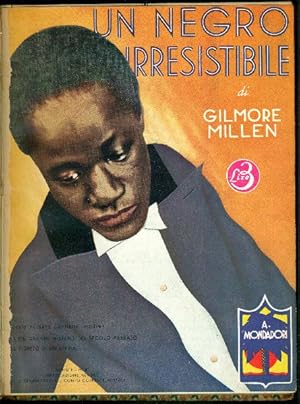
Un negro irresistibile
Published by Milano, Mondadori, I Romanzi della Palma, Milano
Seller: Studio Bibliografico Marini, ROMA, RM, Italy
Seller rating 4 out of 5 stars

hardcover. Condition: Molto buono (Very Good). Traduzione di Ottavio Farcito De Vinea. Illustrazioni a colori di Giorgio Dabovich . 8vo. pp. 112. . Molto buono (Very Good). . Pubblicazione mensile. Anno I - Dicembre 1932. . Prima collana economica della Mondadori ad alta tiratura e prezzi contenuti distribuita mensilmente nelle edicole. I testi pubblicati in questa ''collana di romanzi d'ogni Paese'' furono scelti da un'apposita commissione formata da Fernando Palazzi, Enrico Piceni, Lavinia Mazzucchetti, Cesare Giardini, Giacomo Prampolini ed il giovane Emilio Ceretti. I romanzi che avevano toni tragici o comici, delicati o scabrosi, erano divisi in due categorie segnalate da un contrasseggno colorato in copertina: quello blu indicava che l'opera poteva andare nelle mani di tutti, al contrario di quelli con il contrassegno rosso Pubblicazione mensile. Anno I - Dicembre 1932. Book.
-
Un negro irresistibile
Published by Mondadori, 1932
Seller: LIBRI RARI di Gattignolo Libraio-Editore, Vigevano, PV, Italy
Seller rating 2 out of 5 stars

First Edition
Brossura. Condition: buono. prima edizione. Gilmore Millen, Un negro irresistibile, Mondadori, Verona, 1932. Prima edizione. Pagine 112. Collana I romanzi della Palma n. 8. Corredato da alcune illustrazioni a colori f.t. Volume in buono stato con abrasioni e bruniture alla brossura e gore al frontespizio.
-

Sweet Man
Published by Viking, New York, 1930
Seller: Beasley Books, ABAA, ILAB, MWABA, Chicago, IL, U.S.A.
Association Member: ABAA ILAB MWABA
Seller rating 4 out of 5 stars
First Edition
Hardcover. First Edition; First Printing. A very close to fine book in a very good+ dust jacket with a sunned spine with small chips and small tears and creases along the book's edges. ; 8vo 8" - 9" tall; 299 pp.
-
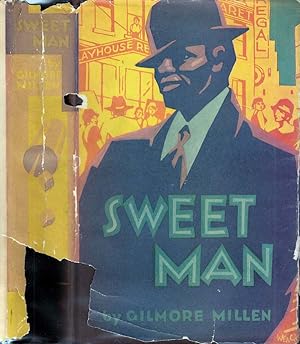
Sweet Man (AFRICAN-AMERICAN INTEREST)
Published by Viking Press, New York, 1930
Seller: Babylon Revisited Rare Books, Northampton, MA, U.S.A.
Seller rating 4 out of 5 stars
Second Printing. Wenck dustjacket art. African-American themed novel by this white author and southern newspaperman concerning John Henry. "the Negro vagabond, son of a mulatto and a white man." The dustjacket copy continues to state: "In him is the urge of the wanderer.new women loved and then forgotten. Only one woman is able to hold him for any length of time and after their marriage even she must give way to John Henry's burning desire for adventure. The pages of Sweet Man teem with elemental and casual passion, love, hate, murder, a horrible lynching, the racy life of the old Beale Street, the sophisticated life of a decadent household in Hollywood." Dialect speech is made use of in the novel. Very Good, some light signs of dampstain at fore edge of covers, in Good dustjacket, vertical split at spine, lacks lower two inches of spine.
-
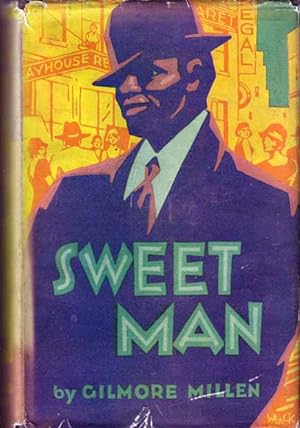
Sweet Man (AFRICAN-AMERICAN INTEREST)
Published by Viking Press, New York, 1930
Seller: Babylon Revisited Rare Books, Northampton, MA, U.S.A.
Seller rating 4 out of 5 stars
Second Printing. Wenck dustjacket art. African-American themed novel by this white author and southern newspaperman concerning John Henry. "the Negro vagabond, son of a mulatto and a white man." The dustjacket copy continues to state: "In him is the urge of the wanderer.new women loved and then forgotten. Only one woman is able to hold him for any length of time and after their marriage even she must give way to John Henry's burning desire for adventure. The pages of Sweet Man teem with elemental and casual passion, love, hate, murder, a horrible lynching, the racy life of the old Beale Street, the sophisticated life of a decadent household in Hollywood." Dialect speech is made use of in the novel. Near Fine in Very Good plus dustjacket, few tiny edge chips, spine colors moderately faded.
-
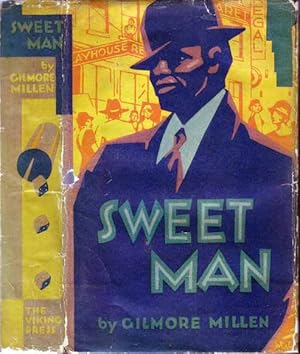
Sweet Man (AFRICAN-AMERICAN INTEREST)
Published by Viking Press, New York, 1930
Seller: Babylon Revisited Rare Books, Northampton, MA, U.S.A.
Seller rating 4 out of 5 stars
First Edition
First Edition. Wenck dustjacket art. African-American themed novel by this white author and southern newspaperman concerning John Henry."the Negro vagabond, son of a mulatto and a white man." The dustjacket copy continues to state: "In him is the urge of the wanderer.new women loved and then forgotten. Only one woman is able to hold him for any length of time and after their marriage even she must give way to John Henry's burning desire for adventure. The pages of Sweet Man teem with elemental and casual passion, love, hate, murder, a horrible lynching, the racy life of the old Beale Street, the sophisticated life of a decadent household in Hollywood." Dialect speech is made use of in the novel. Near Fine in Very Good dustjacket, modest wear and rubbing to edges and spine ends, unobtrusive squares of paper tape affixed to verso of jacket at spine and flap corners, small chip at mid front spine edge mended with scotch tape.


