
November 1921 (67 results)
 More images
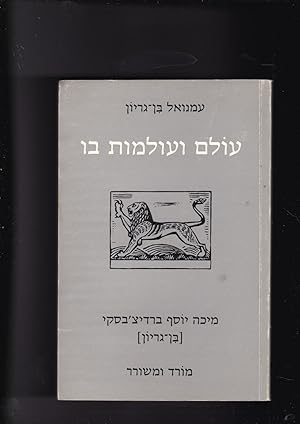
Olam ve-olamot bo olam veolamot bo : M. I. Berdyczevski (Bin Gorion) Sofer umeshorer Rebel and Poet
Micha Josef Berdyczewski (Mikhah Yosef Bin-Gorion Berdichevsky)(August 7, 1865 Medzhybizh, western Ukraine, Russian Empire - November 18, 1921 Berlin)
Language: Hebrew
Published by Reshafim, Israel, 1986
- Softcover
Seller: Meir Turner, New York, NY, U.S.A.Meir Turner
Contact seller5-star sellerCondition: Used - Very good
US$ 5.00
US$ 8.00 shippingShips within U.S.A.Quantity: 1 available
Add to basketSoft cover. Condition: Very Good. No Jacket. In Hebrew. 159 pages. 225 x 150 mm. Barely visible water stain in bottom blank margin of last 40 pages and very minor damage to back wrapper, see image.

- Softcover
Seller: BargainBookStores, Grand Rapids, MI, U.S.A.BargainBookStores
Contact seller5-star sellerCondition: New
US$ 28.35
Free ShippingShips within U.S.A.Quantity: 5 available
Paperback or Softback. Condition: New. Manual of Field Works (All Arms) 1921. Book.
 More images
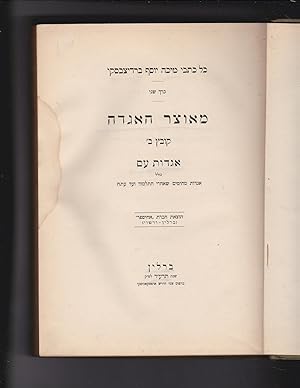
Kol Kitvey Micha Yosef Berdyczewski. Kerekh sheni [volume II only] MEOTZAR HA'AGADA kovetz bet AGADOT AM kolel agadot mehayamim shakhrey hatalmud ve'ad ata. Hebraeische Schriften Zweiter Band Aus dem judischen Sagenschatz Teil II Nachtalmudische Zeit
Micha Josef Berdyczewski, or Mikhah Yosef Bin-Gorion (August 7, 1865 - November 18, 1921) (surname also written Berdichevsky)
Language: Hebrew
Published by Achisefer, Berlin, German, 1914
- Hardcover
Seller: Meir Turner, New York, NY, U.S.A.Meir Turner
Contact seller5-star sellerCondition: Used - Fair
US$ 7.00
US$ 8.00 shippingShips within U.S.A.Quantity: 1 available
Add to basketHardcover. Condition: Acceptable. No Jacket. In Hebrew. XV, 234 pages. 23 x 17 cm. Lacks spine strip. Water stained boards and water stain in foredge margin. Micha Josef Berdyczewski, or Mikhah Yosef Bin-Gorion (August 7, 1865 - November 18, 1921) (also written Berdichevsky), was born in Little Russia. He was a writer of Hebrew,… a journalist, and a scholar. He appealed to Jews to move away from religion, tradition and history, but is also known for his work with pre-modern Jewish myths and legends. He wrote in Hebrew, Yiddish and German. He was born in the town Medzhybizh in western Ukraine, to a family of Hasidic Rabbis. His father was the town Rabbi. In his youth he began to read works from the Jewish Enlightenment, and their influence is noticeable in his works. Berdyczewski was forced to divorce his first wife following her family's objection to his involvement with secular literature. He then moved to the Volozhin Yeshiva, but there too his pursuit of unconventional literature stirred anger and objection. One of his earliest publications was about this period of his life, an article titled "Hetzitz V'nifga" (= peeked and was hurt), meaning "gone to heresy", published in 1888 in the newspaper Ha-Melitz. Most of his works from this period were polemic, and his emotional style became his trademark throughout his writing career. In 1890 he went to Germany and Switzerland, studied at the universities of Berlin, Breslau and Bern, and completed his Doctor of Philosophy degree. In this period Berdyczewski studied the works of Nietzsche and Hegel, and was deeply influenced by them. In the ten years until his return to Ukraine he published many articles and stories in Hebrew journals. Up to 1900, the year in which he married Rahel Ramberg, he had published ten books. Upon his return to Ukraine, Berdyczewski encountered the harsh reality of the Jewish life in the Pale of Settlement, and subsequently the subject of many of his stories is the deterioration of the traditional way of life. After a short stay in Warsaw, he returned to Germany in 1911, where he lived until his death in 1921. He is buried in the Jewish Cemetery in Weißensee, Berlin. Berdyczewski adopted the surname Bin-Gorion, first used to sign a collection of his works that he published in Berlin in 1914. The name Bin-Gorion is also inscribed on his tombstone. His last years were spent in intensive writing and research, collecting Jewish legends and folktales and publishing in Hebrew, Yiddish, and German. After his death, his wife and their son Emanuel Bin-Gorion translated some of his works into German, among them Die Sagen der Juden ("The Legends of the Jews", 1935) and Der Born Judas ("The Well of Judah"), published in six volumes. Berdyczewski's popularity among the Jews of his age is attributed to his success in expressing their ambivalent attitude towards the traditional Jewish world, and to the secular European culture.
 More images
Kol Kitvey Micha Yosef Berdyczewski. Kerekh sheni MEOTZAR HA'AGADA kovetz bet AGADOT AM kolel agadot mehayamim shakhrey hatalmud ve'ad ata. Hebraeische Schriften Zweiter Band Aus dem judischen Sagenschatz Teil II Nachtalmudische Zeit
Micha Josef Berdyczewski, or Mikhah Yosef Bin-Gorion (August 7, 1865 - November 18, 1921) (surname also written Berdichevsky)
Language: Hebrew
Published by Achisefer, Berlin, German, 1914
- Hardcover
Seller: Meir Turner, New York, NY, U.S.A.Meir Turner
Contact seller5-star sellerCondition: Used - Fair
US$ 9.00
US$ 8.00 shippingShips within U.S.A.Quantity: 1 available
Add to basketHardcover. Condition: Acceptable. No Jacket. In Hebrew. XV, 234 pages. 23 x 17 cm. Loose in binding. While book block is solid, it is loose in the binding. Free endpapers made of woodpulp and so are yellow and brittle. Oscar Summer of Washington D.C. apparently donated it to the Library of Congress which disposed of it in 1952.…Micha Josef Berdyczewski, or Mikhah Yosef Bin-Gorion (August 7, 1865 - November 18, 1921) (also written Berdichevsky), was born in Little Russia. He was a writer of Hebrew, a journalist, and a scholar. He appealed to Jews to move away from religion, tradition and history, but is also known for his work with pre-modern Jewish myths and legends. He wrote in Hebrew, Yiddish and German. He was born in the town Medzhybizh in western Ukraine, to a family of Hasidic Rabbis. His father was the town Rabbi. In his youth he began to read works from the Jewish Enlightenment, and their influence is noticeable in his works. Berdyczewski was forced to divorce his first wife following her family's objection to his involvement with secular literature. He then moved to the Volozhin Yeshiva, but there too his pursuit of unconventional literature stirred anger and objection. One of his earliest publications was about this period of his life, an article titled "Hetzitz V'nifga" (= peeked and was hurt), meaning "gone to heresy", published in 1888 in the newspaper Ha-Melitz. Most of his works from this period were polemic, and his emotional style became his trademark throughout his writing career. In 1890 he went to Germany and Switzerland, studied at the universities of Berlin, Breslau and Bern, and completed his Doctor of Philosophy degree. In this period Berdyczewski studied the works of Nietzsche and Hegel, and was deeply influenced by them. In the ten years until his return to Ukraine he published many articles and stories in Hebrew journals. Up to 1900, the year in which he married Rahel Ramberg, he had published ten books. Upon his return to Ukraine, Berdyczewski encountered the harsh reality of the Jewish life in the Pale of Settlement, and subsequently the subject of many of his stories is the deterioration of the traditional way of life. After a short stay in Warsaw, he returned to Germany in 1911, where he lived until his death in 1921. He is buried in the Jewish Cemetery in Weißensee, Berlin. Berdyczewski adopted the surname Bin-Gorion, first used to sign a collection of his works that he published in Berlin in 1914. The name Bin-Gorion is also inscribed on his tombstone. His last years were spent in intensive writing and research, collecting Jewish legends and folktales and publishing in Hebrew, Yiddish, and German. After his death, his wife and their son Emanuel Bin-Gorion translated some of his works into German, among them Die Sagen der Juden ("The Legends of the Jews", 1935) and Der Born Judas ("The Well of Judah"), published in six volumes. Berdyczewski's popularity among the Jews of his age is attributed to his success in expressing their ambivalent attitude towards the traditional Jewish world, and to the secular European culture.
 More images
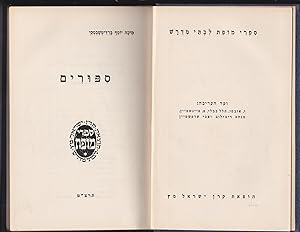
SIPURIM [in the series:] sifrey mofet levatey midrash
Micha Josef Berdyczewski, or Mikhah Yosef Bin-Gorion (August 7, 1865 - November 18, 1921) (surname also written Berdichevsky)
Language: Hebrew
Published by Israel Matz Foundation, Eretz Israel, 1939
- Hardcover
Seller: Meir Turner, New York, NY, U.S.A.Meir Turner
Contact seller5-star sellerCondition: Used - Very good
US$ 9.00
US$ 8.00 shippingShips within U.S.A.Quantity: 1 available
Add to basketHardcover. Condition: Very Good. No Jacket. In Hebrew. 22 x 14 cm. (6), xxxi, 201 pages. Micha Josef Berdyczewski, or Mikhah Yosef Bin-Gorion (August 7, 1865 - November 18, 1921) (also written Berdichevsky), was born in Little Russia. He was a writer of Hebrew, a journalist, and a scholar. He appealed to Jews to move away from r…eligion, tradition and history, but is also known for his work with pre-modern Jewish myths and legends. He wrote in Hebrew, Yiddish and German. He was born in the town Medzhybizh in western Ukraine, to a family of Hasidic Rabbis. His father was the town Rabbi. In his youth he began to read works from the Jewish Enlightenment, and their influence is noticeable in his works. Berdyczewski was forced to divorce his first wife following her family's objection to his involvement with secular literature. He then moved to the Volozhin Yeshiva, but there too his pursuit of unconventional literature stirred anger and objection. One of his earliest publications was about this period of his life, an article titled "Hetzitz V'nifga" (= peeked and was hurt), meaning "gone to heresy", published in 1888 in the newspaper Ha-Melitz. Most of his works from this period were polemic, and his emotional style became his trademark throughout his writing career. In 1890 he went to Germany and Switzerland, studied at the universities of Berlin, Breslau and Bern, and completed his Doctor of Philosophy degree. In this period Berdyczewski studied the works of Nietzsche and Hegel, and was deeply influenced by them. In the ten years until his return to Ukraine he published many articles and stories in Hebrew journals. Up to 1900, the year in which he married Rahel Ramberg, he had published ten books. Upon his return to Ukraine, Berdyczewski encountered the harsh reality of the Jewish life in the Pale of Settlement, and subsequently the subject of many of his stories is the deterioration of the traditional way of life. After a short stay in Warsaw, he returned to Germany in 1911, where he lived until his death in 1921. He is buried in the Jewish Cemetery in Weißensee, Berlin. Berdyczewski adopted the surname Bin-Gorion, first used to sign a collection of his works that he published in Berlin in 1914. The name Bin-Gorion is also inscribed on his tombstone. His last years were spent in intensive writing and research, collecting Jewish legends and folktales and publishing in Hebrew, Yiddish, and German. After his death, his wife and their son Emanuel Bin-Gorion translated some of his works into German, among them Die Sagen der Juden ("The Legends of the Jews", 1935) and Der Born Judas ("The Well of Judah"), published in six volumes. Berdyczewski's popularity among the Jews of his age is attributed to his success in expressing their ambivalent attitude towards the traditional Jewish world, and to the secular European culture.
 More images
SIPURIM mivkhar mot'am lekhativa haelyona shel bet hasefer al pi tokhnit halimudim shel misrad hakhinukh vehatarbut [Stories chosen for high school students]
Micha Josef Berdyczewski, or Mikhah Yosef Bin-Gorion (August 7, 1865 - November 18, 1921) (surname also written Berdichevsky)
Language: Hebrew
Published by Dvir, Jerusalem and Tel Aviv, Israel, 1980
- Softcover
Seller: Meir Turner, New York, NY, U.S.A.Meir Turner
Contact seller5-star sellerCondition: Used - Very good
US$ 9.00
US$ 8.00 shippingShips within U.S.A.Quantity: 1 available
Add to basketSoft cover. Condition: Very Good. No Jacket. In Hebrew. 18 x 10.5 cm. 266 pages. Micha Josef Berdyczewski, or Mikhah Yosef Bin-Gorion (August 7, 1865 - November 18, 1921) (also written Berdichevsky), was born in Little Russia. He was a writer of Hebrew, a journalist, and a scholar. He appealed to Jews to move away from religion,… tradition and history, but is also known for his work with pre-modern Jewish myths and legends. He wrote in Hebrew, Yiddish and German. He was born in the town Medzhybizh in western Ukraine, to a family of Hasidic Rabbis. His father was the town Rabbi. In his youth he began to read works from the Jewish Enlightenment, and their influence is noticeable in his works. Berdyczewski was forced to divorce his first wife following her family's objection to his involvement with secular literature. He then moved to the Volozhin Yeshiva, but there too his pursuit of unconventional literature stirred anger and objection. One of his earliest publications was about this period of his life, an article titled "Hetzitz V'nifga" (= peeked and got hurt), meaning "gone to heresy", published in 1888 in the newspaper Ha-Melitz. Most of his works from this period were polemic, and his emotional style became his trademark throughout his writing career. In 1890 he went to Germany and Switzerland, studied at the universities of Berlin, Breslau and Bern, and completed his Doctor of Philosophy degree. In this period Berdyczewski studied the works of Nietzsche and Hegel, and was deeply influenced by them. In the ten years until his return to Ukraine he published many articles and stories in Hebrew journals. Up to 1900, the year in which he married Rahel Ramberg, he had published ten books. Upon his return to Ukraine, Berdyczewski encountered the harsh reality of the Jewish life in the Pale of Settlement, and subsequently the subject of many of his stories is the deterioration of the traditional way of life. After a short stay in Warsaw, he returned to Germany in 1911, where he lived until his death in 1921. He is buried in the Jewish Cemetery in Weißensee, Berlin. Berdyczewski adopted the surname Bin-Gorion, first used to sign a collection of his works that he published in Berlin in 1914. The name Bin-Gorion is also inscribed on his tombstone. His last years were spent in intensive writing and research, collecting Jewish legends and folktales and publishing in Hebrew, Yiddish, and German. After his death, his wife and their son Emanuel Bin-Gorion translated some of his works into German, among them Die Sagen der Juden ("The Legends of the Jews", 1935) and Der Born Judas ("The Well of Judah"), published in six volumes. Berdyczewski's popularity among the Jews of his age is attributed to his success in expressing their ambivalent attitude towards the traditional Jewish world, and to the secular European culture.

SIPURIM mivkhar mot'am lekhativa haelyona shel bet hasefer al pi tokhnit halimudim shel misrad hakhinukh vehatarbut [Stories chosen for high school students]
Micha Josef Berdyczewski, or Mikhah Yosef Bin-Gorion (August 7, 1865 - November 18, 1921) (surname also written Berdichevsky)
Language: Hebrew
Published by Dvir, Jerusalem and Tel Aviv, Israel, 1980
- Softcover
Seller: Meir Turner, New York, NY, U.S.A.Meir Turner
Contact seller5-star sellerCondition: Used - Very good
US$ 9.00
US$ 8.00 shippingShips within U.S.A.Quantity: 1 available
Add to basketSoft cover. Condition: Very Good. No Jacket. In Hebrew. 18 x 10.5 cm. 266 pages. Micha Josef Berdyczewski, or Mikhah Yosef Bin-Gorion (August 7, 1865 - November 18, 1921) (also written Berdichevsky), was born in Little Russia. He was a writer of Hebrew, a journalist, and a scholar. He appealed to Jews to move away from religion,… tradition and history, but is also known for his work with pre-modern Jewish myths and legends. He wrote in Hebrew, Yiddish and German. He was born in the town Medzhybizh in western Ukraine, to a family of Hasidic Rabbis. His father was the town Rabbi. In his youth he began to read works from the Jewish Enlightenment, and their influence is noticeable in his works. Berdyczewski was forced to divorce his first wife following her family's objection to his involvement with secular literature. He then moved to the Volozhin Yeshiva, but there too his pursuit of unconventional literature stirred anger and objection. One of his earliest publications was about this period of his life, an article titled "Hetzitz V'nifga" (= peeked and was hurt), meaning "gone to heresy", published in 1888 in the newspaper Ha-Melitz. Most of his works from this period were polemic, and his emotional style became his trademark throughout his writing career. In 1890 he went to Germany and Switzerland, studied at the universities of Berlin, Breslau and Bern, and completed his Doctor of Philosophy degree. In this period Berdyczewski studied the works of Nietzsche and Hegel, and was deeply influenced by them. In the ten years until his return to Ukraine he published many articles and stories in Hebrew journals. Up to 1900, the year in which he married Rahel Ramberg, he had published ten books. Upon his return to Ukraine, Berdyczewski encountered the harsh reality of the Jewish life in the Pale of Settlement, and subsequently the subject of many of his stories is the deterioration of the traditional way of life. After a short stay in Warsaw, he returned to Germany in 1911, where he lived until his death in 1921. He is buried in the Jewish Cemetery in Weißensee, Berlin. Berdyczewski adopted the surname Bin-Gorion, first used to sign a collection of his works that he published in Berlin in 1914. The name Bin-Gorion is also inscribed on his tombstone. His last years were spent in intensive writing and research, collecting Jewish legends and folktales and publishing in Hebrew, Yiddish, and German. After his death, his wife and their son Emanuel Bin-Gorion translated some of his works into German, among them Die Sagen der Juden ("The Legends of the Jews", 1935) and Der Born Judas ("The Well of Judah"), published in six volumes. Berdyczewski's popularity among the Jews of his age is attributed to his success in expressing their ambivalent attitude towards the traditional Jewish world, and to the secular European culture.

Annual Reports of the President and the Treasurer of Oberlin College for 1920-21: Presented to the Board of Trustees at the Annual Meeting, November 11, 1921 (Classic Reprint)
Presented To The Board Of Trustees At The Annual Meeting, November 11, 1921
- Softcover
Seller: Majestic Books, Hounslow, United KingdomMajestic Books
Contact seller4-star sellerCondition: New
US$ 23.33
US$ 8.73 shippingShips from United Kingdom to U.S.A.Quantity: 1 available
Condition: New. pp. 174.
Annual Reports of the President and the Treasurer of Oberlin College for 1920-21: Presented to the Board of Trustees at the Annual Meeting, November 11, 1921 (Classic Reprint)
Presented To The Board Of Trustees At The Annual Meeting, November 11, 1921
- Softcover
Seller: Books Puddle, New York, NY, U.S.A.Books Puddle
Contact seller4-star sellerCondition: New
US$ 27.98
US$ 3.99 shippingShips within U.S.A.Quantity: 1 available
Condition: New. pp. 174.
 More images
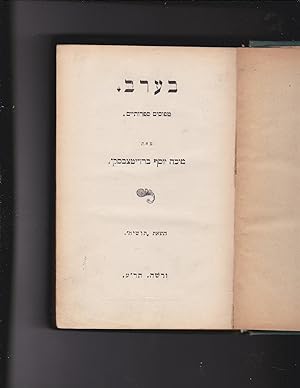
BaErev; BeShira uvelashon; Pri Sefer (3 works bound together)
Micha Josef Berdyczewski (Mikhah Yosef Bin-Gorion Berdichevsky)(August 7, 1865 Medzhybizh, western Ukraine, Russian Empire - November 18, 1921 Berlin)
Language: Hebrew
Published by Tushiyah 1910, 1911, 1911, Warsaw, 1911
- Hardcover
Seller: Meir Turner, New York, NY, U.S.A.Meir Turner
Contact seller5-star sellerCondition: Used - Poor
US$ 12.00
US$ 8.00 shippingShips within U.S.A.Quantity: 1 available
Add to basketHardcover. Condition: Poor. No Jacket. In Hebrew. 105, 75, 76 pages. 211 x 146 mm. Pages yellowed, some wrinkled. Micha Josef Berdyczewski (Mikhah Yosef Bin-Gorion Berdichevsky)(August 7, 1865 Medzhybizh, western Ukraine, Russian Empire - November 18, 1921 Berlin) was a writer of Hebrew, a journalist, and a scholar. He appealed…for the Jews to change their way of thinking and free themselves from dogmas ruling the Jewish religion, tradition and history, but he is also known for his work with pre-modern Jewish myths and legends. He wrote in Hebrew, Yiddish and German and has been described as "the first Hebrew writer living in Berlin to be revered in the world of German letters." His father was the town Rabbi. In his youth he began to read works from the Jewish Enlightenment, and their influence is noticeable in his works. He was forced to divorce his first wife following her family's objection to his involvement with secular literature. He then moved to the Volozhin Yeshiva, but there too, his pursuit of secular literature stirred anger and objection. One of his earliest publications was about this period of his life, an article titled "Hetzitz V'nifga" (= "peeked and got hurt" = meaning "gone to heresy"), published in 1888 in the newspaper Ha-Melitz. Most of his works from this period were polemic, and his emotional style became his trademark throughout his writing career. In 1890 he went to Germany and Switzerland, studied at the universities of Berlin, Breslau and Bern, and completed his Doctor of Philosophy degree. In this period Berdyczewski studied the works of the Nietzsche and Hegel, and was deeply influenced by them. In the 10 years until his return to Ukraine, he published many articles and stories in Hebrew journals. Up to 1900, the year in which he married Rahel Ramberg, He had published 10 books. Upon his return to Ukraine, he encountered the harsh reality of Jewish life in the Pale of Settlement, and subsequently the subject of many of his stories is the deterioration of the traditional way of life. After a short stay in Warsaw, he returned to Germany in 1911, where he lived until his death in 1921. He is buried in the Jewish Cemetery in Weißensee, Berlin. Berdyczewski adopted the surname Bin-Gorion, first used to sign a collection of his works that he published in Berlin in 1914. His last years were spent in intensive writing and research, collecting Jewish legends and folktales and publishing in Hebrew, Yiddish, and German. After his death, his wife and their son Emanuel Bin-Gorion translated some of his works into German, among them Die Sagen der Juden ("The Legends of the Jews", 1935) and Der Born Judas ("The Well of Judah"), published in six volumes. Berdyczewski's popularity among the Jews of his age is attributed to his success in expressing their ambivalent attitude towards the traditional Jewish world, and to the secular European culture.

- Softcover
Seller: Naval and Military Press Ltd, Uckfield, United KingdomNaval and Military Press Ltd
Contact seller4-star sellerCondition: New
US$ 20.07
US$ 19.48 shippingShips from United Kingdom to U.S.A.Quantity: 10 available
Condition: New. SB 260pp.+175 full page plates ,2003 N&MP Reprint of 1921 Original EditionPublished Price £14.50 This manual summarises the state of the art after the First World War, and includes no fewer than 175 plates with a range of diagrams of the most significant value.It examines the general principles underlying field…fortifications, and explains why they are needed. Emphasis is placed on the need for defences in the field against artillery, gas, mines and aircraft: all lessons learned in the First War. There follows a great deal of valuable detail on how and where to site trenches, both for infantry and machine guns.The real meat comes in the long section dealing with the trenches themselves and fire positions, and how to establish a defensive system. Camouflage is included in this section of the book.The detail in the book is quite remarkable, and covers other matters of importance, such as bridging, accommodation in the field, communications and demolitionâs, and there is a special section on land mines and traps.
 More images
Kitvey Micha Yosef Bin Gurion (Berdichevski) KHADASHIM GAM YESHANIM : Baderekh khelek sheni [Part Two, only] (kitvei)
Micha Josef Berdyczewski (Mikhah Yosef Bin-Gorion Berdichevsky)(August 7, 1865 Medzhybizh, western Ukraine, Russian Empire - November 18, 1921 Berlin)
Language: Hebrew
Published by Avraham Yosef Stibel (Abraham Joseph Stiebel), Leipzig, Germany, 1922
- Hardcover
Seller: Meir Turner, New York, NY, U.S.A.Meir Turner
Contact seller5-star sellerCondition: Used - Good
US$ 15.00
US$ 8.00 shippingShips within U.S.A.Quantity: 1 available
Add to basketHardcover. Condition: Good. No Jacket. In Hebrew. 83, (2) pages. 234 x 156 mm. Damage to upper spine strip, see image here. Micha Josef Berdyczewski (Mikhah Yosef Bin-Gorion Berdichevsky)(August 7, 1865 Medzhybizh, western Ukraine, Russian Empire - November 18, 1921 Berlin) was a writer of Hebrew, a journalist, and a scholar. He… appealed for the Jews to change their way of thinking and free themselves from dogmas ruling the Jewish religion, tradition and history, but he is also known for his work with pre-modern Jewish myths and legends. He wrote in Hebrew, Yiddish and German and has been described as "the first Hebrew writer living in Berlin to be revered in the world of German letters." His father was the town Rabbi. In his youth he began to read works from the Jewish Enlightenment, and their influence is noticeable in his works. He was forced to divorce his first wife following her family's objection to his involvement with secular literature. He then moved to the Volozhin Yeshiva, but there too, his pursuit of secular literature stirred anger and objection. One of his earliest publications was about this period of his life, an article titled "Hetzitz V'nifga" (= "peeked and got hurt" = meaning "gone to heresy"), published in 1888 in the newspaper Ha-Melitz. Most of his works from this period were polemic, and his emotional style became his trademark throughout his writing career. In 1890 he went to Germany and Switzerland, studied at the universities of Berlin, Breslau and Bern, and completed his Doctor of Philosophy degree. In this period Berdyczewski studied the works of the Nietzsche and Hegel, and was deeply influenced by them. In the 10 years until his return to Ukraine, he published many articles and stories in Hebrew journals. Up to 1900, the year in which he married Rahel Ramberg, He had published 10 books. Upon his return to Ukraine, he encountered the harsh reality of Jewish life in the Pale of Settlement, and subsequently the subject of many of his stories is the deterioration of the traditional way of life. After a short stay in Warsaw, he returned to Germany in 1911, where he lived until his death in 1921. He is buried in the Jewish Cemetery in Weißensee, Berlin. Berdyczewski adopted the surname Bin-Gorion, first used to sign a collection of his works that he published in Berlin in 1914. His last years were spent in intensive writing and research, collecting Jewish legends and folktales and publishing in Hebrew, Yiddish, and German. After his death, his wife and their son Emanuel Bin-Gorion translated some of his works into German, among them Die Sagen der Juden ("The Legends of the Jews", 1935) and Der Born Judas ("The Well of Judah"), published in six volumes. Berdyczewski's popularity among the Jews of his age is attributed to his success in expressing their ambivalent attitude towards the traditional Jewish world, and to the secular European culture.

- Softcover
Seller: Chiron Media, Wallingford, United KingdomChiron Media
Contact seller5-star sellerCondition: New
US$ 21.66
US$ 20.81 shippingShips from United Kingdom to U.S.A.Quantity: 10 available
PF. Condition: New.

- Hardcover
Seller: Naval and Military Press Ltd, Uckfield, United KingdomNaval and Military Press Ltd
Contact seller4-star sellerCondition: New
US$ 31.13
US$ 19.48 shippingShips from United Kingdom to U.S.A.Quantity: 10 available
Condition: New. HB 260pp.+175 full page plates ,2003 N&MP Reprint of 1921 Original Edition This manual summarises the state of the art after the First World War, and includes no fewer than 175 plates with a range of diagrams of the most significant value.It examines the general principles underlying field fortifications, and exp…lains why they are needed. Emphasis is placed on the need for defences in the field against artillery, gas, mines and aircraft: all lessons learned in the First War. There follows a great deal of valuable detail on how and where to site trenches, both for infantry and machine guns.The real meat comes in the long section dealing with the trenches themselves and fire positions, and how to establish a defensive system. Camouflage is included in this section of the book.The detail in the book is quite remarkable, and covers other matters of importance, such as bridging, accommodation in the field, communications and demolitionâs, and there is a special section on land mines and traps.
Manual of Field Works (All Arms) 1921
War Office November 1921, Office Novembe; War Office November 1921
- Hardcover
Seller: California Books, Miami, FL, U.S.A.California Books
Contact seller4-star sellerCondition: New
US$ 67.00
Free ShippingShips within U.S.A.Quantity: Over 20 available
Condition: New.

- Hardcover
Seller: Rarewaves.com USA, London, LONDO, United KingdomRarewaves.com USA
Contact seller5-star sellerCondition: New
US$ 69.66
Free ShippingShips from United Kingdom to U.S.A.Quantity: Over 20 available
Hardback. Condition: New.
- Hardcover
Seller: Phatpocket Limited, Waltham Abbey, HERTS, United KingdomPhatpocket Limited
Contact seller5-star sellerCondition: Used - As new
US$ 57.38
US$ 14.29 shippingShips from United Kingdom to U.S.A.Quantity: 1 available
Condition: Like New. Used - Like New. Book is new and unread but may have minor shelf wear. Your purchase helps support Sri Lankan Children's Charity 'The Rainbow Centre'. Our donations to The Rainbow Centre have helped provide an education and a safe haven to hundreds of children who live in appalling conditions.
 More images
Imperial Potentate Ernest A. Cutts (Classic Reprint)
And Other Distinguished Visitors Will Arrive In San Francisco, Thursday, November 24, 1921
- Softcover
- Print on Demand
Seller: Forgotten Books, London, United KingdomForgotten Books
Contact seller4-star sellerCondition: New
US$ 17.22
Free ShippingShips from United Kingdom to U.S.A.Quantity: Over 20 available
Paperback. Condition: New. Print on Demand. This book offers a fascinating glimpse into the history, rituals, and traditions of Islam Temple, a prominent regional chapter of the fraternal organization, The Ancient Arabic Order of the Nobles of the Mystic Shrine. Through the colorful accounts of the temple's events and the insigh…ts of its influential members, the author presents a vivid exploration of the Shrine's role within the broader context of American fraternalism. The author delves into the themes of brotherhood, philanthropy, and entertainment that have shaped Islam Temple's century-long legacy. By chronicling the temple's activities, from its elaborate ceremonies to its charitable endeavors, the book examines the ways in which fraternal organizations have contributed to the social and cultural fabric of the United States. The author's engaging narrative style and meticulous research make this book an invaluable resource for anyone interested in the history of fraternalism, the evolution of American society, and the unique story of Islam Temple. This book is a reproduction of an important historical work, digitally reconstructed using state-of-the-art technology to preserve the original format. In rare cases, an imperfection in the original, such as a blemish or missing page, may be replicated in the book. print-on-demand item.
Manual of Field Works (All Arms) 1921
War Office November 1921, Office Novembe; War Office November 1921
- Hardcover
Seller: Ria Christie Collections, Uxbridge, United KingdomRia Christie Collections
Contact seller5-star sellerCondition: New
US$ 60.37
US$ 16.09 shippingShips from United Kingdom to U.S.A.Quantity: Over 20 available
Condition: New. In.
 More images
- Softcover
- Print on Demand
Seller: Forgotten Books, London, United KingdomForgotten Books
Contact seller4-star sellerCondition: New
US$ 17.73
Free ShippingShips from United Kingdom to U.S.A.Quantity: Over 20 available
Paperback. Condition: New. Print on Demand. This book, a chronicle of textile innovations from the 19th and 20th centuries, reveals the sweeping changes that led to the textile industry as we know it today. The author records the technical advancements and the social and economic conditions of the era, providing insight into the… industry's evolution from hand-operated equipment and small workshops to the advanced mechanization and production lines of modern times. The book explores the impact of the Industrial Revolution on textiles, including the development of automated looms, spinning machines, and synthetic fibers, all of which transformed textile production. It also analyzes the shift from natural fibers such as cotton and wool to the advent of artificial fibers, highlighting the role of chemistry in shaping the industry's trajectory. By tracing the evolution of textile technology, this book offers a comprehensive understanding of the profound changes that have shaped the industry and the broader implications for technological progress and societal transformation. This book is a reproduction of an important historical work, digitally reconstructed using state-of-the-art technology to preserve the original format. In rare cases, an imperfection in the original, such as a blemish or missing page, may be replicated in the book. print-on-demand item.

- Softcover
- Print on Demand
Seller: Forgotten Books, London, United KingdomForgotten Books
Contact seller4-star sellerCondition: New
US$ 17.87
Free ShippingShips from United Kingdom to U.S.A.Quantity: Over 20 available
Paperback. Condition: New. Print on Demand. This book explores the history, appearance, and habits of the European corn borer, an insect that has been devastating corn crops in Europe and Asia for centuries. The author provides a detailed description of the borer's life cycle, from egg to adult, and discusses the various methods… that can be used to control its spread. The book also includes information on the economic impact of the borer and the efforts that are being made to eradicate it. Written in clear, concise language, this book is an essential resource for farmers, agricultural scientists, and anyone else who is interested in the fight against the European corn borer. This book is a reproduction of an important historical work, digitally reconstructed using state-of-the-art technology to preserve the original format. In rare cases, an imperfection in the original, such as a blemish or missing page, may be replicated in the book. print-on-demand item.
- Hardcover
Seller: Kennys Bookshop and Art Galleries Ltd., Galway, GY, IrelandKennys Bookshop and Art Galleries Ltd.
Contact seller5-star sellerCondition: New
US$ 72.82
US$ 11.99 shippingShips from Ireland to U.S.A.Quantity: Over 20 available
Condition: New.
 More images
- Softcover
- Print on Demand
Seller: Forgotten Books, London, United KingdomForgotten Books
Contact seller4-star sellerCondition: New
US$ 19.89
Free ShippingShips from United Kingdom to U.S.A.Quantity: Over 20 available
Paperback. Condition: New. Print on Demand. This book chronicles the establishment of The National Farm School, from its inception in 1896 to its 25th Anniversary in 1922. The narrative outlines the goals and achievements of the school, which focused on reversing the mass movement of people from rural areas to cities at the begi…nning of the 20th century. Targeted at individuals concerned about unemployment and food shortages, the author presents a detailed history of the schoolâs leadership in returning people to agricultural work and increasing food security. This book is a reproduction of an important historical work, digitally reconstructed using state-of-the-art technology to preserve the original format. In rare cases, an imperfection in the original, such as a blemish or missing page, may be replicated in the book. print-on-demand item.
 More images
Kitvey Micha Yosef Bin Gurion, khadashim gam yeshanim. Ma'arakha Bet. khelek Rishon: Divrey Khazon; khelek sheni: Shinuy Arakhin; khelek shlishi: Am Va'aretz (kitvei)
Micha Josef Berdyczewski, or Mikhah Yosef Bin-Gorion (August 7, 1865 - November 18, 1921) (surname also written Berdichevsky)
Language: Hebrew
Published by Avrahm Yosef Stiebel, Leipzig, Germany, 1922
- Hardcover
Seller: Meir Turner, New York, NY, U.S.A.Meir Turner
Contact seller5-star sellerCondition: Used - Very good
US$ 39.00
US$ 8.00 shippingShips within U.S.A.Quantity: 1 available
Add to basketHardcover. Condition: Very Good. No Jacket. In Hebrew. Top edge gilt. Lacks outer spine strip. 90; 86; 130 pages. Printed on high quality paper. Lacks spine strip. Bin Gurion was a writer of Hebrew, a journalist, and a scholar. He appealed for the Jews to change their way of thinking, freeing themselves from dogmas ruling the Je…wish religion, tradition and history, but is also known for his work with pre-modern Jewish myths and legends. He wrote in Hebrew, Yiddish and German and has been described as "the first Hebrew writer living in Berlin to be revered in the world of German letters". Berdyczewski was born in 1865 in the town Medzhybizh in western Ukraine, to a family of Hasidic Rabbis. His father was the town Rabbi. In his youth he began to read works from the Jewish Enlightenment, and their influence is noticeable in his works. Berdyczewski was forced to divorce his first wife following her family's objection to his involvement with secular literature. He then moved to the Volozhin Yeshiva, but there too, his pursuit of unconventional literature stirred anger and objection. One of his earliest publications was about this period of his life, an article, in Hebrew, titled "Hetzitz V'nifga" [ = "peeked and got hurt", meaning "gone to heresy"), published in 1888 in the newspaper Ha-Melitz. Most of his works from this period were polemic, and his emotional style became his trademark throughout his writing career. In 1890 he went to Germany and Switzerland, studied at the universities of Berlin, Breslau and Bern, and completed his Doctor of Philosophy degree. In this period Berdyczewski studied the works of the great German philosophers Nietzsche and Hegel, and was deeply influenced by them. In the ten years until his return to Ukraine he published many articles and stories in Hebrew journals. Up to 1900, the year in which he married Rahel Ramberg, Berdyczewski had published ten books. Upon his return to Ukraine, Berdyczewski encountered the harsh reality of the Jewish life in the Pale of Settlement, and subsequently the subject of many of his stories is the deterioration of the traditional way of life. After a short stay in Warsaw, Berdyczewski returned to Germany in 1911, where he lived until his death in 1921. He is buried in the Jewish Cemetery in Weißensee, Berlin. Berdyczewski adopted the surname Bin-Gorion, first used to sign a collection of his works that he published in Berlin in 1914. The name Bin-Gorion is also inscribed on his tombstone. His last years were spent in intensive writing and research, collecting Jewish legends and folktales and publishing in Hebrew, Yiddish, and German. Berdyczewski's popularity among the Jews of his age is attributed to his success in expressing their ambivalent attitude towards the traditional Jewish world, and to the secular European culture.
 More images
Kitvey Micha Yosef Bin Gurion, khadashim gam yeshanim. MMa'arakha Bet. khelek Rishon: mikhutz latkhum; khelek sheni: Me'emek Refai'm; khelek shlishi: Miriam roman mekhayey shtey irot (kitvei)
Micha Josef Berdyczewski, or Mikhah Yosef Bin-Gorion (August 7, 1865 - November 18, 1921) (surname also written Berdichevsky)
Language: Hebrew
Published by Avrahm Yosef Stiebel, Leipzig, Germany, 1921
- Hardcover
Seller: Meir Turner, New York, NY, U.S.A.Meir Turner
Contact seller5-star sellerCondition: Used - Very good
US$ 39.00
US$ 8.00 shippingShips within U.S.A.Quantity: 1 available
Add to basketHardcover. Condition: Very Good. No Jacket. In Hebrew. Top edge gilt. Lacks outer spine strip. 138; 126; 110 pages. Printed on high quality paper. Lacks spine strip. Bin Gurion was a writer of Hebrew, a journalist, and a scholar. He appealed for the Jews to change their way of thinking, freeing themselves from dogmas ruling the…Jewish religion, tradition and history, but is also known for his work with pre-modern Jewish myths and legends. He wrote in Hebrew, Yiddish and German and has been described as "the first Hebrew writer living in Berlin to be revered in the world of German letters". Berdyczewski was born in 1865 in the town Medzhybizh in western Ukraine, to a family of Hasidic Rabbis. His father was the town Rabbi. In his youth he began to read works from the Jewish Enlightenment, and their influence is noticeable in his works. Berdyczewski was forced to divorce his first wife following her family's objection to his involvement with secular literature. He then moved to the Volozhin Yeshiva, but there too, his pursuit of unconventional literature stirred anger and objection. One of his earliest publications was about this period of his life, an article, in Hebrew, titled "Hetzitz V'nifga" [ = "peeked and got hurt", meaning "gone to heresy"), published in 1888 in the newspaper Ha-Melitz. Most of his works from this period were polemic, and his emotional style became his trademark throughout his writing career. In 1890 he went to Germany and Switzerland, studied at the universities of Berlin, Breslau and Bern, and completed his Doctor of Philosophy degree. In this period Berdyczewski studied the works of the great German philosophers Nietzsche and Hegel, and was deeply influenced by them. In the ten years until his return to Ukraine he published many articles and stories in Hebrew journals. Up to 1900, the year in which he married Rahel Ramberg, Berdyczewski had published ten books. Upon his return to Ukraine, Berdyczewski encountered the harsh reality of the Jewish life in the Pale of Settlement, and subsequently the subject of many of his stories is the deterioration of the traditional way of life. After a short stay in Warsaw, Berdyczewski returned to Germany in 1911, where he lived until his death in 1921. He is buried in the Jewish Cemetery in Weißensee, Berlin. Berdyczewski adopted the surname Bin-Gorion, first used to sign a collection of his works that he published in Berlin in 1914. The name Bin-Gorion is also inscribed on his tombstone. His last years were spent in intensive writing and research, collecting Jewish legends and folktales and publishing in Hebrew, Yiddish, and German. Berdyczewski's popularity among the Jews of his age is attributed to his success in expressing their ambivalent attitude towards the traditional Jewish world, and to the secular European culture.
 More images
Kitvey Micha Yosef Bin Gurion, khadashim gam yeshanim. Ma'amariam. Marakha Gimel. khelek Rishon: mishney Avarim; khelek sheni: Khukim uSefarim; khelek shlishi: Lifnot Erev (kitvei)
Micha Josef Berdyczewski, or Mikhah Yosef Bin-Gorion (August 7, 1865 - November 18, 1921) (surname also written Berdichevsky)
Language: Hebrew
Published by Avrahm Yosef Stiebel, Leipzig, Germany, 1922
- Hardcover
Seller: Meir Turner, New York, NY, U.S.A.Meir Turner
Contact seller5-star sellerCondition: Used - Very good
US$ 39.00
US$ 8.00 shippingShips within U.S.A.Quantity: 1 available
Add to basketHardcover. Condition: Very Good. No Jacket. In Hebrew. Top edge gilt. Lacks outer spine strip. 170; 160; 116 pages. Printed on high quality paper. Lacks spine strip. Bin Gurion was a writer of Hebrew, a journalist, and a scholar. He appealed for the Jews to change their way of thinking, freeing themselves from dogmas ruling the…Jewish religion, tradition and history, but is also known for his work with pre-modern Jewish myths and legends. He wrote in Hebrew, Yiddish and German and has been described as "the first Hebrew writer living in Berlin to be revered in the world of German letters". Berdyczewski was born in 1865 in the town Medzhybizh in western Ukraine, to a family of Hasidic Rabbis. His father was the town Rabbi. In his youth he began to read works from the Jewish Enlightenment, and their influence is noticeable in his works. Berdyczewski was forced to divorce his first wife following her family's objection to his involvement with secular literature. He then moved to the Volozhin Yeshiva, but there too, his pursuit of unconventional literature stirred anger and objection. One of his earliest publications was about this period of his life, an article, in Hebrew, titled "Hetzitz V'nifga" [ = "peeked and got hurt", meaning "gone to heresy"), published in 1888 in the newspaper Ha-Melitz. Most of his works from this period were polemic, and his emotional style became his trademark throughout his writing career. In 1890 he went to Germany and Switzerland, studied at the universities of Berlin, Breslau and Bern, and completed his Doctor of Philosophy degree. In this period Berdyczewski studied the works of the great German philosophers Nietzsche and Hegel, and was deeply influenced by them. In the ten years until his return to Ukraine he published many articles and stories in Hebrew journals. Up to 1900, the year in which he married Rahel Ramberg, Berdyczewski had published ten books. Upon his return to Ukraine, Berdyczewski encountered the harsh reality of the Jewish life in the Pale of Settlement, and subsequently the subject of many of his stories is the deterioration of the traditional way of life. After a short stay in Warsaw, Berdyczewski returned to Germany in 1911, where he lived until his death in 1921. He is buried in the Jewish Cemetery in Weißensee, Berlin. Berdyczewski adopted the surname Bin-Gorion, first used to sign a collection of his works that he published in Berlin in 1914. The name Bin-Gorion is also inscribed on his tombstone. His last years were spent in intensive writing and research, collecting Jewish legends and folktales and publishing in Hebrew, Yiddish, and German. Berdyczewski's popularity among the Jews of his age is attributed to his success in expressing their ambivalent attitude towards the traditional Jewish world, and to the secular European culture.
 More images
Kitvey Micha Yosef Bin Gurion, khadashim gam yeshanim. SIPURIM Ma'arakha Bet. khelek Rishon: mikhutz latkhum; khelek sheni: Me'emek Refai'm; khelek shlishi: Miriam roman mekhayey shtey irot (kitvei)
Micha Josef Berdyczewski, or Mikhah Yosef Bin-Gorion (August 7, 1865 - November 18, 1921) (surname also written Berdichevsky)
Language: Hebrew
Published by Avrahm Yosef Stiebel, Leipzig, Germany, 1923
- Hardcover
Seller: Meir Turner, New York, NY, U.S.A.Meir Turner
Contact seller5-star sellerCondition: Used - Very good
US$ 39.00
US$ 8.00 shippingShips within U.S.A.Quantity: 1 available
Add to basketHardcover. Condition: Very Good. No Jacket. In Hebrew. Top edge gilt. Lacks outer spine strip. 160; 123; 156 pages. Printed on high quality paper. Lacks spine strip. Bin Gurion was a writer of Hebrew, a journalist, and a scholar. He appealed for the Jews to change their way of thinking, freeing themselves from dogmas ruling the…Jewish religion, tradition and history, but is also known for his work with pre-modern Jewish myths and legends. He wrote in Hebrew, Yiddish and German and has been described as "the first Hebrew writer living in Berlin to be revered in the world of German letters". Berdyczewski was born in 1865 in the town Medzhybizh in western Ukraine, to a family of Hasidic Rabbis. His father was the town Rabbi. In his youth he began to read works from the Jewish Enlightenment, and their influence is noticeable in his works. Berdyczewski was forced to divorce his first wife following her family's objection to his involvement with secular literature. He then moved to the Volozhin Yeshiva, but there too, his pursuit of unconventional literature stirred anger and objection. One of his earliest publications was about this period of his life, an article, in Hebrew, titled "Hetzitz V'nifga" [ = "peeked and got hurt", meaning "gone to heresy"), published in 1888 in the newspaper Ha-Melitz. Most of his works from this period were polemic, and his emotional style became his trademark throughout his writing career. In 1890 he went to Germany and Switzerland, studied at the universities of Berlin, Breslau and Bern, and completed his Doctor of Philosophy degree. In this period Berdyczewski studied the works of the great German philosophers Nietzsche and Hegel, and was deeply influenced by them. In the ten years until his return to Ukraine he published many articles and stories in Hebrew journals. Up to 1900, the year in which he married Rahel Ramberg, Berdyczewski had published ten books. Upon his return to Ukraine, Berdyczewski encountered the harsh reality of the Jewish life in the Pale of Settlement, and subsequently the subject of many of his stories is the deterioration of the traditional way of life. After a short stay in Warsaw, Berdyczewski returned to Germany in 1911, where he lived until his death in 1921. He is buried in the Jewish Cemetery in Weißensee, Berlin. Berdyczewski adopted the surname Bin-Gorion, first used to sign a collection of his works that he published in Berlin in 1914. The name Bin-Gorion is also inscribed on his tombstone. His last years were spent in intensive writing and research, collecting Jewish legends and folktales and publishing in Hebrew, Yiddish, and German. Berdyczewski's popularity among the Jews of his age is attributed to his success in expressing their ambivalent attitude towards the traditional Jewish world, and to the secular European culture.
 More images
Kitvey Micha Yosef Bin Gurion, khadashim gam yeshanim. SIPURIM Ma'arakha alef. khelek Rishon: ben hakhomot; khelek sheni: Meoraot vema'asim; khelek shlishi: romanim ketzarim (kitvei)
Micha Josef Berdyczewski, or Mikhah Yosef Bin-Gorion (August 7, 1865 - November 18, 1921) (surname also written Berdichevsky)
Language: Hebrew
Published by Avrahm Yosef Stiebel, Leipzig, Germany, 1923
- Hardcover
Seller: Meir Turner, New York, NY, U.S.A.Meir Turner
Contact seller5-star sellerCondition: Used - Very good
US$ 39.00
US$ 8.00 shippingShips within U.S.A.Quantity: 1 available
Add to basketHardcover. Condition: Very Good. No Jacket. In Hebrew. Top edge gilt. Lacks outer spine strip. 130, (2); 187 pages; 221 pages. Printed on high quality paper. Lacks spine strip. Back board detached. Bin Gurion was a writer of Hebrew, a journalist, and a scholar. He appealed for the Jews to change their way of thinking, freeing th…emselves from dogmas ruling the Jewish religion, tradition and history, but is also known for his work with pre-modern Jewish myths and legends. He wrote in Hebrew, Yiddish and German and has been described as "the first Hebrew writer living in Berlin to be revered in the world of German letters". Berdyczewski was born in 1865 in the town Medzhybizh in western Ukraine, to a family of Hasidic Rabbis. His father was the town Rabbi. In his youth he began to read works from the Jewish Enlightenment, and their influence is noticeable in his works. Berdyczewski was forced to divorce his first wife following her family's objection to his involvement with secular literature. He then moved to the Volozhin Yeshiva, but there too, his pursuit of unconventional literature stirred anger and objection. One of his earliest publications was about this period of his life, an article, in Hebrew, titled "Hetzitz V'nifga" [ = "peeked and got hurt", meaning "gone to heresy"), published in 1888 in the newspaper Ha-Melitz. Most of his works from this period were polemic, and his emotional style became his trademark throughout his writing career. In 1890 he went to Germany and Switzerland, studied at the universities of Berlin, Breslau and Bern, and completed his Doctor of Philosophy degree. In this period Berdyczewski studied the works of the great German philosophers Nietzsche and Hegel, and was deeply influenced by them. In the ten years until his return to Ukraine he published many articles and stories in Hebrew journals. Up to 1900, the year in which he married Rahel Ramberg, Berdyczewski had published ten books. Upon his return to Ukraine, Berdyczewski encountered the harsh reality of the Jewish life in the Pale of Settlement, and subsequently the subject of many of his stories is the deterioration of the traditional way of life. After a short stay in Warsaw, Berdyczewski returned to Germany in 1911, where he lived until his death in 1921. He is buried in the Jewish Cemetery in Weißensee, Berlin. Berdyczewski adopted the surname Bin-Gorion, first used to sign a collection of his works that he published in Berlin in 1914. The name Bin-Gorion is also inscribed on his tombstone. His last years were spent in intensive writing and research, collecting Jewish legends and folktales and publishing in Hebrew, Yiddish, and German. Berdyczewski's popularity among the Jews of his age is attributed to his success in expressing their ambivalent attitude towards the traditional Jewish world, and to the secular European culture.
- Hardcover
Seller: Kennys Bookstore, Olney, MD, U.S.A.Kennys Bookstore
Contact seller5-star sellerCondition: New
US$ 87.16
US$ 10.50 shippingShips within U.S.A.Quantity: Over 20 available
Condition: New.

Theobald Theodor Friedrich Alfred von Bethmann Hollweg | Vintage Monochrome Post Card (Postcard)
Theobald Theodor Friedrich Alfred von Bethmann Hollweg (29 November 1856 - 1 January 1921) was a German politician who was imperial chancellor of the German Empire from 1909 to 1917. He oversaw the German entry into World War I and played a key role during its first three years. He was replaced as chancellor in July 1917 due in large part to opposition to his policies by leaders in the military.
Published by Published by Wohlfahrts Karte.
Seller: Little Stour Books PBFA Member, Canterbury, United KingdomLittle Stour Books PBFA Member
Contact seller5-star sellerAssociation member: PBFA
Condition: Used
US$ 6.92
US$ 40.29 shippingShips from United Kingdom to U.S.A.Quantity: 1 available
Add to basket5½'' x 3½''. Divided back printed in red, black and blue. Monochrome post card. Member of the P.B.F.A. POSTCARDS.


