Order Total (1 Item Items):
Shipping Destination:

Perotto Niccolo (9 results)
Skip to main search results
Search filters
Product Type
- All Product Types
- Books (9)
- Magazines & Periodicals (No further results match this refinement)
- Comics (No further results match this refinement)
- Sheet Music (No further results match this refinement)
- Art, Prints & Posters (No further results match this refinement)
- Photographs (No further results match this refinement)
- Maps (No further results match this refinement)
- Manuscripts & Paper Collectibles (No further results match this refinement)
Condition Learn more
- New (2)
- As New, Fine or Near Fine (No further results match this refinement)
- Very Good or Good (2)
- Fair or Poor (No further results match this refinement)
- As Described (5)
Binding
- All Bindings
- Hardcover (6)
- Softcover (No further results match this refinement)
Collectible Attributes
- First Edition (No further results match this refinement)
- Signed (No further results match this refinement)
- Dust Jacket (No further results match this refinement)
- Seller-Supplied Images (6)
- Not Print on Demand (7)
Language (1)
Price
- Any Price
- Under US$ 25 (No further results match this refinement)
- US$ 25 to US$ 50
- Over US$ 50
Free Shipping
Seller Location
Seller Rating
-

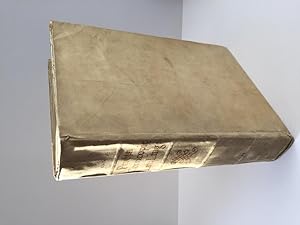
Cornucopiae, sive linguae Latinae commentarij diligentissime recogniti: atque ex archetypo emendati. Index copiosissimus dictionum omnium, quae in hisce Sypontini commentarijs . Eiusdem Sypontini libellus .
Published by Venezia, Aldo Manunzio & Andrea Torresano (In aedibus Aldi et Andreae soceri), 1513
Seller: Libreria SEAB srl (socio Alai/Lila), Bologna BO, BO, Italy
Seller rating 4 out of 5 stars

Volume di grande formato, cm 31,2 x 21,5, cartonato rustico coevo (ripulito), risguardi sostituiti. Cc. 79 + 1 bianca + 1436 colonne, manca ultima bianca con la terza ancora, identica a quella posta alla volta di K8, altra ancora al frontespizio. Alla segnatura K carta 8, dove termina la prima parte, si ritrova, a piede della colonna 1054: "Venetiis In aedibus Aldi et Andreae soceri M.D.XIII. MENSE SEPTEMBRI. Alla segnatura Y carta 7 si ritrova, a piede della colonna 1436: "Venetiis In aedibus Aldi et Andreae soceri M.D.XIII. MENSE NOVEMBRI, per tanto si tratta di una VERA ED OMOGENEA SECONDA EDIZIONE ALDINA, la prima uscì nel 1499, e non la più "comune" edizione spuria 1513/1517. Nel Renouard, a pagina 63, si rileva che l'A. ne aveva collazionato una copia conforme alla nostra da cui deduce non corretto l'uso di considerare come seconda edizione quella riportante le due diverse date. Alcune carte sono state ripulite e un po' fragile risulta il margine esterno del frontespizio e dell'ultima carta. Stampa a carattere corsivo; nei primi 79 fogli, numerati in unica sequenza, si trova la prefazione di Aldo, la dedica di Pirro Perotti al Duca di Urbino, una vita di Marziale e una dedica a Leone X di Bembo, seguono ancora due privilegi che Giulio II e Alessandro VI concessero a Manunzio. Importante ed erudito commento filologico dove furono inseriti testi di Marco Terenzio Varro. Cornelio Vitelli, Sesto Properzio Festo e Marcello Nonio. Umanista fanese, teologo ed arcivescovo di Siponte, Niccolo' Perrotto insegno' teologia, greco e latino nell'Università di Bologna.
-
Cornucopi[a]e nuper emendatum a domino Benedicto Brugnolo: ac mirifice concinnatum cum tabula prioribus aliis copiosiori utiliori faciliorique.
Published by [Milan], Giovanni Giacomo and brothers da Legnano [for Giovanni Angelo Scinzenzeler, 28 October 1510 (colophon)]., 1510
Seller: Bernard Quaritch Ltd ABA ILAB, London, United Kingdom
Association Member: ABA ILAB PBFA
Seller rating 4 out of 5 stars
US$ 2,453.31
US$ 34.03 shipping
Ships from United Kingdom to U.S.A.Quantity: 1 available
Add to basketFolio, ff. [1], cols 1268, ff. [48]; index bound at end; title in gothic letter, woodcut angel device of Giovanni Giacomo da Legnano and brothers at head of title (CNCM 1148), 3-, 4-, 8-, and 14-line woodcut initials, capital spaces with guide letters (see below); sporadic foxing and toning, particularly to index, light soiling and neat repairs to title, paperflaw to blank margin of d8 with small loss, inkstain to e4 affecting legibility of two words; a good copy, slightly trimmed, in twentieth-century vellum-backed boards, spine gilt directly; occasional early underlining and marking.Scarce Milanese edition of Perotto's Cornucopiae, an encyclopaedic commentary to the first book of Martial's epigrams, here with a curious combination of woodcut initials and capital spaces with guide letters. Written in Nicolò Perotto's (14291480) native Sassoferrato and first published posthumously in 1489 following revisions by his son, the Cornucopiae incorporates thousands of quotations from ancient authors and comments upon nearly every word of Martial's epigrams, with a vast index and text ordered in numbered columns for ease of reference. Editing the present text was the final project undertaken by Benedetto Brugnolo (d. 1502), who corrected and expanded the index with three thousand new words shortly before his death. The present edition is the product of several intergenerational partnerships: in 1502 Giovanni Angelo Scinzenzeler had published an edition of the Cornucopiae as edited by Brugnolo for the printer, bookseller, and paper-maker Giovanni da Legnano the father of the brothers Legnano whose device appears at the head of the title dubbing Brugnolo the 'Cicero veronensis' in his letter to the reader. The elder da Legnano had also enjoyed several years of collaboration with the Bavarian-born Milanese printer Ulrich Scinzenzeler (fl. 14771500), father of Giovanni Angelo. The da Legnano brothers have here employed a veritable cornucopia of visual styles, utilising a wide variety of woodcut initials; often incongruous in style and sophistication, they appear largely toward the end of the work, with up to six initials to a page. The workshop, however, appears to have run out of four-line Qs and Os, which are cleverly replaced by capital spaces with guide letters.Scarce outside continental Europe. We find two copies in the US (Boston Public Library, Detroit Public Library), and none in the UK.EDIT16 49929; USTC 847568. Language: Latin.
-
HORATIVS // CVM QVINQVE COMMENTIS. // QVIN. HORATII // Flacci Poemata omnia: Commentantibus Antonio // Mancinello: Acrone: Porphyrione: Ioanne Brita/ // nico: necnon & Iodoco Badio Ascensio: uiris eru/ // ditissimis. // Centimetrum Marii Seruii. // Annotationes Aldi Manutii Romani. // Ratio mensuum: quibus Odæ tenentur: eodem Aldo // authore. // Nicolai Peroti Libellus demetris Odarum. // Annotationes Matthæi Bonfinis Asculani: suis locis in // sertæ & ad finem ex integro restitutæ. // Index copiosissimus omnium uocabulorum: quæin to/ // to opere animaduersione digna uisa sunt. // Quæ omnia // [device] // diligentissima // cura nuper // [same device] // excusa sunt. // M. D. X X X V I .
Published by Jean Tacuini de Tridino, July 1536. Colophon: Venetiis in ædibus Ioannis Tacuini de Tridino. Anno dñi // M.D.XXXVI. mense Iulii. Regnante Inclyto // Andrea Griti Principe. // REGISTRVM. //?., Venise, 1536
Seller: Alexandre Antique Prints, Maps & Books, Toronto, ON, Canada
Seller rating 5 out of 5 stars

Expertly rebacked 17th century vellum; spine raised with five (5) bands and gilt lettered title on morocco label on two. Edges uncut. , Venice edition of Aldo Manutio?s annotations.This work includes the Epistola Ascensii, Vita Horatii by Petrum Grifitum Florentinum; Epistle Mancinelli; Vita Horatii by Antonio Mancinello; Index vocabulorum; Carminum [four books]; Epodon; Ars Poetica; Sermons [two books]; Epistles [two books]; Annotations of ALDO MANUZIO; Genera Metrorum; De Metris Odarum; Annotations of Matthei Bonfinis of Asculani. Nicolai Peroti's Book of the Meters of the Odes. , Size : Folio (302x208mm), Woodcut illustration framing title in red and black ink at the centre; woodcut initials of varying sizes at openings of sections and paragraphs; woodblock illustrations at openings; central text in larger font flanked by commentary in two columns. , References : Philippe Renouard: Bibliographie des impressions et des ?uvres de Josse Badius Ascensius. p.512, #10; London. Brit. Mus. - Oxford Bib. Bodl., Ll: [6], 296, bl.; collation: Bl., illustrated title, +2-6, A1-Z8; AA1-EE8, FF1-6, GG1-LL8, MM1-10, NN1-OO8 [with colophon], bl. Attractive, example; some leaves restored & reinforced; minor tear repairs, i. e. upper corner tear-offs at XXII and the final leaf. This rare and desirable work is in very good condition.
-
Cornucopiae, siue linguae Latinae commentarij diligentissimé recogniti
Published by in aedibus Aldi, et Andreae soceri, Venice, 1513
Seller: Sokol Books Ltd. ABA ILAB, London, United Kingdom
Seller rating 5 out of 5 stars
US$ 5,537.46
US$ 57.16 shipping
Ships from United Kingdom to U.S.A.Quantity: 1 available
Add to basketHardcover. Condition: Very good. Folio. ff. 79 [i], 1436 columns, ff.(i). ?-10?8, a-z8, A-Y8. Italic letter in double column. Aldine device on title, capital spaces with guide letters. Two ll of quire y slightly oxidized browned, couple of tiny single worm holes on first few leaves and at end, title a little thumbed in lower outer blank corner, of table, the odd minor marginal mark. A very good copy, crisp and clean, in contemporary vellum over boards, title ms. on spine. An excellent copy of the second Aldine edition of this monumental collection of grammars, including one of the most important Renaissance Latin dictionaries, by Niccolo Perroto, together with three influential classical grammars by Varro, Festus and Nonius Marcellus, dedicated to the condottiere Federico da Montefeltro of Urbino. The largest section of the work is taken up by Perroti's Cornucopia. Written as a commentary on book I of Martial, it includes a discussion on almost every word of Martial's text, becoming a standard work of reference on the Latin language. "a massive encyclopedia of the classical world. Every verse, indeed every word of Martial's text was a hook on which Perotti hung a densely woven tissue of linguistic, historical and cultural knowledge" Brian Ogilvie, 'The Science of Describing: Natural History in Renaissance Europe." The work was revised and expanded by Perotto's son Pyrrhus and the first edition was published in Venice by in 1489; the first Aldine in 1499. The text has been carefully numbered by page and by line so that the index can be precisely keyed, marking the inception of a modern scholarly system of reference. Niccolò Perotto (1429-1480) was an Italian cleric and humanist, born and died in Sassoferrato. From 1451 to 1453 he taught rhetoric and poetry at the University of Bologna. In 1452 he was made Poet Laureate by the Emperor Frederick III, in acknowledgment of his speech of welcome to the city. He was the papal secretary from 1455 and archbishop of Siponto in 1458. Although his later career was as a papal governor, he continued his scholarly pursuits, editing the works of the Roman writers Pliny and Martial. Apart from his Cornucopia, he wrote a Latin school grammar, Rudimenta Grammatices (Pannartz and Sweynheim 1473), one of the earliest and most popular Renaissance Latin grammars, which attempted to exclude many words and constructions of medieval origin. To the Cornucopia are added the three most important classical texts on the grammar and etymology of the Latin language. "Varro's treatise is the earliest extant work on Grammar. This great work which was finished before Cicero's death in 43 BC, owes much to the Stoic teaching of Aelius Stilo. . The first three of the surviving books are on Etymology, book V being on names of places, VI on terms denoting time and VII on poetic expressions." Sandys I p. 179. Sextus Pompeius Festus' epitome in 21 books of the encyclopedic treatise 'De verborum significatione' of Valerius Flaccus is added next. Festus gives the etymology as well as the meaning of many words, and his work throws considerable light on the Latin language, mythology and antiquities of ancient Rome. The work ends with Nonius Marcellus's compendia. A lovely fresh copy of these important texts. BM STC. It. C16th p. 499. Adams P720. Renouard 63.6 Latin.
-
![Seller image for Regulae Syppontinae per egregium grammaticum Georgium Carrariam Taurinatem 1507 [LeatherBound] for sale by True World of Books](https://pictures.abebooks.com/inventory/md/md31534271514.jpg)
LeatherBound. Condition: New. BOOKS ARE EXEMPT FROM IMPORT DUTIES AND TARIFFS; NO EXTRA CHARGES APPLY. LeatherBound edition. Condition: New. Reprinted from 1507 edition. Leather Binding on Spine and Corners with Golden leaf printing on spine. NO changes have been made to the original text. This is NOT a retyped or an ocr'd reprint. Illustrations, Index, if any, are included in black and white. Each page is checked manually before printing. Pages: 167 As this print on demand book is reprinted from a very old book, there could be some missing or flawed pages, but we always try to make the book as complete as possible. Fold-outs, if any, are not part of the book. If the original book was published in multiple volumes then this reprint is of only one volume, not the whole set. Sewing binding for longer life, where the book block is actually sewn (smythe sewn/section sewn) with thread before binding which results in a more durable type of binding. Pages: 167 Language: Latin.
-
Regulae grammaticales Nicolai Perotti tironibus perutiles
Published by Ludovico Britannico, Brescia, 1539
Seller: Libreria Antonio Pettini, ROMA, RM, Italy
Seller rating 5 out of 5 stars
In 8°, 188pp, legatura in carta decorata, altrimenti buono stato. Niccolò Perotti, o Niccolò Perotto, in lingua latina Nicolaus Perottus (Sassoferrato, 1430 circa - Sassoferrato, 14 dicembre 1480), è stato un umanista, filologo e arcivescovo cattolico italiano. Nel 1452 Perotti ricevette a Bologna l'alloro poetico dalle mani dell'imperatore Federico III. Durante il soggiorno bolognese Perotti ebbe anche un violento scontro con Poggio Bracciolini in difesa di Lorenzo Valla.Nel 1455 Perotti tornò a Roma, dove venne nominato segretario apostolico. L'anno successivo ricevette gli ordini, e il 19 ottobre 1458 fu nominato arcivescovo di Siponto, sede nella quale tuttavia non risiedette mai. Partecipò invece l'anno successivo al Concilio di Mantova, indetto da Pio II per cercare di arrestare gli Ottomani che nel 1453 avevano espugnato Costantinopoli. Ritornò successivamente al seguito di Bessarione, restandovi fino al 1464, anno in cui fu nominato governatore del Patrimonio di San Pietro. Nel biennio 1460-61, al seguito del card. Bessarione, Perotti fu in Germania, dove venne nominato consigliere imperiale di Federico III, e poi a Venezia (1461), dove ottenne la nomina a referendario pontificio. Durante il quinquennio 1464-69, trascorso a Viterbo come governatore del Patrimonio di San Pietro, Perotti cominciò a pubblicare le sue opere di filologia. Nel 1469 Perotti tornò a Roma; attorno al 1470 scrisse un'invettiva contro Giorgio di Trebisonda reo di aver attaccato violentemente il card. Bessarione. Nel 1471 Perotti fu nominato governatore di Spoleto, incarico che lasciò l'anno successivo. Nel 1474 divenne governatore di Perugia, dove ebbe come segretario l'umanista Francesco Maturanzio. Ai primi del 1477, terminato l'incarico in Umbria, Perotti si ritirò nelle Marche, dove rimase fino al termine della vita.In-8°, 188pp, decorated paper binding, otherwise good copy. Niccolò Perotti, or Niccolò Perotto, in Latin Nicolaus Perottus (Sassoferrato, around 1430 - Sassoferrato, 14 December 1480), was an Italian Catholic humanist, philologist and archbishop. In 1452 Perotti received the poetic laurel in Bologna from the hands of Emperor Frederick III. During his stay in Bologna Perotti also had a violent clash with Poggio Bracciolini in defense of Lorenzo Valla.In 1455 Perotti returned to Rome, where he was appointed apostolic secretary. The following year he received orders, and on October 19, 1458 he was appointed archbishop of Siponto, where he never lived, however. Instead, he participated the following year in the Council of Mantua, called by Pius II to try to arrest the Ottomans who in 1453 had conquered Constantinople. He subsequently returned to the retinue of Bessarione, remaining there until 1464, the year in which he was appointed governor of the Patrimony of San Pietro. In the biennium 1460-61, following card. Bessarione, Perotti was in Germany, where he was appointed imperial councilor of Frederick III, and then in Venice (1461), where he obtained the nomination as pontifical referendarius. During the five-year period 1464-69, spent in Viterbo as governor of the Patrimony of San Pietro, Perotti began to publish his philological works. In 1469 Perotti returned to Rome; around 1470 he wrote an invective against George of Trebizond guilty of violently attacking card. Bessarion. In 1471 Perotti was appointed governor of Spoleto, a position he left the following year. In 1474 he became governor of Perugia, where he had the humanist Francesco Maturanzio as secretary. In early 1477, having finished his assignment in Umbria, Perotti retired to the Marche region, where he remained until the end of his life.
-
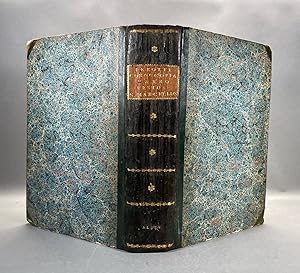
Cornucopiae, siue linguæ latiae commentarii diligentissime recogniti: atque ex archetypo emendati. Index copiosissimus dictionum omnium, quæ in hisce Sypontini commentarijs: quæ in libris de lingua latina,|| & de Analogia M. Terentij Varronis: quæ in undeuiginti librorum fragmentis Sexti Pompeij Festi: quæ in compendijs Nonij Marcelli de proprietate sermonum continentur ?. Eiusdem Sypontini libellus, quo Plynij epistola, ad Titum Vespasianum corrigitur. Cornelii Vitellij in eum ipsum libellum Sypontini Annotationes. M. Terentij Varronis De lingua latina libri tres Quartus. Quintus. Sextus. Eiusdem de Analogia libri tres.|| Sexti Pompeij Festi undeuiginti librorum fragmenta. Nonij Marcelli Compendia, in quibus tertia fere? pars addita est: n
Published by Aldus Manutius & Andreae Soceri 1513, 1517, Venice, 1513
Seller: William Chrisant & Sons, ABAA, ILAB. IOBA, ABA, Ephemera Society, Fort Lauderdale, FL, U.S.A.
Association Member: ABAA ESA ILAB
Seller rating 5 out of 5 stars
Condition: Very Good. Half calf over marbled boards. 79 leaves [i], 1436 columns, (a-z8, A-Y8). 79 leaves followed by 1054 columns, the Aldus Press dolphin, then col. 1055-1436 & final leaf with again the Aldine dolphin & anchor. Though dated 1513 at the final colophon, this work is actually 1517 as noted in the colophon at column 1054. Wear to edges. Worming to spine & lightly to final leaves, nonetheless a tight, sturdy & supple copy. Light symbolic scholia & page corrections. Please do not hesitate to request additional images. 8.5 x 12.75 in.
-

Cornucopiae latinae linguae hoc est,dimissum penu unde omnia, quae in primis ad culturam in literis ingeniorum desyderari possunt, maxima & diligentia, & copia exponuntur. ad haec ex antiquiore Romani sermonis sacrario, M. Terentii Varronis.
Published by ex Officina Ioannis Valderi, Basileae, 1536
Seller: Gilibert Libreria Antiquaria (ILAB), Torino, TO, Italy
Seller rating 4 out of 5 stars
In-folio (301x203mm), pp. (148) di frontespizio, proemio ed estesissimi indici greci e latini disposti su quattro e su cinque colonne, colonne 1587 (la numerazione del volume è per colonne anziché per pagine), (28) di Castigationes in luculentissimos Nonii Marcelli Commenatarios, et obiter in M. Varronis, et Festi Pompeij, quae quidem extant fragmenta. Solida legatura ottocentesca m. pergamena e angoli con titolo e filetti in oro su tassello rosso chiaro al dorso. Frontespizio con impresa tipografica incisa in xilografia. Antichi ex-libris manoscritti al foglio del titolo, alcuni dei quali parzialmente cassati. Testo su due colonne, capilettera istoriati in xilografia. Al verso dell'ultima c. di Castigationes, impresa tipografica xilografica con variante di quella del titolo, sempre con un pappagallo sorreggente un ramo nel becco. L'angolo inferiore delle pp. con colonne 173-204 è ricostitutito, con perdita di numerose lettere di testo. Aloni e fioriture sparse di lieve entità. Numerosi errori nella numerazione delle colonne. Rara riedizione cinquecentesca di Basilea della principale opera del Perotto, costituente un amplissimo e dottissimo commento agli Epigrammata di Marziale e, assieme, un dizionario ragionato della lingua latina; in essa sono anche conservati alcuni frammenti di classici che altrimenti sarebbero andati perduti. Alla Cornucopia sono aggiunti altri scritti di ordine linguistico-filologico, tra cui il De Lingua Latina di Varrone, il De Analogia dello stesso, il De Verborum Veterum Significatione di Sesto Pompeo Festo, il De Proprietate Sermonum di Nonio Marcello. Il Perotto (Fano, 1429-Sassoferrato, 1480), formatosi a Mantova e a Ferrara con Vittorino da Feltre e Guarino da Verona, fu umanista di notevole valore, procuratore di Enrico VI presso la Curia romana, vescovo di Ely, segretario apostolico e poi arcivescovo di Siponto. Manca all'Adams e allo Short Title Catalogue of Books Printed in the German Speaking Countries. Tre copie di questa edizione in SBN (alla Biblioteca del Seminario maggiore, alla Biblioteca Casanatense, e, in esemplare mutilo delle coll. 481-528, alla Civica di Torino). Latino.
-
![Seller image for Regulae grammaticales Nicolai Perotti pontificis Syppontini ad Pyrrhum Perottum nepotem ex fratre suauissimum rudimenta grammatices. Addito Opusculo de generibus metrorum eiusdem auctoris necnon uocabulorum indice copiosissimo, nunquam ab alijs adhuc impresso. Omnia nuper reuisa, & ab infinitis erroribus espurgata 1545 [LeatherBound] for sale by True World of Books](https://pictures.abebooks.com/inventory/md/md31534272478.jpg)
LeatherBound. Condition: New. BOOKS ARE EXEMPT FROM IMPORT DUTIES AND TARIFFS; NO EXTRA CHARGES APPLY. LeatherBound edition. Condition: New. Reprinted from 1545 edition. Leather Binding on Spine and Corners with Golden leaf printing on spine. NO changes have been made to the original text. This is NOT a retyped or an ocr'd reprint. Illustrations, Index, if any, are included in black and white. Each page is checked manually before printing. Pages: 229 As this print on demand book is reprinted from a very old book, there could be some missing or flawed pages, but we always try to make the book as complete as possible. Fold-outs, if any, are not part of the book. If the original book was published in multiple volumes then this reprint is of only one volume, not the whole set. Sewing binding for longer life, where the book block is actually sewn (smythe sewn/section sewn) with thread before binding which results in a more durable type of binding. Pages: 229 Language: Latin.


![Seller image for Cornucopi[a]e nuper emendatum a domino Benedicto Brugnolo: ac mirifice concinnatum cum tabula prioribus aliis copiosiori utiliori faciliorique. for sale by Bernard Quaritch Ltd ABA ILAB](https://pictures.abebooks.com/inventory/md/md31887880427.jpg)