Order Total (1 Item Items):
Shipping Destination:

Prayer Book Binding (10 results)
Skip to main search results
Search filters
Product Type
- All Product Types
- Books (10)
- Magazines & Periodicals (No further results match this refinement)
- Comics (No further results match this refinement)
- Sheet Music (No further results match this refinement)
- Art, Prints & Posters (No further results match this refinement)
- Photographs (No further results match this refinement)
- Maps (No further results match this refinement)
- Manuscripts & Paper Collectibles (No further results match this refinement)
Condition Learn more
- New (No further results match this refinement)
- As New, Fine or Near Fine (3)
- Very Good or Good (1)
- Fair or Poor (No further results match this refinement)
- As Described (6)
Binding
- All Bindings
- Hardcover (8)
- Softcover (No further results match this refinement)
Collectible Attributes
- First Edition (No further results match this refinement)
- Signed (No further results match this refinement)
- Dust Jacket (No further results match this refinement)
- Seller-Supplied Images (10)
- Not Print on Demand (10)
Language (1)
Price
- Any Price
- Under US$ 25 (No further results match this refinement)
- US$ 25 to US$ 50 (No further results match this refinement)
- Over US$ 50
Free Shipping
- Free Shipping to U.S.A. (No further results match this refinement)
Seller Location
Seller Rating
-
THE BOOK OF COMMON PRAYER, and Administration of The Sacraments, and Other Rites and Ceremonies of the Church. According to the use of the United Church of England and Ireland: Together with the Psalms of David, Pointed as they are to be sung or said in Churches.
Published by Oxford: Printed by S. Collingwood and Co. at the Clarendon Press., 1828
Seller: Sky Duthie Rare Books (ABA, ILAB, PBFA), York, United Kingdom
Association Member: ABA ILAB PBFA
Seller rating 5 out of 5 stars

US$ 138.17
US$ 33.54 shipping
Ships from United Kingdom to U.S.A.Quantity: 1 available
Add to basket32mo (9 x 5.5cm). Contemporary 'cathedral binding' of full red morocco with embossed gothic architectural decoration to the boards and spine. Owner's name "A. Berriman" in gilt to the upper board and the date "Jan. 1. 1834" to the lower board. A very good copy, the binding firm with a little rubbing to the extremities and a small worm hole to foot of the lower joint. The contents with a some cracking to the rear hinge, a little scattered foxing and some minor creasing to a few page corners are otherwise in very good order. A charming miniature prayer book in an attractive gothic 'cathedral binding'.
-
The Book of Common Prayer, and Administration of the Sacraments, and Other Rites and Ceremonies of the Church, according to the use of the United Church of England and Ireland: Together with the Psalter or Psalms of David and with the New Version of the Psalms of David bound at end, dated 1817.
Published by Oxford University Press Oxford. N.d. c, 1820
US$ 172.71
US$ 32.19 shipping
Ships from United Kingdom to U.S.A.Quantity: 1 available
Add to basketOxford: Printed at The Clarendon Press. 12mo. No date circa 1820. Very handsomely bound in full red morocco gilt. Boards are gilt ruled with decorations in blind to both sets of four corners. Raised bands to spine and gilt decorations to edges of boards and inner dentelles. All edges gilt. Slight signs of wear to edges and some browning and foxing to pages otherwise a very attractive volume.
-
![Seller image for [ALTAR SERVICE] THE HOLY COMMUNION together with The Collects, Epistles and Gospels; and Prayers and Thanksgivings; with Additional Prayers from the Book of Common Prayer for sale by Arches Bookhouse](https://pictures.abebooks.com/inventory/md/md32460183006.jpg)
[ALTAR SERVICE] THE HOLY COMMUNION together with The Collects, Epistles and Gospels; and Prayers and Thanksgivings; with Additional Prayers from the Book of Common Prayer
Published by Oxford University Press, 1971
Seller: Arches Bookhouse, Portland, OR, U.S.A.
Seller rating 5 out of 5 stars
Hardcover. Condition: VERY GOOD. Episcopalian 'Altar Service' being the selections of the Book of Common Prayer (1928) for use in public worship. 67-269, [3], 35-53, [7] pp. 4to, Red leatherette over boards, gilt stamped spine cross and title to front cover, speckled edges, text printed in red and black in a large, clear and emminently legible font, five place ribbons. FINE copy -- exceedingly clean and sharp with crisp, fresh pages, tight binding, and no evidence of use. This 1971 printing was the final printing of an Alter Service edition of 1928 Prayer Book before the 1979 modern-English revision.
-
![Seller image for [Prayer Book] Guia Del Alma Cristiana O Practica Manual De Las Obligaciones Mas Indispensables Al Cristiano. Con La Autorizacion Eclesiastica for sale by Charles Parkhurst Rare Books, Inc. ABAA](https://pictures.abebooks.com/inventory/md/md18891385783.jpg)
[Prayer Book] Guia Del Alma Cristiana O Practica Manual De Las Obligaciones Mas Indispensables Al Cristiano. Con La Autorizacion Eclesiastica
Published by Juan B. Majo y Cia, Buenos Aires (1930), 1930
Seller: Charles Parkhurst Rare Books, Inc. ABAA, Surprise, AZ, U.S.A.
Association Member: ABAA ILAB RMABA
Seller rating 5 out of 5 stars
Hard Cover. Condition: Near Fine. 16mo, 192 pages; lovely Bakelite binding, with bronze hinges, clasps and oval medallion on front panel. Color frontis. Neat owner name. A beautiful prayer book, in Spanish.
-
[ALTAR SERVICE] THE HOLY COMMUNION together with The Collects, Epistles and Gospels; and Prayers and Thanksgivings; with Additional Prayers from the Book of Common Prayer
Published by Oxford University Press, 1971
Seller: Arches Bookhouse, Portland, OR, U.S.A.
Seller rating 5 out of 5 stars
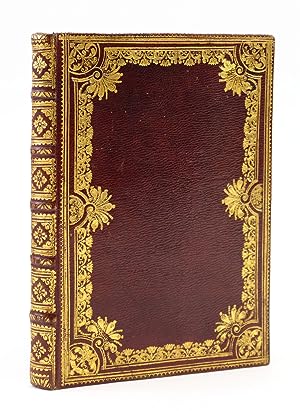
Hardcover. Condition: FINE. Fine Binding edition of the Episcopalian 'Altar Service' being the selections of the Book of Common Prayer (1928) for use in public worship. 67-269, [3], 35-53, [7] pp. 4to, Red Morocco goatskin leather, gilt stamped spine lettering, blind-ruled spine panels and covers, all edges gilt, gilt dentelle, 3 red place ribbons, text printed in red and black in a large, clear and emminently legible font. With just some trivial rubbing to the very tips, else FINE -- exceedingly clean and sharp with crisp, fresh pages, tight binding, and no evidence of use. This 1971 printing was the final printing of an Alter Service edition of 1928 Prayer Book before the 1979 modern-English revision.
-
Parelen voor Godminnende Zielen. Volledig gebedenboek voor Roomsch-Katholijke Christenen.
Published by Brepols en Dierckx zoon, 1863., Turnhout:, 1863
Seller: Jeff Weber Rare Books, Neuchatel, NEUCH, Switzerland
Seller rating 4 out of 5 stars

12mo. 383, [1] pp. Dutch text. 2 chromo-lithographic plates (frontispiece and half-title), 2 engraved plates (facing pages 23 and 57); an additional chromolithographic plate laid in. With a stunning full mother-of-pearl 3-part binding or remarkable design (because mother-of-pearl is not flexible), the upper and lower covers, the separate spine (itself combined of 2 parts), all in beautiful mother-of-pearl with the upper cover stamped in blind with a religious cross and decorative framing also in blind, the spine fluted, the fore-edges elaborately decorated with gauffering and all edges gilt, the free endleaves of period embossed paper - all these design concepts creating a beautiful devotional binding to treasure. Well preserved copy. BEAUTIFULLY BOUND DUTCH PRAYER BOOK. Illustrated with the following chromolithographic plates:
-
The Book of Common Prayer, and Administration of the Sacraments, and Other Rites and Ceremonies of the Church, According to the Use of the Church of England; Together with the Psalter or Psalms of David, Pointed as They are to be Sung or Said in Chur
Published by ches; and the Form or Manner of Making Ordaining and Consecrating of Bishops Priests and Deacons London Oxford and Cambridge: Riviingtons, 1866
Seller: Geoffrey Jackson, Royal Wootton Bassett, WILTS, United Kingdom
Seller rating 4 out of 5 stars
US$ 1,001.71
US$ 23.47 shipping
Ships from United Kingdom to U.S.A.Quantity: 1 available
Add to basketHardcover. Condition: Near Fine. Special Edition. 24mo., [iv], 405 pages, title-page and text printed in red and black, also specially bound in are 6 unique finely hand-painted pictorial illuminations on vellum paper (see illustations), marbled endpapers, all edges blocked in gilt, specially bound in full contemporary red morocco with both covers and spine covered in repeating gilt fleur-de-lys des patterns, all within gilt-ruled double borders and a further outer gilt decorated border together with decorative inner gilt dentelles. A near fine copy in a most handsome binding with only light occasional minimal wear to some extremities which contains 6 unique finely hand-painted illuminated drawings on vellum paper which have been professionally bound into this fine work. With a neat Presentation inscription to blank front endpaper, 'Florence V. Higginson from Edgar Selright, June 27. 1882' "In Memoriam". The Book of Common Prayer is the name given to a number of related prayer books used in the Anglican Communion and by other Christian churches historically related to Anglicanism. The first prayer book, published in 1549 in the reign of King Edward VI of England, was a product of the English Reformation following the break with Rome. The work of 1549 was the first prayer book to include the complete forms of service for daily and Sunday worship in English. In 1604, James I ordered some further changes, the most significant being the addition to the Catechism of a section on the Sacraments; this resulted in the 1604 Book of Common Prayer. Following the tumultuous events surrounding the English Civil War, when the Prayer Book was again abolished, another revision was published as the 1662 prayer book. That edition remains the official prayer book of the Church of England, although throughout the later twentieth century, alternative forms which were technically supplements have largely displaced the Book of Common Prayer for the main Sunday worship of most English parish churches.
-
The Book of Common Prayer, And Administration of the Sacraments, and other Rites and Ceremonies of the Church, According to the Use of The Church of England: Together with the Psalter or Psalms of David, Printed as tey are to be sung or said in Churches. WITH: The Liturgy of the Church of England. Illustrated with Fifty Nine Historical and Explanatory Sculptures, Engraved by Mess. Ravenett, Grignion, Scotin, Cannot, Walker and W. Ryland. Published according to Act of Parliament. WITH: The Whole Book of Psalms, Collected into English Metre, by Thomas Sternhold, John Hopkins, and Others.
Published by Oxford, printed at the University Press, 1807
Seller: Antiquariaat de Roo, Zwijndrecht, Netherlands
Seller rating 4 out of 5 stars
US$ 3,770.45
US$ 26.62 shipping
Ships from Netherlands to U.S.A.Quantity: 1 available
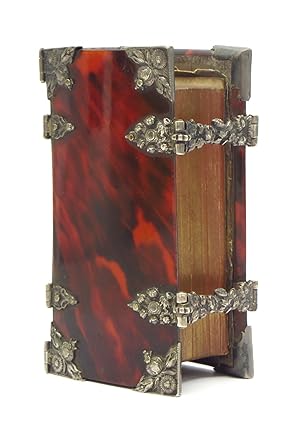
Add to basketOriginele Schildpadband uit de 18e eeuw, met 2 zilveren sloten, 8 zilveren hoeken, 4 zilveren schanierstukken en zilveren randen, 12°. H. 12 x B. 6,8 x D. 3,5 cm. In de bovenste klamp zijn de initialen "S.M." gegraveerd. Het boekje in de band is er later los ingelegd. 18th century binding and silver fittings, with 2 chiselled silver clasps and catches with the initials "S.M.", 4 silver corner-pieces, 2 silver hinges across backstrip, all with floral motif, and silver spine-ends by an unidentified silversmith, all edges gilt, silk endpapers, 12°. H. 12 x W. 6,8 x D. 3,5 cm. Later inserted: The book of the common prayer, Oxford, Univ. Press., 1867. Book block loose.
-
La journée du chrétien, sanctifiée par la prière et la méditation.
Published by Librairie Catolique de Perisse frères,, Lyon and Paris,, 1844
Seller: ASHER Rare Books, T Goy Houten, Netherlands
Seller rating 5 out of 5 stars
US$ 77,495.20
US$ 28.94 shipping
Ships from Netherlands to U.S.A.Quantity: 1 available
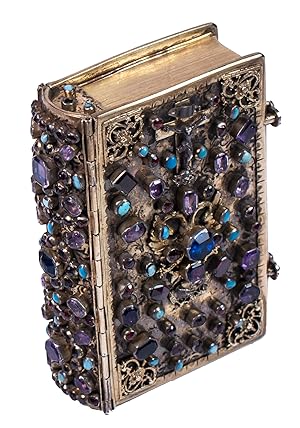
Add to basketA beautiful and fabulously ornate jewelled 17th-century binding, its boards, spine and clasps adorned with turquoises, amethysts, garnets, and (simulated) sapphires. It contains a popular French prayerbook entitled La journée du chrétien, which was added long after the completion of the binding itself. The prayerbook, published in numerous editions during the 19th century, is reminiscent of medieval and early modern books of hours. The work specifies the daily duties of Christians and includes devotional prayers.It was for a long time part of the collection of the princes and rulers of Hohenzollern-Sigmaringen in what is now southwestern Germany. Their collection was exhibited in the Städel museum in Frankfurt in 1928 and the present binding is listed in the exhibition catalogue. The French prayer book was at one time part of the collection of the Stadtbibliothek Frankfurt, according to the blue stamp on the verso of the title page. The whole - binding and prayer book - were part of Cornelius John Hauck's bibliophile collection during the second half of the 20th century, which subsequently appeared at Christie's auction house New York in 2008.With the bookplate of Cornelius J. Hauck on the verso of the first flyleaf, and a blue stamp of the "Stadtbibliothek Frankfurt am Main" on the back of the title page. With very slight foxing and stains in the gutter of the first few leaves, a brown stain in the gutter of pp. 24-27, and the Stadtbibliothek stamp bleeds through a bit to the title page: otherwise internally fine and clean. The whole is in very good condition.l WorldCat 467731356 (1 copy, BnF). 17th-century elaborately jewelled and decorated gilt silver binding with a gilt silver imperial double-headed eagle and two hands holding a heart centre piece, below Jesus on the cross (with an added skull and bones at the foot of the cross) and ornamental gilt silver corner pieces connected to the gilt silver board edge fittings on both boards. The whole is set with numerous jewels (amethysts, garnets, turquoise, and (simulated) sapphires). With two jewelled clasps closing on pegs in the fore edge of the front board, gilt edges, red velvet paste-downs and blue silk flyleaves backed with paper. With a small printer's device on the title page. Pages: VIII, 524, [5], [3 blank] pp.
-
HOCHSCHÄTZBARER SEELEN EHREN THRON
Published by Michael Wening, München [Munich], 1683
Seller: Phillip J. Pirages Rare Books (ABAA), McMinnville, OR, U.S.A.
Seller rating 3 out of 5 stars

175 x 117 mm. (6 7/8 x 4 5/8"). 8 p.l., 38, [12] leaves. Very pretty, almost certainly contemporary dark red morocco, gilt, covers framed by multiple gilt rules, fleuron side- and cornerpieces in lobed compartments, central panel with inner frame of repeating floral rolls, palmette sprays at corners and sides, raised bands, spine compartments with central quatrefoil, volute cornerpieces, red paste paper endpapers, all edges gilt. ENGRAVED THROUGHOUT, WITH 112 COPPER ENGRAVINGS, 22 OF THEM FULL-PAGE, the others either as large figures flanking the text or as small, massed images in frames around it. Graesse VII, 435; VD17 23:238964Z. âBoards tending to splay very slightly, one opening slightly soiled, one leaf with old repair to tail margin (not affecting engraving), otherwise very fine, the leaves especially fresh and clean, and THE BINDING REMARKABLY WELL PRESERVED, with virtually no signs of wear. This is a charming little devotional book done by the court engraver to the Elector of Bavaria, with imaginative illustrations and in a lovely binding. Born and trained in Nuremberg, Michael Wening (1645-1718) moved in 1669 to Catholic Munich, where he applied to the court to do engraving work, after wisely shedding his Protestantism; six years later, he was named court engraver. Having subsequently founded a publishing company, he began producing illustrated calendars, then--as commissions from the Elector--providing battle scenes celebrating Bavarian victories against the incursions of the Ottoman Empire. The present work, "Esteemed Souls, Honor the Throne," offers guidance for personal devotions to God and the Saints. Although it has prayers in the vernacular German used by Protestants rather than the Latin decreed for Catholics, the book nevertheless would seem to be linked to Wening's new faith: in addition to a frontispiece illustration of the Last Supper, the sequence of full-page plates shows St. Charles Borromeo, a leader in the Counter-Reformation, celebrating Mass. Accompanied by two acolytes--and often a small angel--the priest performs the rituals, as scenes from the Bible play out in the clouds above the altar. Following the final Benediction in the Mass, there are further prayers to female saints (pictured in pairs on either side of the text), and to Christ and his mother. Wening's martial court engravings influence one of the final plates, showing an Angel blowing a trumpet to sound Victory over the infidel Turks. The engravings are richly detailed, with complex scenes playing out in small vignettes, and composed with artistry and skill. The binding's very pretty gilding is fresh and delicate in comparison with other somber and weighty blind-stamped volumes of the period, and seems to be a harbinger of 18th century styles.


![Seller image for [ALTAR SERVICE] THE HOLY COMMUNION together with The Collects, Epistles and Gospels; and Prayers and Thanksgivings; with Additional Prayers from the Book of Common Prayer for sale by Arches Bookhouse](https://pictures.abebooks.com/inventory/md/md32447421489.jpg)