
Raap Daniel (1 results)
- Signed
Seller: Goltzius, Lisse, , NetherlandsGoltzius
Contact seller5-star sellerCondition: Used
US$ 342.68
US$ 36.80 shippingShips from Netherlands to U.S.A.Quantity: 1 available
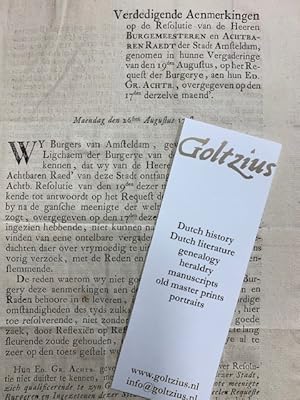
Amsterdam, 26sten Augustus 1748, 7 printed pages, no binding, 31x21cm. Pamphlet written in the unruly year 1748 signed by Daniel Raap, Jacob Carel de Huyser, Elie Chatin and Johannes Romans, when Dutch citizens turned against the elite and demanded fairer taxation and more help from stadhouder Willem IV. Not in KB only in Leiden… University Library and Rotterdam. Printersemblem of Altytwel (woodcut) on last page, scarce. Daniël Raap (Amsterdam, 1703 - Amsterdam, 10 January 1754) was a porcelain merchant who played a leading role during the Orangist revolution in the Netherlands of 1747-1751. During the opening months of the revolution that would put an end to the Second Stadtholderless Period, Raap, together with other agitators like the journalist Rousset de Missy published pamphlets demanding the restoration of the stadtholderate in the provinces of the Dutch Republic that had abolished the office, and the appointment of the Frisian stadtholder William IV, Prince of Orange, in all provinces to this dignity, that should henceforth be hereditary in the male and female line. At the same time the agitators asked for more influence of the common people on the government that had hitherto been dominated by the Regents. More specifically, the petition he circulated demanded that militia captains would henceforth be directly elected; vacant public offices be auctioned off; and the guilds be restored in their old privileges.The agitators asked the Prince to come to Amsterdam to oust the city government, which he did on 2 September 1748. But instead of appointing new government members from the ranks of the democratic opposition the Prince selected the new city government from the old Regent class, be it from the Orangist faction that had been excluded during the Stadtholderless regime. This caused a rupture between Raap and the Orangist partisans, like Willem Bentinck van Rhoon. Likewise, the more radical democrats in the movement distanced themselves from him, because he was considered too moderate. His erstwhile popularity therefore turned into a deep hatred by the members of the Amsterdam mob, who had earlier revered him, by the time of his death in 1754. There were riots at his funeral and his coffin was destroyed.
