
Robert Averill Walker (4 results)

Published by Dryden Press 1955
- Hardcover
Seller: HPB Inc., Dallas, U.S.A.HPB Inc.
Contact seller5-star sellerCondition: Used - Very good
US$ 5.00
US$ 3.75 shippingShips within U.S.A.Quantity: 1 available
Add to baskethardcover. Condition: Very Good. Connecting readers with great books since 1972! Used books may not include companion materials, and may have some shelf wear or limited writing. We ship orders daily and Customer Service is our top priority.
Published by University of Chicago Press 1950
- Hardcover
Seller: Easy Chair Books, Lexington, U.S.A.Easy Chair Books
Contact seller5-star sellerCondition: Used - Good
Original price: US$ 10.00; 25% offCurrent price: US$ 7.50
US$ 5.50 shippingShips within U.S.A.Quantity: 1 available
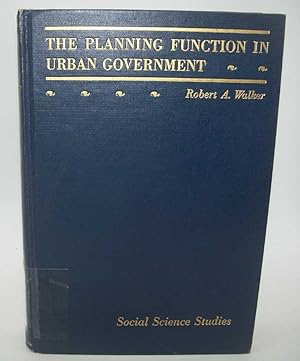
Add to basketHardcover. Condition: Good. No Dust Jacket. 410 pages, second edition. Ex-university library book, light wear to the blue covers, lightly yellowed pages; a good sound binding. No jacket. Quantity Available: 1. Category: Sociology & Politics; Inventory No: 211966.
- Softcover
Seller: Redins antikvariat, Enköping, SwedenRedins antikvariat
Contact seller5-star sellerCondition: Used
US$ 21.53
US$ 34.60 shippingShips from Sweden to U.S.A.Quantity: 1 available
Add to basketDiss. Chicago 1941. XXI, 376 pages. Softcover. Stamped.[#67293].
 More images
Published by The University Of Chicago Press, Chicago, Illinois 1941
- Hardcover
- First Edition
Seller: Rareeclectic, pound ridge, U.S.A.Rareeclectic
Contact seller5-star sellerCondition: Used - Very good
US$ 90.00
Free ShippingShips within U.S.A.Quantity: 1 available
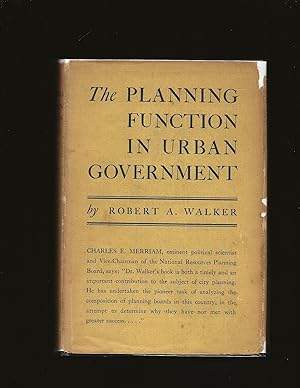
Add to basketHardcover. Condition: Very Good. Dust Jacket Condition: Good. 1st Edition. First Edition ( 'Published April 1941' ; The University Of Chicago Press= 'Published (year)' ). Once listed, this book will be the Only original, the only first edition, for sale anywhere on the Internet. The second edition was published ten years later.…This will also be the Only book of either edition with its dust jacket. The book was a part of the Social Science Studies project, directed by the Social Science research committee of the University Of Chicago. It is Number XXXIX. At the time of its publication Professor Walker was an Associated Administrative Analyst at the Office of Budget and Finance, United States Department Of Agriculture. He went on to teach at Stanford University: 'Robert A. Walker was professor of political science at Stanford University from 1949 until his retirement in 1976. He was a co-founder of the overseas studies program at Stanford, and active on university committees dealing with land use planning and faculty/staff housing. He was also instrumental in curriculum studies, serving as director of general studies in the 1950s-60s. He earned his B.A. and Ph. D. from the University of Chicago; he worked for the National Resources Planning Board and taught at Kansas State before joining the Stanford faculty. He died in 1998.' From The University Of Chicago Law Review: 'After the present war, win or lose, one of the most important trends in our society will be governmental planning. We can guess that there will be some international order, voluntary or imposed, or at least some economic planning through quotas, agreements, cartels, or directives on a world-wide scale. There is less doubt about national planning of production in business, agriculture, labor. Regional planning, based on power resources, will no doubt remain an integral part of American government. With greater certainty still, we can anticipate an intensification in land-use planning and regulation, both rural and urban. Urban planning in particular will be used to transform our cities, a process that has already gone forward in our rapid shift from a rural to an urban people, and now to a metropolitan and suburban civilization. Whether the law will be an effective instrument of planning depends upon the philosophy and understanding of the bar and the bench. Such an understanding will not be attained without a contemporary body of knowledge about city planning which can be absorbed by our legal profession. One of the best readable compilations for this purpose is Robert A. Walker's book. As the University of Chicago's Social Science Study Number 39, Dr. Walker's is the latest in a whole series of urban researches in the sociology, the economics, and the administration of city life.' You can see the covers of the book in the photos. They're in very nice shape, very clean, only a few inconspicuous spots, and some toning on the spine and off the rear top corner. The cover edges are in solid shape. So are the cover corners. The gilt lettering on the spine is nicely bright. It's not so bright on the spine but very legible. The book is very solidly bound from cover to cover with nicely tight pages throughout and nicely tight covers as well. No binding issues. The inside covers and end papers have a light bit of foxing, but that is not the case with the text pages. They are exceptionally clean. I didn't see any conspicuous soiling. Nor is there any conspicuous creasing, no placeholder creases. There are no markings. No attachments. And no one has written their name or anything else anywhere in the book. You can see the dust jacket in the first few photos. Not bad for 1939. There are a few small losses, the spine is toned. The flaps are in solid shape, one closed tear off the front flap's bottom edge, a little soiling or toning at the top edges of both flaps. The jacket is NOT price-clipped, not clipped at all. I have always had it in a fitted protective cover.

