Order Total (1 Item Items):
Shipping Destination:

Robert John Ridgeway (3 results)
Skip to main search results
Search filters
Product Type
- All Product Types
- Books (3)
- Magazines & Periodicals (No further results match this refinement)
- Comics (No further results match this refinement)
- Sheet Music (No further results match this refinement)
- Art, Prints & Posters (No further results match this refinement)
- Photographs (No further results match this refinement)
- Maps (No further results match this refinement)
- Manuscripts & Paper Collectibles (No further results match this refinement)
Condition Learn more
- New (No further results match this refinement)
- As New, Fine or Near Fine (1)
- Very Good or Good (No further results match this refinement)
- Fair or Poor (1)
- As Described (1)
Binding
- All Bindings
- Hardcover (2)
- Softcover (No further results match this refinement)
Collectible Attributes
- First Edition (2)
- Signed (No further results match this refinement)
- Dust Jacket (No further results match this refinement)
- Seller-Supplied Images (3)
- Not Print on Demand (3)
Language (1)
Price
- Any Price
- Under US$ 25 (No further results match this refinement)
- US$ 25 to US$ 50
- Over US$ 50
Free Shipping
- Free Shipping to U.S.A. (No further results match this refinement)
Seller Location
Seller Rating
-
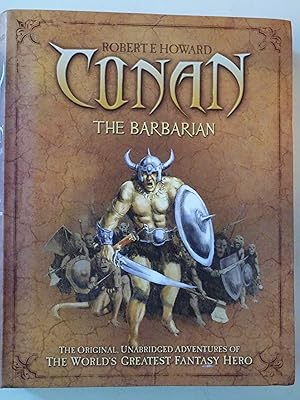
Conan The Barbarian: The Original, Unabridged Adventures Of The World's Greatest Fantasy Hero
Published by Carlton, 2010
Flexi-binding. John Ridgeway (illustrator). Illustrations by John Ridgeway. Near Fine British edition, likely attractive, unmarked and innaculate inside and out. The Flexi-binding does show some sign of 10 years of handling, slight curve to cover corners, a ding or two, but overall a gorgeous, gi.
-
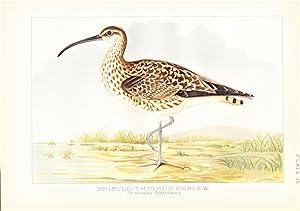
Report upon the Natural History Collections made in Alaska between the years 1877 and 1881.
Published by Government Printing Office, Washington, 1887
Seller: Rodger Friedman Rare Book Studio, ABAA, Tuxedo, NY, U.S.A.
Seller rating 5 out of 5 stars

First Edition
Condition: Poor. First edition. 31 cm; 337 pages, and 12 chromolithograph plates of birds, ten of them by the Ridgeway brothers, and 9 b/w plates of fish. Original green cloth. Spine broken, one gathering loose. A possible breaker or for rebinding. Plates and text are clean and unblemished. All pages and plates are present.
-
Arboretum et Fruticetum Britannicum; or, The Trees and Shrubs of Britain, Native and Foreign, Hardy and Half-Hardy, Pictorially and Botanically Delineated, and Scientifically and Popularly Described, with Their Propagation, Culture, Management and Uses in the Arts, in Useful and Ornamental Plantations, and in Landscape Gardening; Preceded by a Historical and Geographical Outline of the Trees and Shrubs of Temperate Climates Throughout the World. (In Eight Volumes)
Published by Printed For the Author. Sold by Longman, Orme, Brown, Green and Longmans, London, 1838
Seller: Dark and Stormy Night Books, Newburyport, MA, U.S.A.
Seller rating 5 out of 5 stars
First Edition
Hard Cover. Condition: Near Fine. James Ridgeway, G.R. Lewis, Lawrence Studley, W.H. Jukes et al. (illustrator). First Edition. Hard cover, 8vo, association copy rebound in three-quarter green calf over marbled paper-covered boards, edged in blind with a shark tooth roll, the spine with five raised bands gilt, title and volume numbers upon red and black onlaid labels. Tree-shaped roll at foot of spine in blind. All edges marbled, with matching endpapers. 2500 black and white illustrations from engravings by botanical artists, with "tree portraits," herbal-type plant illustrations, landscape layouts, leaf shape details, trees in various stages of growth, sorted by overall shape etc. V.1: ccxxx, [4]1-494[4]pp. V.2: x, 495-1256pp. V.3: vi, 2030pp. V.4. viii, 2031-2694pp. Plates: V.5: viii, and (variously) Plates 1- 84, including 3 larger (4to) fold-out plates. V.6: viii, Plates 85-167a, incl. 3 fold-out plates. V.7: viii, Plates 169-280a, including 10 fold-out plates. V.8: viii, 1-6 (index to plates), Plates 253-352, including 4 fold-out plates. First edition. NOTE: ENTIRE listing is on website. CONDITION: Near Fine. Some marks and scuffs externally to the paper covered boards and wear to leather at corners. Minor oxidation to spines. Inside, pristine, with the very occasional single spots of foxing. Square, tight, clean, pages bright. Hinges and joints in order. Top edge a little dusty. Engraved bookplate to endpaper each volume: see below. Really a lovely set.** "ARBORETUM ET FRUTICETUM BRITANNICUM" was the magnum opus of the prolific, influential Scottish botanic polymath, JOHN CLAUDIUS (J.C.) LOUDON, F.L.S., H.S., &c. (1783-1843). Author, agriculturist, architect, town planner, natural historian, gardening magazine publisher and --most significantly--inventor of the arboretum. He was born near Glasgow, later educated at Univ. Edinburgh in agriculture and botany among other subjects, while apprenticing at the nursery of a Mr. Scot in the nearby Edinburgh district of Easter Dalry. A year of botanic travels followed. His later career was made more difficult because of several severe disabilities, including the loss of an arm. He famously planned and established the Derby Arboretum in 1840, directly influencing the Americans Frederick Law Olmsted, and later corresponded with some of the most notable British, American and European nurserymen, botanists and estate owners of the day. Patronage of the Duke of Northumberland included provision of the artist G.R. Lewis to record a number of the numerous engraved "tree portraits" from Syon House. Loddiges, catalogue-nurserymen near London and importers of newly discovered plant materials, were among the many who also supplied Louden with his exemplars and illustrations. A history of foreign plant introductions traces "plant hunters" from Tradescant to Staunton, and more. Loudon's arboretum," founded at Derby in 1840, gave real form to the "paper arboretum" of this book. Trees, shrubs and other plants of both native and imported varieties, were displayed for educational and scientific study, beautification, and free public access in a purpose-designed landscape. Boston's Arnold Arboretum and New York's Botanical Garden followed in Loudon's footsteps. Frederick Law Olmstead's Green Belt constructions at Boston and New York's Central Park were specifically influenced by Loudon's work. Dendrological varieties suitable for the (sometimes heated) walled gardens, advice on the propagation of non-native semi-hardy fruiting trees hailing from warmer climes were included; appendices include fruiting trees of Italy. Other Loudon publications discussed plans for glasshouses, and heated conservatories. **PROVENANCE: Engraved bookplate "Ferguson of Raith" to endpaper of each volume; "ROBERT FERGUSON, MP, FHS &ct."(1769-1840) is listed among both Contributors and Subscribers to "Arboretum et Fruticetum Britannicum," thus making this an association copy. The Fergusons were in possession of Raith House, on the outskirts of Kirkcaldy, Fife from 1725. As laird, Ferguson oversaw parklands laid out in the18th century by Scottish landscape designer THOMAS WHITE (1736-1811), once a student of "Capability" Brown. The Raith C. Lucitanica Lois, (Portugal Laurel,) and Corylaceæ Quercus (Holly Oak) are mentioned in Loudon. Later additions of Sequoia were added after their introduction to Britain in the 1840's. Playfair's home farm, and a monastic walled garden, Abbotshall, also then formed part of the estate. A tower folly and artificial lake were added in the early 19th century. Architects of the Palladian manor house included JAMES SMITH (1645-1731), a student of Sir William Bruce, who did the Holyrood Palace rehab of the1660's. Beginning in 1785, architect JAMES PLAYFAIR (1755-1794) extended and remodeled Raith House. The hilly elevation of the Fife coast allowed panoramic views from Raith across the Firth of Forth, toward North Berwick Law, and away to Arthur's Seat, the extinct volcano looming over the Holyrood parklands. Otherwise, Robert Ferguson was known for two reasons. As a Fellow of the Royal Society of both Edinburgh and London, Ferguson was an amateur mineralogist. Several forms of the rare earth mineral Fergusonite, discovered in Greenland in 1825, were named after him, a mildly radioactive and a semi-precious gemstone. Ferguson was also named in a famous divorce case of 1807 in which his near-neighbor, the Earl of Elgin (purveyor of the infamous Parthenon "Elgin Marbles"), sued him for the alienation of the affections of his wife, Mary Bruce, (neé Nisbet,) winning 10,000 pounds sterling in damages. The scandal put a temporary boot to Ferguson's career as an MP, although his political fortunes recovered; he was Lord Lieutenant of Fife from 1837. Books later through descendants, including Agnes and Mary Berry, heirs and literary executors of the English novelist Horace Walpole, and nieces to the Fergusons of Raith. REFS: Hist. of Parliam'nt online. Bioheritage Libr., Hist. Environment Scotland, Raith Estate. M. Brown, "Scotland's Lost Gardens"(2012). Blunt & Stearn (1994)et al. Book.