

Order Total (1 Item Items):
Shipping Destination:

Simoni Philippi (1 results)
Skip to main search results
Search filters
Product Type
- All Product Types
- Books (1)
- Magazines & Periodicals (No further results match this refinement)
- Comics (No further results match this refinement)
- Sheet Music (No further results match this refinement)
- Art, Prints & Posters (No further results match this refinement)
- Photographs (No further results match this refinement)
- Maps (No further results match this refinement)
- Manuscripts & Paper Collectibles (No further results match this refinement)
Condition Learn more
- New (No further results match this refinement)
- As New, Fine or Near Fine (No further results match this refinement)
- Very Good or Good (No further results match this refinement)
- Fair or Poor (No further results match this refinement)
- As Described (1)
Binding
- All Bindings
- Hardcover (1)
- Softcover (No further results match this refinement)
Collectible Attributes
- First Edition (No further results match this refinement)
- Signed (No further results match this refinement)
- Dust Jacket (1)
- Seller-Supplied Images (1)
- Not Print on Demand (1)
Language (1)
Price
- Any Price
- Under US$ 25 (No further results match this refinement)
- US$ 25 to US$ 50 (No further results match this refinement)
- Over US$ 50
Free Shipping
- Free Shipping to U.S.A. (No further results match this refinement)
Seller Location
Seller Rating
-
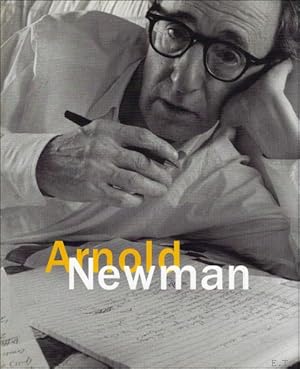
Arnold Newman ENG / FR / GER
Published by , Taschen, 2000, 2000
Seller: BOOKSELLER - ERIK TONEN BOOKS, Antwerpen, Belgium
Association Member: ILAB
Seller rating 4 out of 5 stars

Hardcover , 276 pages, ENG / FR / GER , 330 x 275 x 32 mm, dustjacket, book is As New !, full page photographs in colour / b/w , Large Format ! ISBN 9783822871935. Piet Mondrian behind his easel, Igor Stravinsky at his piano, Max Ernst sitting smoking on his throne-like chair: Arnold Newman's photographs are classics of portraiture. His subtle arrangements constituted the foundations of "environmental portraiture." His photographs integrate the respective artist's characteristic equipment and surroundings, thus indicating his or her field of activity. The enormous fame of Newman's portraits can be ascribed to their daring compositions and sometimes astounding spatial structures. The photographer's beginnings, on the other hand, were none too promising. During the Great Depression Newman had to abandon his art studies for financial reasons. Between 1938 and 1942 he concentrated on socio-documentary photography in the ghettos of West Palm Beach, Philadelphia, and Baltimore. One might think that being forced to earn his living in a photography studio would have stifled his artistic potential: Newman portrayed up to 70 clients a day. Yet he still succeeded in developing a very personal touch and establishing himself in the New York art scene of the early 1940s. His subjects included Max Ernst, Marcel Duchamp, Marc Chagall, Jackson Pollock, Willem de Kooning and Alexander Calder. With his unmistakable style, Newman became the star photographer of artists, writers and musicians. 2550 g.
