

Order Total (1 Item Items):
Shipping Destination:

Sorrell Phillip (50 results)
Skip to main search results
Search filters
Product Type
- All Product Types
- Books (48)
- Magazines & Periodicals (1)
- Comics (No further results match this refinement)
- Sheet Music (No further results match this refinement)
- Art, Prints & Posters (No further results match this refinement)
- Photographs (1)
- Maps (No further results match this refinement)
- Manuscripts & Paper Collectibles (No further results match this refinement)
Condition Learn more
- New (41)
- As New, Fine or Near Fine (4)
- Very Good or Good (3)
- Fair or Poor (No further results match this refinement)
- As Described (2)
Binding
Collectible Attributes
- First Edition (3)
- Signed (No further results match this refinement)
- Dust Jacket (No further results match this refinement)
- Seller-Supplied Images (17)
- Not Print on Demand (50)
Language (2)
Free Shipping
Seller Location
Seller Rating
-
Doctors' Women
Published by Universal Publishing, New York, 1964
Seller: Bookworks [MWABA, IOBA], Beloit, WI, U.S.A.
Association Member: IOBA MWABA
Seller rating 5 out of 5 stars

Paperback. Condition: Good. Second Printing. Hospital infidelity. Pocket-sized paperback, as pictured; stated second [paperback] printing, two years after the first, with new cover art. Beacon Signal Sixty B780x. Shows some light rubbing, stains to covers, paper tanned. Size: 4¼" by 7".
-

Paperback. 2nd reprints beacon 486. B-780X very good - fine, reading crease Cover by Maguire. paperback,
-
Doctor's Women
Published by Beacon Signal Sixty/Universal Publishing and Distribution Corporation, 1964
Soft cover. Condition: Good. Soft cover. Pocket paper back. Light edge/shelf wear. Corner bumped, lightly. Pages toned with age. Wavy/curl. 2nd printing [stated/no number line]. Cover art [uncredited]. B780X K. Original cover price 60 cents. Scarce/rare/hard to find/out of print.
-

Condition: New.
-

Hardback or Cased Book. Condition: New. 226 Garages and Service Stations. Book.
-
Condition: New.
-
Condition: As New. Unread book in perfect condition.
-
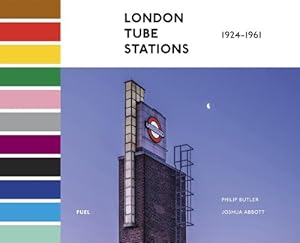
London Tube Stations 1924-1961 (Hardcover)
Language: English
Published by FUEL Publishing, London, 2023
ISBN 10: 1739887824 ISBN 13: 9781739887827
Hardcover. Condition: new. Hardcover. Charles Holden's designs for the London Underground from the mid-1920s to the outbreak of World War II represent a high point of transport architecture and Modernist design in Britain. His collaboration with Frank Pick, the Chief Executive of London Transport, brought about a marriage of form and function still celebrated today. Pick used the term 'Medieval Modernism' to describe their work on the underground system, comparing the task to the construction of a great cathedral.London Tube Stations 1924 - 1961 catalogues and showcases every surviving station from this innovative period. These beautiful buildings, simultaneously historic and futuristic, have been meticulously documented by architectural photographer Philip Butler.Annotated with station-by-station overviews by writer and historian Joshua Abbott, the book provides an indispensable guide to the network's Modernist gems. All the key stations have a double page spread, with a primary exterior photograph alongside supporting images. A broader historical introduction, illustrated with archival images from the London Transport Museum, gives historical context, while a closing chapter lists the demolished examples alongside further period images.These stations, as famed architectural historian Nicholas Pevsner later noted, would "pave the way for the twentieth-century style in England". Shipping may be from multiple locations in the US or from the UK, depending on stock availability.
-

London Tube Stations 1924-1961
Seller: Rarewaves.com USA, London, LONDO, United Kingdom
Seller rating 5 out of 5 stars
US$ 33.26
Free Shipping
Ships from United Kingdom to U.S.A.Quantity: Over 20 available
Add to basketHardback. Condition: New. Charles Holden's designs for the London Underground from the mid-1920s to the outbreak of World War II represent a high point of transport architecture and Modernist design in Britain. His collaboration with Frank Pick, the Chief Executive of London Transport, brought about a marriage of form and function still celebrated today. Pick used the term 'Medieval Modernism' to describe their work on the underground system, comparing the task to the construction of a great cathedral. London Tube Stations 1924 - 1961 catalogues and showcases every surviving station from this innovative period. These beautiful buildings, simultaneously historic and futuristic, have been meticulously documented by architectural photographer Philip Butler.Annotated with station-by-station overviews by writer and historian Joshua Abbott, the book provides an indispensable guide to the network's Modernist gems. All the key stations have a double page spread, with a primary exterior photograph alongside supporting images. A broader historical introduction, illustrated with archival images from the London Transport Museum, gives historical context, while a closing chapter lists the demolished examples alongside further period images.These stations, as famed architectural historian Nicholas Pevsner later noted, would "pave the way for the twentieth-century style in England".
-
226 Garages and Service Stations (Hardcover)
Language: English
Published by FUEL Publishing, London, 2025
ISBN 10: 1739887891 ISBN 13: 9781739887896
Hardcover. Condition: new. Hardcover. Small garages and service stations are a vital - but fast disappearing - part of Britain's automotive landscape. Often independently owned and sited in idiosyncratic buildings, they are rightfully celebrated and sensitively documented in this essential book.You might use a local garage to change a tyre or replace your exhaust, but when was the last time you pulled over and took a good look at the building itself? In the spirit of Ed Ruscha's Twentysix Gasoline Stations (1963), photographer Philip Butler has done just that. Over six years, he's travelled the length and breadth of Britain photographing these diverse, eccentric and idiosyncratic buildings. As motoring became popular in the early 1900s, the need for mechanical expertise to service, repair, refuel, and sell vehicles soared - and the 'garage' was born. From the Mock-Tudor fad of the 1920s via the Streamline Moderne of the 1930s, to the simple Modernist rationalism of postwar Britain, each era has produced a distinct automotive architecture. With the introduction of the Ministry of Transport (MOT) vehicle test in the 1960s, demand accelerated still further. A diverse array of structures was utilised - churches, cinemas, railway arches, fire stations, shops, factories - all proved versatile enough to find second lives as garages. As the era of the combustion engine draws to a close, Butler's enchanting photographs of 226 Garages and Service Stations document the charm and personality of these survivors of the petrol age. Shipping may be from multiple locations in the US or from the UK, depending on stock availability.
-

Hardback. Condition: New. Charles Holden's designs for the London Underground from the mid-1920s to the outbreak of World War II represent a high point of transport architecture and Modernist design in Britain. His collaboration with Frank Pick, the Chief Executive of London Transport, brought about a marriage of form and function still celebrated today. Pick used the term 'Medieval Modernism' to describe their work on the underground system, comparing the task to the construction of a great cathedral. London Tube Stations 1924 - 1961 catalogues and showcases every surviving station from this innovative period. These beautiful buildings, simultaneously historic and futuristic, have been meticulously documented by architectural photographer Philip Butler.Annotated with station-by-station overviews by writer and historian Joshua Abbott, the book provides an indispensable guide to the network's Modernist gems. All the key stations have a double page spread, with a primary exterior photograph alongside supporting images. A broader historical introduction, illustrated with archival images from the London Transport Museum, gives historical context, while a closing chapter lists the demolished examples alongside further period images.These stations, as famed architectural historian Nicholas Pevsner later noted, would "pave the way for the twentieth-century style in England".
-

226 Garages and Service Stations
Seller: Rarewaves.com USA, London, LONDO, United Kingdom
Seller rating 5 out of 5 stars
US$ 37.19
Free Shipping
Ships from United Kingdom to U.S.A.Quantity: Over 20 available
Add to basketHardback. Condition: New. Small garages and service stations are a vital - but fast disappearing - part of Britain's automotive landscape. Often independently owned and sited in idiosyncratic buildings, they are rightfully celebrated and sensitively documented in this essential book.You might use a local garage to change a tyre or replace your exhaust, but when was the last time you pulled over and took a good look at the building itself? In the spirit of Ed Ruscha's Twentysix Gasoline Stations (1963), photographer Philip Butler has done just that. Over six years, he's travelled the length and breadth of Britain photographing these diverse, eccentric and idiosyncratic buildings. As motoring became popular in the early 1900s, the need for mechanical expertise to service, repair, refuel, and sell vehicles soared - and the 'garage' was born. From the Mock-Tudor fad of the 1920s via the Streamline Moderne of the 1930s, to the simple Modernist rationalism of postwar Britain, each era has produced a distinct automotive architecture. With the introduction of the Ministry of Transport (MOT) vehicle test in the 1960s, demand accelerated still further. A diverse array of structures was utilised - churches, cinemas, railway arches, fire stations, shops, factories - all proved versatile enough to find second lives as garages. As the era of the combustion engine draws to a close, Butler's enchanting photographs of 226 Garages and Service Stations document the charm and personality of these survivors of the petrol age.
-

Condition: NEW.
-
Condition: new.
-

Hardback. Condition: New. Small garages and service stations are a vital - but fast disappearing - part of Britain's automotive landscape. Often independently owned and sited in idiosyncratic buildings, they are rightfully celebrated and sensitively documented in this essential book.You might use a local garage to change a tyre or replace your exhaust, but when was the last time you pulled over and took a good look at the building itself? In the spirit of Ed Ruscha's Twentysix Gasoline Stations (1963), photographer Philip Butler has done just that. Over six years, he's travelled the length and breadth of Britain photographing these diverse, eccentric and idiosyncratic buildings. As motoring became popular in the early 1900s, the need for mechanical expertise to service, repair, refuel, and sell vehicles soared - and the 'garage' was born. From the Mock-Tudor fad of the 1920s via the Streamline Moderne of the 1930s, to the simple Modernist rationalism of postwar Britain, each era has produced a distinct automotive architecture. With the introduction of the Ministry of Transport (MOT) vehicle test in the 1960s, demand accelerated still further. A diverse array of structures was utilised - churches, cinemas, railway arches, fire stations, shops, factories - all proved versatile enough to find second lives as garages. As the era of the combustion engine draws to a close, Butler's enchanting photographs of 226 Garages and Service Stations document the charm and personality of these survivors of the petrol age.
-
Condition: new.
-
Condition: NEW.
-
Condition: New.
-
London Tube Stations 1924-1961
Seller: Kennys Bookshop and Art Galleries Ltd., Galway, GY, Ireland
Seller rating 5 out of 5 stars
First Edition
Condition: New. 2023. 1st Edition. Hardcover. . . . . .
-
US$ 25.66
US$ 20.78 shipping
Ships from United Kingdom to U.S.A.Quantity: 6 available
Add to baskethardcover. Condition: New.
-
226 Garages and Service Stations
Seller: GreatBookPricesUK, Woodford Green, United Kingdom
Seller rating 5 out of 5 stars
US$ 27.46
US$ 20.12 shipping
Ships from United Kingdom to U.S.A.Quantity: 17 available
Add to basketCondition: New.
-
226 Garages and Service Stations
Seller: Kennys Bookshop and Art Galleries Ltd., Galway, GY, Ireland
Seller rating 5 out of 5 stars
Condition: New. 2025. hardcover. . . . . .
-
226 Garages and Service Stations
Seller: Ria Christie Collections, Uxbridge, United Kingdom
Seller rating 5 out of 5 stars
US$ 32.74
US$ 16.07 shipping
Ships from United Kingdom to U.S.A.Quantity: 15 available
Add to basketCondition: New. In.
-
US$ 27.79
US$ 20.78 shipping
Ships from United Kingdom to U.S.A.Quantity: 15 available
Add to baskethardcover. Condition: New.
-
Condition: New. 2023. 1st Edition. Hardcover. . . . . . Books ship from the US and Ireland.
-
Condition: New. 2025. hardcover. . . . . . Books ship from the US and Ireland.
-
226 Garages and Service Stations
Seller: GreatBookPricesUK, Woodford Green, United Kingdom
Seller rating 5 out of 5 stars
US$ 32.80
US$ 20.12 shipping
Ships from United Kingdom to U.S.A.Quantity: 17 available
Add to basketCondition: As New. Unread book in perfect condition.
-
US$ 36.42
US$ 16.77 shipping
Ships from United Kingdom to U.S.A.Quantity: 2 available
Add to basketHardcover. Condition: Brand New. 248 pages. 6.50x8.00x6.50 inches. In Stock.
-
London Tube Stations 1924-1961
Seller: THE SAINT BOOKSTORE, Southport, United Kingdom
Seller rating 5 out of 5 stars
US$ 29.89
US$ 24.35 shipping
Ships from United Kingdom to U.S.A.Quantity: Over 20 available
Add to basketHardback. Condition: New. New copy - Usually dispatched within 4 working days.
-
US$ 43.68 20% off
US$ 34.95
US$ 19.99 shipping
Ships from Canada to U.S.A.Quantity: 5 available
Add to baskethardcover. Condition: New. Special order direct from the distributor.
![Seller image for Doctors' Women for sale by Bookworks [MWABA, IOBA]](https://pictures.abebooks.com/inventory/md/md31429706479.jpg)


